Executive Overview
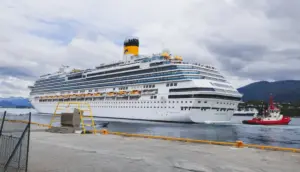
The Port of Vancouver has officially closed the book on what can only be described as a watershed year for its maritime and tourism sectors. In the pre-dawn hours of October 13, 2026, Norwegian Cruise Line’s Norwegian Encore slipped away from the Canada Place cruise terminal, embarking on a six-night Pacific Coast journey. That single departure did more than merely close out another operational window; it served as the ceremonial exclamation point on a record-shattering 2026 cruise season that fundamentally exceeded even the most bullish prognostications from port authorities and industry analysts alike.
Long before the first gangway was lowered in February 2026, industry watchers anticipated a robust year. Projections compiled by maritime observers signaled a massive passenger surge, driven largely by an insatiable global appetite for Alaskan itineraries and Pacific coastal voyages. As the final manifest data was tallied by the Vancouver Fraser Port Authority, those early predictions were not only met—they were surpassed.
The 2026 season delivered an unprecedented influx of travelers and vessels to Canada Place, anchoring Vancouver’s status as the premier cruise gateway of the Pacific Northwest. Driven by strategic infrastructure modernizations, a burgeoning lineup of luxury and mega-ships, and an expanding economic footprint, the port’s performance over the eight-month season has set a formidable new benchmark for North American cruise homeports. Beyond the sheer volume of hulls and passengers, the season underscored a structural shift in how travelers interact with maritime hubs, transforming brief port calls into extended, high-value urban stays.

Detailed Chronology of the 2026 Season
The trajectory of Vancouver’s historic 2026 maritime calendar can be traced through a series of key milestones, operational achievements, and debut visits that collectively redefined the capacity and prestige of the Canada Place terminal.
The Spring Awakening: February to May
The season kicked off earlier than in previous years, opening its doors in February to accommodate an evolving shoulder-season demand. From the outset, the tempo at Canada Place was relentless. Unlike prior years, which often experienced a gradual ramp-up toward the traditional summer peak, the early months of 2026 demonstrated sustained, high-volume activity. Turnaround operations ran with precision, setting an immediate tone of efficiency that would define the entire multi-month run.
Summer Zenith and Maiden Calls
As the season transitioned into the height of the Alaska cruise window between June and August, the Port of Vancouver became a revolving door for some of the world’s most sophisticated tonnage. Crucially, 2026 was distinguished by a wave of maiden voyages and brand-new entrants making their inaugural calls at the Canadian hub.
Among the most notable arrivals were:

- Virgin Voyages’ Brilliant Lady: Bringing the distinctive adults-only, lifestyle-driven brand to the Pacific Northwest for the first time, capturing a younger, experiential demographic.
- Ritz-Carlton Yacht Collection’s Luminara: Introducing ultra-luxury yacht cruising to Vancouver’s pier, signaling the port’s growing appeal to the high-net-worth experiential travel sector.
- Disney Cruise Line’s Disney Magic: Returning classic family-focused enchantment to the waterfront, driving massive family-segment bookings throughout the region.
The Autumn Finale and Historic Milestones
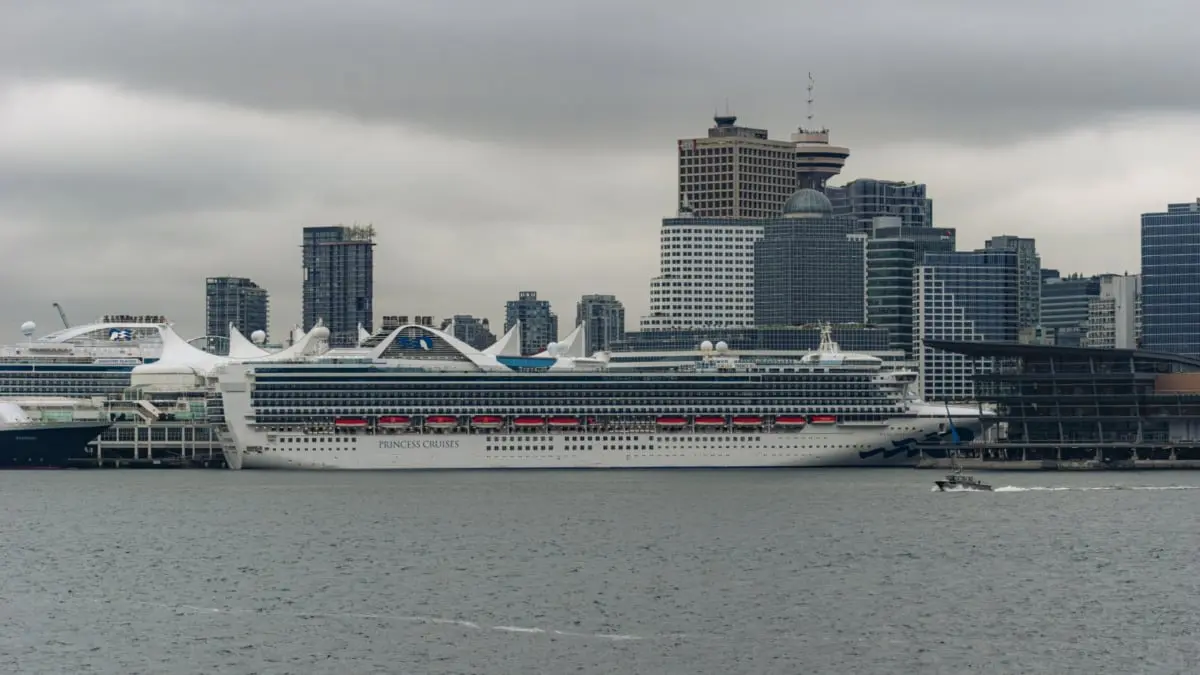
The closing weeks of September and early October brought moments of genuine maritime history. On September 27, 2026, Princess Cruises achieved a new milestone when the 177,882-gross-ton Star Princess gently eased into her berth at Canada Place. The arrival of the massive vessel marked a historic turning point for the terminal: Star Princess officially claimed the title of the largest cruise ship by tonnage ever to dock in Vancouver. The flawless handling of such a mega-ship proved that Canada Place, despite its downtown urban constraints, possesses the logistical sophistication required to service the next generation of goliath cruise vessels.
The final act arrived under the crisp autumn skies of October 13. With the departure of Norwegian Encore, the terminal doors closed on a season that had operated nearly nonstop for over 240 days, leaving port operators, local businesses, and municipal authorities to marvel at the numbers left in its wake.
Supporting Context & Metrics: By the Numbers
To truly appreciate the scope of Vancouver’s 2026 cruise boom, one must examine the rigorous data provided by the Vancouver Fraser Port Authority and regional tourism associations. The year-over-year growth across all core performance indicators reflects an industry experiencing accelerated, compounding momentum.
Passenger Movements and Ship Calls
According to the final year-end statistical release from the Vancouver Fraser Port Authority, the port recorded nearly 1.4 million passenger movements between February and October 2026. This represents an impressive 18% increase over the 1.2 million passenger visits recorded during the 2025 season.
Equally striking is the growth in vessel traffic. The port welcomed 358 cruise ship calls over the course of the 2026 season. Compared to the 300 ship calls handled in 2025, this translates to a 19% year-over-year jump in port utilization. When combined, passenger movements and ship calls reflect a nearly 20% aggregate surge in operational throughput at the Canada Place terminal.
The Economic Engine: Breaking Down the Billion-Dollar Milestone
The maritime sector is rarely evaluated solely on passenger headcounts; its true value lies in economic impact. In 2026, Vancouver’s cruise industry achieved a monumental financial milestone by injecting more than C$1 billion directly into the local economy.
This financial windfall is generated through a complex ecosystem of port fees, provisions, fuel bunkering, maritime services, and, most importantly, onshore passenger spending. According to the latest comprehensive Cruise Passenger Survey conducted by the Pacific Rim Cruise Association, Vancouver has successfully transformed from a mere embarkation/disembarkation point into a premier destination in its own right.
Key findings from the passenger survey include:
- Extended Stays: An astounding 76% of cruise passengers choose to extend their vacations by spending additional time in Vancouver either before or after their sailings.
- Duration: On average, these extended-stay travelers remain in the city for 1.4 nights, utilizing local accommodations and tourist infrastructure.
- Direct Expenditure: Each cruise passenger spends an average of C$1,144 during their time in the city. This capital is heavily distributed across local hotels, fine-dining restaurants, retail shopping, guided city tours, and iconic regional attractions like Stanley Park, Grouse Mountain, and Capilano Suspension Bridge.
Official Statements and Industry Perspective
The monumental success of the 2026 season has prompted enthusiastic responses from the leadership steering Western Canada’s maritime commerce. Speaking on the convergence of record metrics and infrastructure readiness, executive stakeholders emphasized that Vancouver’s growth is the deliberate result of strategic planning, sustainable stewardship, and robust partnerships with cruise lines.
“We are thrilled to celebrate another successful cruise season, with more than C$1 billion injected into the local economy as cruise lines and passengers increasingly make Vancouver a core part of their Alaska adventure,” declared Jeff Scott, Vice President of Operations and Supply Chain at the Vancouver Fraser Port Authority.
Scott’s remarks underscore a critical strategic positioning: Vancouver is no longer just a convenient geographical waypoint on the map between Seattle and Seward; it is an integral, highly anticipated core component of the modern luxury and adventure travel experience.
Industry analysts point out that maintaining service quality while processing a nearly 20% surge in human and vessel traffic is no small feat. Port officials credit this success to a corporate culture that embraces technological modernization and operational flexibility. By coordinating closely with federal border agencies, municipal transit planners, and major cruise operators, the port managed to absorb the historic influx of visitors without experiencing the severe bottlenecking or landside congestion that has historically plagued other major global homeports during peak periods.
Future Outlook: Infrastructure, Innovation, and the 2027 Horizon
While the 2026 season has only just concluded, the Vancouver Fraser Port Authority is already actively positioning the port for the challenges and opportunities of 2027 and beyond. The philosophy driving the port’s capital expenditure program is clear: sustainable growth must be supported by continuous technological and physical infrastructure upgrades.
The Biometric Revolution and Passenger Flow
A cornerstone of Vancouver’s recent operational efficiency has been its forward-thinking adoption of automation. Port officials explicitly cited the successful integration of facial biometric scanning technology, first introduced at the Canada Place terminal in 2024, as a pivotal factor in managing the massive 2026 crowds.
By streamlining identity verification and customs declarations, the port has dramatically accelerated terminal throughput. According to port metrics, the average embarkation time for passengers has shrunk to under 30 minutes since the biometric systems went live. This friction-free terminal experience has received high marks from both cruise passengers and line operators, who rely on rapid turnaround times to maintain tight sailing schedules.
Looking Ahead to 2027: Capital Investments and Shore Power
Resting on its laurels is not an option in the fiercely competitive North American cruise market. Looking toward the 2027 season, the port authority has greenlit a series of aggressive infrastructure enhancements designed to elevate capacity, enhance accessibility, and improve environmental sustainability.
- Shore Power Expansion: Work is scheduled to begin in the coming months to substantially expand shore power capacity at Canada Place. This initiative allows docked cruise ships to shut down their auxiliary diesel engines and plug into local hydroelectric power, drastically reducing municipal air emissions and advancing the port’s aggressive green-maritime mandates.
- Terminal Modernization: To further ease passenger navigation—particularly for families, elderly travelers, and guests with mobility challenges—completely upgraded elevators are currently being installed throughout the Canada Place complex. These structural improvements will smooth out the pathways between baggage claim, customs, and the ship boarding gates.
Conclusion: A Blueprint for Sustainable Maritime Growth
As the maritime world looks toward the future, the Port of Vancouver stands out as a global case study in how to successfully scale cruise tourism while preserving community value and economic integrity. By breaking records in passenger volume, welcoming the largest ships in the industry, driving over a billion dollars into local commerce, and heavily investing in next-generation green and digital infrastructure, Vancouver has proven that the Pacific Northwest cruise market is not merely recovering from past disruptions—it is entering a bold, dynamic golden age. The stage is officially set, and anticipation is already building for what the 2027 maritime season will bring to the shores of British Columbia.