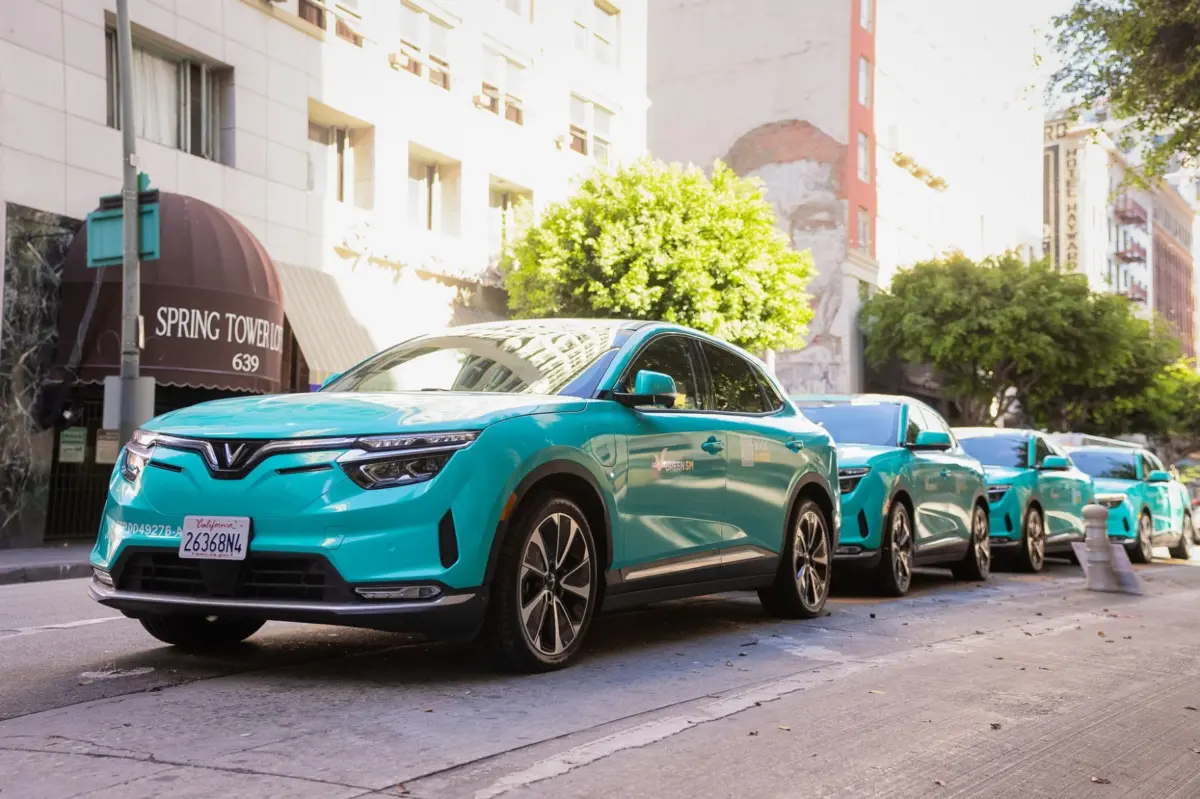
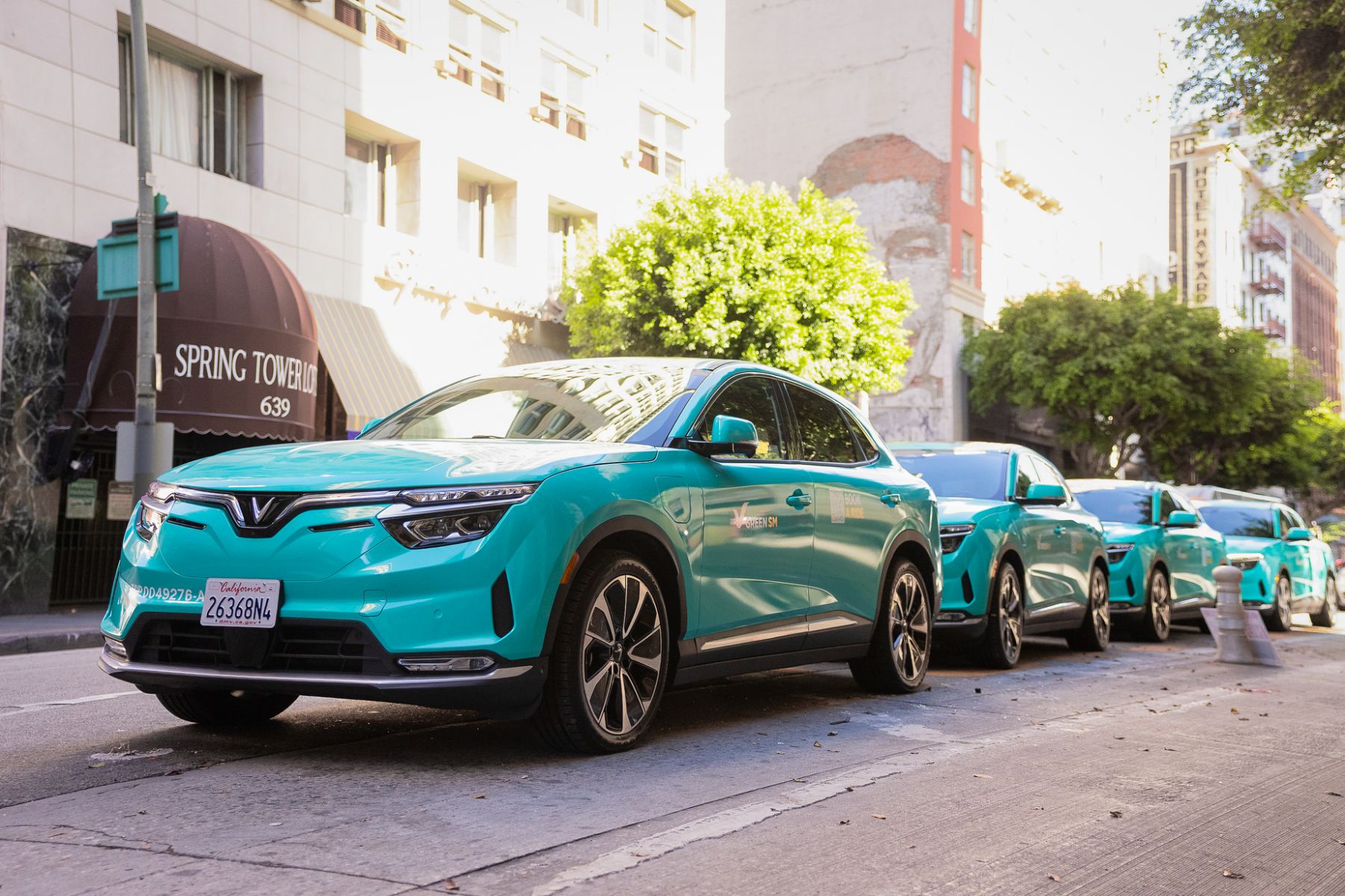
In a strategic move that bridges Southeast Asian electric vehicle manufacturing with the sprawling, car-centric landscape of North America, public transportation provider Green SM (GSM) has officially launched its all-electric taxi service in Los Angeles, California. This milestone marks the United States as the ninth international market for the Vietnamese-born sustainable transport platform, positioning its operations squarely in one of the most congested, high-demand transit markets in the world.
Operating an exclusive fleet of VinFast battery-electric vehicles, GSM’s entry into Southern California is more than just a localized rollout; it is a high-stakes proving ground. The company aims to showcase real-world battery endurance, rapid turnaround times, and fleet reliability under the grueling demands of Los Angeles traffic. This launch follows closely on the heels of sister-brand VinFast’s announcement at the APTA TRANSform & EXPO in Chicago, where it revealed plans to introduce electric buses to the American public transit market through a strategic partnership with NexMove.
While VinFast’s commercial bus platform targets municipal operations and high-capacity corridors, Green SM’s passenger operations in Los Angeles offer consumers a direct, touchpoint-heavy experience with the brand. However, the rollout also invites critical questions regarding supply chain logistics, inventory management, and the broader viability of foreign EV ecosystems attempting to gain a foothold on U.S. soil. As GSM sets up local infrastructure—recruiting drivers, establishing maintenance yards, and deploying app-based dispatch networks—the automotive and green-tech sectors will be watching closely to see how this ambitious cross-border partnership fares.
Detailed Chronology: From Hanoi to Hollywood
To fully understand the gravity of GSM’s arrival in Los Angeles, it is necessary to trace the rapid evolution of the brand across global markets.
The Vietnamese Genesis (2023)
Green SM was established in Vietnam in 2023 under the umbrella of Pham Nhat Vuong, the billionaire founder of parent conglomerate Vingroup (which also owns VinFast). Conceived as a green mobility platform designed to accelerate the adoption of VinFast electric vehicles domestically, GSM quickly scaled from a localized startup into a dominant transport force in Vietnam. By utilizing dedicated EV fleets, the company bypassed traditional internal combustion engine (ICE) barriers, capturing significant market share in major urban centers like Hanoi and Ho Chi Minh City.
Rapid Global Expansion
Riding the momentum of its domestic success, GSM embarked on an aggressive international expansion campaign. Over a remarkably short span, the company exported its business model to eight other nations across Asia and Europe, including:
- Laos and Indonesia: Establishing foundational Southeast Asian green corridors.
- The Philippines and India: Tapping into massive, densely populated urban centers with critical air quality challenges.
- Kazakhstan: Testing fleet resilience in extreme continental weather variations.
- Denmark and the Netherlands: Venturing into mature, highly regulated European EV markets.
The North American Leap (Late 2025 – 2026)
The groundwork for the U.S. entry materialized through a series of synchronized corporate announcements. First, VinFast signaled its intent to deepen its North American footprint by partnering with NexMove to introduce electric transit buses for municipal systems. Shortly thereafter, Green SM confirmed its operational launch in Los Angeles, California.

By choosing Los Angeles, GSM selected a notoriously difficult operating theater characterized by vast geographic sprawl, heavy highway congestion, and deeply entrenched car culture. The company deployed an initial fleet of VinFast VF 8 crossover models, accessible to passengers via a dedicated mobile app, traditional phone dispatch, or street hails. To jumpstart ridership, the Los Angeles rollout features introductory price discounts and subscription options tailored for daily commuters.
Supporting Context & Metrics: Scale, Savings, and Supply Chain Mysteries
Global Footprint and Environmental Impact
GSM enters the U.S. market backed by substantial operational data compiled across its international networks. According to company metrics, its global fleets have collectively:
- Completed approximately 850 million rides.
- Logged nearly 6 billion kilometers of zero-emission travel.
- Prevented an estimated 800,000 tons of carbon dioxide ($CO_2$) emissions from entering the atmosphere.
These figures illustrate a mature operational backend capable of managing high-volume dispatching, driver training, and fleet maintenance. However, scaling these operations in the United States introduces unique regulatory, labor, and economic hurdles that differ vastly from emerging Asian markets or even regulated European frameworks.
The Inventory Mystery: Fresh Imports vs. Domestic Stockpile
A critical journalistic question surrounds the physical origin of the vehicles currently operating on the streets of Los Angeles. CleanTechnica reached out to VinFast corporate communications to clarify whether the VF 8 crossovers utilized by GSM were freshly manufactured and imported from VinFast’s primary production facility in Hai Phong, Vietnam, or if they represent reconditioned units drawn from the several thousand unsold VF 8 models sitting idle in various U.S. inventory and distribution lots.
As of publication, VinFast has not issued a response. This distinction is far from trivial. Utilizing surplus domestic inventory would offer VinFast an ingenious channel to monetize sitting assets, recondition consumer perception, and mitigate inventory bloat. Conversely, shipping fresh units directly from Hai Phong would underscore a steadfast, uncompromised supply chain pipeline dedicated specifically to supporting GSM’s international growth. Industry analysts continue to monitor registration data to untangle this logistical puzzle.
Official Statements: Building Trust, One Journey at a Time
The corporate philosophy guiding GSM’s North American debut centers on service quality and community integration rather than sheer vehicle deployment.
Hoang Thanh Hang, CEO of Green SM in the U.S., emphasized the cultural and strategic weight of the Los Angeles launch in a recent statement:
"The United States represents an important milestone in Green SM’s growth journey. We are not simply expanding into a new market. We aim to build trust with customers, drivers, and local communities, one journey at a time."
Hoang further elaborated on the operational ethos derived from their international trials, noting that hardware alone is insufficient to guarantee long-term success in Western transit ecosystems:

"Our experience across international markets has shown us that the future of electric mobility is not defined by an all-electric fleet alone. It also depends on service quality, well-trained and reliable drivers, and genuine care in every customer interaction."
To achieve this, the company’s Southern California strategy involves comprehensive local engagement. This includes active recruitment drives for local drivers, the implementation of rigorous customer service training regimens, and the establishment of dedicated maintenance and service facilities to ensure maximum uptime for the VF 8 fleet.
Future Outlook: The Road Ahead for GSM and VinFast in America
The launch of Green SM in Los Angeles serves as a litmus test for the broader Vingroup ecosystem in North America. For years, VinFast’s direct-to-consumer passenger vehicle sales in the U.S. faced mixed consumer reviews, logistical delays, and fierce competition from established domestic and international EV giants like Tesla, Hyundai, and Ford.
By integrating an all-electric taxi service into the mix, Vingroup is effectively utilizing a B2B2C (Business-to-Business-to-Consumer) model. Millions of Angelenos and tourists who might otherwise hesitate to purchase a VinFast vehicle can now experience the VF 8 firsthand as passengers. This high-frequency "seat time" acts as a rolling showroom, potentially softening consumer skepticism and demonstrating the vehicle’s day-to-day comfort, ride quality, and electric range in real-world conditions.
Strategic Roadmap for Expansion
Looking forward, GSM’s trajectory in the United States will likely depend on several key factors:
- Operational Efficiency: Maintaining low vehicle downtime through robust local maintenance infrastructure.
- Regulatory Compliance: Navigating California’s stringent labor laws, ridesharing regulations, and commercial vehicle insurance requirements.
- Synergy with Public Transit: Leveraging VinFast’s parallel push into municipal electric buses (via the NexMove partnership) to position the Vingroup brand as a holistic, comprehensive urban mobility provider across American cities.
If the Los Angeles pilot proves successful, industry insiders anticipate that GSM will replicate its playbook in other high-density, eco-conscious American urban centers—potentially expanding into cities like San Francisco, New York, or Seattle.
For now, the green cabs cruising down the congested arteries of Los Angeles represent a bold gamble. They carry not only everyday commuters, but also the ambitions of a Vietnamese industrial giant striving to carve out a permanent, respected place in the fiercely competitive American automotive landscape.