










PUBLISHED BY THE MARITIME INVESTIGATIVE DESK
Executive Overview
Maritime safety regulators have officially released their comprehensive accident investigation report concerning a tragic fatality that occurred aboard the Bermuda-flagged passenger cruise vessel Arvia. The incident, which took place on October 26, 2025, unfolded while the vessel was navigating the open waters of the Atlantic Ocean on a routine voyage from Southampton, England, to Santa Cruz de Tenerife in the Canary Islands, Spain.
The investigation was spearheaded by the United Kingdom’s Marine Accident Investigation Branch (MAIB), acting on behalf of the Bermuda Ship Registry. Because Bermuda is a valued member of the prestigious Red Ensign Group (REG), the probe was conducted under established international cooperation protocols. Specifically, the inquiry followed the strict operational frameworks outlined in the Memorandum of Understanding (MoU) existing between the MAIB and various REG member administrations.

While the formal publication of the report aims to bring clarity to the sequence of events that led to the loss of life, it also serves a broader, more critical purpose within the global maritime community: identifying systemic vulnerabilities, reinforcing safety management protocols, and preventing similar tragedies from occurring across the international commercial cruise fleet. This in-depth report examines the findings of the investigation, explores the operational context of the voyage, analyzes the regulatory framework governing such incidents, and outlines the urgent calls for enhanced safety measures moving forward.
Detailed Chronology of the Voyage and Incident
Departure from Southampton and Passage Plan
On the morning of October 26, 2025, the Arvia—one of the modern flagships of the contemporary cruise industry—slipped away from its moorings in the Port of Southampton. The ship was embarking on a scheduled transatlantic-bound itinerary heading south toward the sun-drenched islands of the Canaries. On board were thousands of holidaymakers and a large, multinational complement of officers, technical crew, hospitality staff, and support personnel.
The initial leg of the voyage required the vessel to navigate out of the heavily congested waters of the Solent, clear the English Channel, and push out past the western approaches of the UK into the dynamic, often unpredictable waters of the Bay of Biscay and the broader North Atlantic. Throughout the departure phase, routine deck and engine-room operations proceeded in accordance with the ship’s Safety Management System (SMS). Crew members were assigned to various watchkeeping, maintenance, and service duties customary for a vessel of this scale during an open-sea transit.
The Critical Incident
As the Arvia made steady southward progress into international waters, operational tasks continued across multiple departments. It was during this routine passage phase that the fatal accident involving a crew member occurred.

While the precise minute-by-minute actions immediately preceding the event remain detailed within the restricted operational sections of the MAIB dossier, the incident required an immediate, high-priority emergency response from the shipboard medical team and designated emergency response parties. Standard marine protocols for man-overboard, medical trauma, or onboard industrial accidents were swiftly initiated. Despite the rapid mobilization of shipboard medical assets and immediate stabilization efforts administered by the onboard medical staff, the injured crew member succumbed to their injuries.
Immediate Post-Accident Response and Medical Disembarkation
Following the confirmation of the fatality, the master of the Arvia immediately informed the relevant maritime rescue coordination centers (MRCCs) and the flag state administration. In accordance with maritime law and standard operational procedures, the vessel altered elements of its tactical communication protocols to preserve evidence, secure the scene of the accident, and prepare comprehensive preliminary incident reports for shore-side authorities.
The vessel maintained its communication loop with maritime authorities in the UK, Bermuda, and Spain to coordinate the most appropriate logistics for the management of the deceased crew member, statutory investigations, and the psychological support of the crew. Upon arrival at the subsequent port of call—Santa Cruz de Tenerife—local authorities, maritime inspectors, and forensic teams boarded the vessel to conduct initial local inquiries before releasing the ship to continue its operational commitments under stringent oversight.

Supporting Context and Metrics
The Vessel: Arvia and the Cruise Industry Landscape
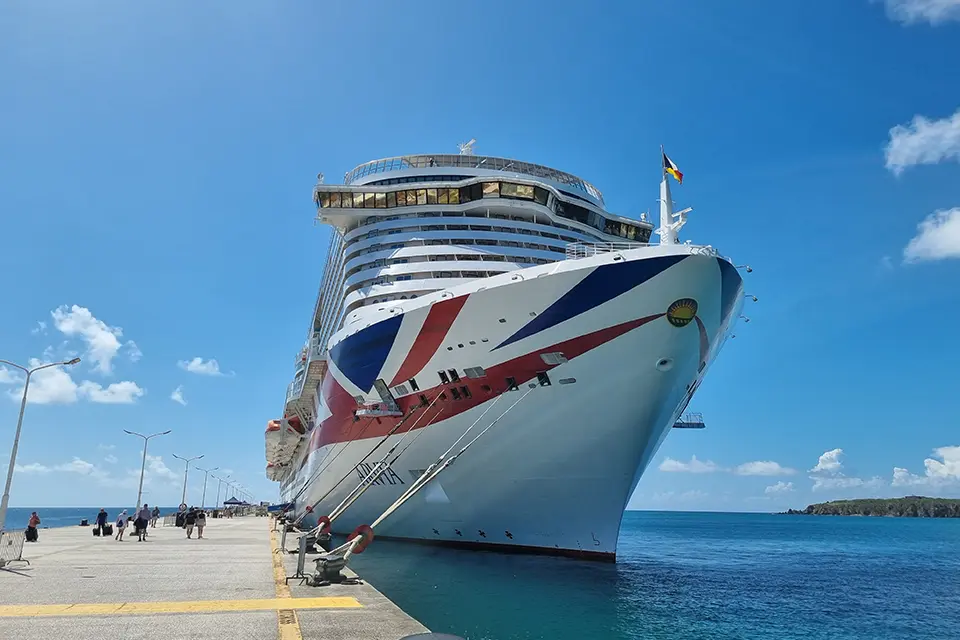
To fully understand the magnitude of the incident, one must examine the operational environment of the vessel itself. The Arvia is a massive, state-of-the-art mega-cruise ship. Operating under the Bermuda flag—a Red Category registry known for enforcing rigorous adherence to international maritime conventions—the vessel represents the pinnacle of modern marine engineering, passenger comfort, and hospitality infrastructure.
However, beneath the gleaming exterior designed for thousands of vacationers lies a complex industrial workplace. Modern cruise ships function effectively as floating cities. They require continuous, around-the-clock maintenance of massive diesel-electric propulsion systems, intricate hotel services, hotel-grade plumbing, heavy material handling equipment, and complex mooring and anchoring systems.
Occupational Safety Hazards at Sea
Statistically, life at sea remains one of the most hazardous occupations globally. According to international maritime labor organizations, despite strict adherence to the International Safety Management (ISM) Code and the Maritime Labour Convention (MLC), crew members face unique occupational risks that shore-based workers rarely encounter:
- Dynamic Environments: Unlike fixed industrial plants, ships are constantly moving, pitching, and rolling in response to sea states, introducing unpredictable gravitational forces during heavy maintenance tasks.
- Fatigue and Circadian Disruption: Shift work, crossing multiple time zones, and grueling contract hours can lead to chronic fatigue, which directly impacts situational awareness, reaction times, and cognitive function.
- Confined Spaces and Heavy Machinery: Working within engine rooms, ballast tanks, and restricted technical spaces exposes crew members to mechanical pinch points, high-pressure fluid systems, electrical hazards, and asphyxiation risks.
- Multicultural and Multilingual Dynamics: Crews aboard modern cruise liners often comprise dozens of nationalities. While English is the working language of the sea, nuances in communication can sometimes introduce friction or misunderstandings during complex, high-risk technical operations.
Official Statements and Regulatory Framework
The Role of the MAIB and the Red Ensign Group
The investigation into the Arvia fatality was led by the Marine Accident Investigation Branch (MAIB), an independent branch of the UK Department for Transport charged with investigating accidents involving UK-flagged vessels, as well as vessels operating within UK waters or under specific international agreements.
Because the Arvia is registered in Bermuda, the Bermuda Ship Registry held primary jurisdiction as the flag state. However, through the cooperative framework of the Red Ensign Group—which unites the UK, the Crown Dependencies, and the Overseas Territories under a shared commitment to high maritime standards—the MAIB was formally delegated to lead the technical safety investigation.
This cooperative model ensures that even when flag registries are geographically removed from the physical location of an incident, they retain access to world-class investigative expertise. The MAIB’s findings are entirely independent, non-judicial, and strictly focused on determining the causes and circumstances of an accident rather than apportioning blame or liability.
Summary of Investigation Findings and Safety Recommendations
While the full text of the MAIB report delves deep into the minutiae of human factors, equipment design, and procedural compliance, the core takeaways emphasize several critical themes:
- Procedural Adherence: The investigation scrutinized whether existing safety management system (SMS) instructions were sufficiently clear, practical, and enforced during the execution of the task that led to the fatality.
- Risk Assessment Protocols: A central pillar of the report evaluates how dynamic risk assessments were conducted prior to the commencement of work. The MAIB often stresses that generic risk assessments are insufficient for complex, non-routine tasks performed in high-motion marine environments.
- Supervision and Crew Oversight: The report highlights the critical role played by supervisory personnel in monitoring work practices, ensuring personal protective equipment (PPE) is properly utilized, and halting operations if environmental or operational conditions deteriorate.
Future Outlook: Industry Implications and Safety Culture
Moving Beyond Compliance to True Safety Culture
The publication of the MAIB report on the Arvia tragedy is not merely a bureaucratic milestone; it is a vital catalyst for introspection across the entire global cruise and commercial shipping sectors. Maritime safety experts agree that while regulatory compliance (such as adherence to SOLAS, MARPOL, and the ISM Code) is non-negotiable, true safety cannot be achieved through paperwork alone. It requires the cultivation of a robust "safety culture"—an environment where every crew member, from the master down to the most junior wiper or steward, feels empowered to speak up, halt unsafe work, and question questionable procedures without fear of professional reprisal.
Technological and Procedural Innovations
In the wake of such incidents, forward-thinking cruise operators and maritime authorities are increasingly turning to advanced technological and procedural solutions to safeguard personnel:
- Enhanced Digital Permit-to-Work (PtW) Systems: Moving away from paper-based checklists toward real-time, digital tracking systems that ensure all safety gates, isolations, and hazard identifications are rigorously verified before high-risk tasks begin.
- Wearable Safety Technology: Exploring the use of smart PPE, biometric monitoring, and proximity sensors to alert workers and supervisors to dangerous environmental conditions, fatigue levels, or unauthorized entry into hazardous zones.
- Continuous Human Factors Training: Upgrading crew resource management (CRM) and leadership training to ensure that communication bottlenecks are minimized and junior staff are fully supported in asserting safety concerns.
Conclusion
The fatal accident on board the Arvia on October 26, 2025, stands as a solemn reminder of the profound human cost associated with keeping the global maritime trade and tourism sectors moving. As the industry digests the findings and recommendations put forward by the MAIB and the Bermuda Ship Registry, the ultimate tribute to the crew member who lost their life will be a renewed, unyielding commitment by shipowners, operators, regulators, and seafarers alike to ensure that no life is ever compromised in the pursuit of maritime excellence.


