










By Philippe Lazaro
Digital Content Manager
Executive Overview
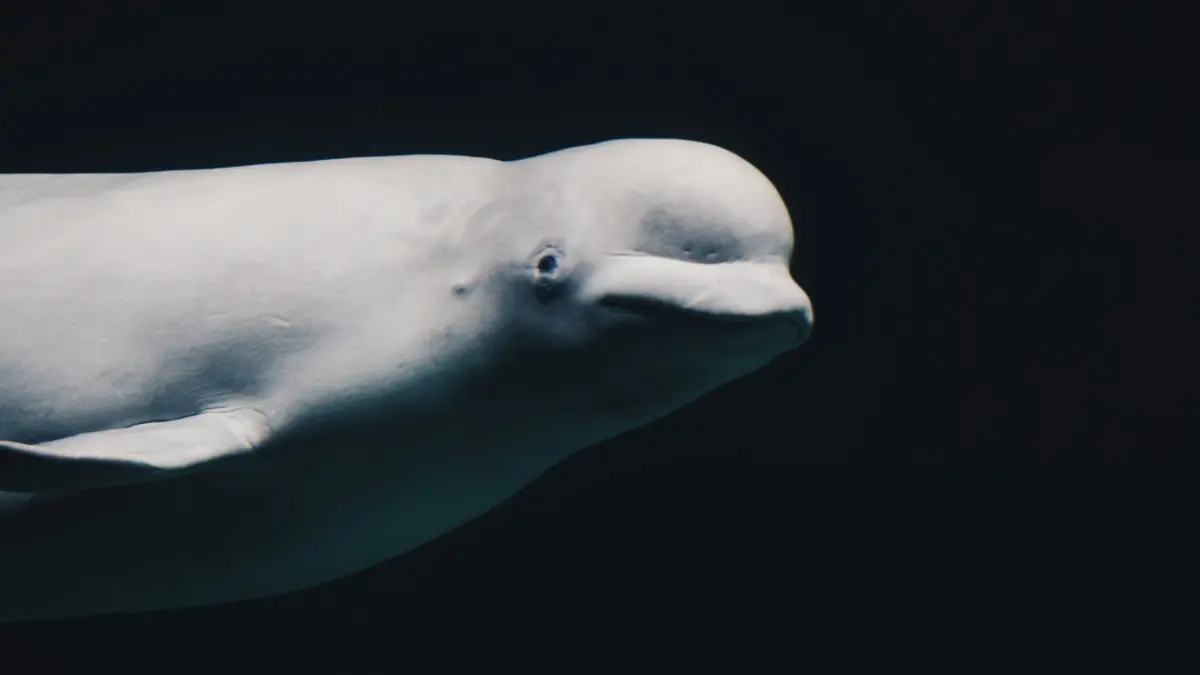
To stand on the jagged, windswept banks of the St. Lawrence River in Quebec is to witness a paradox of marine biology. Amidst the freshwater currents, hundreds of miles away from the roaring swells of the open Atlantic, a sudden flash of ivory breaks the surface. It is a beluga whale (Delphinapterus leucas)—a creature typically associated with the pack ice of the high Arctic, gracefully navigating shipping lanes, recreational kayaks, and commercial waterways.
These resilient cetaceans are not lost wanderers. They are the permanent, year-round residents of an inland aquatic highway, representing a distinct, genetically isolated population that has called the St. Lawrence estuary home for millennia. Yet, the story of these Canadian river-dwellers is not merely one of remarkable biological adaptation; it is a profound testament to the shifting geologic and climatic epochs of North America.

Today, this ancient lineage faces an unprecedented convergence of modern crises. Having survived the retreat of continental ice sheets and decades of industrial pollution, the St. Lawrence belugas now confront the accelerated warming of the Arctic and the shifting marine dynamics of the twenty-first century. With their population reduced to a fragile fraction of historical counts, these iconic white whales stand as living archives of a bygone geological era—and urgent sentinels of a rapidly warming ocean.
Detailed Chronology: From Glacial Basins to Modern Estuaries
The presence of Arctic whales deep within the North American continent begins not with the fluid mechanics of modern river systems, but with the colossal, slow-grinding power of the last Ice Age.
The Retreat of the Wisconsin Glacier (c. 15,000 Years Ago)
Approximately 15,000 years ago, the gargantuan Wisconsin ice sheet—which had blanketed vast swaths of North America under thousands of feet of ice—began its agonizingly slow retreat. The colossal weight of this frozen monolith had severely depressed the Earth’s crust, creating a massive, depressed basin. As global temperatures rose and the glacier melted, frigid seawater from the Atlantic Ocean rushed inland to fill the depression.
This cataclysmic flooding birthed the Champlain Sea, a vast inland body of salt and brackish water that stretched from the modern-day Atlantic coast westward toward the Great Lakes basin and deep into what is now New York State and the Ottawa Valley.

The Prehistoric Menagerie (12,000–10,000 Years Ago)
During the height of the Champlain Sea’s existence, Arctic marine mammals thrived deep within the North American interior. Geological excavations across Quebec and Ontario have repeatedly unearthered the fossilized remains of porpoises, humpback whales, fin whales, bowhead whales, seals, and multiple species of walrus.
Buried deep beneath modern farm fields, suburban subdivisions, and suburban backyards lie the skeletal remnants of a sub-Arctic ecosystem. Notably, in 2001, researchers at the Université du Québec à Montréal recovered a beluga fossil dated to more than 10,000 years old, confirming that white whales were active participants in this ancient inland sea.
Post-Glacial Land Rebound and Isolation (c. 8,000–10,000 Years Ago)
As the ice age decisively drew to a close, the weight of the melted glacier lifted from the Earth’s crust, prompting a geologic process known as post-glacial rebound. The land slowly rose, draining the Champlain Sea and leaving behind the modern St. Lawrence River basin.
While most marine mammals retreated eastward with the receding saltwater, a distinct population of beluga whales remained behind. Trapped by receding coastlines and changing salinities, these whales adapted to the newly formed St. Lawrence estuary. Over thousands of years, this stranded cohort became entirely isolated from all other beluga populations in the Canadian high Arctic, Russian waters, and Alaska.
Cut off from their northern cousins, these pioneers forged a unique evolutionary path. Their feeding habits, seasonal migration patterns, and social structures became intricately synchronized with the distinct rhythms of the river. For Indigenous communities inhabiting the region, these whales long served as an essential pillar of subsistence, cultural identity, and food security.
Supporting Context & Metrics: A Species Under Seige
The evolutionary triumph of the St. Lawrence beluga is now heavily overshadowed by a grim demographic reality. Once numbering in the tens of thousands at the dawn of the twentieth century, the population has been decimated by historical hunting—which legally persisted until 1979—alongside chronic industrial contamination and heavy commercial vessel traffic.
Population Metrics and Trends
- Historical Baseline (c. 1900): An estimated 10,000 belugas roamed the St. Lawrence estuary.
- Late 20th Century Decline: Decades of unregulated hunting reduced the population to a few thousand by the time protections were enacted.
- Modern Estimates: While historical recovery plans hoped for a rebound, recent scientific surveys indicate that only 900 to 1,800 individuals remain. Many marine biologists fear the population hovers closer to the lower threshold, leaving them profoundly vulnerable to extinction via stochastic environmental shocks.
The Compounding Threat of Climate Change
While direct human pressures—such as toxic chemical runoff from the industrializing Great Lakes watershed and underwater acoustic pollution from cargo ships—have long stifled population recovery, climate change introduces a novel, multi-pronged threat vector.
As global temperatures rise, the Arctic environment is undergoing radical structural changes. The annual summer melting of sea ice is expanding further north and lingering longer, systematically dismantling the natural barriers that once separated northern ecosystems from sub-polar regions.
- Invasion of Apex Predators: With sea ice retreating, killer whales (Orcas)—formidable apex predators capable of hunting all Arctic cetacean species—have been increasingly documented pushing into traditional beluga habitats in southern Canadian waters.
- Acoustic and Physical Disturbance: Less ice cover directly correlates with extended commercial shipping seasons, increased vessel density, and heightened underwater noise pollution. This industrial din severely disrupts the complex echolocation and acoustic communication networks that belugas rely upon to hunt, navigate, and rear their calves.
- Shrinking Refuges: Every September, scientists at the National Snow and Ice Data Center (NSIDC) mark the annual Arctic sea-ice minimum—the point where summer melting peaks before winter refreezing begins. Data spanning the last two decades (2007–2025) reveals the 19 lowest summer ice extents in recorded satellite history. For the St. Lawrence belugas, this planetary-scale warming compresses their already fragile ecological niche.
Official Statements & Conservation Imperatives
Marine conservation organizations emphasize that the plight of the St. Lawrence beluga is not an isolated local tragedy, but a canary in the coal mine for global ocean health.
"Groups of belugas in places like the St. Lawrence River and the Arctic have been separated for such long periods that they highlight the importance of genetic diversity when it comes to climate resilience," notes policy experts at Ocean Conservancy. "Losing one distinct population, like the St. Lawrence group, cannot simply be offset by healthy numbers of belugas in another part of our world. They represent thousands of years of unique history, culture, and evolutionary adaptation."
Conservation biologists point out that the St. Lawrence belugas join other imperiled groups, such as the critically endangered Cook Inlet belugas in Alaska, in facing existential threats from a rapidly industrializing and warming marine environment. Because these populations possess specialized behavioral adaptations and distinct genetic markers, their extinction would represent an irreversible loss of biological heritage.
To combat these threats, legislative avenues are actively being pursued. Initiatives such as the proposed Whale CHARTS Act aim to fundamentally reduce fatal ship strikes. This legislation seeks to amend the National Oceanic and Atmospheric Administration’s (NOAA) near-real-time monitoring and mitigation programs for large cetaceans, drastically improving scientific understanding of baleen and sperm whale migration corridors, feeding zones, and calving grounds.
Future Outlook: Charting a New Course for Marine Biodiversity
The beluga whale of the St. Lawrence River occupies a unique philosophical and ecological space: it is simultaneously a living archaeological record of what North America’s marine environment once was, and a stark biological warning of what our warming oceans are rapidly becoming.
The geologic forces that trapped their ancestors in an inland sea 15,000 years ago changed their world irrevocably, setting them on a ten-millennium journey of adaptation. Today, human-driven climate change is altering their world once again—only this time, the timeline of disruption operates on a scale of decades rather than millennia.
Protecting these animals requires more than passive observation; it demands aggressive, cross-border policy action. Mitigating underwater noise pollution, strictly regulating industrial chemical discharge, establishing real-time vessel speed restrictions, and curbing global carbon emissions are non-negotiable prerequisites for their survival.
Ultimately, the fate of the St. Lawrence beluga serves as a profound reminder that our oceans shape life in ways that extend far inland and last infinitely longer than humanity anticipates. Whether these pale, vocal sentinels continue to grace the waters of Quebec for future generations depends entirely on the urgency and efficacy of our conservation commitments today.


