











Executive Overview
As urban centers across the globe grapple with escalating traffic congestion, deteriorating air quality, and the existential imperative of carbon mitigation, the humble bicycle has transitioned from a recreational pastime to a critical component of twenty-first-century transportation infrastructure. Two recent deep-dives by prominent urban mobility commentators—the regional advocacy channel Chicagoans Who Bike and the internationally renowned cycling journalist Shifter—have trained their lenses on two vastly different urban ecosystems: Minneapolis, Minnesota, and Shanghai, China.
These contrasting case studies offer a masterclass in urban planning, revealing how both mid-sized Western municipalities and sprawling Eastern megacities are reimagining public right-of-ways. Minneapolis, despite its grueling Midwestern winters and a fierce regional sports rivalry, has quietly engineered arguably the finest cycling network in the United States. Its infrastructure sets a gold standard for safety, scale, and year-round usability. Simultaneously, an ocean away, Shanghai and its Chinese counterparts are confronting a fascinating sociological paradox: possessing some of the most advanced physical bike infrastructure on earth while struggling to recapture a vibrant, organic cycling culture that was rapidly paved over by the twentieth-century automobile boom.
This report synthesizes these developments, exploring how infrastructural design, political will, and cultural psychology intersect to shape the future of urban mobility. By examining the structural mechanics of Minneapolis’s protected networks and the historical evolution of China’s bike-sharing revolution, urban planners, policymakers, and civic advocates can extract actionable blueprints for cities aiming to transition from car-dependent dystopias to human-scaled mobility havens.
Detailed Chronology: The Evolution of Two Cycling Capitals
To understand where urban cycling stands today, one must trace the distinct historical trajectories that brought Minneapolis and China’s megacities to their current infrastructural pinnacles.
The Minneapolis Ascent: From Industrial Hub to Two-Wheeled Utopia
- Late 20th Century: Minneapolis begins developing its visionary Grand Rounds National Scenic Byway, primarily focused on recreational trails rather than utilitarian commuter cycling.
- The 2000s: Local political leadership, propelled by grassroots advocacy groups, recognizes the economic and public health benefits of active transportation. The city drafts its first comprehensive bicycle master plans, prioritizing on-street painted lanes.
- The 2010s: Recognizing that painted lines do not equal safety, the city pivots dramatically toward protected bike lanes (PBLs). Engineers implement curb-level infrastructure, separating bicycles from vehicular traffic with concrete medians and bollards.
- Present Day: Minneapolis boasts a network robust enough to impress even cynical visitors from neighboring cycling-resistant hubs like Chicago. The city successfully operationalizes full-size snowplow-ready paths, neutralizing the argument that cold climates preclude year-round cycling infrastructure.
The Chinese Cycling Paradigm: A Rollercoaster of Eras
- 1970s–1980s: China earns its global moniker as the "Kingdom of Bicycles." With automobile ownership virtually nonexistent for the average citizen, cities like Beijing and Shanghai record astronomical cycling mode shares, with up to 64% of all urban trips executed on two wheels.
- 1990s–2000s: Accelerated by economic liberalization and explosive GDP growth, Chinese urban planning pivots aggressively toward car-centric modernization. Multi-lane highways slice through historic neighborhoods, and cities actively ban or marginalize bicycles to clear the path for private automobiles.
- 2010s: The dockless bike-sharing boom (led by startups like Mobike andofo) floods Chinese megacities with millions of colorful bicycles, sparking a chaotic but undeniable renaissance in urban cycling. Municipalities are forced to rapidly retrofit streets with wide, dedicated pathways to manage the congestion.
- Present Day: Chinese megacities boast world-class physical cycling "hardware." However, as Shifter’s exploration reveals, the cultural "software"—the social prestige, organic integration, and safety perception of everyday cycling—remains in a complex state of recovery against the lingering prestige of private car ownership.
Supporting Context & Metrics: Infrastructure, Climate, and Culture
To evaluate the true efficacy of these networks, urban researchers rely on a blend of quantitative metrics and qualitative indicators. The comparisons between Minneapolis and Chinese megacities offer stark insights into what makes a cycling ecosystem thrive.
The Minneapolis Model: Engineering for All Seasons
The achievement of Minneapolis cannot be overstated within the North American context. According to regional transit data, the city’s success rests on three core pillars:
- Physical Separation: Unlike standard urban bike lanes that rely merely on thermoplastic paint—affording zero protection from distracted motorists—Minneapolis heavily invests in curb-separated tracks. These are engineered at sidewalk grade or protected by concrete islands.
- Winter Maintenance Integration: A primary deterrent for northern cities is snow accumulation. Minneapolis treats its premier cycling corridors as high-priority arterials, dispatching specialized, downsized snowplows that clear bike paths simultaneously with vehicular roadways. This operational commitment sustains commuter numbers even when temperatures plunge well below freezing.
- Intermodal Connectivity: The network does not exist in isolation; it bridges residential neighborhoods, commercial districts, and the extensive regional parks system, creating a seamless mesh rather than isolated, disjointed segments.
The Chinese Enigma: Hardware vs. Software
Shifter’s analysis of Shanghai and Beijing introduces a vital analytical framework for urban planners: the distinction between urban cycling hardware (physical infrastructure) and software (cultural acceptance and usage habits).
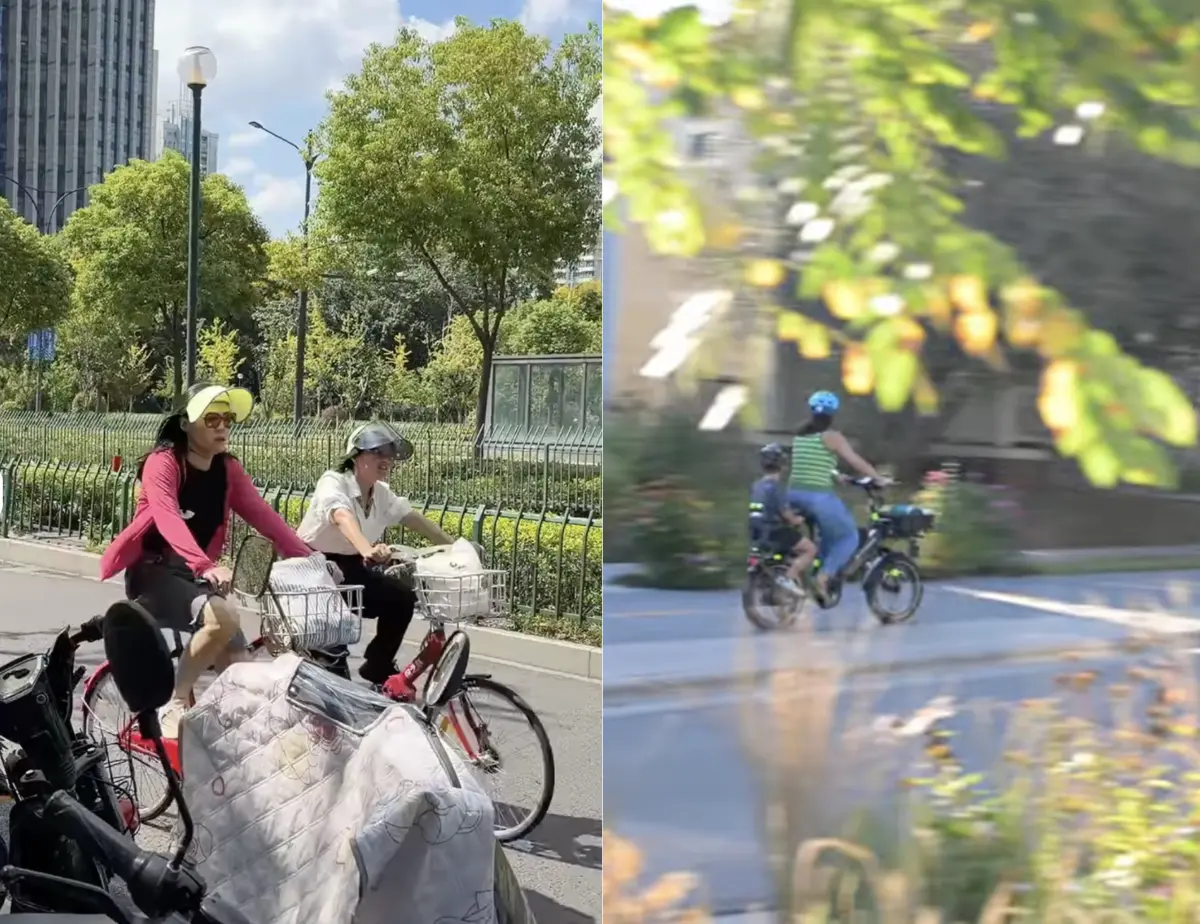
- The Hardware Advantage: Megacities in China feature scale that Western cities can rarely fathom. Arterial roads frequently incorporate bike paths that are wider than entire driving lanes in North American cities. Grade-separated intersections and dedicated cycling overpasses minimize conflicts with turning motor vehicles.
- The Software Deficit: Despite this staggering physical provision, the cultural perception of cycling suffers from historical baggage. For decades, the bicycle was viewed as a symbol of poverty—a mandatory mode of transit endured only until one could afford a motorcycle or a sedan. Consequently, even as cities build world-class paths, the cultural prestige of the automobile continues to exert a powerful pull on the rising middle class.
However, emerging trends—including the rise of leisure cycling among younger generations, government-led carbon neutrality targets, and the backlash against severe urban gridlock—are slowly rewriting this cultural software, paving the way for a holistic urban renaissance.
Official Statements and Expert Perspectives
Urban planners, content creators, and municipal officials have increasingly converged on the notion that traditional traffic engineering is fundamentally broken and requires a paradigm shift toward active mobility.
In their viral dispatch, the creators of Chicagoans Who Bike marveled at the psychological barrier-breaking power of the Minneapolis network:
"If these ultra-wide, curb-level, full-size-snow-plow-ready paths can overcome the intense regional sports rivalries of the Midwest, you know they’ve got to be functionally bulletproof. Minneapolis isn’t just building bike lanes; they are engineering an entirely different standard of public civic space."
Weighing in on the global historical perspective, the transit journalist behind Shifter challenged Western assumptions about Asian urbanism during his deep-dive into Shanghai:
"We often look at Amsterdam or Copenhagen as the eternal, untouchable holy lands of cycling. Yet, a few decades ago, Chinese megacities quietly achieved cycling mode shares as high as sixty-four percent—numbers that utterly dwarf European capitals. The challenge today isn’t building the roads; it’s upgrading the cultural software so that citizens view the bicycle not as a relic of a bygone era, but as the pinnacle of modern, sophisticated urban living."
Civic leaders in Minneapolis echo these sentiments, frequently emphasizing that investments in cycling infrastructure yield compounding returns in public health, retail vitality, and municipal resilience against extreme weather events.
Future Outlook: The Road Ahead for Global Urban Mobility
As cities worldwide stare down the barrel of a warming climate and unrelenting urbanization, the lessons derived from Minneapolis and Shanghai point toward a clear, albeit challenging, roadmap for the future.
1. Moving Beyond Paint to Permanent Protection
The era of the unprotected, painted gutter-lane is drawing to a deserved close. As Minneapolis demonstrates, cities that wish to achieve mass modal shift must invest in heavy, permanent, physical separation. Safe infrastructure breeds confidence, and confidence breeds ridership across diverse demographics—from school children to seniors.
2. Harmonizing Hardware with Cultural Software
Shanghai’s experience proves that building immaculate infrastructure is only half the battle. Municipalities must couple physical construction with aggressive public relations campaigns, car-reduction policies (such as congestion pricing and parking maximums), and community-building initiatives that elevate cycling as a high-status, aspirational lifestyle choice.
3. Climate-Resilient Infrastructure
The persistent myth that cold or hyper-humid climates preclude cycling is thoroughly debunked by winter-plowed Minneapolis and the year-round cycling populations of monsoon-prone Asian megacities. Future urban planning must bake climate resilience directly into transport budgets, ensuring that bike lanes receive the same maintenance priority as emergency vehicle routes.
Ultimately, whether navigating the snowy thoroughfares of the American Midwest or the sprawling expressways of a Chinese megacity, the trajectory is unmistakable. The cities of tomorrow will not be measured by how efficiently they move private automobiles, but by how successfully they liberate public space for human beings on two wheels.


