By Philippe Lazaro
Digital Content Manager
Executive Overview
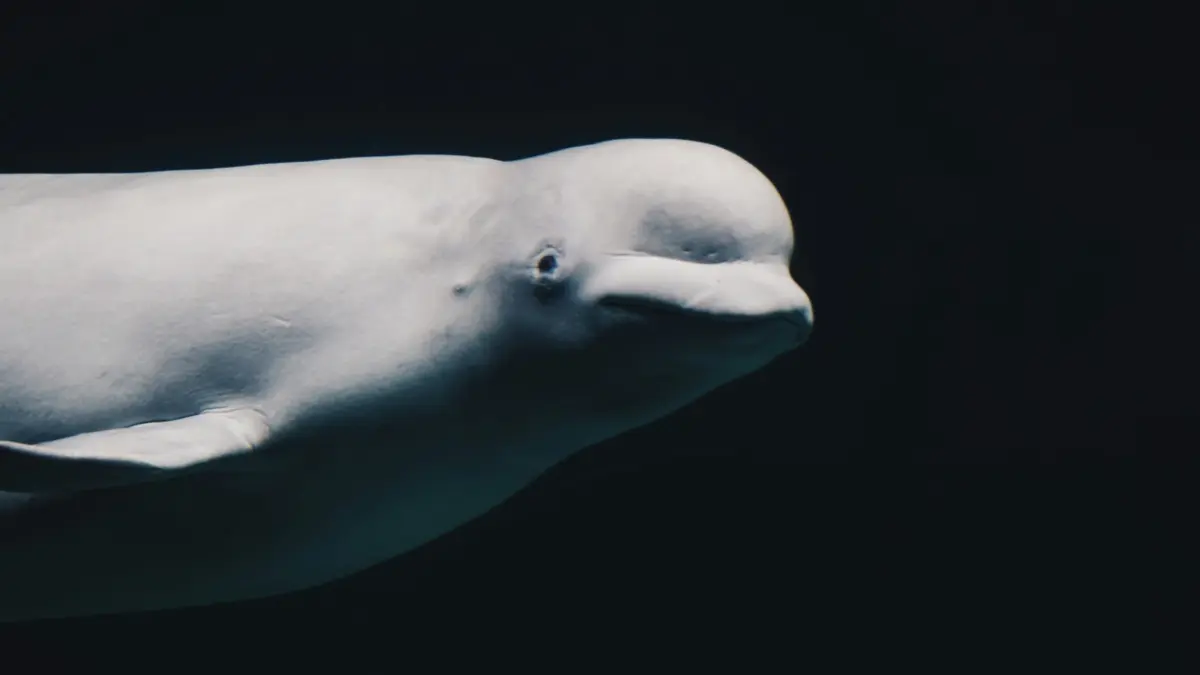
To stand on the banks of the St. Lawrence River in Quebec is to witness a paradox of natural history. Beneath the wind-swept surface of a major commercial waterway, a flash of pure ivory cuts through the current. It is a beluga whale (Delphinapterus leucas)—an iconic resident of the high Arctic, thriving hundreds of miles inland from the open ocean. These small, social cetaceans navigate the exact same freshwater corridors used by transatlantic container ships, cargo freighters, and recreational kayakers.
Yet, the presence of these Arctic mammals in a Canadian river is not a modern anomaly; it is an enduring biological legacy written into the Earth’s geology more than 15,000 years ago. The story of the St. Lawrence belugas is one of evolutionary resilience forged in the crucible of retreating glaciers.

Today, however, that ancient resilience is facing an unprecedented and accelerated threat matrix. Once numbering in the tens of thousands, the genetically distinct St. Lawrence beluga population has plummeted to critically low levels, with recent surveys suggesting fewer than 900 individuals remain. While legacy contaminants, industrialization, and historic commercial whaling laid the groundwork for their decline, a rapidly warming planet is now rewriting the rules of their survival. Climate change is shrinking Arctic sea ice, pushing apex predators like killer whales into historic refuges, and dramatically increasing industrial vessel traffic.
As the window to rescue this irreplaceable population narrows, the plight of the St. Lawrence beluga serves as both a living archive of our planet’s climatic history and an urgent warning signal of the oceanic transformations yet to come.
Detailed Chronology: From the Champlain Sea to Modern Isolation
To understand how Arctic whales came to inhabit a Canadian river, one must look back to the Pleistocene epoch and the catastrophic melting of the North American ice sheet.
Phase I: The Wisconsin Glacier and the Inland Sea (~15,000 Years Ago)
Approximately 15,000 years ago, the colossal Wisconsin ice sheet—which had blanketed vast stretches of North America—began its agonizingly slow retreat. The sheer weight of this multi-mile-thick mantle of ice had catastrophically depressed the Earth’s crust beneath it for millennia. As global temperatures rose and the glacier melted, the depressed landmass dropped below sea level, inviting the salty waters of the Atlantic Ocean to rush inland and flood the vast low-lying basin.

This catastrophic inundation birthed the Champlain Sea, a massive inland body of water that stretched from the modern-day Atlantic coastline westward toward the Great Lakes and into what is now upstate New York and the Ottawa Valley.
Phase II: A Subarctic Ecosystem in Inland North America
During the height of the Champlain Sea’s existence, the waters of what is now the St. Lawrence lowlands played host to a thriving subarctic marine ecosystem. Paleontological discoveries across Quebec City and the Ottawa Valley have unassailable proof of this forgotten world. Buried deep beneath modern farm fields, suburban developments, and rural orchards, researchers have unearthed the fossilized remains of:
- Porpoises
- Humpback whales (Megaptera novaeangliae)
- Fin whales (Balaenoptera physalus)
- Bowhead whales (Balaena mysticetus)
- Multiple species of seals and walruses (Odobenus rosmarus)
Crucially, in 2001, researchers at the Université du Québec à Montréal (UQAM) cataloged a beluga fossil recovered from regional sediment beds dated to more than 10,000 years old.
Phase III: Land Rebound and Genetic Isolation
As the ice age drew to a close, the weight lifted from the Earth’s crust, initiating a geological process known as isostatic rebound. The land slowly rose, draining the Champlain Sea and leaving behind the modern St. Lawrence River and its expansive estuary.
While most marine mammals retreated eastward with the receding saltwater, a distinct population of belugas chose to stay. Trapped by receding coastlines and drawn to the rich upwellings of the newly formed estuary, these whales took up permanent residence. Over millennia, this localized group became genetically isolated from all other beluga populations inhabiting northern Canada, Alaska, and Russia.
For more than 10,000 years—a timespan stretching far beyond recorded human history in the region—the St. Lawrence River has been the sole home known to this lineage. They adapted their biological rhythms, feeding habits, and seasonal migrations to the extreme dynamics of a freshwater-marine transition zone. For Indigenous communities along the river, these whales historically provided subsistence, food security, and a central pillar of cultural identity.
Supporting Context & Metrics: A Population Under Severe Pressure
Despite surviving thousands of years of environmental shifts, the St. Lawrence belugas are currently listed as endangered under Canadian law. The numbers paint a grim picture of industrial-era devastation.
- Population Freefall: At the turn of the 20th century, historical estimates place the St. Lawrence beluga population at roughly 10,000 individuals. Commercial hunting and deliberate culling programs—viewing the whales as competitors for fisheries—decimated the stock until hunting was finally legally restricted in 1979. Today, official estimates hover around 1,800 individuals, though recent independent scientific surveys indicate that the true population may be perilously closer to 900 remaining whales.
- The Legacy of Contaminants: Even after hunting ceased, the population failed to rebound. The St. Lawrence watershed became heavily industrialized through the 20th century, flushing massive loads of industrial toxins—including PCBs, heavy metals, and polycyclic aromatic hydrocarbons (PAHs)—into the river. Belugas sit at the apex of the aquatic food web, causing these toxins to bioaccumulate in their blubber. Historically, dead belugas washed ashore with such high concentrations of industrial pollutants that their carcasses were officially classified as toxic waste.
- The Climate Accelerator: While chemical pollution and underwater vessel noise remain persistent threats, anthropogenic climate change is now compounding the crisis from a completely novel direction. As global temperatures rise, the Arctic is warming nearly four times faster than the rest of the planet.
According to satellite data maintained by the National Snow and Ice Data Center (NSIDC), the annual Arctic sea-ice minimum—measured every September—has traced a relentless downward trajectory. Every single September sea-ice extent recorded between 2007 and 2025 represents the 19 lowest minimums in nearly five decades of continuous satellite observation.
This loss of Arctic sea ice is having cascading ecological effects. With less ice cover, opportunistic apex predators like orcas (Orcinus orca) are expanding their range into historic beluga habitats, introducing a deadly new predation pressure to regions where belugas previously found safety beneath thick ice shields. Furthermore, retreating ice opens northern shipping lanes, leading to a surge in commercial vessel traffic, heightened underwater acoustic pollution, and a breakdown in the delicate acoustic communication networks belugas rely upon to find food, navigate, and rear their calves.
Future Outlook: Conserving Genetic Resilience
The plight of the St. Lawrence beluga is not an isolated conservation failure; it mirrors the struggles of other vulnerable groups, such as the critically endangered Cook Inlet beluga population in Alaska.
Conservation biologists emphasize that these isolated sub-populations hold immense evolutionary value. Because groups like the St. Lawrence belugas have been genetically separated from Arctic counterparts for millennia, they represent unique reservoirs of adaptive genetic diversity. Conservation organizations, such as Ocean Conservancy, stress that losing the St. Lawrence population cannot simply be "offset" by healthy beluga numbers elsewhere in the world. Each distinct population is a living archive of regional ecological history.
Protecting these marine mammals requires aggressive, forward-looking policy interventions designed to mitigate modern maritime hazards. Lawmakers and environmental advocates are increasingly pushing for legislative frameworks that address the direct causes of cetacean mortality in busy waterways.
Chart a New Course for Whales
To combat the escalating threats of ship strikes, industrial noise, and habitat degradation, conservation advocates are championing legislative solutions like the Whale CHARTS Act.
This critical piece of legislation aims to dramatically reduce fatal ship strikes by amending the National Oceanic and Atmospheric Administration’s (NOAA) near-real-time monitoring and mitigation programs for large cetaceans. By deploying advanced acoustic sensors and aerial tracking, the act will vastly improve our scientific understanding of the exact location, timing, and geographic extent of baleen and sperm whale migration routes, as well as their critical feeding, mating, and calving grounds.
Ultimately, the white flash of a beluga in the St. Lawrence River is more than just a breathtaking wildlife encounter. It is a living record of what our oceans once were—and a stark, urgent signal of what our marine ecosystems are rapidly becoming.