











Executive Overview
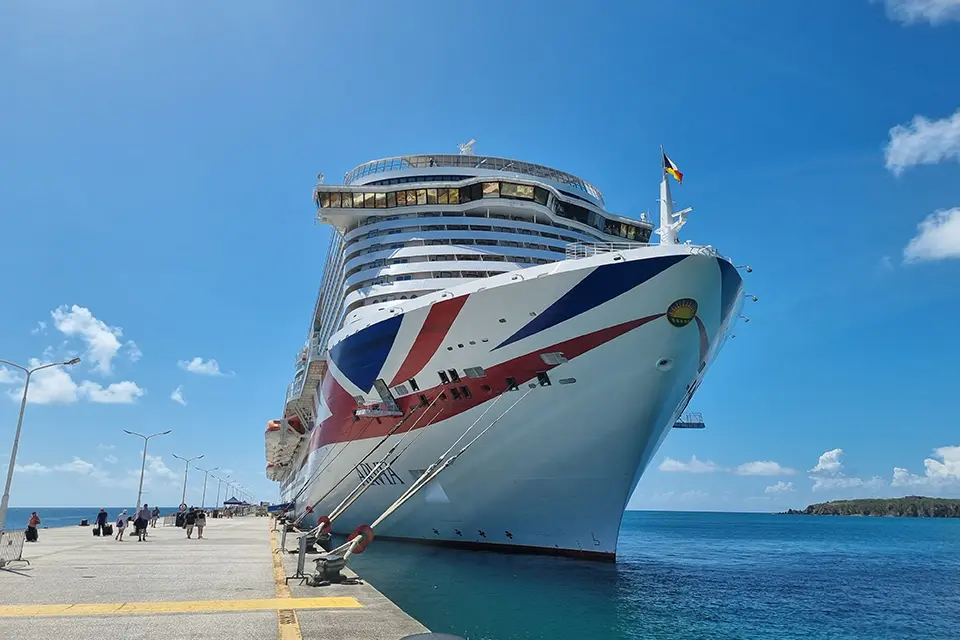
The global maritime community faces yet another sobering reminder of the inherent risks associated with life at sea following the official release of a comprehensive accident investigation report concerning a fatal incident aboard the Bermuda-registered passenger vessel Arvia. The incident, which claimed the life of a crew member, occurred on October 26, 2025, while the massive cruise liner was transiting open waters on a routine voyage from Southampton, England, to Santa Cruz de Tenerife in the Canary Islands, Spain.
The formal inquiry was spearheaded by the United Kingdom’s Marine Accident Investigation Branch (MAIB). Because the Arvia flies the flag of Bermuda—a proud and active member of the prestigious Red Ensign Group (REG)—the investigation was conducted on behalf of the Bermuda Ship Registry. This collaborative effort was executed seamlessly under the framework of a pre-existing Memorandum of Understanding (MoU) established between the MAIB and various REG member administrations.
This tragic event has once again cast a bright, critical spotlight on the complex operational realities of modern megacruise ships. While these floating cities are engineered to provide the utmost in luxury, entertainment, and safety for thousands of vacationing passengers, they simultaneously function as heavy industrial workplaces for hundreds—sometimes thousands—of multinational crew members. The findings of the Arvia report are expected to reverberate across the cruise industry, prompting maritime regulators, vessel operators, and labor advocacy groups to re-evaluate how safety protocols are implemented, supervised, and enforced on board contemporary passenger fleets.
Detailed Chronology of the Voyage and Incident
Departure from Southampton: Setting the Stage
The voyage began with the typical bustling activity characteristic of a major cruise turnaround in the Port of Southampton. The Arvia, one of the jewels of the modern cruise sector, was embarking on a scheduled transatlantic itinerary heading south toward the sun-drenched islands of the Canaries. On board were thousands of passengers eager for a relaxing holiday, alongside a dedicated hospitality and marine operations crew working tirelessly behind the scenes to ensure a smooth departure.
As the vessel cleared the Solent and entered the open waters of the English Channel, standard operational routines took effect. For the marine and technical departments, this transition period involves shifting from port operations—which are characterized by intense logistical coordination, bunkering, provisioning, and passenger embarkation—to sea passage routines. During sea passages, crew members are typically assigned to scheduled watches, routine maintenance programs, safety drills, and preparatory tasks for the upcoming port of call.
The October 26 Incident: Unfolding Events
While the Arvia was several hundred miles off its departure point, navigating the Atlantic approaches on October 26, 2025, an operational task tragically went awry. While specific operational details regarding the precise location of the accident on the ship and the exact nature of the task remain closely detailed within the full technical annexes of the MAIB report, the incident involved a critical failure in safety barriers during a routine shipboard operation.
Emergency response protocols were initiated almost instantaneously by the ship’s command team. The vessel’s dedicated on-board medical staff responded rapidly to the scene, administering advanced trauma care and emergency resuscitation procedures. Despite the swift and professional actions of the ship’s medical brigade and designated emergency response teams, the injured crew member succumbed to their injuries.

In accordance with international maritime law and standard cruise line emergency procedures, the vessel’s master immediately notified the relevant flag state authorities, maritime rescue coordination centers, and company headquarters. The Arvia continued its navigation toward Santa Cruz de Tenerife, where local authorities, marine investigators, and diplomatic representatives were standing by to assist upon the vessel’s arrival.
Post-Incident Actions and Jurisdictional Handover
Upon berthing in Tenerife, formal investigative procedures commenced. Representatives from the local maritime authorities, medical examiners, and investigators from the MAIB—acting on behalf of the Bermuda Ship Registry—stepped aboard to secure the scene, gather evidentiary material, interview key witnesses, review CCTV footage, and examine safety management system (SMS) documentation.
The body of the deceased crew member was repatriated with the full support of the ship operators, flag state officials, and consular services, allowing grieving family members to begin the process of closure. Meanwhile, the physical vessel resumed its operational schedule only after initial safety clearances were granted, though the shadow of the tragedy lingered heavily over both the crew and the wider maritime community.
Supporting Context & Metrics: Safety in the Cruise Sector
The Dual Nature of the Cruise Environment
To fully understand the context of the Arvia incident, one must examine the unique environment of a modern megacruise vessel. To the paying public, a ship like the Arvia is a floating resort complete with theaters, restaurants, pools, and luxury suites. However, hidden from the view of holidaymakers is a vast industrial complex featuring high-powered diesel-electric propulsion systems, complex HVAC networks, heavy mooring and anchoring equipment, high-pressure piping systems, and massive hotel-service logistics operations.
Crew members live and work in this high-intensity environment for contracts typically ranging from four to ten months. The workforce is highly multinational, often drawing personnel from dozens of different nations, which introduces unique challenges concerning communication, language barriers, varying baseline safety cultures, and fatigue management.
Regulatory Frameworks: Flag States and Memorandums
Maritime safety is governed by a dense web of international conventions primarily established by the International Maritime Organization (IMO), including the Safety of Life at Sea (SOLAS) convention, the Standards of Training, Certification and Watchkeeping (STCW) convention, and the Maritime Labour Convention (MLC).
However, enforcement and day-to-day oversight rely heavily on the flag state under whose laws the vessel is registered. In this case, Bermuda—as a prominent Category 1 Red Ensign Group member—maintains rigorous regulatory standards aligned closely with UK and international maritime law.
The cooperation between the MAIB (an independent branch of the UK Department for Transport) and the Bermuda Ship Registry is a prime example of international administrative synergy. Under their established Memorandum of Understanding, the MAIB possesses the technical expertise, global reach, and investigative independence to lead complex marine safety investigations on behalf of overseas territories and Crown dependencies. This ensures that investigations remain entirely objective, transparent, and unhindered by commercial pressures.

Statistical Insights into Crew Safety
While passenger safety on modern cruise ships is exceptionally high—backed by stringent lifeboat regulations, sophisticated fire suppression systems, and advanced electronic navigation—crew safety statistics have historically drawn more critical scrutiny from labor organizations and maritime safety watchdogs.
- Occupational Hazards: Crew members working in deck, engine, and technical departments frequently face risks comparable to heavy industry, including working at heights, enclosed space entry, heavy lifting, machinery maintenance, and hazardous material handling.
- Fatigue Factors: Unlike shoreside industrial workers, seafarers live at their workplace. Long working hours, irregular watch schedules, and time zone changes can contribute significantly to cumulative fatigue, which is frequently cited by marine safety investigators as a contributing factor in human-error-related accidents.
- Safety Culture Evolution: Over the past two decades, the cruise industry has invested heavily in Safety Management Systems (SMS) designed to empower crew members to exercise their "Stop Work Authority" if they perceive an unsafe condition. Despite these advancements, catastrophic failures still occur, proving that written policies alone are insufficient without a deeply embedded cultural commitment to safety at every level of corporate and shipboard management.
Official Statements and Regulatory Responses
The Marine Accident Investigation Branch (MAIB)
The publication of the Arvia report marks the culmination of months of meticulous evidence collection, expert analysis, and stakeholder consultation. In its public release, the MAIB emphasized that the primary objective of its investigation was not to apportion blame or liability, but rather to determine the causal and contributing factors of the accident with the sole aim of preventing similar tragedies in the future.
A senior MAIB spokesperson noted:
"Our investigation into the fatal accident on board the Arvia has provided critical insights into the operational vulnerabilities that can emerge during routine shipboard tasks. We extend our deepest condolences to the family, friends, and colleagues of the crew member who lost their life. The lessons identified in this report must serve as a catalyst for immediate reflection and action across the wider passenger vessel sector. Safety management systems are only as effective as their practical implementation on the deck plates and in the engine rooms."
The Bermuda Ship Registry and Red Ensign Group
As the flag administration responsible for the Arvia, the Bermuda Ship Registry played a pivotal role in facilitating the investigation and ensuring that all recommendations are translated into mandatory regulatory actions where necessary.
In a joint briefing, representatives from the Red Ensign Group underscored their unwavering commitment to maritime safety:
"The welfare and safety of every seafarer sailing under a Red Ensign flag remains our highest priority. We have worked closely and cooperatively with the MAIB throughout this comprehensive inquiry. We are reviewing the specific safety recommendations contained within the report and will work directly with vessel operators to ensure that lessons learned are disseminated globally across our entire fleet."
Cruise Operator Response
The operating company of the Arvia issued a formal statement expressing profound sorrow over the incident and confirming their full cooperation with the MAIB and the Bermuda Ship Registry.
Company executives stated:
"We are deeply saddened by the tragic loss of our crew member. Our immediate priority following the incident was the care and support of the deceased’s family and our on-board crew. We have thoroughly reviewed our operational procedures, risk assessments, and training programs in light of the MAIB’s findings. We remain steadfast in our commitment to maintaining the highest possible safety standards across our entire fleet, ensuring that our ships remain safe working environments for all who serve on board."
Future Outlook: Lessons Learned and Industry Implications
Actionable Safety Recommendations
The published MAIB report contains several targeted safety recommendations directed at the vessel’s operators, the Bermuda Ship Registry, and the broader cruise industry. Key areas of focus include:
- Refinement of Risk Assessments: Operators must ensure that generic risk assessments for routine shipboard tasks are rigorously adapted to reflect the specific physical layout, environmental conditions, and operational pressures unique to modern megacruise ships.
- Enhancement of Supervision and Briefings: The report highlights the critical need for comprehensive pre-task safety briefings (often referred to as "Toolbox Talks") involving all participating crew members, ensuring absolute clarity regarding roles, responsibilities, hazard identification, and stop-work triggers.
- Communication and Language Integration: Given the multinational makeup of cruise ship crews, safety procedures must be communicated in a manner that transcends potential language barriers, utilizing standardized visual aids, unambiguous terminology, and verified comprehension checks.
- Strengthening Permit-to-Work Systems: Strict adherence to permit-to-work protocols—particularly for high-risk operations such as working aloft, side-shell access, and heavy machinery maintenance—must be continuously audited by both shipboard management and shoreside superintendents.
A Turning Point for Crew Welfare
Industry analysts suggest that the Arvia incident will likely spur renewed discussions within the International Maritime Organization (IMO) regarding standardized occupational health and safety codes specifically tailored for cruise ship workforces. While merchant shipping has long focused heavily on cargo operations, the unique operational tempo of passenger vessels—where passenger comfort and tight itineraries can sometimes exert subtle pressures on operational decision-making—requires specialized regulatory attention.
Labor unions and maritime welfare organizations have welcomed the thoroughness of the MAIB report, utilizing its findings to advocate for stronger legal protections, mandatory fatigue management audits, and increased empowerment for safety representatives on board passenger ships.
Conclusion
The tragic loss of life on board the Arvia on October 26, 2025, serves as a solemn reminder that the vast, gleaming vessels cruising our world’s oceans are workplaces fraught with serious operational hazards. As the maritime industry absorbs the findings and recommendations of the MAIB investigation report, the ultimate tribute to the crew member who lost their life will be a renewed, unyielding dedication to safety across the global fleet. Through rigorous oversight, transparent investigations, and an uncompromising safety culture, maritime authorities and operators alike must strive to ensure that no other family suffers such a devastating loss at sea.


