In a coordinated diplomatic move aimed at cutting off Russia’s remaining economic lifelines, the Baltic states—Lithuania, Latvia, and Estonia—have formally petitioned the European Union to institute an absolute ban on the transit and export of Russian grain across the bloc’s territory and maritime infrastructure. The joint initiative was formalized in a high-level letter dispatched to European Council President António Costa and European Commission President Ursula von der Leyen, underscoring growing frustration among Eastern European nations over Moscow’s continued utilization of European logistical corridors.
The diplomatic push marks a critical escalation in the European Union’s broader sanction strategy. While energy, banking, and industrial goods have faced rigorous sanctions regimes since 2022, agricultural products have historically been granted wide exemptions under the pretext of maintaining global food security, particularly for vulnerable nations in the Global South. However, Baltic policymakers argue that Moscow has systematically exploited these humanitarian carve-outs to finance its military machinery, redirecting vast agricultural volumes through Baltic sea ports following targeted Ukrainian attacks on Russian maritime hubs in the Black Sea.
By demanding a unified, EU-wide legislative embargo, Vilnius, Riga, and Tallinn seek to eliminate legal ambiguities and close national regulatory loopholes that allow Russian commodities to transit through Baltic infrastructure. The initiative follows Estonia’s landmark decision to unilaterally bar Russian grain from its transit corridors, establishing a legal precedent that the trio now seeks to scale across all 27 EU member states. If adopted, the proposal would effectively shut off Russia’s northern agrarian trade routes, forcing Moscow to rely entirely on longer, riskier, and significantly more costly maritime routes.
+-----------------------------------------------------------------------------------+
| CHRONOLOGY OF THE BALTIC GRAIN TRANSIT EMBARGO PUSH                               |
+-----------------------------------------------------------------------------------+
| Mid-2026: Escalating Ukrainian attacks targeting Black Sea grain terminals        |
|           (Novorossiysk, Taman) severely disrupt Russian southern trade corridors.|
|                                                                                   |
| Late Summer 2026: Russian agricultural conglomerates pivot toward Baltic rail and |
|                   maritime routes, significantly expanding transit throughput.    |
|                                                                                   |
| October 2, 2026: Estonia announces a unilateral national ban on Russian grain     |
|                  transit, becoming the first EU state to enforce complete closure.|
|                                                                                   |
| October 9, 2026: Joint letter from Lithuania, Latvia, and Estonia sent to top     |
|                  EU leadership, demanding a binding, bloc-wide embargo.           |
+-----------------------------------------------------------------------------------+
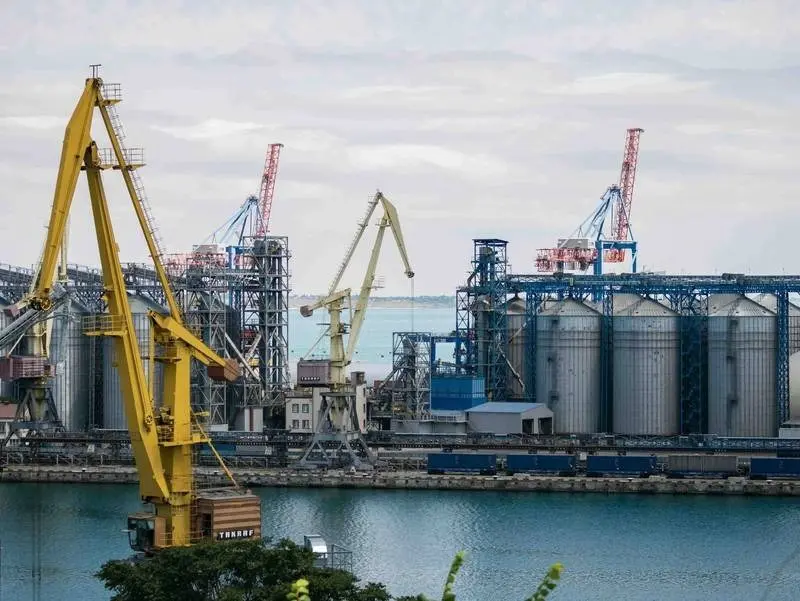
The genesis of the joint Baltic proposal lies in a dramatic shift in global maritime logistics triggered by escalating conflict in the Black Sea region. Throughout the spring and summer of 2026, long-range Ukrainian maritime drone strikes and precision missile attacks systematically targeted critical Russian export infrastructure across the Sea of Azov and the Black Sea, targeting key terminals in Novorossiysk, Tuapse, and Taman.
Faced with rising hull insurance premiums, deteriorating port capacity, and heightened operational risks in southern waters, Russian state-backed grain traders orchestrated a mass operational pivot toward the Baltic Sea corridor. Leveraging interconnected, Russian-gauge rail networks extending into Europe, Moscow redirected hundreds of thousands of metric tons of wheat, barley, and sunflower meal toward port facilities in the Baltic states, particularly through transit hubs connected to Riga, Ventspils, and Klaipėda.
Recognizing the domestic legal and political risks of serving as a logistical bypass for Russian agricultural revenue, the Estonian government took decisive unilateral action. The Estonian Ministry of Regional Affairs and Agriculture enacted a ban prohibiting any Russian-origin grain from entering the country’s railway system or being handled at Estonian ports, such as Muuga and Paldiski.
Building on Estonia’s legislative move, national security advisors and transport ministers from Lithuania, Latvia, and Estonia convened to harmonize their regional strategies. Recognizing that national-level bans invite economic leakage—wherein grain shipments are simply rerouted to neighboring Baltic ports—the three governments drafted a joint policy proposal. The letter delivered to Brussels explicitly requests an immediate legislative amendment to existing EU sanctions regulations, seeking to mandate the complete prohibition of import, transit, and port-handling services for all Russian-origin agricultural commodities across the Union.
The economic rationale underpinning the Baltic proposal rests on the scale of Russian agricultural exports moving through European infrastructure. Agriculture represents one of Russia’s primary non-energy sources of foreign currency income, generating tens of billions of dollars annually.
Prior to the current push, EU regulations permitted the transshipment of Russian grain under strict provisions aimed at preventing famine in third-party markets. However, intelligence and trade tracking data compiled by Baltic port authorities revealed a complex picture. Much of the grain entering Western European logistics systems was not moving directly to vulnerable destinations in Sub-Saharan Africa, but was instead being blended, re-documented, and distributed through European commodity exchanges, allowing Russian entities to capture elevated market premiums while utilizing European port infrastructure.
+-----------------------------------------------------------------------------------+
| BALTIC PORT TRANSIT ANALYSIS (PRE-BAN ESTIMATES)                                  |
+-----------------------------------------------------------------------------------+
| Primary Commodity Categories:  Wheat, Barley, Corn, Agricultural Byproducts      |
|                                                                                   |
| Principal Regional Hubs:       Klaipėda (Lithuania), Riga & Ventspils (Latvia),    |
|                                Muuga (Estonia)                                    |
|                                                                                   |
| Logistics Shift Drivers:       • 40%+ surge in Black Sea maritime insurance rates   |
|                                • Disruption of southern terminal infrastructure   |
|                                • Direct rail connectivity via broad-gauge tracks  |
|                                                                                   |
| Impact of Blockade:            Estimated divertible volume: 2.5–4.0 Million MT     |
|                                Potential Russian logistical cost increase: ~18–25%|
+-----------------------------------------------------------------------------------+
Maritime analytics indicate that following the disruption of Black Sea infrastructure, Russian grain transit through Northern rail corridors into Baltic ports increased sharply. Broad-gauge railway lines, inherited from the Soviet era, directly connect Russian grain-producing regions with Baltic deep-water berths, offering Russian exporters an efficient overland route that bypasses maritime choke points like the Bosporus.
High rail bottlenecks, insufficient freight car availability
Low
Furthermore, regional security analysts have repeatedly flagged the risk of stolen Ukrainian grain being integrated into Russian state supply chains. Agricultural produce harvested from occupied territories in Zaporizhzhia, Kherson, and Donetsk is routinely commingled with Russian domestic yields at inland silos before being freighted westward, rendering origin tracking exceptionally difficult for European customs authorities without a blanket transit ban.
Official Statements and Diplomatic Messaging
The joint communique addressed to European Council President António Costa and European Commission President Ursula von der Leyen frames the issue as both a moral imperative and a national security strategy.
In a joint press conference following the submission of the letter, representatives from the Baltic diplomatic corps emphasized that sanction loopholes directly undermine European security policy.
"Every ton of Russian grain transiting through our ports and utilizing our rail infrastructure yields revenue that directly funds military operations against Ukraine," stated Lithuania’s Foreign Minister. "We cannot allow European logistics networks to function as a safety valve for Moscow’s war economy while Ukrainian agriculture is systematically targeted and destroyed."
Latvian officials echoed these sentiments, highlighting the economic operational risk of selective compliance across individual member states:
"Unilateral action by single member states creates market distortions and simply shifts traffic from one port to another," noted Latvia’s Minister of Transport. "Only a comprehensive, legally binding European Union ban can ensure that our shared infrastructure is not weaponized against our strategic interests. We are calling on the Commission to show decisive leadership."
Estonian officials pointed to their own domestic prohibition as an enforceable blueprint for broader EU action:
"Estonia demonstrated last week that closing domestic transit routes to Russian agricultural products is logistically viable and morally necessary," declared Estonia’s Minister of Regional Affairs. "Our national ban was the first step; now, European solidarity requires that this rule apply uniformly from the Baltic Sea to the Mediterranean."
From Brussels, an official spokesperson for the European Commission acknowledged receipt of the joint letter, issuing a cautious statement reflecting the diplomatic balancing act required within the bloc:
"The European Commission has received the letter from Lithuania, Latvia, and Estonia regarding agricultural transits. We remain fully committed to denying Russia the means to finance its aggressive war while simultaneously safeguarding global food security and ensuring that third countries maintain access to vital agricultural supplies. The proposal will be analyzed carefully by relevant services."
Meanwhile, Moscow strongly condemned the Baltic proposal. A spokesperson for the Russian Ministry of Foreign Affairs characterized the initiative as a violation of international trade laws:
"The attempt by the Baltic states to blockade the transit of Russian agricultural exports is a illegal act of economic coercion that endangers global supply chains. These measures disproportionately threaten developing nations reliant on Russian grain and demonstrate a disregard for international food security mechanisms."
Strategic Impact and Future Outlook
The proposal by Lithuania, Latvia, and Estonia places the European Commission and member states at a strategic crossroads. For an EU-wide grain embargo to take effect, it must either be incorporated into a formal sanctions package requiring unanimous approval from all 27 member states, or enacted through specialized commercial regulations requiring a qualified majority.
+-----------------------------------------------------------------------------------+
| DIPLOMATIC & ECONOMIC PATHWAYS FOR EU-WIDE BAN                                    |
+-----------------------------------------------------------------------------------+
| PROPOSAL APPROVAL PATHWAY                                                         |
| ├── Full Sanctions Inclusion (Requires Unanimity among 27 EU States)              |
| └── Regulatory Tariff/Prohibition Model (Qualified Majority Vote)                 |
|                                                                                   |
| POTENTIAL GLOBAL MARKET IMPACTS                                                   |
| ├── Increased reliance on direct Russian exports via Ust-Luga/St. Petersburg     |
| ├── Re-routing of global trade flows through Southern/Asian maritime hubs          |
| └── Tightening of EU domestic grain market compliance & origin verification       |
+-----------------------------------------------------------------------------------+
Achieving consensus across the bloc presents diplomatic challenges. Several Western and Southern European nations remain cautious about expanding agricultural sanctions, citing potential pushback from international trade organizations and non-aligned nations reliant on grain imports. Countries like Hungary and Slovakia have previously expressed reluctance regarding measures that impact agricultural trade and transit corridors.
To bypass potential vetoes, legal experts suggest the European Commission could employ targeted mechanisms, such as imposing prohibitive tariffs on Russian agricultural transit—a model previously utilized to curtail direct imports without imposing a full embargo. Alternatively, maritime enforcement mechanisms could target shipping operators, insurance providers, and vessel registries servicing Russian grain cargoes.
If the Baltic initiative succeeds, the operational impact on Russian trade will be immediate and severe:
Infrastructure Overload: Direct Russian Baltic ports like Ust-Luga and St. Petersburg are primarily optimized for fertilizer, energy, and bulk minerals, lacking the specialized high-capacity grain loading infrastructure required to absorb diverted rail volumes.
Increased Freight Costs: Redirecting grain overland to Asian destinations or attempting to move smaller vessels through volatile southern routes will sharply increase logistical expenditures, eroding profit margins for state-run trading houses.
Tightened Origin Verification: A full transit ban would dramatically simplify enforcement for European customs services, removing the legal cover used to move mixed or improperly documented grain shipments through EU territory.
As discussions unfold in Brussels, the Baltic states have signaled that they will continue to press for aggressive timeline commitments. With winter approaching and Ukrainian strikes continuing to impact Black Sea routes, the fight over Baltic grain transits represents a critical juncture in shaping the economic contours of Western sanctions policy.