











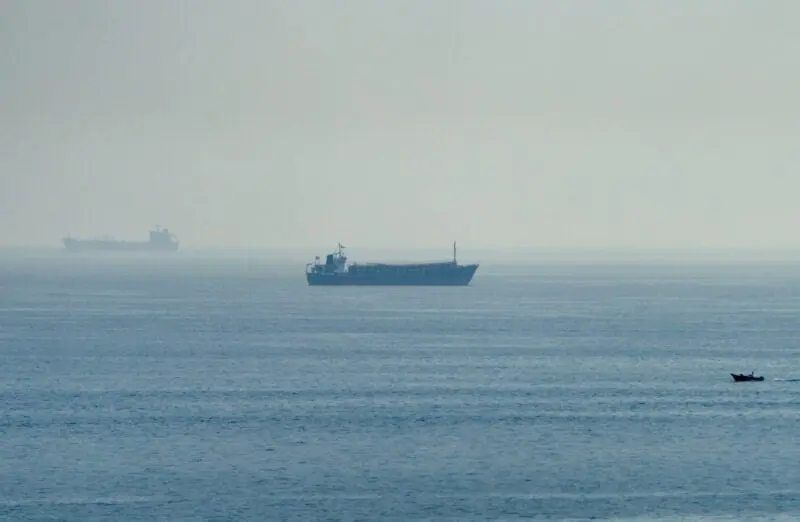
Executive Overview
In a move that marks one of the most significant structural shifts in global energy logistics in decades, Saudi Arabia is in active negotiations with its major international customers to formalize oil deliveries outside the Strait of Hormuz. According to sources familiar with the matter, state-owned energy giant Saudi Aramco is seeking to enshrine these alternative delivery mechanisms within its long-term supply contracts for the upcoming year.
For generations, the global oil trade has operated under the assumption that buyers of Middle Eastern crude must assume the geopolitical and maritime risks of transiting the narrow Strait of Hormuz—a choke point through which roughly a fifth of the world’s petroleum flows. However, the protracted conflict involving Iran, now entering its eighth month, has fundamentally fractured traditional shipping corridors. Facing unprecedented shipping disruptions, skyrocketing insurance premiums, and intense competition for market share in Asia, Riyadh is pivoting from its traditional Free-on-Board (FOB) sales model toward a highly flexible, active logistics strategy.
The ongoing negotiations, which must be finalized before the year-end contracting cycle concludes, represent a paradigm shift. If approved, Saudi Aramco will not only formalize the complex "Hormuz Shuttle" system it developed as an emergency wartime workaround but may also offer customers alternative pricing benchmarks—such as Brent futures—and direct-to-destination deliveries in Asia. This strategic evolution highlights how the kingdom is weaponizing its massive logistical capacity to guarantee supply security, defend its market share, and extract commercial value from the maritime crisis.

Detailed Chronology: From Emergency Workaround to Contractual Standard
To understand the scale of Aramco’s proposed contractual overhaul, it is necessary to trace the escalation of the maritime logistics crisis over the past eight months of the conflict.
[Month 1-2: Conflict Outbreak] ➔ [Month 3-5: The Shuttle System] ➔ [Month 6-7: Global Expansion] ➔ [Month 8: Contractual Integration]
 - War risk premiums spike       - Aramco & peers launch STS      - STS transfers off India        - Aramco begins formalizing
 - Shipowners reject Hormuz      - Crude moved to Gulf of Oman    - Congestion relief at ports     - Negotiations for 2027 contracts
Months 1–2: The Outbreak of Hostilities and Maritime Paralysis
At the onset of the conflict, the Strait of Hormuz immediately became a highly volatile combat zone. War risk insurance premiums for tankers transiting the waterway surged by over 1,000%, prompting major international shipowners to declare force majeure or simply refuse to send their vessels into the Persian Gulf.
Historically, Saudi Aramco’s primary customers in Asia, Europe, and the Americas arranged their own chartered vessels to collect crude directly from the Ras Tanura and Ju’aymah export terminals, located deep within the Persian Gulf. As shipowners balked at entering the Gulf, Asian refiners faced a severe supply squeeze, despite there being no shortage of physical crude at Saudi wellheads.
Months 3–5: The Emergence of the "Hormuz Shuttle"
Recognizing that physical isolation threatened its market share, Saudi Arabia, alongside regional neighbors including the United Arab Emirates, Kuwait, and Iraq, initiated ad-hoc ship-to-ship (STS) transfer operations.

Under this emergency framework, Aramco utilized its own shipping subsidiary, Bahri, and chartered tonnage to transport crude from Persian Gulf terminals through the Strait of Hormuz to safer waters in the Gulf of Oman and the Arabian Sea. Once outside the choke point, the crude was transferred from shuttle tankers to the buyers’ waiting Very Large Crude Carriers (VLCCs). Under this arrangement, the seller—Saudi Aramco—absorbed the immediate war-risk hazards of the Hormuz transit.
Months 6–7: Geographic Diversification and Indian Ocean Hubs
As the conflict dragged on, the waters off Fujairah and the Gulf of Oman became heavily congested with shuttle tankers, raising operational risks and causing costly demurrage delays.
In response, Aramco expanded the program’s geographic scope. The company began permitting select buyers to conduct STS transfers much further afield, including off the coast of India. This innovative workaround allowed buyers who were restricted by internal security protocols or national sanctions from sending vessels anywhere near the Middle East Gulf to receive Saudi crude in the relatively safe waters of the Indian Ocean, while simultaneously alleviating port congestion along the Arabian Peninsula.
Month 8 (Present): The Transition to Permanent Contractual Terms
With no end to the conflict in sight, Saudi Aramco is moving to transition these temporary, ad-hoc logistics arrangements into formalized clauses for its next-cycle long-term contracts. The current negotiations aim to institutionalize these options, giving buyers contractual guarantees of out-of-Hormuz delivery, alternative pricing structures, and potential Delivered-Ex-Ship (DES) terms for the next year and beyond.
Supporting Context & Logistics Metrics
The restructuring of Saudi Aramco’s supply contracts is not merely a diplomatic gesture; it is an incredibly complex logistical and financial undertaking that fundamentally alters the economics of the global oil trade.
The Mechanics of the Out-of-Hormuz Shuttle
The physical execution of these contracts relies on high-volume Ship-to-Ship (STS) transfer protocols. Aramco has primarily deployed this system for its three flagship crude grades:
- Arab Light: The global benchmark for medium-sour crude, highly sought after by complex Asian refiners.
- Arab Medium: A versatile grade that forms the backbone of many industrial refining operations.
- Arab Heavy: A dense, high-sulfur grade traditionally discounted but highly valued for asphalt and heavy fuel oil production.
+-----------------------------------------------------------------------------+
|                         THE HORMUZ SHUTTLE SYSTEM                           |
+-----------------------------------------------------------------------------+
|                                                                             |
|  [ Saudi Aramco Terminals ] (Ras Tanura / Ju'aymah)                         |
|             │                                                               |
|             ▼                                                               |
|  [ Shuttle Tankers (Bahri/Chartered) ]                                      |
|             │                                                               |
|             ▼  ==================================                           |
|      ( Strait of Hormuz - HIGH RISK ZONE )                                  |
|        ==================================                                   |
|             │                                                               |
|             ▼                                                               |
|  [ Safe Water STS Hubs ] (Gulf of Oman / Arabian Sea / Coast of India)      |
|             │                                                               |
|             ├─► [ STS Transfer: Shuttle to Customer VLCC ]                  |
|             │                                                               |
|             ▼                                                               |
|  [ Final Destination ] (Asian / Global Refineries)                          |
|                                                                             |
+-----------------------------------------------------------------------------+
By taking responsibility for the shuttle leg, Aramco assumes the maritime insurance liability and physical security risk of the transit through the Strait. However, this risk is offset by the immense commercial goodwill generated among buyers, who are spared the logistical headache of securing scarce tankers willing to brave a war zone.
The Financial Dimension: Capturing Freight Premiums and Benchmark Shifts
Aramco’s move to offer delivered cargoes outside the Strait of Hormuz is also a shrewd financial play. The cost of hiring ships to traverse the Strait of Hormuz has soared. By arranging the shipping itself and delivering crude directly to customers (either via STS outside the Gulf or directly to Asian ports), Aramco can capture a portion of these high freight premiums.
Furthermore, the negotiations have opened the door to a radical departure in pricing methodology. Traditionally, Middle Eastern crude oil sold to Asian markets is priced against the average of the Dubai and Oman benchmarks, which are assessed by price reporting agencies based on physical trades within the Persian Gulf. Because the conflict has distorted physical trading activity within the Gulf, some Asian refiners are negotiating to price their long-term Saudi contracts against Brent crude futures.
| Metric / Feature | Traditional Contract Framework | Proposed New Contract Framework |
|---|---|---|
| Delivery Term | Free-on-Board (FOB) at Ras Tanura / Ju’aymah | Delivered-Ex-Ship (DES) or STS outside Hormuz |
| Shipping Risk | Assumed entirely by the Buyer | Assumed by Saudi Aramco (up to the STS point) |
| Pricing Benchmark | Dubai / Oman Average | Brent Futures Option (under negotiation) |
| Primary STS Hubs | None (Direct loading) | Gulf of Oman, Arabian Sea, Coast of India |
| Freight Margin | Retained by third-party shipowners | Captured partially by Saudi Aramco / Bahri |
Official Positions and Market Reactions
Because the ongoing contract negotiations are highly sensitive and commercially confidential, both Saudi Aramco and the Saudi Energy Ministry have declined to comment publicly on the specifics of the talks.
However, industry insiders and maritime analysts view the development as a pragmatic and necessary response to an existential threat to Saudi market share.
The Refiner’s Perspective
Asian refining executives, speaking on the condition of anonymity, have expressed quiet relief at the prospect of formalized out-of-Hormuz contracts. "Securing tonnage that is willing to enter the Gulf has become a weekly nightmare," stated a procurement director at a major South Korean refining company. "If Aramco can guarantee delivery in the Gulf of Oman or off the coast of India, it removes a massive operational risk from our books. However, the devil will be in the details of the pricing formula and how much of the freight premium Aramco expects us to pay."
The Shipping Analyst’s View
Maritime economists point out that Aramco’s strategy could permanently alter the tanker market. By taking control of a larger portion of the global VLCC fleet to manage its shuttle operations and direct deliveries, Aramco is transitioning from a passive supplier into a dominant global logistics provider.
This move could marginalize smaller independent shipowners who rely on spot charters from Asian buyers, while consolidating power in the hands of state-backed fleets like Saudi Arabia’s Bahri.
Future Outlook: A Permanent Realignment of Energy Logistics
As the year-end deadline for contract signatures approaches, the outcome of these negotiations will have far-reaching implications for the global energy landscape, stretching well beyond the resolution of the current conflict.
The Geopolitical Decoupling of Oil Flows
If Saudi Arabia successfully formalizes out-of-Hormuz deliveries, it will have effectively decoupled its oil export capacity from the physical security of the Strait of Hormuz. This reduces the geopolitical leverage of regional adversaries, such as Iran, who have historically used the threat of closing the Strait as a powerful economic counterweight. By proving that it can reliably bypass the waterway through a combination of pipeline infrastructure (such as the East-West Pipeline to the Red Sea) and offshore shuttle hubs, Riyadh is reinforcing its status as the world’s premier, risk-insulated energy supplier.
A New Standard for Middle Eastern Exporters
Saudi Aramco’s competitors in the region will be forced to adapt. The United Arab Emirates, which already possesses the key export terminal of Fujairah outside the Strait, is well-positioned to offer similar terms. However, landlocked Gulf producers such as Kuwait and Iraq, which lack direct pipeline access to waters outside the Persian Gulf, may find themselves at a severe competitive disadvantage if they cannot match Saudi Arabia’s sophisticated ship-to-ship shuttle network.
Ultimately, the formalization of these contracts represents a structural evolution. Even when peace is eventually restored, the logistical pathways, pricing mechanisms, and risk-management strategies forged during this conflict are likely to remain. Saudi Aramco’s transition from a port-bound seller to an active, global delivered-crude provider marks the beginning of a new era in energy logistics—one where agility, security, and supply guarantees are valued just as highly as the crude oil itself.


