











PUBLISHED: March 2026
AUTHOR: Maritime Investigations Desk
SUBJECT: Marine Accident Investigation Branch (MAIB) Final Report – Arvia Fatality
Executive Overview
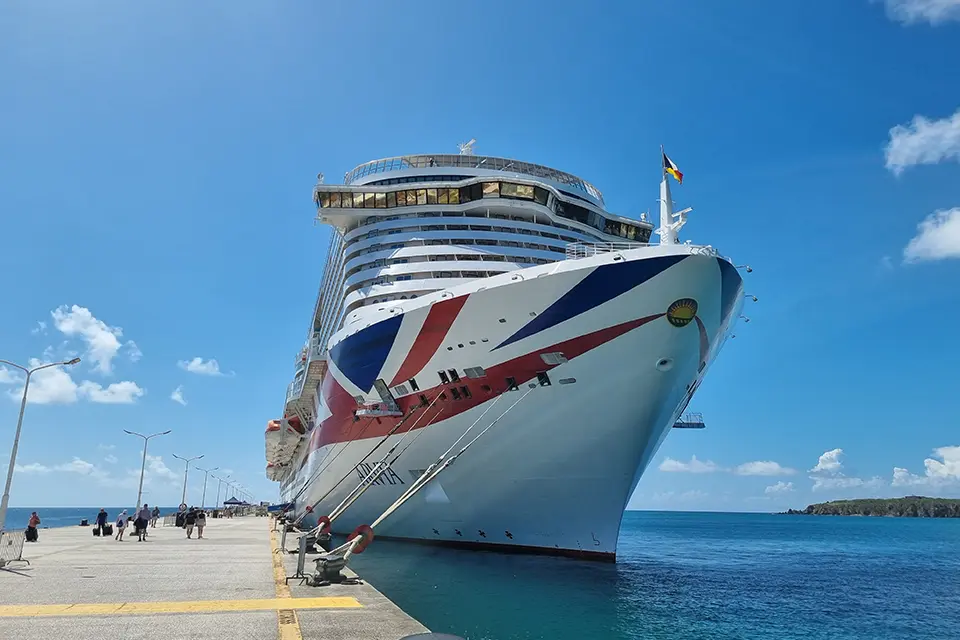
Maritime safety regulators have officially released their comprehensive investigative findings into a tragic incident that claimed the life of a crew member aboard the Bermuda-flagged passenger vessel Arvia. The fatal event occurred on October 26, 2025, while the massive cruise liner was navigating open waters on a scheduled voyage departing from Southampton, United Kingdom, and heading toward Santa Cruz de Tenerife in the Canary Islands, Spain.
The investigation was spearheaded by the United Kingdom’s Marine Accident Investigation Branch (MAIB). Because the Arvia is registered under the Bermuda Ship Registry—a prominent member of the Red Ensign Group (REG)—the inquiry was conducted pursuant to a formal Memorandum of Understanding (MoU) established between the MAIB and the administrative bodies of the REG. This cooperative framework ensures that complex international maritime incidents involving British Red Ensign vessels receive rigorous, independent, and high-standard technical investigations, regardless of where in the world the incident transpires.
The newly published report delivers a meticulous account of the events leading up to the tragedy, analyzes the operational and human factors involved, and underscores critical systemic lessons for the global cruise industry. As modern cruise ships grow exponentially in scale, passenger capacity, and crew numbers, the logistical and occupational hazards associated with maintaining these floating cities continue to demand unyielding scrutiny. This comprehensive review examines the background of the incident, reconstructs the operational timeline, evaluates the broader regulatory framework, and explores the vital implications for future maritime safety protocols across international waters.
Detailed Chronology of Events
Departure and Transit
On the morning of October 26, 2025, the Arvia—one of the modern flagships of contemporary cruise operations—was well into its routine transit across the Bay of Biscay and down the western coast of the Iberian Peninsula. Having departed from the bustling container and passenger port of Southampton days prior, the vessel was operating on a standard trans-Atlantic itinerary bound for the warm waters of the Canary Islands.
Weather conditions along the route were characteristic of late autumn transit lanes, featuring moderate sea states and standard operational rhythms typical of a vessel maintaining a steady commercial schedule. Onboard, hundreds of crew members were engaged in their respective departmental duties, ranging from hospitality and guest services to technical engineering and deck maintenance.
The Critical Incident
While the vessel was underway, an operation involving a crew member took a catastrophic turn. Although the specific operational task being performed at the time of the incident is detailed extensively in the technical sections of the MAIB report, the unfolding sequence of events required immediate emergency response protocols from the ship’s onboard medical and safety teams.

According to the factual timeline established by investigators, the crew member sustained severe injuries during the course of their duties. Immediate internal alarms were raised, and the ship’s designated emergency response teams, including medical personnel trained in advanced trauma life support at sea, were dispatched to the scene without delay.
Emergency Response and Medical Intervention
Upon arrival at the location of the incident, the onboard medical staff initiated immediate resuscitation and stabilization efforts. Given the deep-ocean coordinates of the vessel at the time of the emergency, immediate evacuation via shore-based helicopter or high-speed coastal rescue craft was logistically unviable due to the extreme distance from the nearest mainland coastline.
Despite the exhaustive and timely efforts of the shipboard medical team to administer emergency intervention, the crew member succumbed to their injuries. The vessel’s master subsequently informed relevant maritime rescue coordination centers (MRCCs) and the flag state administration of the fatality, logging the precise geographical position, time, and circumstances surrounding the medical emergency. Upon the vessel’s eventual arrival in port, formal jurisdictional handovers were conducted with local law enforcement, medical examiners, and maritime authorities.
Supporting Context & Metrics
The Arvia: Vessel Profile and Specifications
To understand the operational environment in which the accident occurred, it is necessary to examine the sheer scale and complexity of the Arvia. Delivered to its operators as a pinnacle of modern marine engineering, the vessel represents the apex of contemporary cruise ship design:
- Gross Tonnage: Approximately 185,000 GT
- Passenger Capacity: Up to 5,200 guests (double occupancy) and over 6,000 maximum capacity
- Crew Complement: Approximately 1,800 marine and hospitality professionals
- Flag State: Bermuda (Red Ensign Group)
- Primary Route Profiles: Northern European itineraries, Mediterranean voyages, and transatlantic seasonal relocations
Operating a vessel of this magnitude requires a continuous, complex choreography of technical maintenance, hotel services, navigation, and deck operations. The juxtaposition of a massive floating resort with an industrial maritime workplace creates a unique set of occupational health and safety challenges.
The Role of the MAIB and the Red Ensign Group
The Marine Accident Investigation Branch is an independent branch of the UK Department for Transport, charged with investigating marine accidents involving UK vessels, as well as accidents occurring within UK territorial waters. However, its jurisdiction extends internationally through collaborative agreements when British Overseas Territories, such as Bermuda, request assistance.
The Red Ensign Group comprises the UK Shipping Registers of the UK, the Crown Dependencies (Isle of Man, Guernsey, and Jersey), and the UK Overseas Territories (including Bermuda, the Cayman Islands, and Gibraltar). Vessels flying the Red Ensign are subject to stringent UK-aligned maritime safety standards, environmental regulations, and crew welfare laws.

When marine casualties occur on these vessels, rigorous investigations like the one conducted for the Arvia serve a dual purpose:
- Accountability: Determining the exact causal and contributing factors of the accident.
- Prevention: Generating actionable safety recommendations to prevent recurrence across the global fleet.
Comparative Occupational Safety Metrics in Modern Cruising
While the cruise industry maintains an exceptionally high safety record regarding passenger transport and hull integrity—largely driven by the International Convention for the Safety of Life at Sea (SOLAS)—occupational safety for crew members remains a critical focus area for international regulators.
According to historical maritime safety data compiled by agencies such as the International Maritime Organization (IMO) and various flag states:
- Routine vs. Non-Routine Tasks: A significant percentage of serious crew injuries occur not during high-risk maneuvering or severe weather navigation, but during routine maintenance, housekeeping, mooring, and technical upkeep operations.
- Human Factors: Communication breakdowns, fatigue, time pressures associated with tight cruise schedules, and procedural drift are frequently identified as underlying contributors in safety investigation findings.
- Safety Culture: The transition from a compliance-based safety model (merely following the rules) to a generative safety culture (where safety is actively discussed, questioned, and prioritized at every level of the hierarchy) remains an ongoing evolution within the maritime sector.
Official Statements and Regulatory Findings
Key Conclusions from the MAIB Report
The published investigation report delves deep into the mechanics of the accident, offering a forensic breakdown of the physical environment, equipment involved, and the human elements at play. While the report acknowledges that all standard safety management systems (SMS) were formally in place aboard the vessel, it highlights critical areas where operational reality diverged from written procedures.
Among the core findings highlighted in the report:
- Procedural Adherence and Supervision: The investigation evaluated whether the task being executed adhered strictly to the vessel’s established Safety Management System (SMS) guidelines. Investigators identified gaps in how specific operational procedures were interpreted and executed at the deck level.
- Risk Assessment Realities: The report emphasizes the necessity for dynamic, real-time risk assessments prior to the commencement of specialized tasks, noting that generic risk assessments often fail to account for situational variables encountered in dynamic maritime environments.
- Equipment and Human Interface: The interaction between the crew member and the operational equipment involved was subjected to rigorous engineering analysis to determine whether design factors contributed to the severity of the outcome.
Responses from Stakeholders
In the wake of the report’s publication, maritime stakeholders have issued formal responses outlining their commitment to implementing the MAIB’s recommendations:
"The loss of any crew member is a profound tragedy for the entire maritime community. Our primary objective in conducting this exhaustive investigation is to uncover the underlying causes of this accident and ensure that comprehensive, actionable safety lessons are disseminated across the international fleet to protect those who work at sea."
— Spokesperson, Marine Accident Investigation Branch (MAIB)
Ship operators and management companies associated with the Arvia have also engaged directly with the Bermuda Ship Registry and the MAIB to review the findings. In corporate statements released following the incident and the subsequent report rollout, management emphasized their unwavering dedication to crew welfare:
"We are deeply saddened by the passing of our colleague. We have fully cooperated with the MAIB and the Bermuda Ship Registry throughout this thorough investigation. We are reviewing all associated safety protocols, training modules, and operational procedures company-wide to ensure that every possible measure is taken to safeguard the health and well-being of our onboard personnel."
— Representative for the Vessel Operators
Future Outlook: Implications for the Global Cruise Industry
Re-Evaluating Onboard Safety Management Systems
The publication of the Arvia investigation report is expected to catalyze a broader review of safety management frameworks across the international cruise sector. Flag states, classification societies, and cruise operators will likely use these findings as a benchmark to audit existing procedures.
Key areas targeted for future enhancement include:
- Enhanced Task-Level Training: Moving beyond generic certification to ensure that crew members engaged in specialized technical and maintenance tasks undergo rigorous, practical, and context-specific competency verifications.
- Empowering the Stop-Work Authority: Fostering an organizational climate where any crew member—regardless of rank—feels fully empowered to halt an operation immediately if they perceive unmitigated risks, without fear of schedule-driven repercussions.
- Digital Safety Integration: Leveraging modern data analytics, wearable safety technology, and digital tracking tools to monitor high-risk operational zones and ensure compliance with safety perimeters in real-time.
The Human Element in Maritime Regulation
As ships become increasingly technologically advanced, the human element remains the most vital—and vulnerable—component of maritime operations. The International Maritime Organization (IMO) continues to emphasize that technological innovation must be matched by human-centric safety designs and robust mental and physical health support systems for seafarers.
The tragic incident aboard the Arvia serves as a sobering reminder of the inherent risks associated with life and work at sea. While millions of passengers travel safely across the world’s oceans each year, the invisible workforce behind these floating marvels operates in a demanding industrial environment where safety margins are exceptionally narrow.
Conclusion
The release of the MAIB investigation report closes a rigorous chapter of inquiry, but it must open a new era of vigilance. For the maritime industry, the true value of such reports lies not in the documentation of tragedy, but in the steadfast implementation of their recommendations. By honoring the memory of the fallen crew member through meaningful operational reforms, regulators, operators, and seafarers alike can move forward with a renewed, uncompromising commitment to safety across the global fleet.


