










Executive Overview
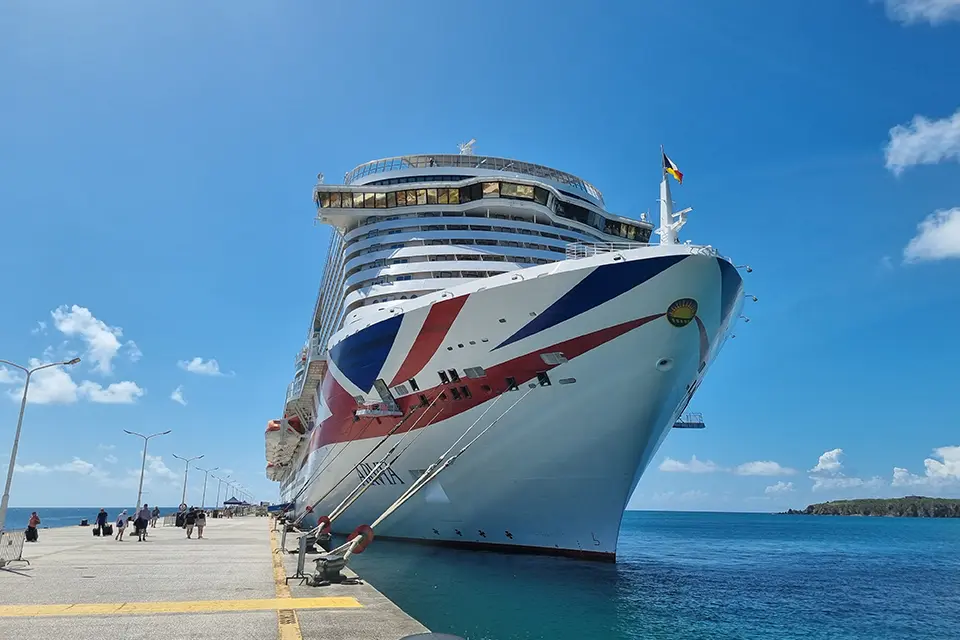
Maritime safety authorities have officially released their comprehensive findings regarding a tragic fatality that occurred aboard the Bermuda-registered passenger vessel Arvia. The incident, which took place on October 26, 2025, unfolded while the ultra-large cruise ship was navigating the open waters of the Atlantic Ocean on a routine voyage from Southampton, England, to Santa Cruz de Tenerife in the Canary Islands, Spain.
The official investigation was spearheaded by the United Kingdom’s Marine Accident Investigation Branch (MAIB). Operating on behalf of the Bermuda Ship Registry—a prominent member of the Red Ensign Group (REG)—the MAIB conducted a rigorous inquiry in strict accordance with the established memorandum of understanding governing maritime safety investigations between the MAIB and REG member administrations.
This tragic event has once again cast a sharp spotlight on the complex and inherently hazardous nature of modern cruise ship operations, specifically regarding the safety protocols required of multicultural maritime crews working around the clock in dynamic environments. While the Arvia is celebrated as a pinnacle of modern leisure engineering and passenger comfort, this incident underscores the severe, high-stakes operational realities faced by the thousands of crew members who maintain these floating cities. The publication of the MAIB report aims not only to determine the exact sequence of events that led to the crew member’s death but also to initiate a broader industry-wide re-evaluation of safety cultures, operational procedures, and risk mitigation strategies across the global cruise sector.

Detailed Chronology of Events
Departure from Southampton
On the afternoon of October 25, 2025, the Arvia cast off its moorings in Southampton, signaling the commencement of a popular autumn sunshine cruise heading south toward the warmer waters of the Atlantic and the Canary Islands. As standard procedure for a vessel of this scale, the departure followed a tightly managed schedule involving harbor pilots, port control, and a fully briefed shipboard compliment of officers, engineering staff, hotel personnel, and deck crew.
For the first twenty-four hours of the voyage, transit conditions were typical for late October in the English Channel and the approaches to the Bay of Biscay. The ship maintained its cruising speed, and normal watchkeeping rotations, routine maintenance schedules, and passenger entertainment programs proceeded without disruption. Behind the scenes, however, the vessel’s vast infrastructure required constant upkeep, setting the stage for the operational tasks that would later intersect with tragedy.
The Incident on October 26
On October 26, 2025, while the Arvia was deep in transit across the Atlantic, an incident occurred that resulted in fatal injuries to a member of the ship’s crew. While specific operational details of the exact task being performed at the time of the accident remain closely detailed within the technical body of the MAIB report, the timeline indicates that the emergency response was triggered immediately following the event.
Upon the discovery of the injured crew member, the ship’s onboard medical team was mobilized without delay. Standard maritime emergency protocols were enacted, involving the ship’s command team, safety officers, and medical personnel working in tandem to administer emergency trauma care. Despite the rapid response and the deployment of advanced onboard medical equipment, the crew member succumbed to their injuries.
Communication and Jurisdictional Handover
Following the confirmation of the fatality, the master of the Arvia initiated mandatory distress and notification procedures, communicating with relevant maritime authorities, the vessel’s operators, and the flag state administration—the Bermuda Ship Registry. As the vessel continued its southward passage toward the Canary Islands, arrangements were made with local authorities to facilitate the handover of the deceased crew member, coordinate consular notifications, and begin the formal investigative process.
Upon arrival in Santa Cruz de Tenerife, local law enforcement, medical examiners, and maritime inspectors boarded the vessel to conduct preliminary local inquiries, while the MAIB deployed specialized investigators to secure evidence, interview witnesses, analyze voyage data recorder (VDR) logs, and examine the specific area of the ship where the accident occurred.
Supporting Context & Metrics
The Vessel: Arvia
To fully understand the environment in which the accident took place, one must examine the sheer scale and operational complexity of the vessel itself. Delivered to its operators as part of a multi-billion-dollar fleet expansion, the Arvia is a behemoth of modern maritime engineering.
- Gross Tonnage: Approximately 185,000 GT
- Passenger Capacity: Over 5,200 guests (double occupancy)
- Crew Complement: Approximately 1,800 marine, technical, and hotel personnel
- Flag State: Hamilton, Bermuda (Red Ensign Group)
Operating a vessel of this magnitude requires a highly sophisticated command structure and an immense workforce divided into distinct departments: deck and engine operations, hotel services, safety and security, and specialized maintenance. The integration of thousands of crew members from dozens of different nationalities introduces unique operational hurdles, particularly regarding communication, standardized training, and the continuous enforcement of safety management systems (SMS).
Maritime Safety Statistics and Crew Risks
While public perception of the cruise industry focuses predominantly on passenger safety, leisure cruising, and onboard amenities, maritime labor organizations and accident investigators consistently highlight the disproportionate occupational risks borne by crew members.

According to data compiled by international maritime agencies, including the International Maritime Organization (IMO) and various flag state administrations, accidents involving crew members during routine maintenance, mooring operations, and technical spaces remain a leading cause of severe injury and mortality at sea. Unlike land-based industrial environments, a ship at sea is a constantly moving, vibration-heavy workspace where environmental factors such as swell, wind, and weather conditions can drastically elevate the risk profile of even routine mechanical or deck tasks.
The following metrics contextualize the operational landscape of modern cruise shipping:
- Multinational Workforces: Over 80% of global cruise ship crew members originate from developing nations, requiring rigorous verification of standardized safety training under the International Convention on Standards of Training, Certification and Watchkeeping for Seafarers (STCW).
- Fatigue Management: Regulatory frameworks mandate strict rest hours, yet unexpected turnaround schedules and continuous operational demands place persistent pressures on technical and maintenance departments.
- Closed Spaces and Heavy Machinery: A significant percentage of fatal and serious injuries on passenger vessels occur either in machinery spaces, during heavy lifting operations, or during routine hull and deck maintenance.
Official Statements and Regulatory Framework
The Role of the MAIB and the Red Ensign Group
The Marine Accident Investigation Branch (MAIB) is an independent branch of the United Kingdom’s Department for Transport. Its sole objective is to investigate marine accidents and incidents with the aim of preventing future occurrences—not to apportion blame or liability.
Because the Arvia is registered in Bermuda, the regulatory framework governing the vessel falls under the jurisdiction of the Bermuda Ship Registry. Bermuda, as a Category 1 Red Ensign Group member, maintains high regulatory standards aligned with UK and international maritime conventions. Through a formal memorandum of understanding (MoU), the MAIB frequently conducts technical investigations on behalf of Red Ensign Group administrations, leveraging its specialized investigative resources and forensic expertise to ensure comprehensive oversight.
Operator and Industry Responses
Following the publication of the MAIB accident report, representatives for the vessel’s operators issued statements expressing profound sorrow over the loss of their crew member. The company emphasized its unwavering commitment to the safety, health, and welfare of every individual working across its fleet.
"The entire maritime community is devastated by this tragic loss of life," a representative for the operating company noted following the release of the report. "We are cooperating fully with the MAIB, the Bermuda Ship Registry, and all relevant authorities. We are carefully reviewing every finding and safety recommendation contained within the report to ensure that all necessary measures are swiftly implemented across our fleet to protect our people."
Maritime labor unions and safety advocacy groups have also weighed in, calling for a meticulous review of the specific operational procedures highlighted in the report. These organizations have emphasized that safety management systems must not only exist on paper but must be actively audited, updated, and adapted to the practical realities faced by crews working in high-pressure maritime environments.
Future Outlook: Implications for Cruise Safety
Implementing MAIB Recommendations
The publication of the MAIB investigation report is not merely the conclusion of a singular inquiry; it serves as a critical catalyst for systemic change within the maritime sector. The report outlines specific safety recommendations directed at the vessel’s operators, the flag administration, and, where applicable, the broader cruise industry.
Key areas targeted for improvement typically include:
- Enhanced Risk Assessments: Mandating more granular, task-specific hazard identification protocols before crew members undertake complex maintenance or operational procedures.
- Communication and Supervision: Strengthening supervisory oversight and safety briefings, particularly for operations involving cross-departmental teams or multinational personnel where language barriers or differing experience levels might introduce risk.
- Equipment and Safety Gear Design: Re-evaluating the physical layout of workspaces, guarding mechanisms, and personal protective equipment (PPE) to engineer out potential points of failure.
- Safety Culture Reinforcement: Encouraging an open, blame-free reporting culture where crew members feel fully empowered to halt work if they perceive unsafe conditions, without fear of operational repercussion.
The Broader Trajectory of Maritime Labor Standards
As the global cruise industry continues to expand—with new, increasingly massive vessels entering service year after year—the demand for skilled maritime labor will only intensify. Incidents such as the fatality aboard the Arvia serve as a sobering reminder of the human cost associated with global maritime commerce and leisure operations.
Regulatory bodies, flag states, and cruise operators face mounting pressure to modernize safety regimes in tandem with technological advancements. The lessons learned from the Arvia investigation will undoubtedly be integrated into international safety forums, training academies, and corporate boardrooms.
Ultimately, the true measure of the MAIB’s report will not lie merely in the thoroughness of its historical reconstruction, but in its tangible impact on future operations. By turning tragedy into actionable insight, the maritime community strives toward an environment where every crew member can complete their voyage and return safely home to their families.


