











By Blake Aued
Published: October 7, 2026
Streetsblog USA
Executive Overview
In the realm of modern American politics, few figures have championed large-scale infrastructure development with the vigor and volume of Donald Trump. Throughout multiple campaigns, legislative sessions, and public addresses, the concept of building has served as a central pillar of his political brand. From ambitious proposals to construct a massive southern border wall to perpetual promises of revitalizing crumbling highways, bridges, and airports, the physical transformation of the American landscape is framed as a core competency of his leadership.
Yet, a glaring, systemic paradox defines this overarching development agenda: while nearly every sector of American infrastructure enjoys enthusiastic rhetorical and financial backing, public transportation is met with conspicuous resistance, underfunding, and institutional neglect.
Urban transit networks—such as Boston’s historic Green Line, the sprawling underground arteries of New York City, Chicago’s rail lines, and light rail systems across the Sun Belt—face an uphill battle under the Trump administration. The fundamental question resonating among urban planners, transit advocates, and commuters alike is stark: Why is public transportation seemingly the only thing Donald Trump does not want to build?
This investigative report examines the political, ideological, and economic forces driving this exclusionary approach to infrastructure. By analyzing historical policy decisions, federal budget allocations, and the distinct philosophy that elevates highways over steel rails, we explore the profound implications this transit deficit holds for the future of American mobility, climate resilience, and urban equity.
Detailed Chronology: The Evolution of Transit Policy and Executive Neglect
To understand the current state of federal public transit policy under the Trump administration, it is necessary to trace the trajectory of federal infrastructure priorities over the past decade.
The Era of "Infrastructure Week" (2017–2021)
During his initial term in office, Donald Trump frequently popularized the phrase "Infrastructure Week," attempting to pivot national media attention toward a trillion-dollar rebuilding plan. However, despite the grand announcements, public transit consistently found itself sidelined in favor of automobile-centric projects.

While highway trust funds received continuous attention and regulatory roadblocks for highway construction were aggressively dismantled through executive orders, federal grant programs specifically targeted at transit expansion—such as the Federal Transit Administration’s (FTA) Capital Investment Grants (CIG) program—faced severe delays, bureaucratic hurdles, and proposed budget slashing. Major light rail and heavy rail expansion projects across the country were left in administrative limbo, waiting months or even years simply to secure environmental reviews and funding agreements that highway projects cleared with minimal friction.
The Post-Pandemic Divergence (2021–2025)
As American cities grappled with the unprecedented ridership shifts and financial strains of the post-pandemic era, federal intervention became a lifeline for municipal transit agencies. While the broader federal landscape saw historic investments through bipartisan legislation, subsequent executive priorities increasingly fractured the consensus on mass transit funding.
The administration’s posture shifted from passive neglect to active skepticism regarding the long-term viability and necessity of urban rail and bus rapid transit systems. Funding formulas began to heavily favor roadway capacity expansions, smart-highway technologies for autonomous vehicles, and electric vehicle (EV) charging corridors—so long as those corridors served private automobiles rather than regional electric buses or commuter rail networks.
The 2026 Reality: Stalled Systems and Deferred Maintenance
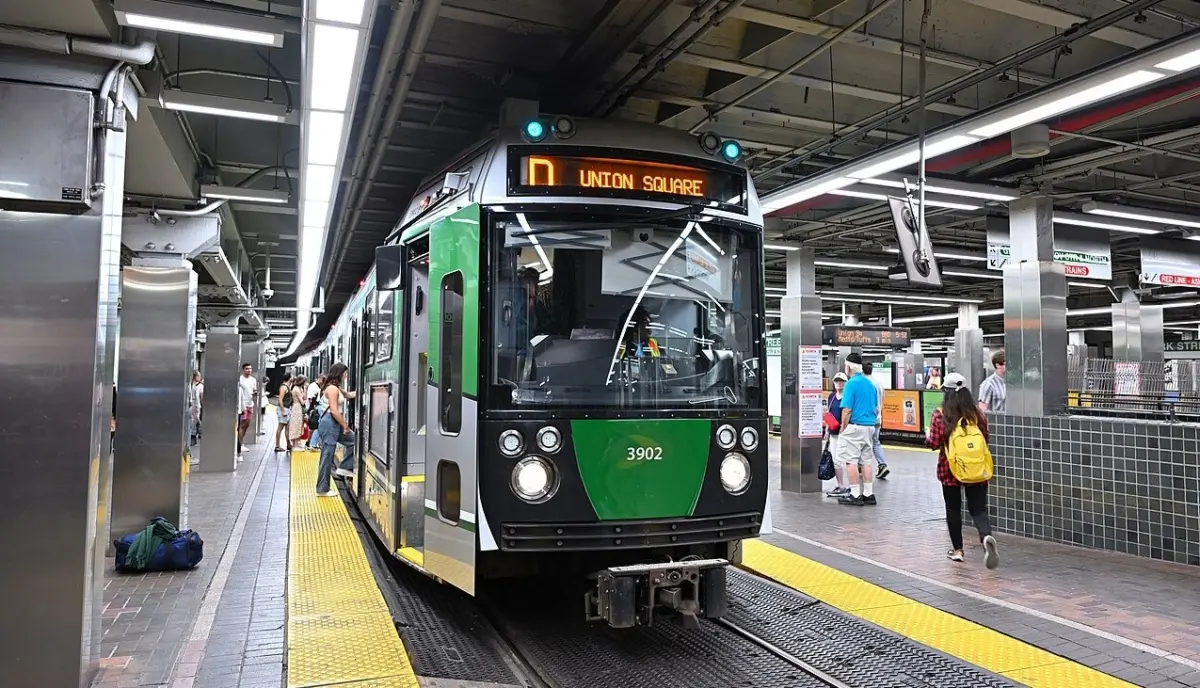
By late 2026, the cumulative impact of this executive policy direction has manifested clearly on the ground. Systems like the Massachusetts Bay Transportation Authority (MBTA)—exemplified by its heavily trafficked and perpetually strained Green Line—illustrate the nationwide toll of federal indifference.
Without robust federal partnership, local municipalities are forced to bear the brunt of deferred maintenance, skyrocketing capital costs, and modernization delays. The chronology of the past decade reveals a clear, unbroken thread: federal transportation policy under Trump has consistently drawn a hard line where rubber meets the asphalt, actively barring steel wheels on rails from receiving the transformative investments afforded to private motor vehicle infrastructure.
Supporting Context & Metrics: The Highway-Transit Disparity
To fully grasp the mechanics of this exclusion, one must look closely at the data governing federal transportation expenditures, funding formulas, and ideological alignments.
The Funding Asymmetry
Historically, the Highway Trust Fund—financed primarily through federal fuel taxes—receives the lion’s share of federal surface transportation revenue. While a fraction of these funds is legally authorized for transit via the Mass Transit Account, the structural bias heavily favors highways.

Under recent federal budget proposals championed by conservative factions aligned with the administration:
- Highway Funding Priorities: Capital allocations for interstate widening, bridge reconstruction, and exurban beltway expansions routinely see expedited reviews and robust matching fund percentages.
- Transit Grant Bottlenecks: FTA Capital Investment Grants, which require rigorous cost-effectiveness ratings and local match guarantees, face stringent caps. Projects often find themselves disqualified or deprioritized based on restrictive metrics that fail to account for the broader societal benefits of public transit, such as reduced traffic congestion, lower carbon emissions, and equitable economic mobility.
The Ideology of the Automobile
The resistance to public transit is not merely budgetary; it is deeply cultural and ideological. The political coalition backing Donald Trump heavily prioritizes suburban and rural car-dependent constituencies. Within this worldview, the private automobile represents the ultimate expression of American personal freedom, independence, and individual mobility.
Conversely, public transit is frequently coded in political rhetoric as an urban, collectivist enterprise—inefficient, heavily subsidized, and misaligned with the traditional American lifestyle. Consequently, investing billions of dollars in underground subways or urban streetcars struggles to find a constituency among voters who measure infrastructure success by the speed of their morning highway commute.
Official Statements and Political Rhetoric
The administration’s stance on infrastructure is regularly articulated through public speeches, policy briefs, and social media communications, where the dichotomy between roads and rails is frequently highlighted.
Proponents of the administration’s infrastructure philosophy argue that federal dollars must chase the highest return on investment, which they contend lies in smoothing freight bottlenecks, reducing highway gridlock for commercial trucking, and expanding roadway capacity to accommodate growing populations in car-centric Sun Belt metros.
In various policy rollouts, administration officials have repeatedly characterized federal funding for high-density rail projects as "local bailouts" or "expensive toys for big cities," arguing that local municipalities and state governments should bear the full financial responsibility of building and maintaining their own transit networks.
Conversely, municipal leaders, urban policy experts, and transit advocacy groups have vocally criticized this perspective. Representatives from organizations like Streetsblog and various urban planning institutes argue that starving public transit of federal support creates a vicious cycle: diminished service leads to lower ridership, which is then cited by critics as justification for further disinvestment.

Transit advocates emphasize that no major metropolitan area in the world—from Tokyo to London to New York—can function efficiently on highways alone. Without robust, high-capacity public transportation, economic productivity stalls, housing affordability crisis worsen, and carbon reduction goals become entirely mathematically impossible to achieve.
Future Outlook: What Lies Ahead for American Mobility?
As the United States looks toward the latter half of the 2020s and beyond, the ongoing exclusion of public transportation from the national infrastructure vision poses critical challenges for the country’s urban centers.
The Threat to Climate and Economic Goals
With transportation remaining the single largest source of greenhouse gas emissions in the United States, failing to invest in electrified, high-capacity public transit undermines national climate commitments. Furthermore, as metropolitan areas continue to densify, adding more lanes to highways—often referred to as "inducing demand"—has been proven by decades of traffic data to be an ineffective long-term solution to congestion.
The Path Forward for Local Agencies
In the absence of a supportive federal partner, local and state transit agencies are increasingly forced to innovate. Cities are turning to local ballot measures, public-private partnerships (PPPs), and value-capture financing mechanisms to fund system expansions and repairs. However, these local funding streams are often volatile and insufficient to cover the multi-billion-dollar capital costs associated with modernizing aging heavy rail and light rail infrastructure.
Conclusion
The paradox of Donald Trump’s infrastructure agenda highlights a fundamental division in how Americans view the future of movement. By drawing a sharp boundary that embraces asphalt while sidelining steel rails, current federal policy risks stranding millions of transit-dependent Americans in aging, underfunded systems. Until public transportation is viewed not as a partisan wedge or an urban luxury, but as an essential national utility on par with highways and bridges, the great American infrastructure paradox will endure.
For further updates on this developing story, subscribe to the Streetsblog USA newsletter or contact our news desk at [email protected].


