Executive Overview
In a strategic operational maneuver that underscores the agility of the world’s largest leisure travel provider, Carnival Corporation & plc has announced a major fleet reshuffle involving three of its premier cruise brands. Slated for execution in 2029, this complex multi-brand realignment will see two prominent vessels change hands, significantly altering the operational capacity, deployment flexibility, and brand positioning of Holland America Line, P&O Cruises, and Cunard.
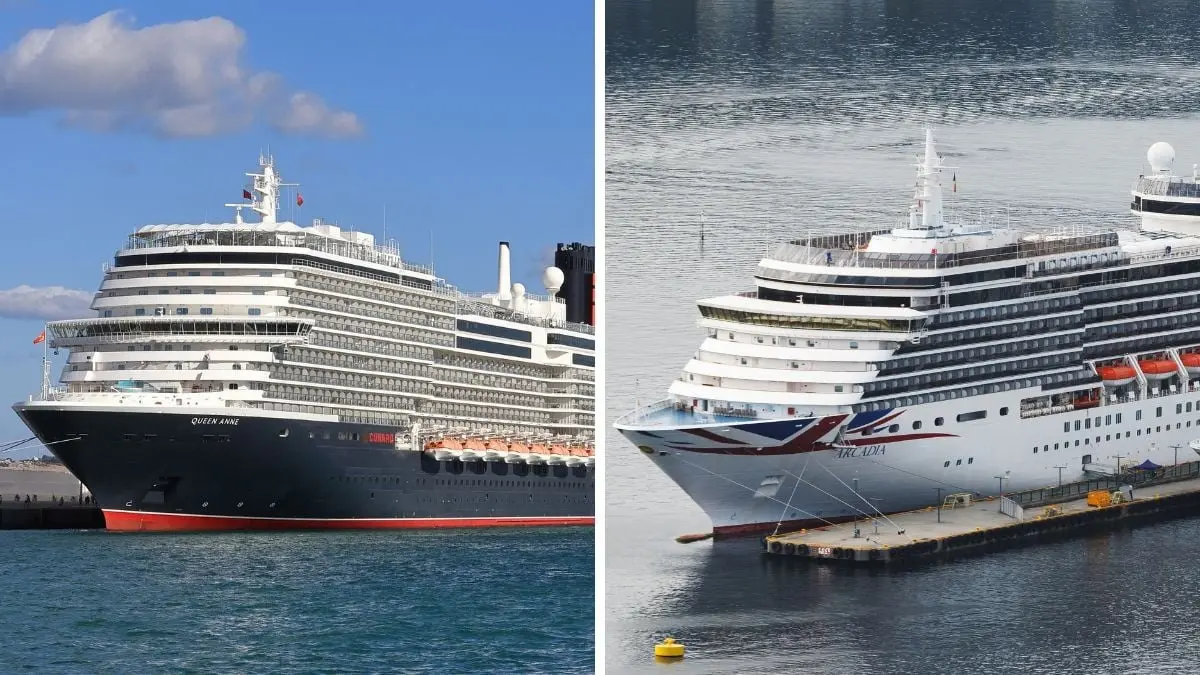
The core of the transaction involves the 83,781-gross-ton Arcadia transferring from P&O Cruises to Holland America Line, expanding the latter’s fleet from 11 to 12 ships. Simultaneously, Cunard’s relatively new 113,000-gross-ton Queen Anne will transition into the P&O Cruises fleet following an extensive redesign and renaming process in mid-2029.
This corporate choreography is far more than a simple administrative swap. For Holland America Line, the acquisition of the Arcadia represents a delayed homecoming nearly three decades in the making, while simultaneously serving as a flagship extension of the line’s ongoing $500 million fleet-wide revitalization initiative, the Evolution program. For Cunard, the departure of the Queen Anne streamlines its operations into a tightly integrated, ultra-traditional three-ship fleet comprising its iconic "Queens," ahead of an anticipated era of specialized luxury cruising. Meanwhile, P&O Cruises absorbs a modern, high-capacity Pinnacle-class vessel, modernizing its offerings and reinforcing its dominant presence in the British cruise market.
Corporate leadership has stressed that while the structural implications of these transfers are far-reaching, consumer impact will be carefully managed. All currently published itineraries for both the Arcadia and the Queen Anne leading up to their respective 2029 transitions will operate exactly as scheduled, ensuring zero disruption for booked guests.
Detailed Chronology: The Journey of the Arcadia and Queen Anne
The Strange, Circuitous Odyssey of the Arcadia
To fully understand the significance of the Arcadia finally entering service with Holland America Line, one must look back nearly thirty years into the complex blueprints of modern cruise ship construction.
The vessel that would eventually become known as the Arcadia was originally commissioned in the year 2000 as part of Holland America Line’s highly successful Vista-class series. Designed to offer expansive public spaces, panoramic ocean views, and a sophisticated mid-sized footprint, the ship was envisioned as a natural sibling to other iconic Holland America vessels such as the Oosterdam, Noordam, Westerdam, and Zuiderdam.
However, corporate repositioning within the broader Carnival Corporation ecosystem led to a series of cascading reassignments before the ship ever touched the water. During the final stages of its pre-launch development, the hull was reallocated to the legendary Cunard Line, where it was initially intended to debut under a heritage name as the Queen Victoria. Plans shifted once more as market demands and brand strategies evolved within Carnival’s British division. Ultimately, the vessel was reassigned to P&O Cruises, officially entering service under the British brand name Arcadia in 2005. For nearly a quarter-century, the ship has operated successfully under the P&O banner, cultivating a loyal following among British travelers.
The planned 2029 transfer back to Holland America Line completes this bizarre historical circle. Nearly thirty years after the ship was first drawn up on drafting tables specifically for the Rotterdam-based cruise line, the Arcadia will finally join the fleet it was originally destined for.
Queen Anne’s Evolution and Transition to P&O Cruises
On the other side of the corporate ledger is the Queen Anne, a magnificent 113,000-gross-ton luxury liner that officially entered service with Cunard Line in 2024. As a premier Pinnacle-class vessel, the Queen Anne shares its advanced architectural platform and engineering lineage with modern Holland America favorites like the Koningsdam, Nieuw Statendam, and Rotterdam.
Accommodating approximately 3,000 guests, the Queen Anne represents a modern interpretation of Cunard’s signature art-deco elegance, featuring sprawling multi-story public atriums, innovative dining concepts, and refined stateroom designs. Despite its modern acclaim, corporate planners at Carnival Corporation have identified the vessel as a transformative asset for P&O Cruises, where it will seamlessly fill the capacity and market space vacated by the outgoing Arcadia.
The Queen Anne will maintain its regular schedule with Cunard through the winter season, culminating in its high-profile participation in the line’s comprehensive 2028/29 World Voyage, which sets sail in January 2029. Once this global itinerary concludes, the ship will be handed over to P&O Cruises. There, it will undergo an extensive dry-dock transformation, receiving a tailored interior redesign and a new moniker before officially commencing P&O service in May 2029.
Supporting Context & Metrics: Fleet Dynamics and Financial Investment
The Holland America Evolution Program
The integration of the Arcadia into the Holland America Line fleet is intrinsically tied to the brand’s massive capital expenditure initiative known as the Evolution program. First announced by cruise industry analysts in April 2026, this multi-year financial commitment represents a $500 million overhaul designed to completely transform the onboard experience across the brand’s entire roster of ships.
Initially, the Evolution program targeted six specific Vista and Signature class vessels: the Oosterdam, Zuiderdam, Westerdam, Noordam, Nieuw Amsterdam, and Eurodam. The investment blueprint called for sweeping structural and aesthetic upgrades, ranging from the introduction of cutting-edge specialty dining venues and reimagined entertainment spaces to fully refurbished staterooms incorporating contemporary design motifs borrowed from the larger Pinnacle-class ships.
By bringing the Arcadia—a fellow Vista-class vessel—into the fold in 2029, Holland America Line is effectively inheriting a physical layout that is already fundamentally compatible with the engineering specifications and interior design philosophies driving the Evolution program.
Financial and Capacity Metrics at a Glance
- Holland America Line Fleet Expansion: Fleet size increases from 11 to 12 active vessels.
- Passenger Capacity Addition: The introduction of the Arcadia injects capacity for more than 2,000 additional guests into the Holland America network.
- The Arcadia Specifications: 83,781 gross tons, Vista-class design architecture.
- The Queen Anne Specifications: 113,000 gross tons, Pinnacle-class architecture, 3,000-guest capacity.
- Cunard Post-Transfer Fleet Size: 3 vessels (Queen Mary 2, Queen Victoria, Queen Elizabeth).
- Capital Investment Baseline: Anchored by Holland America’s broader $500 million multi-year fleet revitalization strategy.
Official Statements and Industry Perspective
Corporate leadership across the affected brands has framed these coordinated maneuvers as a masterclass in strategic resource allocation, designed to optimize brand identities while maximizing return on invested capital.
Beth Bodensteiner, president of Holland America Line, emphasized the profound operational and thematic synergy of welcoming the Arcadia into the fleet under the umbrella of the Evolution initiative:
"As a Vista Class ship, she is a natural fit and an exciting extension of Holland America Evolution, the largest guest experience transformation in our 153-year history," said Beth Bodensteiner, president of Holland America Line. "This addition not only expands our operational footprint to 12 ships and provides our deployment planners with vital geographic flexibility, but it also allows us to welcome a vessel whose structural DNA was originally engineered specifically for our brand."
Meanwhile, Paul Ludlow, president of Carnival UK, P&O Cruises, and Cunard, addressed the transformation of the Cunard fleet and the creation of a more cohesive operational identity for the storied luxury line:
"Each [ship] has a deeply established identity and embodies the timeless style, heritage and sense of occasion that guests around the world most closely associate with Cunard," said Ludlow.
By narrowing Cunard’s active roster down to a tightly curated, highly synchronized three-ship core comprising the Queen Mary 2, Queen Victoria, and Queen Elizabeth, the brand can more effectively project its signature high-luxury, transatlantic, and world-cruising identity without operational dilution.
Future Outlook: Milestones on the Horizon for 2028 and 2029
As the industry looks ahead to the execution of these transfers in 2029, several milestone events are scheduled to mark the transition phases for both Cunard and Holland America Line.
Foremost among these is the historic Four Queens celebration scheduled to take place in Liverpool, United Kingdom, in May 2028. This unprecedented maritime gathering will unite all four active Cunard vessels—Queen Mary 2, Queen Victoria, Queen Elizabeth, and the Queen Anne—in a single port for the first time in history. This grand gathering will serve as a triumphant celebration of the Queen Anne’s tenure with Cunard before the ship embarks on its final grand World Voyage and subsequent transfer to P&O Cruises.
Concurrently, Holland America Line will be busy preparing its operational infrastructure for the arrival of the Arcadia. While specific details regarding the extent of the Arcadia’s pre-transfer overhaul remain under wraps, maritime engineers anticipate that the ship will undergo a comprehensive refit to align its public rooms, staterooms, and culinary venues with the rigorous standards established by the ongoing Evolution program.
For travelers, the overarching message from Carnival Corporation is one of seamless continuity. With all existing bookings guaranteed to run without alteration, the 2029 fleet shuffle stands as a rare corporate realignment that enhances brand cohesion, operational efficiency, and passenger experience enrichment without causing a ripple of disruption for the cruising public.