










Executive Overview
Our ocean covers over 70 percent of the Earth’s surface, yet the vast majority of this aquatic realm remains unmapped, unexplored, and poorly understood. Among the most compelling frontiers on our blue planet is the Mariana Trench, a colossal scar in the crust of the western North Pacific Ocean. Located east of the Philippines within the Mariana Archipelago, this aquatic abyss represents the deepest known marine environment on Earth. Encompassing more than 95,000 square miles within the broader boundaries of the Mariana Trench Marine National Monument, the zone is a geologically complex theater of submerged volcanic arcs, tectonic fault lines, and extreme physical parameters.
For centuries, the crushing dark of the deep ocean fired human imagination, but only recently have technological advancements allowed researchers to probe its absolute lowest point: the Challenger Deep. Reaching nearly 36,000 feet below the surface, Challenger Deep defies standard human comprehension of pressure, temperature, and biology. Yet, far from being a sterile wasteland, this remote depression teems with specialized life forms, holds clues to planetary tectonics, and serves as a stark barometer for human impacts on the global ecosystem. From the mechanics of its formation to the discovery of thousands of novel species, this report synthesizes the definitive answers to humanity’s most pressing questions regarding the Mariana Trench.
Detailed Chronology: From Weighted Ropes to Solo Submarines
The history of humanity’s engagement with the Mariana Trench is a narrative defined by daring technological leaps and persistent curiosity. For ages, the deep sea was believed to be anazoic—a lifeless void incapable of sustaining biological organisms. The systematic exploration of this belief began in the late 19th century and evolved across distinct historical eras.

1875: The HMS Challenger Discovery
The existence of the world’s deepest trenches remained entirely unknown until the mid-Victorian era. In 1875, a British Royal Navy expedition aboard the HMS Challenger set out on a historic global oceanographic cruise. Utilizing a heavy hemp sounding rope lowered manually into the Pacific waters, scientists on board recorded a depth of approximately five miles below the surface. This monumental sounding proved that the ocean floor was not a flat, uniform plain, but a dramatic landscape featuring colossal depressions. The deepest point later discovered within this trench system was subsequently named Challenger Deep in honor of the pioneering ship.
1960: The Historic Descent of the Trieste
Nearly a century elapsed before human beings physically visited the bottom of Challenger Deep. On January 23, 1960, Swiss oceanographer Jacques Piccard and U.S. Navy Lieutenant Don Walsh achieved the unthinkable. Piloting the U.S. Navy deep-sea submersible Trieste, a custom-built bathyscaphe, the two explorers endured a grueling five-hour descent into absolute darkness. When they touched down on the muddy seafloor, they looked through a quartz viewport and observed living creatures—notably a flatfish and shrimp-like amphipods—shattering the long-held scientific dogma that complex life could not exist under such extreme pressures.
2012–2022: Modern Solo Expeditions
Following the milestone Trieste dive, human descents into Challenger Deep remained exceedingly rare due to the staggering engineering challenges involved. In March 2012, acclaimed filmmaker and deep-sea explorer James Cameron executed the first successful solo crewed submarine dive in the DEEPSEA CHALLENGER, reaching the seafloor in roughly two and a half hours. Subsequent technical breakthroughs paved the way for institutional and scientific submersibles. In 2022, pioneering oceanographer Dr. Dawn Wright completed a historic dive to the bottom of the trench, piloting a modern submersible down to conduct high-resolution scientific mapping and biological sampling. To date, fewer than 30 human beings have ever witnessed the abyss of Challenger Deep firsthand.
Supporting Context & Metrics: Scale, Pressure, and Geology
To comprehend the sheer magnitude of the Mariana Trench, analysts and educators often rely on terrestrial analogies. However, standard comparisons frequently fail to capture the true scale of this marine colossal feature.

COMPARATIVE DEPTHS & DIMENSIONS:
========================================================================
[Sea Level] ------------------------------------------------ 0 feet
   |
   |--- RMS Titanic Wreckage .............................. -12,500 feet
   |
   |--- Mount Everest (Summit) ............................ +29,000 feet
   |
   |--- Mariana Trench / Challenger Deep .................. -36,000 feet
========================================================================
*Note: Challenger Deep reaches approximately 7,000 feet deeper than
 Mount Everest is tall.*
Dimensional Scale and Geological Metrics
Often colloquially dubbed the "Grand Canyon of the ocean," the Mariana Trench dwarfs its terrestrial counterpart in nearly every metric. While the Grand Canyon is a celebrated national park feature, the Mariana Trench’s spatial footprint is estimated to be roughly 120 times larger. To visualize descending to the bottom of Challenger Deep, an explorer would need to stack nearly six Grand Canyons directly on top of one another before hitting the seafloor. Furthermore, the trench is exceptionally broad, spanning approximately 43 miles across—making it roughly five times wider than it is deep.
The Physics of Extreme Pressure
Water pressure is arguably the most formidable barrier to deep-sea exploration. In the marine environment, pressure escalates dramatically by one atmosphere (equivalent to standard air pressure at sea level, or roughly 14.7 pounds per square inch [PSI]) for every 33 feet (10 meters) of descent.
To contextualize this force:

- At a depth of 2,000 feet, the pressure equals the cumulative weight of roughly 60 bowling balls pressing down on every single square inch of a vessel.
- At the abyssal floor of Challenger Deep, the atmospheric pressure surges to an astonishing 16,000 PSI.
- This localized pressure is equivalent to having a full-grown elephant balanced on every square inch of a submersible, or, in more visceral terms, the crushing weight of roughly 50 jumbo jetliners piled directly on top of an individual.
Geological Formation via Subduction
The Mariana Trench was forged through a fundamental geophysical process known as subduction. The Earth’s lithosphere is fragmented into massive tectonic plates that drift atop the semi-fluid mantle. The Mariana Trench was created where the older, denser Pacific Plate converges with and is forced beneath the lighter Philippine Sea Plate. As the Pacific Plate dives steeply downward into the Earth’s mantle, it drags the overlying ocean floor down with it, creating a deep oceanic furrow. This violent, continuous geological friction accounts for the ancient age of the surrounding tectonic plates—estimated to be roughly 180 million years old—and triggers occasional seismic events deep within the Earth’s crust.
Official Statements and Scientific Insights
The exploration of the Mariana Trench is not merely an exercise in setting depth records; it is a vital pillar of modern oceanography and marine conservation. Leading institutions, including the National Oceanic and Atmospheric Administration (NOAA) and the Ocean Conservancy, emphasize that understanding these remote zones is critical for maintaining planetary health.
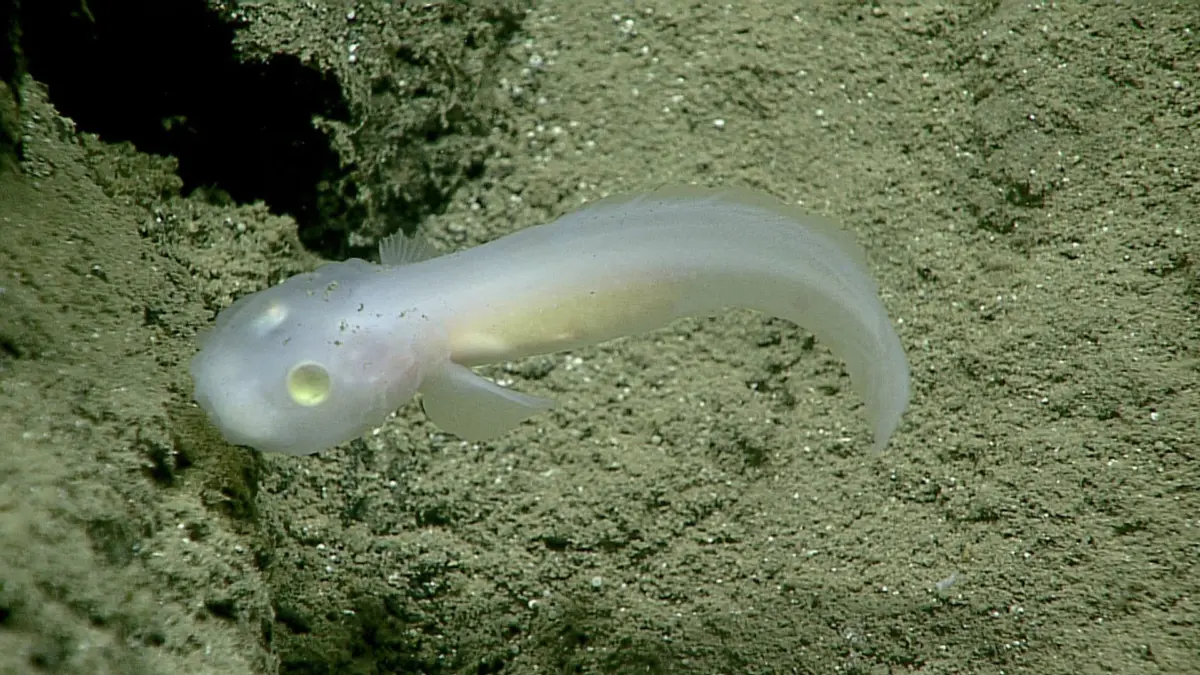
Marine scientists point out that deep-sea trenches act as natural laboratories for studying extremophiles—organisms adapted to environments once thought entirely uninhabitable. The discovery of over 7,000 new species in and around the Mariana Trench trench systems highlights how much of marine biodiversity remains undocumented. Among the most notable discoveries is the hadal snailfish (Pseudoliparis swirei), formally recognized as the deepest-dwelling fish known to science.
Researchers note that because deep-sea organisms experience near-freezing temperatures, absolute darkness, and crushing pressures, their evolutionary adaptations offer profound biochemical and physiological insights. These species depend heavily on marine snow—organic detritus falling from upper ocean layers—or chemosynthetic processes fueled by nutrient-rich mineral plumes spewing from deep-sea hydrothermal vents.
Simultaneously, conservation experts stress that the remote nature of the trench does not isolate it from human influence. The documented presence of anthropogenic debris—such as single-use plastic bags resting on the seafloor of Challenger Deep—serves as an unambiguous reminder of the pervasive nature of marine pollution.
Future Outlook: Protection, Policy, and the Unknown
As humanity looks toward the future of deep-ocean stewardship, the Mariana Trench stands as both a monument of natural wonder and a focal point for environmental vulnerability.
The Imperative of Ocean Mapping and Conservation
Despite growing interest in deep-sea mining, bioprospecting, and marine exploration, more than 70 percent of the global ocean remains unmapped. Conservation advocates argue that humanity cannot sustainably manage or protect environments that remain undocumented. The legal frameworks established by the Mariana Trench Marine National Monument provide a baseline of protection against certain extractive human activities, but they cannot insulate the ecosystem from global pressures like climate change and persistent plastic pollution.
A Call to Global Action
Defending the ocean requires an integrated approach that connects coastal management with abyssal conservation. Safeguarding the health of surface waters directly impacts the organic detritus chains that nourish benthic life down to the deepest trenches. Organizations like the Ocean Conservancy continue to mobilize public support, scientific research, and policy initiatives to secure a resilient global ocean.
Ultimately, unlocking the remaining mysteries of the Mariana Trench and Challenger Deep depends on continued international cooperation, rigorous scientific inquiry, and an unwavering commitment to preserving the integrity of our planet’s most extreme and vulnerable ecosystems.


