











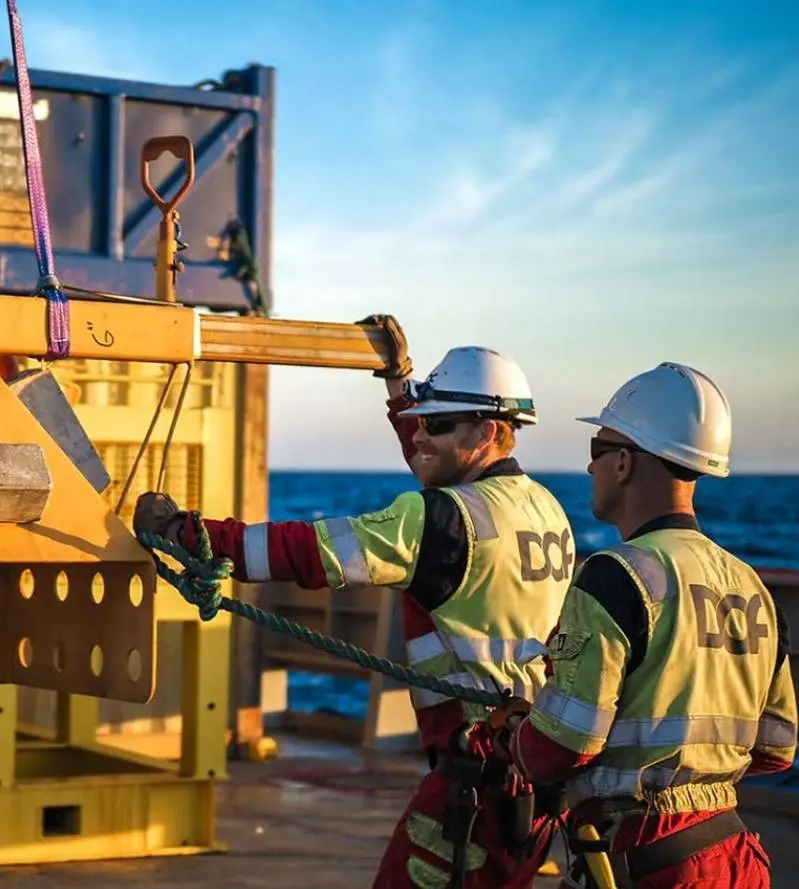
Executive Overview
In a clear signal of the prolonged, multi-year upcycle in the offshore energy sector, Norwegian offshore service giant DOF Group has secured a substantial Letter of Intent (LOI) for one of its high-specification I-class subsea vessels. Announcing the agreement on October 2, 2026, the company revealed that the prospective contract is valued between $50 million and $100 million. The agreement is poised to lock in vessel utilization and integrated services for the first half of 2028, showcasing an extraordinary forward-booking window of nearly 18 months—a phenomenon increasingly common in today’s supply-constrained offshore marine market.
The scope of the anticipated contract goes far beyond a standard time-charter agreement. It encompasses DOF’s comprehensive, in-house suite of marine and subsea services, including advanced project management, engineering, procurement, and complex logistics support. By offering an integrated service model, DOF is positioning itself not merely as an asset provider but as an end-to-end engineering partner capable of de-risking complex offshore operations.
With the final contract award expected to be formalized by mid-November 2026, the offshore industry is closely watching the transaction. Although details regarding the specific client, geographical region, and exact vessel remain under wraps, the financial scale and early commitment window underscore a broader structural reality: high-end subsea construction assets are rapidly becoming the tightest bottleneck in the global offshore supply chain.

Detailed Chronology and Contractual Framework
The progression from initial negotiations to the securing of this high-value LOI highlights the strategic planning required in the modern offshore engineering landscape. Below is the timeline and structural breakdown of the agreement:
[October 2, 2026] --------> [Mid-November 2026] --------> [First Half of 2028]
  LOI Announced              Expected Firm Award            Project Commencement
 ($50M - $100M)             Contract Finalization           Engineering & Offshore Execution
The Timeline of Execution
- October 2, 2026: DOF Group publicly announces the receipt of the LOI for an I-class vessel.
- Mid-November 2026: Target window for resolving outstanding commercial details, finalizing legal terms, and executing the definitive contract.
- First Half of 2028 (H1 2028): Scheduled commencement of offshore operations, preceded by extensive engineering and procurement phases.
Deconstructing the Scope of Work
Rather than a simple bareboat or time charter, this contract leverages DOF’s integrated service model, which has become a key differentiator for the company in a competitive market. The contract structure includes:
- In-House Project Management & Engineering: Comprehensive front-end engineering design (FEED), installation analyses, and operational planning executed by DOF’s specialized engineering offices.
- Procurement Services: Sourcing and managing specialized subsea hardware, rigging, and installation aids required for the campaign.
- Logistics Support: Managing onshore supply bases, vessel mobilization, bunkering, and coordination of third-party services to ensure seamless marine operations.
This turnkey approach allows the client to consolidate risk under a single contractor, eliminating the interface challenges that frequently plague multi-contractor offshore projects.
Deciphering the "I-Class" Asset Class
While DOF Group did not specify which of its I-class vessels has been nominated for this campaign, the company’s fleet includes some of the world’s most capable subsea construction and anchor-handling assets.

Technical Profile of DOF’s High-Spec Tonnage
DOF’s "I-class" designation generally represents versatile, high-capacity vessels designed for deepwater subsea construction, umbilical/flowline installation, and complex subsea intervention works. These vessels are typically characterized by:
- Advanced Dynamic Positioning (DP2 or DP3): Crucial for maintaining precise station-keeping during delicate subsea operations close to existing offshore infrastructure.
- Heavy-Lift Active Heave-Compensated (AHC) Cranes: Typically ranging from 150 to 250 metric tons, allowing for the safe deployment of heavy manifolds, templates, and subsea trees at significant water depths.
- Subsea Work-Class ROVs: Integrated dual-ROV systems capable of operating in deepwater environments to assist in installation and inspection tasks.
- Large Deck Space and High Load Capacity: Essential for carrying heavy subsea structures, umbilical reels, and project equipment, thereby reducing the frequency of port calls.
| Metric | Estimated Range / Capability for I-Class Assets |
|---|---|
| Length Overall (LOA) | 90 to 120+ meters |
| Main Crane Capacity | 150t – 250t Active Heave Compensated (AHC) |
| Accommodation | 90 to 120 berths (suited for client technicians & marine crew) |
| ROV Systems | Dual Work-Class ROVs (typically hangar-housed) |
| Operational Depth | Up to 3,000 meters |
Implied Dayrates and Commercial Value
With a contract value ranging from $50 million to $100 million for a campaign scheduled within a single half-year window (H1 2028), the implied financial metrics are highly favorable. Assuming an active offshore campaign lasting between 90 to 150 days, the blended dayrate—inclusive of engineering, project management, and specialized equipment—could comfortably range between $350,000 and $600,000 per day. This reflects a highly robust pricing environment, indicating that tier-one offshore assets continue to command premium rates as operators scramble to secure capacity.
Supporting Context & Market Metrics
To understand why a client is willing to commit to a major expenditure for 2028 as early as late 2026, one must examine the broader macroeconomic forces shaping the offshore oil, gas, and renewable energy sectors.

The Subsea Supply-Demand Chasm
The offshore marine sector is experiencing the compounding effects of a decade of underinvestment in new vessel construction. Following the downturn of 2014–2015 and the subsequent consolidation wave, shipyards virtually stopped building high-end Subsea Construction Vessels (CSVs) and Anchor Handling Tug Supply (AHTS) vessels.
Vessel Supply Constraints (2026–2028):
┌────────────────────────────────────────────────────────────────────────┐
│ High Shipyard Capex & Long Lead Times (No Newbuilds)                   │
├────────────────────────────────────────────────────────────────────────┤
│ Increased Offshore Wind Foundation & Cabling Demand                    │
├────────────────────────────────────────────────────────────────────────┤
│ Resurgent Deepwater Oil & Gas CAPEX (Brazil, West Africa, GoM)        │
└────────────────────────────────────────────────────────────────────────┘
                       │
                       ▼
          [Severe Shortage of High-Spec CSVs]
                       │
                       ▼
          [Sustained Escalation of Dayrates]
Today, rising interest rates, high inflation, and shipyard capacity being monopolized by container ships and LNG carriers mean that building a new, high-spec subsea vessel is economically prohibitive. With a newbuild lead time of at least three to four years and costs exceeding $250 million, operators are forced to rely on the existing global fleet. Consequently, utilization rates for the top-tier global CSV fleet are hovering near structural maximums (90% to 95% active utilization).
Key Drivers of Global Subsea Demand
- Deepwater Oil & Gas Resurgence: Major deepwater basins—specifically the Brazilian pre-salt plays, West African deepwater fields (Angola, Nigeria, and the emerging Namibian basin), and the US Gulf of Mexico—are experiencing a surge in subsea tie-back projects and Greenfield developments.
- Offshore Wind Integration: High-spec CSVs are increasingly being drawn away from traditional oil and gas work to support offshore wind farm installations. These vessels are critical for cable laying, trenching, subsea substation support, and foundation installation.
- Decommissioning Backlog: In mature basins like the North Sea and shallow-water Gulf of Mexico, regulatory pressure is accelerating the decommissioning of legacy infrastructure, requiring heavy-lift subsea vessels for plugging, abandonment, and structural removal.
Strategic Evolution of DOF Group
The securing of this LOI is a testament to the successful turnaround and strategic repositioning of DOF Group over the past few years.
From Restructuring to Market Leadership
Following a complex and highly publicized financial restructuring completed in 2023, DOF emerged with a radically cleaned-up balance sheet, significantly reduced debt, and a highly disciplined approach to capital allocation.
The company’s market position was further transformed by its strategic acquisition of Maersk Supply Service (MSS), finalized in 2024. This transaction created an offshore powerhouse, combining DOF’s deepwater subsea expertise with Maersk’s high-quality anchor handling and subsea fleet. The integrated entity has achieved significant scale, allowing it to offer global clients unprecedented fleet flexibility and an unmatched geographical footprint.
Backlog Visibility and Financial Health
By securing long-term backlog extending into 2028, DOF is executing a classic de-risking strategy:
- Revenue Predictability: Securing multi-million-dollar contracts far in advance insulates the company against short-term market fluctuations.
- Debt Amortization: Strong, predictable cash flows allow DOF to rapidly pay down its remaining debt, driving equity value for shareholders.
- Leverage for Future Negotiations: Having a significant portion of its fleet booked through 2027 and 2028 gives DOF immense pricing power when negotiating remaining open slots with other operators.
Future Outlook & Industry Implications
The offshore subsea sector is entering a phase of sustained profitability that looks remarkably different from previous cycles. The prevailing trend is defined by disciplined capital allocation, a lack of speculative newbuilds, and close collaboration between operators and service providers.
What Lies Ahead for the 2028 Subsea Market?
As we look toward 2028, the industry is likely to witness:
- Even Longer Lead Times: Operators who delay booking tonnage may find themselves locked out of key execution windows, potentially delaying multi-billion-dollar field developments.
- Consolidation of Service Providers: Tier-one contractors will continue to expand their integrated service offerings, leaving less room for pure-play, asset-only vessel owners.
- Technology Integration: Increased reliance on remote ROV operations, digitalization, and hybrid propulsion systems to meet stringent scope-3 emission targets set by major oil companies and governments.
Conclusion
DOF Group’s latest LOI is more than just a successful commercial deal; it is a bellwether for the structural strength of the offshore marine sector. As the industry marches toward 2028, the value of high-spec marine assets coupled with top-tier engineering expertise has never been clearer. For DOF, this contract serves as another building block in its post-restructuring growth story, cementing its status as a premier partner for global offshore energy development.


