











Executive Overview
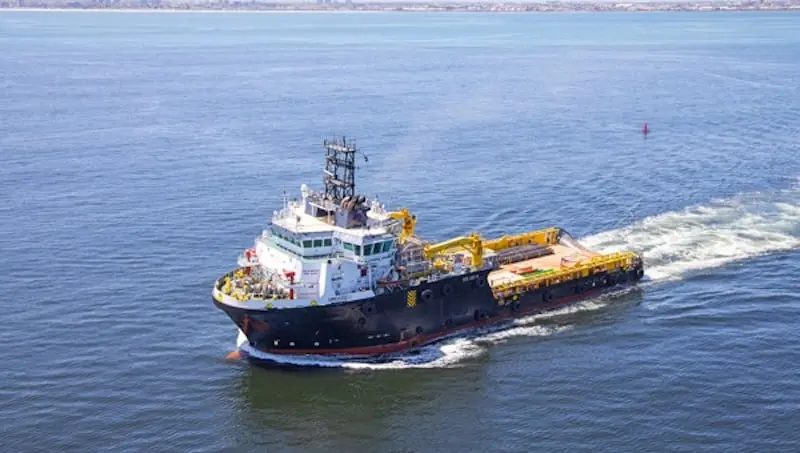
A profound tragedy has struck the international and South African maritime communities following a fatal training or operational accident off the southern coast of South Africa. On Wednesday, September 30, three seafarers lost their lives and two others remain missing after a fast rescue boat, deployed from the state-contracted emergency towing vessel (ETV) Umkhuseli, capsized during an urgent rescue attempt. The vessel, operated by African Marine Solutions (AMSOL) under a strategic partnership with the South African Maritime Safety Authority (SAMSA) and the Department of Transport, was performing safety standby operations approximately 47 nautical miles south of Mossel Bay when the incident occurred.
The disaster unfolded when a crew member fell overboard from the deck of the Umkhuseli. In a rapid response to save their colleague, four crew members launched the vessel’s fast rescue boat (FRB). However, the rescue craft capsized shortly after deployment, casting all five crew members into the volatile waters of the Agulhas Bank.
A massive multi-agency air and sea search-and-rescue (SAR) operation succeeded in recovering three crew members, who were subsequently pronounced dead. Despite exhaustive efforts by national defense, police, and civilian rescue assets, the remaining two mariners could not be found. SAMSA has since concluded the active search phase, transitioning the operation into a recovery and investigative mission.

This catastrophic event highlights the extreme perils faced by maritime first responders. It has raised critical questions regarding operational safety protocols, equipment reliability under heavy sea states, and the immense pressure placed on South Africa’s sole dedicated emergency towing and salvage resource during a period of unprecedented regional shipping traffic.
Detailed Chronology
[September 30: Standby Operations near Mossel Bay]
       │
       ├──> [Crew Member Falls Overboard]
       │
       ├──> [Fast Rescue Boat (FRB) Launched with 4 Crew]
       │
       ├──> [FRB Capsizes in Heavy Seas (5 Men in Water)]
       │
       ├──> [MRCC Cape Town Activates SAR Operations]
       │
       └──> [Three Deceased Recovered; Two Seafarers Remain Missing]
The sequence of events on September 30 began during a routine but high-stakes safety standby mission. The Umkhuseli was positioned near an offshore oil and gas platform in the Bredasdorp Basin, approximately 47 nautical miles south of Mossel Bay—an area notorious for its sudden weather shifts and powerful oceanic swells.
The Initial Incident
During operations on the deck of the Umkhuseli, an unidentified crew member lost footing and fell overboard into the cold, high-energy waters. Observing the emergency, the vessel’s command immediately initiated "Man Overboard" (MOB) protocols.
The Deployment and Capsize
Four trained crew members quickly boarded the vessel’s fast rescue boat (FRB), a specialized rigid-hulled inflatable boat (RHIB) designed for rapid acceleration and maneuverability in extreme sea states. The FRB was launched via the ship’s davit system.

Shortly after hitting the water and attempting to navigate toward the drifted crew member, the rescue boat capsized. The exact mechanical or environmental trigger—whether a rogue swell, a steering failure, or an issue during the launch phase—remains under investigation. The capsize left all five mariners struggling in the open ocean.
The Mobilization of Search and Rescue (SAR)
At the Umkhuseli’s distress call, the Maritime Rescue Co-ordination Centre (MRCC) in Cape Town assumed command of the rescue effort. The MRCC activated a comprehensive sea and air response, utilizing both public and private sector assets:
- Commercial Diversions: Nearby merchant vessels were immediately diverted to the coordinates to provide visual lookout and radar tracking.
- National Sea Rescue Institute (NSRI): Deep-sea rescue vessels from local stations, including Mossel Bay, were dispatched.
- South African Police Service (SAPS): The SAPS Water Wing and air support units deployed helicopters to conduct aerial sweeps.
- AMSOL Support: AMSOL diverted its nearby tug, the Inkanyezi, to assist with search patterns and provide logistical support.
The Recovery and Suspension of Active Search
By Wednesday evening, rescue teams recovered three of the five crew members. Despite receiving immediate medical attention, all three were declared deceased.
On Thursday, October 1, after conducting extensive search grids covering dozens of square nautical miles, SAMSA and the MRCC determined that the window of survivability had closed. The active search and rescue operation was officially terminated. The focus has transitioned to a recovery operation, with the tug Inkanyezi remaining on scene to monitor the area for the two missing seafarers.
Supporting Context & Metrics
To understand the gravity of this accident, it is necessary to examine the operational environment of the South African coast, the critical role of the Umkhuseli, and the unique challenges of Fast Rescue Boat (FRB) operations.
+-------------------------------------------------------------------------+
|                      THE AGULHAS BANK RISK PROFILE                      |
+-------------------------------------------------------------------------+
|                                                                         |
|  [Winds]        Frequent Gale-Force Westerlies / South-Easterlies       |
|                                                                         |
|  [Currents]     Agulhas Current (up to 5 knots) colliding with swells   |
|                                                                         |
|  [Swell Heights] Average 3–5 meters; frequent rogue waves >10 meters    |
|                                                                         |
|  [Traffic]      Surge in Cape Route transits due to Red Sea diversions  |
|                                                                         |
+-------------------------------------------------------------------------+
The Strategic Role of the Umkhuseli
The Umkhuseli (IMO: 9425409) is a highly capable, 89-meter anchor handling tug supply (AHTS) vessel boasting a bollard pull of approximately 220 tonnes. It serves as South Africa’s primary Emergency Towing Vessel (ETV).
Under a long-term contract with SAMSA and the Department of Transport, the Umkhuseli is charged with safeguarding one of the world’s most treacherous and vital shipping lanes. Its responsibilities include:
- Emergency Towage: Intercepting disabled mega-containerships, tankers, and bulkers before they drift aground.
- Salvage Support: Providing heavy-lift and stabilizing capabilities during maritime disasters.
- Environmental Protection: Deploying oil spill response equipment.
- Search and Rescue (SAR): Acting as a highly stable platform for deep-sea rescues.
In recent months, the Umkhuseli has been exceptionally active. Following the Red Sea shipping crisis, which forced hundreds of vessels to bypass the Suez Canal in favor of the Cape of Good Hope, maritime traffic around South Africa has surged. The Umkhuseli was recently deployed to assist disabled and drifting commercial vessels off Cape Town, Port Alfred, and Algoa Bay. This surge in traffic has placed a continuous operational demand on the vessel and its crew.
The Physics and Hazards of Fast Rescue Boat Operations
Fast Rescue Boats (FRBs) are vital tools for saving lives, but their deployment is widely recognized as one of the most hazardous tasks in commercial seafaring.
| Operational Hazard | Description | Mitigation Strategy |
|---|---|---|
| Launch and Recovery Vulnerability | The interface between a rolling mother vessel and a floating FRB during launch can cause the boat to slam against the hull or suffer premature hook release. | Use of specialized wave-compensating davits and tension-retaining painter lines. |
| Tripping and Hydrodynamic Forces | If an FRB is towed or dragged sideways by the mother vessel’s wake or current, it can "trip" and capsize instantly. | Intensive crew training on coxswain maneuvers and quick-release hook mechanisms. |
| Swell and Wind Collisions | High winds and steep swells can get under the bow of a lightweight, high-speed FRB, flipping it backward (blow-over). | Careful throttle management and aligning the launch angle with the mother vessel’s lee. |
Official Statements
The maritime community has reacted with profound grief to the loss of the AMSOL crew members, who were well-known and respected professionals within the regional industry.
Dan Ngakane, Chief Executive of African Marine Solutions (AMSOL), expressed the company’s devastation:
"It is with a deep sense of sadness that we confirm the passing of three of our much loved and respected colleagues. This is a dark day for the AMSOL family. Our immediate priority is to support the families of all five seafarers involved in this tragic incident, as well as our broader crew complement who are dealing with the shock of losing their colleagues."
AMSOL confirmed that all five crew members were South African nationals: one residing in Durban and four in Cape Town. The company has dispatched grief counselors and executive representatives to support the affected families.
The South African Maritime Safety Authority (SAMSA) also issued a formal statement outlining the regulatory actions being taken:
"SAMSA expresses its deepest condolences to the families, friends, and colleagues of the seafarers who lost their lives or remain missing. An incident of this nature, involving a vessel dedicated to the safety of others, is felt deeply across the entire maritime sector. We have initiated a preliminary inquiry under the Merchant Shipping Act to establish the facts surrounding the capsize and to ensure that any lessons learned are integrated into future maritime safety regimes."
Future Outlook and Investigations
As the initial shock of the tragedy subsides, attention is shifting toward the formal investigations that will analyze the technical, environmental, and human factors behind the accident.
                     [Incident Occurs]
                            │
                            ▼
               [Preliminary SAMSA Inquiry]
                            │
       ┌────────────────────┴────────────────────┐
       ▼                                         ▼
[Technical Evaluation]                 [Operational Protocols]
 • Davit & release hooks                • Weather limits for launch
 • FRB stability & buoyancy             • Crew fatigue & training
 • PPE & survival gear performance      • Emergency response procedures
The Scope of the Inquiries
Two distinct investigations are currently underway:
- Internal AMSOL Investigation: This will focus on operational compliance, equipment maintenance records, crew training logs, and the specific decision-making process that led to the launch of the FRB.
- External SAMSA Preliminary Inquiry: As the statutory regulator, SAMSA will conduct an independent marine casualty investigation. This inquiry will determine if there were violations of the Merchant Shipping Act, assess the seaworthiness of the rescue equipment, and examine if broader regulatory updates are required for ETV operations in South African waters.
Key Areas of Inquiry
Investigators are expected to focus heavily on several critical factors:
- Sea State and Environmental Thresholds: What were the exact wave heights, wind speeds, and current velocities at the time of the launch? Did the conditions exceed the certified operational limits of the FRB?
- The Capsize Mechanism: Did the FRB capsize due to environmental forces alone, or did a mechanical failure—such as a steering failure or a malfunctioning quick-release hook—contribute to the instability?
- Personal Protective Equipment (PPE): Investigators will review the performance of the crew’s immersion suits, lifejackets, and emergency beacons (EPIRBs/PLBs) to determine why the recovered crew members could not be saved and why two remain missing.
Implications for Offshore Safety
This tragedy is likely to prompt a review of standby and rescue protocols for offshore vessels operating in the Southern Ocean and Agulhas Bank. The shipping industry may see renewed calls for automated launch systems, enhanced buoyancy standards for rescue craft, and stricter weather limitations on launching small manned boats in open ocean conditions.
For South Africa, the temporary loss of full operational focus from its primary ETV comes at a challenging time. With global shipping routes diverted around the Cape, the safety of these waters is more critical than ever. The lessons learned from the Umkhuseli disaster will be vital in ensuring that those who risk their lives to save others are protected by the highest possible safety standards.


