











Executive Overview
The global public transportation sector is undergoing a profound, technology-driven evolution. Driven by the urgent need for operational efficiency, enhanced passenger experiences, and rigorous safety standards, transit agencies, motorcoach operators, and municipal leaders are rapidly adopting innovative solutions. From artificial intelligence (AI)-powered environmental monitoring and advanced fare collection systems to cutting-edge fire suppression technologies and cloud-native dispatch software, the industry is modernizing at an unprecedented pace.
Recent developments highlighted in the Biz Briefs ecosystem underscore how manufacturers, software providers, and transit authorities are collaborating to address legacy challenges. Fleet modernizations, such as Metrolinx’s expanded procurement of high-capacity motorcoaches and Jefferson Transit Authority’s agile refurbishment programs, demonstrate a continued commitment to sustainable infrastructure. Meanwhile, technological breakthroughs—such as Luminator Technology Group’s Transit Environment Intelligence, Optibus’s Real-Time Suite, and Spare AI—signal a paradigm shift toward data-driven, automated operations.
This comprehensive report examines the major partnerships, acquisitions, and technological investments shaping the future of mobility, providing an authoritative breakdown of how these advancements are transforming transit networks across North America and beyond.
Detailed Chronology of Industry Developments
The past several weeks have yielded a flurry of announcements across the transportation sector. Below is a detailed chronological breakdown of the key partnerships, software rollouts, and vehicle acquisitions driving modern mobility.
Luminator Introduces AI-Powered Bus Stop Monitoring
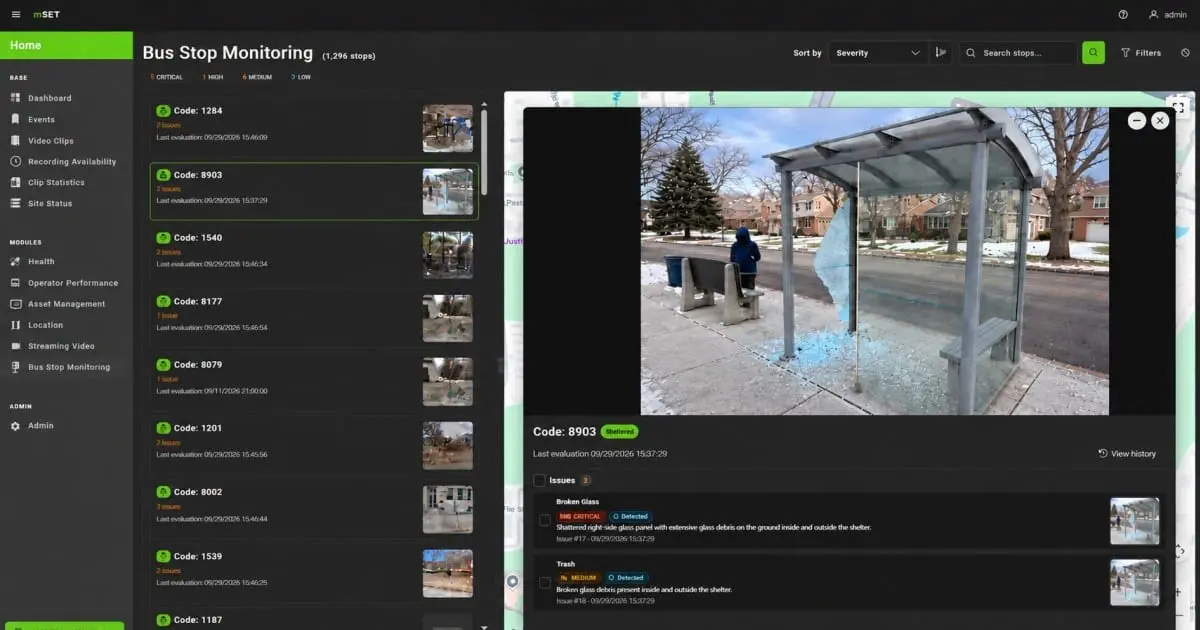
Luminator Technology Group launched Transit Environment Intelligence (TEI), a pioneering capability designed to give transit agencies unprecedented visibility into the physical condition of bus stops and shelters across their networks. Leveraging images captured by transit vehicles during normal daily service, combined with precise location data, mSET software, and AI-assisted analysis, TEI automates the identification of infrastructure wear and tear.
As the first capability of its kind in the transit industry, TEI is currently available for agencies to pilot. By integrating stop and shelter conditions into an actionable workflow, TEI assists agencies in optimizing maintenance prioritization, asset stewardship, accessibility visibility, and passenger environment management. This allows transit providers to act as stronger community partners, ensuring safer and more comfortable travel environments for riders.
Halifax Transit and Masabi Roll Out Account-Based Ticketing
In Canada, Halifax Transit officially launched Account-Based Ticketing (ABT) across its entire bus and ferry network in strategic partnership with Masabi. Utilizing the HFXGO app, riders can now board vehicles simply by scanning their mobile devices, eliminating the need to purchase specific tickets or passes beforehand.
The system features automatic fare capping. Regardless of how many journeys an individual takes, adult riders never pay more than a daily maximum of $7.50 or a monthly maximum of $90. Concession and youth fares are similarly capped at reduced rates. Crucially, bus and ferry journeys count toward the same caps, unifying what was once a fragmented fare experience. This rollout builds upon the initial HFXGO mobile ticketing deployment from November 2023, with Halifax Transit planning to introduce Open Payments—allowing direct contactless bank card and mobile wallet payments—in the coming months.
Optibus Launches Real-Time Suite for Enhanced CAD/AVL Accuracy
Optibus unveiled its Real-Time Suite, a cloud-native intelligence layer built to enhance existing Computer-Aided Dispatch and Automatic Vehicle Location (CAD/AVL) systems. Operating as part of Optibus Control, the software integrates seamlessly with legacy hardware without requiring costly equipment upgrades.
The Real-Time Suite utilizes schedule data and live vehicle feeds to deliver superior Estimated Arrival Times (ETAs), live fleet monitoring, automatic detour detection, passenger alerts, and centralized compliance reporting. By sitting between existing hardware and passenger-facing tools, the platform equips dispatchers with immediate visibility, helping transit agencies overcome chronic challenges like inaccurate ETAs and fragmented communication channels.
MCI Expands Metrolinx Fleet with 47 Additional D45 CRT Coaches
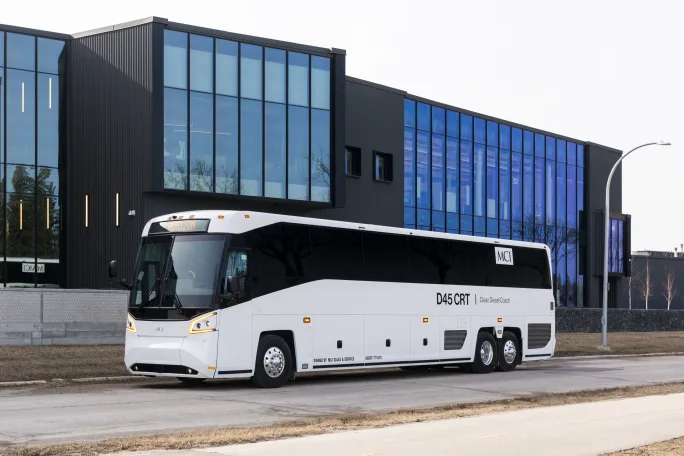
Motor Coach Industries (MCI) secured a significant expansion of its contract with Metrolinx, adding 47 additional 45-foot D45 CRT diesel commuter coaches to the agency’s pipeline.
Stemming from two separate agreements—one for 33 coaches and another for 14—this latest order expands an earlier 97-coach procurement announced in July 2025 to a total of 144 units. Combined with an initial purchase of 80 coaches in early 2025, Metrolinx’s total commitment now stands at 224 MCI coaches. These high-capacity vehicles will directly replace aging models in the fleet, supporting efficient regional transit across the Greater Toronto and Hamilton Area.
Complete Coach Works Secures Washington State Refurbishment Contract
Complete Coach Works (CCW) was awarded a contract to supply and refurbish a 2013 30-foot Gillig Low Floor diesel transit bus for the Jefferson Transit Authority in Port Townsend, Washington. The authority utilized the Washington State Department of Enterprise Services (DES) cooperative purchasing contract to streamline procurement.
By leveraging this state-approved cooperative contract, Jefferson Transit expedited its fleet modernization timeline while maintaining strict public purchasing compliance. The refurbished vehicle will soon enter service, supporting daily transit operations throughout Jefferson County.
ioki Marks U.S. Debut with Georgetown University
European on-demand software provider ioki announced its entry into the U.S. market through a partnership with Georgetown University in Washington, D.C. Commissioned by the university’s Office of Transportation Management (OTM), the late-night safe ride service—dubbed "GUTS-2-Go"—will launch later this month.
Running on the ioki Platform, the service includes dedicated passenger and driver mobile applications alongside robust operations management tools. Georgetown selected ioki based on its extensive European track record, which spans more than 200 on-demand transit deployments since 2018, particularly in low-density or off-peak scenarios where traditional fixed-route services are economically unfeasible.
Troman Industries and HCT Partner on Battery Fire Protection
Troman Industries and Hazard Control Technologies Inc. (HCT) formed a global partnership focused on advancing mobile fire protection for public transit fleets. The collaboration merges Troman’s Trident thermal detection, notification, and suppression platform with HCT’s F-500 Encapsulator Agent technology and specialized portable firefighting equipment.
Designed to combat the unique fire risks associated with lithium-ion batteries, the integrated system identifies developing thermal hazards in real time and deploys cooling and fuel encapsulation agents at the earliest actionable moment. This early intervention aims to arrest thermal runaway before localized incidents escalate into catastrophic vehicle fires.
Spare Unveils Agency-Wide AI Platform
Spare introduced Spare AI, an agency-wide artificial intelligence platform engineered to unify the disparate data systems and workflows utilized by transit agencies and cities.
Spare AI empowers transit personnel to retrieve information instantly without needing to know its physical database location. Using autonomous AI agents and automated workflows, the platform handles complex operational tasks such as investigating service disruptions, generating compliance reports, monitoring network changes, and flagging anomalies. Concurrently, Spare launched its Spare AI Founding Agency Program, a pilot cohort designed to provide participating transit agencies with early access, subsidized credits, and direct engineering support to shape the platform’s future development.
Supporting Context & Operational Metrics
To fully appreciate the scope of these industry developments, it is essential to examine the underlying metrics and operational frameworks guiding modern public transit transformations.
| Company / Agency | Initiative / Project | Key Metrics & Technical Scope | Operational Impact |
|---|---|---|---|
| Luminator Technology Group | Transit Environment Intelligence (TEI) | Integrates vehicle-captured imagery, location data, and AI analysis. | Automates bus stop/shelter maintenance prioritization and asset stewardship. |
| Halifax Transit & Masabi | Account-Based Ticketing (ABT) | Integrated across bus and ferry networks via HFXGO app; fare caps at $7.50 daily / $90 monthly. | Eliminates upfront ticketing decisions; unifies multi-modal travel into a single ledger. |
| Optibus | Real-Time Suite | Cloud-native intelligence layer sitting atop legacy CAD/AVL hardware. | Improves ETA accuracy, automates detour detection, and centralizes compliance reporting. |
| MCI & Metrolinx | D45 CRT Diesel Commuter Coaches | 47 newly added coaches, bringing total Metrolinx commitment to 224 vehicles in 2025. | Replaces aging regional fleet inventory; increases high-capacity commuter throughput. |
| Complete Coach Works | Jefferson Transit Bus Refurbishment | Refurbishment of a 2013 30-foot Gillig Low Floor diesel transit bus via DES cooperative contract. | Accelerates fleet modernization while ensuring strict regulatory and public procurement compliance. |
| ioki & Georgetown University | GUTS-2-Go On-Demand Service | First U.S. deployment of ioki’s European-proven on-demand transit platform. | Provides secure, reliable late-night transportation for students and staff. |
| Troman & HCT | Trident & F-500 Fire Protection Partnership | Combines real-time thermal detection with encapsulator agent suppression technology. | Mitigates lithium-ion battery fire risks through early detection and rapid suppression. |
| Spare | Spare AI Platform | Agency-wide AI ecosystem connecting disparate data silos via automated workflows. | Streamlines administrative workloads, report generation, and cross-departmental communication. |
These metrics highlight a clear industry trend: transit organizations are no longer relying solely on mechanical hardware upgrades. Instead, they are layering intelligent software, predictive maintenance models, and automated compliance frameworks over their physical assets to extract maximum operational value.
Official Perspectives and Industry Insights
The convergence of AI, advanced fare media, and robust safety protocols has elicited strong reactions from industry leaders and institutional stakeholders.
Commenting on the integration of artificial intelligence into daily transit infrastructure, technology developers emphasize that automation is designed to empower human workers rather than replace them. Platforms like Spare AI and Optibus Real-Time Suite are engineered to alleviate the administrative burdens traditionally borne by dispatchers and operations managers. By breaking down data silos, staff can transition from reactive problem-solving to proactive network management.
In the realm of passenger-facing technology, the collaboration between Halifax Transit and Masabi marks a watershed moment for Canadian mobility. Public transit authorities are increasingly recognizing that riders demand the same frictionless payment experiences found in the commercial retail and ride-hailing sectors. By implementing account-based ticketing and automated fare capping, agencies remove financial penalties for occasional riders, thereby encouraging broader public transit adoption.
On the manufacturing and safety fronts, partnerships such as the one forged between Troman Industries and Hazard Control Technologies reflect the industry’s proactive stance on alternative-fuel safety. As transit fleets electrify, managing thermal runaway in lithium-ion battery packs remains a top priority. Industry experts note that combining early-stage thermal detection (Trident) with advanced encapsulator agents (F-500) represents the gold standard in mitigating catastrophic fleet losses.
Future Outlook: The Next Horizon in Public Mobility
As the transportation sector looks toward the remainder of the decade and beyond, several key themes will dictate industry success:
- Hyper-Personalization and Unified Mobility: The boundary lines between distinct transit modes (buses, ferries, microtransit, and rail) will continue to blur. Projects like Halifax Transit’s multi-modal fare capping prove that seamless, account-based journeys are the baseline expectation for modern commuters.
- Mainstream AI Integration: Artificial intelligence will transition from an experimental luxury to core infrastructure. Platforms that automate compliance, predictive maintenance (such as Luminator’s TEI), and dynamic dispatching (Optibus and Spare) will become standard across agencies of all sizes.
- Resilient Fleet Engineering: While zero-emission vehicle adoption remains a primary long-term goal, the immediate necessity for reliable regional transit has spurred substantial investments in high-capacity clean-diesel and refurbished coaches (MCI and CCW). Concurrently, safety standards regarding battery chemistry and thermal suppression will face stricter regulatory oversight, cementing partnerships like Troman-HCT as critical components of fleet management.
- Agile Public Procurement: To keep pace with rapid technological obsolescence, transit authorities will increasingly rely on cooperative purchasing agreements and modular software updates. This agility allows municipal agencies to deploy cutting-edge innovations—such as ioki’s university microtransit solutions—without getting bogged down by protracted bureaucratic procurement cycles.
Ultimately, the transportation sector is entering an era defined by intelligence, resilience, and adaptability. By embracing comprehensive digital ecosystems and forging strategic cross-industry partnerships, transit agencies are well-positioned to meet the evolving mobility demands of communities worldwide.


