











Executive Overview
Tucked into the dramatic curve of the Yorkshire coast, Scarborough stands as a testament to centuries of maritime heritage, royal intrigue, and the enduring British love affair with the seaside. Crowned by a formidable medieval fortress that looms high above two sweeping sandy bays, this vibrant North Sea destination boasts a complex history woven from Viking invasions, medieval commerce, and a fortuitous 17th-century discovery of mineral-rich waters.
Long before the concept of a "beach holiday" entered the cultural lexicon, Scarborough established itself as the United Kingdom’s very first seaside resort, welcoming wellness seekers and nobility alike. Today, the town presents a compelling juxtaposition of old-world grandeur and modern coastal vitality. From the nostalgic amusement arcades and Ferris wheels lining its historic promenades to the quiet, rolling green hills of North Bay and the bustling, trawler-filled waters of Scarborough Harbour, the town offers a rich tapestry of experiences.
Located less than a two-hour drive or transit journey from Leeds—home to the international Leeds Bradford Airport (LBA)—Scarborough is exceptionally accessible. With a resident population hovering around 100,000, according to the 2021 Office for National Statistics (ONS) census, the town possesses the infrastructure of a thriving regional hub while retaining the intimate charm of a coastal village. Accommodations range from cozy bed-and-breakfasts to the magnificent, Wes Anderson-esque architecture of the 19th-century Grand Hotel Scarborough. Divided distinctly into South Bay, the historic castle headland, and North Bay, Scarborough offers something for every traveler: food enthusiasts seeking ultra-fresh seafood, history buffs tracking millennia of civilization, and nature lovers eager to explore rugged cliffs and serene, themed parks.

Detailed Chronology: From Ancient Strongholds to Victorian Splendor
To truly understand Scarborough, one must trace its evolution through the annals of time. The town’s historical footprint spans millennia, marked by strategic fortification, commercial booms, and architectural reinvention.
[Iron Age Settlement] ──> [Viking Raids & Destruction] ──> [Medieval Castle Construction] ──> [1626: Discovery of Mineral Springs] ──> [1867: Rise of Victorian Grandeur]The Ancient and Medieval Foundations
Long before stone fortifications crowned the high promontory, Scarborough’s strategic geography was recognized by early settlers. Archaeological excavations reveal that the headland hosted an Iron Age settlement and later a Roman signal station. However, the town’s early medieval narrative is written in blood and fire. In the late 10th century, Viking raiders led by Thorkell Havellinson sacked and burned the settlement—an event commemorated in local folklore and historical chronicles.
The landscape shifted dramatically in the 12th century under the reign of King Henry II, who recognized the defensive potential of the towering headland. He commissioned the construction of the stone castle, which rapidly evolved into a royal fortress. Throughout the medieval era, Scarborough blossomed not only as a military stronghold but as a bustling port and market town, hosting legendary trade fairs that drew merchants from across Europe.
The Birth of the British Seaside Resort (1626)
The defining turning point in Scarborough’s history occurred in 1626, a development that would fundamentally alter British leisure culture. A local woman named Mrs. Elizabeth Farrer discovered an acidic, mineral-rich spring bubbling from the cliff at the foot of the southern headland. Believed to possess powerful healing and medicinal properties, the waters quickly attracted the attention of the British aristocracy.

Physicians began writing treatises on the health benefits of "spaw" waters, prompting wealthy travelers to make the arduous pilgrimage to the Yorkshire coast. This medical tourism laid the foundational framework for the modern seaside holiday. Visitors did not merely drink the waters; they began bathing in the sea, promenading along the shore, and demanding hospitality infrastructure. Thus, Scarborough inadvertently invented the U.K. seaside resort industry, setting a trend that would sweep the nation’s coastline during the Georgian and Victorian eras.
The Victorian Boom and Architectural Masterpieces
The arrival of the railway in the mid-19th century democratized travel, transforming Scarborough from an exclusive retreat for the elite into a beloved destination for the wider British public. This era of mass tourism sparked a construction boom that defined the town’s architectural skyline.
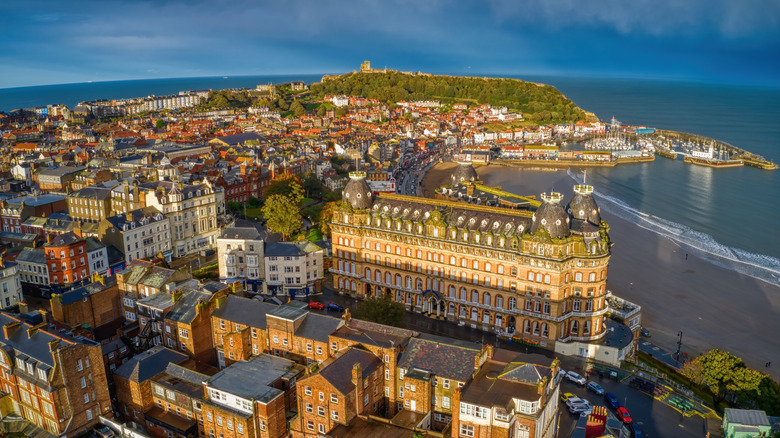
In 1867, the Grand Hotel Scarborough opened its doors. Perched majestically above the South Bay, the 12-floor, four-tower behemoth was designed by the prolific architect Cuthbert Brodrick and stood as the largest hotel in Europe at the time of its completion. Built with a layout representing the calendar year—featuring 12 floors, 52 chimneys, 365 rooms, and four towers representing the seasons—the hotel encapsulated the unbridled ambition and opulent optimism of Victorian engineering.
Simultaneously, civic planners developed public spaces like Peasholm Park in 1912, infusing exotic, Japanese-themed landscape architecture into the traditional British parkland, ensuring that Scarborough remained at the cutting edge of leisure design.
Supporting Context & Metrics: Geography, Infrastructure, and Demography
A comprehensive analysis of Scarborough requires a close examination of its geographic layout, transport networks, and demographic markers, all of which contribute to its enduring viability as a premier tourism and residential destination.
Geographic Division: The Three Realms of Scarborough
Scarborough’s urban morphology is cleanly bifurcated by its central headland, creating three distinct zones, each with its own micro-climate, culture, and visitor demographic:
- North Bay: Characterized by wide stretches of clean sand backed by rolling green hills, North Bay is the quieter, more contemplative side of town. It is favored by surfers, bodyboarders, and families looking to explore rich tide pools at low tide. It also hosts Peasholm Park and the Scarborough Open Air Theatre.
- The Castle Headland: The dramatic limestone cliff separating the two bays, dominated by the ruins of Scarborough Castle and the historic St. Mary’s Church. This elevated ridge offers panoramic vistas of the North Sea and serves as the historical anchor of the municipality.
- South Bay: The bustling, high-energy heart of Scarborough’s traditional tourism. Backed by a steep cliff face, South Bay features a crescent of sand flanked by a historic promenade complete with amusement arcades, ice cream parlors, a Ferris wheel, and the working fishing port of Scarborough Harbour.
Demographic and Economic Metrics
- Population: According to the Office for National Statistics (ONS) 2021 Census data, the broader Scarborough unparished area and surrounding district house a population exceeding 100,000 residents.
- Accessibility: Situated on the Northeast coast of England, Scarborough is exceptionally well-connected. It lies less than a two-hour drive from Leeds via the A64, providing seamless access to Leeds Bradford Airport (LBA), an international transit hub. Direct rail links also connect Scarborough to major northern cities including York, Leeds, Manchester, and Liverpool.
- Tourism Economy: Tourism remains a foundational pillar of the local economy, drawing millions of domestic and international visitors annually. The town’s accommodation sector spans budget-friendly guesthouses, historic architectural landmarks like the Grand Hotel, and high-end boutique properties.
Culinary Heritage: From Fresh Catches to Iconic Chippies
No exploration of Scarborough is complete without examining its robust culinary scene, which bridges traditional British comfort food with world-class, locally sourced seafood.
The Working Harbour and Seafood Excellence
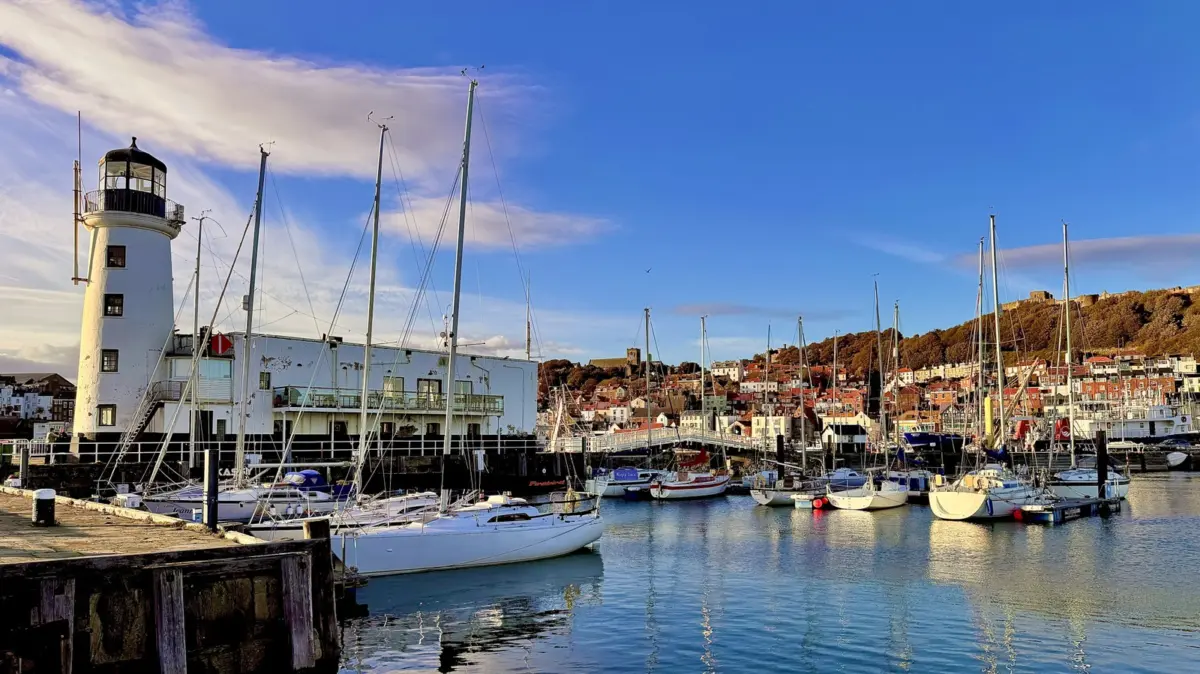
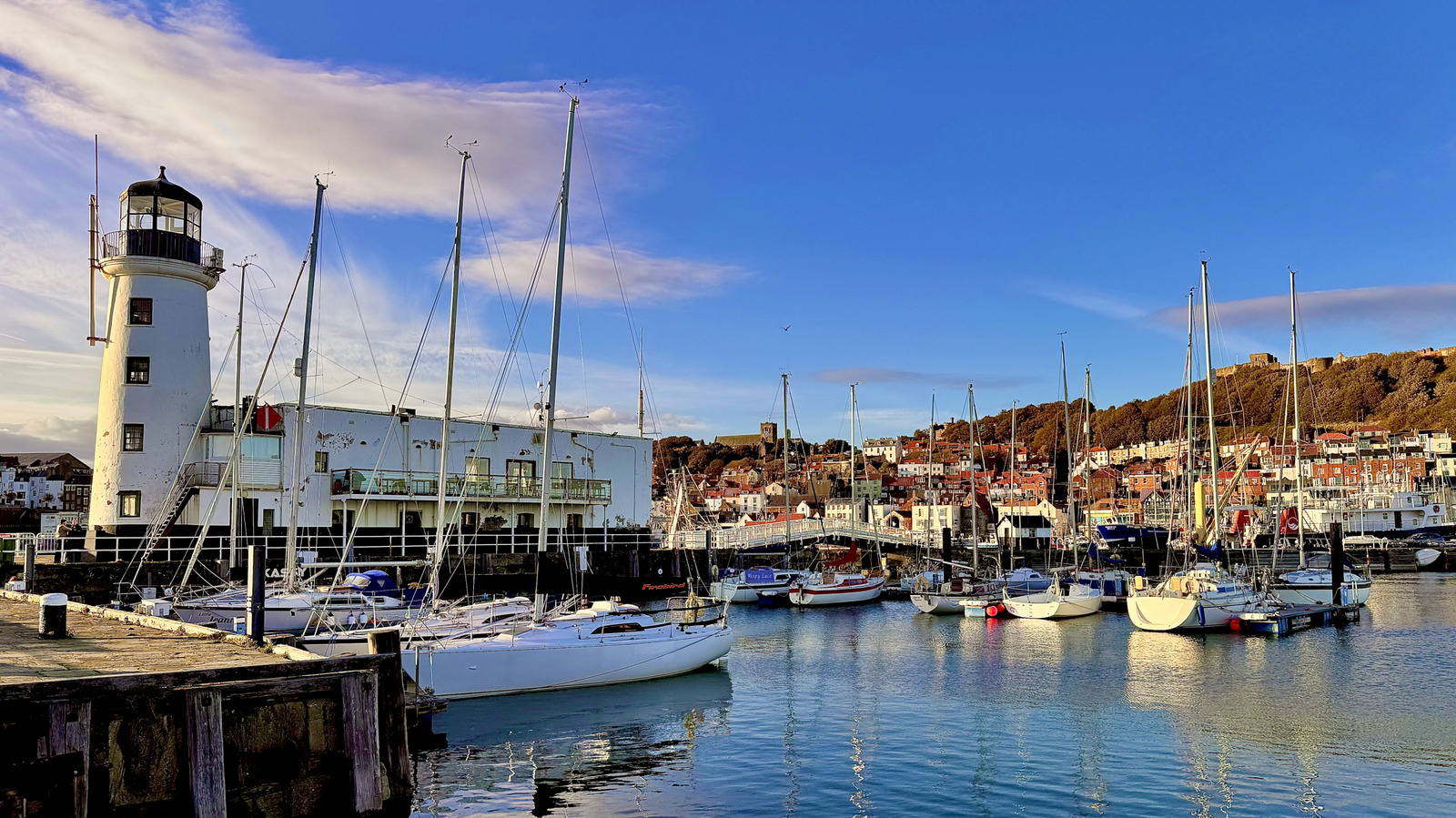
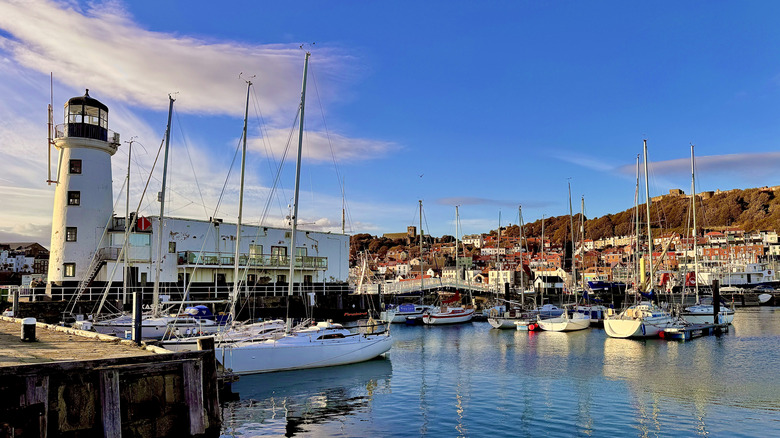
At the northern edge of South Bay lies Scarborough Harbour, where commercial fishing vessels and yachts bob side-by-side against a historic lighthouse. The harbor functions as both a working maritime hub and a culinary destination. Fresh catches—ranging from haddock and lobster to Shetland mussels—are unloaded daily and served directly to patrons in waterfront eateries situated just feet from the water.
Among the standout culinary institutions is Lookout on the Pier, nestled neatly between a row of active fishmongers within the harbor precinct. Boasting a stellar 4.6-star rating on Google derived from over 1,100 reviews, the restaurant is celebrated for its three-tiered seafood platters and cozy, harbor-view dining rooms.
For travelers seeking the quintessential British "chippy" experience, Lifeboat Fish Bar offers award-winning takeaway classics. Recognized with a Travelers’ Choice Award from Tripadvisor, the establishment exemplifies the timeless appeal of freshly battered fish and golden chips served piping hot in paper packaging along the promenade.
The British Pub Culture
For international visitors—particularly American tourists unaccustomed to the nuances of British hospitality culture—Scarborough provides an ideal masterclass in the traditional pub. Ranging from historic coaching inns with timber beams and open fireplaces to modern taprooms pouring local Yorkshire ales, the town’s pubs serve as community living rooms where locals and travelers mingle freely.
Architectural and Cultural Landmarks
Scarborough’s cultural footprint extends far beyond its shoreline. The town is a treasure trove of heritage sites that narrate the sweep of British history.
┌─────────────────────────┬───────────────────────────────┬────────────────────────────────────────┐
│ Landmark                │ Era / Date                    │ Key Significance                       │
├─────────────────────────┼───────────────────────────────┼────────────────────────────────────────┤
│ Scarborough Castle      │ 12th Century (with Iron Age)  │ Royal fortress atop a 3,000-yr site    │
│ St. Mary's Church       │ 12th Century                  │ Historic parish & grave of Anne Brontë │
│ The Grand Hotel         │ 1867                          │ Victorian architectural masterpiece    │
│ Peasholm Park           │ 1912                          │ Japanese-themed park with lake pagoda  │
└─────────────────────────┴───────────────────────────────┴────────────────────────────────────────┘
Scarborough Castle
Positioned majestically on the headland less than a 20-minute walk from the South Bay promenade, Scarborough Castle commands the coastline. Its grounds encapsulate three millennia of human history, featuring exhibits within the Master Gunner’s House that display artifacts spanning the Iron Age, Roman, medieval, and English Civil War periods. Echoing the atmospheric, windswept ruins of Whitby Abbey further up the Yorkshire coast, the castle grounds offer sweeping vistas of the sea and surrounding countryside. Adult admission starts at approximately $12, with comprehensive audio tours available for visitors.
St. Mary’s Church and Literary Connections
Located a short, ten-minute walk from the castle gates stands St. Mary’s Church, a magnificent 12th-century parish church renowned for its medieval architecture and historic graveyard. Notably, the churchyard is the final resting place of Anne Brontë, the youngest of the famous Brontë literary sisters, who passed away in Scarborough in 1849 while seeking solace in the sea air.
Peasholm Park
For those seeking a blend of horticulture and recreation, Peasholm Park near North Bay offers an idyllic escape. Established in 1912, the park is celebrated for its authentic Japanese theme, centered around a tranquil lake featuring an island pagoda. Visitors can rent dragon pedal boats, stroll through winding woodland paths, or relax at the lakeside café. With a 4.6-star rating and nearly 11,000 reviews on Google, it remains one of the North of England’s most cherished municipal green spaces.
Future Outlook: Sustainable Tourism and Regional Integration
As Scarborough looks toward the future, municipal authorities and tourism boards are focusing on sustainable growth, infrastructure modernization, and regional integration within North Yorkshire.
Balancing Heritage Preservation and Modern Tourism
The primary challenge facing Scarborough is the preservation of its fragile historic assets—such as the medieval stonework of the castle and the Victorian structural integrity of the Grand Hotel—while accommodating an increasing influx of modern visitors. Urban planners are prioritizing pedestrianization projects along the seafront promenades, reducing vehicular congestion in the historic old town, and encouraging eco-friendly travel options, including enhanced bicycle rental networks and electric bus routes connecting the railway station to both North and South bays.
Regional Synergy on the Yorkshire Coast
Scarborough is increasingly positioning itself as the anchor of a broader Yorkshire coastal tourism corridor. By strengthening transit and marketing partnerships with nearby jewels—such as the dramatic cliffside village of Robin Hood’s Bay located within the North York Moors National Park, and the Gothic literary hub of Whitby—regional leaders aim to distribute visitor traffic more evenly throughout the year.
This collaborative approach ensures that Scarborough avoids hyper-seasonal volatility, encouraging shoulder-season tourism focused on wellness retreats, culinary festivals, and heritage exploration. By honoring its legacy as Britain’s original seaside resort while aggressively modernizing its amenities, Scarborough secures its status as a vibrant, resilient, and indispensable jewel of the English coast.


