Executive Overview
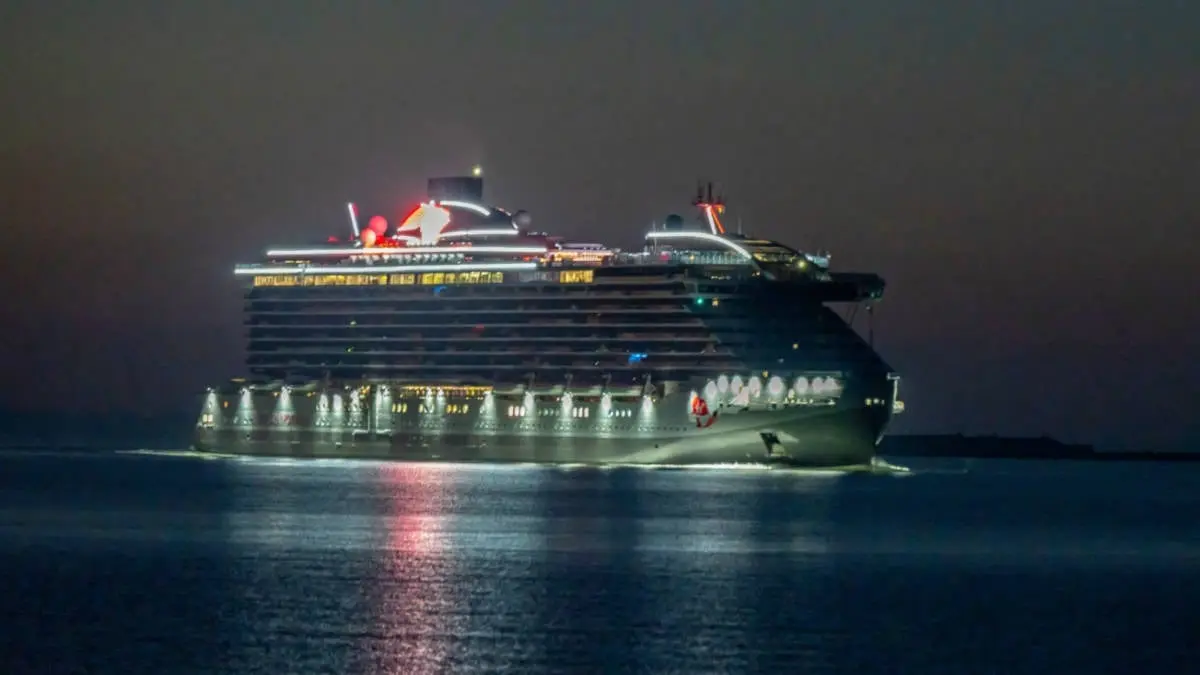
The unpredictable nature of early autumn tropical weather patterns continues to wreak havoc on Pacific cruise schedules, forcing cruise operators to make difficult operational decisions in the interest of passenger safety. Virgin Voyages has officially confirmed a necessary itinerary modification for the October 3 departure of its 2,770-guest vessel, Brilliant Lady, operating out of its homeport in Los Angeles, California.
Originally slated to embark on a classic 7-night Mexican Riviera voyage featuring calls in Cabo San Lucas, Mazatlan, and Puerto Vallarta, the ship’s itinerary has been adjusted to bypass the southernmost tip of the Baja California Peninsula entirely.
The primary catalyst for this operational shift is Hurricane Rachel. While the storm itself has tracked away from the immediate cruise lanes, its aftermath has left behind persistent, heavy ocean swells and severe maritime hazards. Most notably, the port authority in Cabo San Lucas has kept local ports and beaches closed since September 30, with no definitive timeline for reopening.
Consequently, Virgin Voyages has substituted the scheduled Cabo San Lucas call with an added visit to Ensenada on October 4, followed by an extra sea day. This adjustment ensures that guests still experience three distinct days ashore in Mexico while entirely avoiding the perilous sea conditions plaguing the region.
This disruption marks the second consecutive voyage for Brilliant Lady to face significant weather-related rerouting along the Mexican coastline, following a heavily altered sailing in late September due to Hurricane Polo. As cruise lines grapple with heightened tropical activity in the Pacific, passengers and operators alike are reminded of the delicate balance between delivering dream vacations and prioritizing maritime safety.
Detailed Chronology of the Disruption
Understanding the timeline of events leading up to the modification of Brilliant Lady’s October 3 itinerary provides crucial insight into the rapid decision-making processes required by modern cruise operators navigating severe weather anomalies.
September 30: Port Closures and Initial Warnings
The crisis began unfolding in late September as Hurricane Rachel strengthened off the western coast of Mexico. On September 30, local authorities officially closed the port of Cabo San Lucas to all marine traffic due to deteriorating weather conditions, towering waves, and high-velocity winds.

Simultaneously, Virgin Voyages’ operations and meteorology teams were closely monitoring the storm’s trajectory. Recognizing the potential threat to the upcoming October 3 sailing, the cruise line issued preliminary advisories to booked passengers. At that time, travelers were warned that the storm’s path could bring Brilliant Lady dangerously close to the Baja California peninsula by the weekend, necessitating potential contingency plans that ranged from Pacific Northwest alternate routes (such as Seattle, Vancouver, or San Francisco) to coastal California diversions.
October 1–2: Assessing Residual Swells and Infrastructure Realities
As Hurricane Rachel began to weaken and safely move away from the direct route of the cruise ship, operators breathed a temporary sigh of relief regarding direct wind and rain hazards. However, a secondary maritime challenge emerged: lingering ocean swells.
Unlike major mainland destinations such as Mazatlan and Puerto Vallarta—which feature deep-water piers capable of accommodating massive cruise liners directly—Cabo San Lucas presents a unique logistical challenge. The destination lacks a traditional cruise terminal or docking infrastructure. Instead, cruise ships must anchor offshore in the open roadstead, utilizing smaller, specialized tender boats to ferry passengers back and forth between the vessel and the shore marina.
When heavy ocean swells persist, the movement makes the boarding and disembarking process via tender boats exceedingly dangerous, posing a high risk of slips, falls, and crushing hazards against the ship’s hull. With the port remaining closed and sea states failing to subside to safe operating thresholds, corporate leadership made the decisive call to cancel the Cabo San Lucas stop.
October 3: Official Communication and Itinerary Deployment
On the day of embarkation, Virgin Voyages formally confirmed the route change via direct email notifications to booked guests and through updates published on its official travel advisory portal. Passengers boarding the ship in Los Angeles were informed that while the core elements of the Mexican Riviera voyage remained intact—including stops in Mazatlan on October 6 and Puerto Vallarta on October 7—the initial call to Cabo San Lucas would be replaced.
The revised path introduced a prompt stop in Ensenada, Mexico, on October 4, turning what would have been a standard transit day into a vibrant cultural stop, followed by a relaxing day at sea before resuming the scheduled trajectory toward mainland Mexico.
Supporting Context, Ship Metrics, and Regional Impact
To fully appreciate the scope of this itinerary change, it is helpful to examine the vessel itself, the operational realities of cruising the Mexican Riviera, and the broader context of the current Pacific hurricane season.
Vessel Profile: Brilliant Lady
Brilliant Lady is a marvel of modern maritime engineering and design. As part of Virgin Voyages’ acclaimed "Lady Ships" fleet, the vessel boasts a gross tonnage of approximately 110,000 GT, a length of 278 meters, and a passenger capacity capped at roughly 2,770 sailors (guests), supported by an international crew of over 1,100.
Designed exclusively for adult-only travel, the ship emphasizes luxury, wellness, entertainment, and fine dining. Operating out of West Coast ports like Los Angeles, Brilliant Lady represents a cornerstone of Virgin Voyages’ expansion into Pacific itineraries, offering travelers an upscale alternative to traditional mega-ship cruising. However, regardless of a ship’s size, modern luxury vessels remain bound by the laws of physics and maritime safety when dealing with open-roadstead tender operations like those required in Cabo San Lucas.
The Mechanics of Tendering in Cabo San Lucas
Cabo San Lucas is one of the most popular cruise ports along the Mexican Riviera, renowned for its dramatic rock formations (El Arco), vibrant marine life, and luxury resorts. Yet, its geography dictates its vulnerability to ocean conditions.
Because there are no deep-water piers, cruise ships must drop anchor roughly half a mile to a mile offshore. Tender boats—often the ship’s own lifeboats or contracted commercial catamarans—load passengers and navigate the often choppy waters of the Gulf of California meeting the Pacific Ocean.
When a hurricane passes hundreds of miles offshore, it can still generate long-period ocean swells that travel across the basin for days. These swells break unpredictably near the shore and create severe vertical and horizontal surges against the tender platforms. Even if the sun is shining and winds are calm locally, a residual swell of just a few feet can make platform-to-boat transfers unsafe for guests, particularly elderly travelers or those with mobility challenges.
A Domino Effect: Back-to-Back Weather Disruptions
The cancellation of the Cabo San Lucas call on the October 3 sailing is not an isolated incident; rather, it highlights an exceptionally volatile stretch of weather in the region.
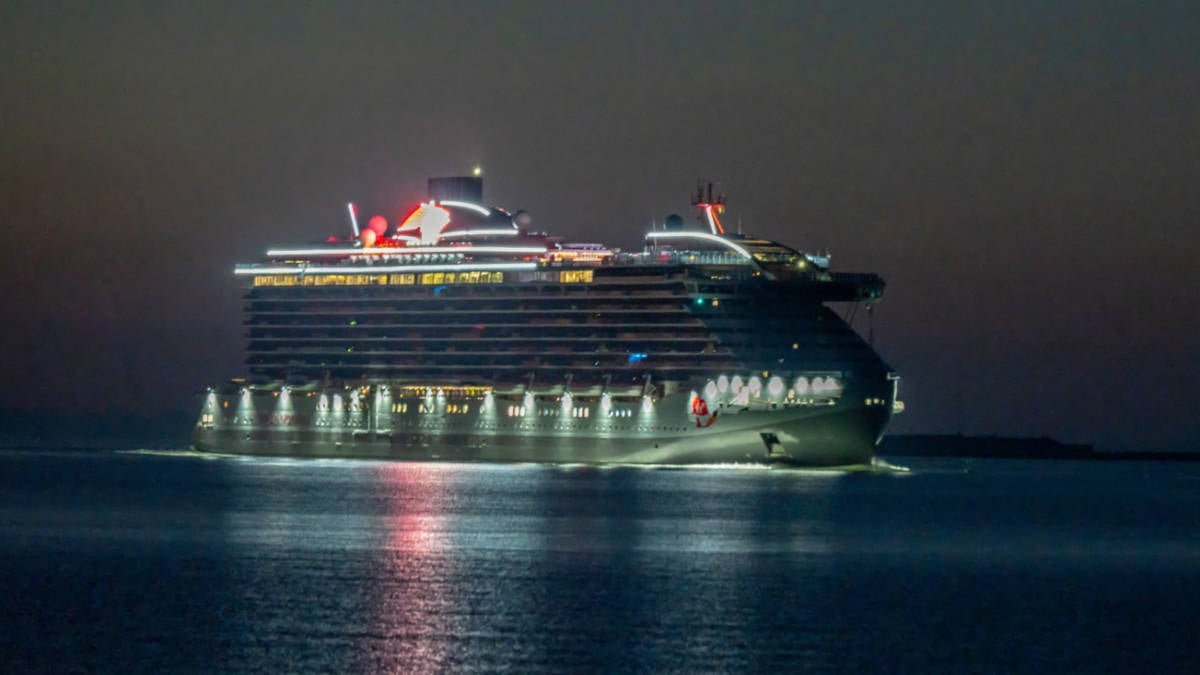
Just prior to this voyage, the September 26 sailing of Brilliant Lady out of Los Angeles faced even more severe disruptions due to Hurricane Polo. That particular voyage was forced to completely abandon its traditional Mexican Riviera loop (Cabo San Lucas, Mazatlan, and Puerto Vallarta) and execute an emergency northern reroute, taking guests to San Francisco, San Diego, and Ensenada instead.
The coincidence of back-to-back hurricanes impacting consecutive voyages underscores the challenges cruise lines face during shoulder-season operations in tropical convergence zones.
Official Statements and Guest Reactions
The announcement of itinerary changes inevitably generates a spectrum of responses from the traveling public, ranging from pragmatic acceptance to vocal disappointment. Virgin Voyages managed the communication transparently, providing clear rationales for their decisions.
Official Communications from Virgin Voyages
In their official communications distributed to guests via email and published prominently on the Virgin Voyages travel advisory web page, company representatives emphasized that safety remains the absolute non-negotiable priority.
“Hurricane Rachel has safely moved away from our route, but it’s left behind residual swell strong enough that tendering into Cabo San Lucas wouldn’t be safe or comfortable,” the cruise line stated in its official advisory.
The statement reassured passengers that the ship’s captain and navigational teams constantly evaluate meteorological data to optimize passenger comfort, avoiding unnecessary rolling or pitching in rough seas while striving to deliver as much of the promised vacation experience as possible.
Passenger Sentiment and Community Discourse
As is common in the modern cruising landscape, impacted guests quickly took to social media platforms, travel forums, and Reddit communities to share updates, compare notes, and vent their frustrations or share relief.
Within the r/VirginVoyages subreddit, where a user shared the official email notification shortly after its release, reactions were mixed. Some passengers expressed audible disappointment over missing out on one of the marquee highlights of a Mexican Riviera cruise.
“I was a bit disappointed to see this [the Ensenada swap], as missing Cabo feels like a major downgrade,” wrote one booked guest, reflecting the sentiments of travelers who had specifically anticipated visiting the iconic Baja California destination.
However, many other passengers tempered their disappointment by comparing the final itinerary to the catastrophic rerouting experienced by the previous week’s sailing. Remembering early warnings that suggested potential emergency diversions as far north as Seattle, British Columbia, or Northern California, the substitution of Ensenada and an extra sea day was widely viewed as a favorable compromise.
“I was a bit disappointed to see this, but compared to the possibility of re-routing all the way up to San Francisco and missing Mexico entirely, I’ll take it!” another community member commented.
Ultimately, most sailors acknowledged that while weather-related modifications are unfortunate, the crew’s proactive management successfully preserved a genuine Mexican coastal experience.
Future Outlook and Ongoing Monitoring
As Brilliant Lady progresses along its adjusted October 3 itinerary, corporate operations teams and future passengers are already looking ahead to determine whether these weather anomalies will continue to cast a shadow over subsequent sailings.
The Outlook for Upcoming Departures
The immediate question facing Virgin Voyages is whether the lingering effects of Hurricane Rachel—or subsequent tropical disturbances forming in the Eastern Pacific—will impact the next scheduled voyage.
Brilliant Lady is currently scheduled to depart Los Angeles on October 10 for its next 7-night Mexican Riviera voyage, which includes a planned call in Cabo San Lucas on October 12. As of right now, port authorities have not provided a definitive reopening schedule for Cabo San Lucas’s tender operations, as infrastructure assessments and cleanup along the marina and beaches are ongoing.
Cruise line executives and meteorologists are maintaining a 24-hour watch on sea conditions in the southern Baja region. If swells fail to dissipate sufficiently over the coming week, Virgin Voyages may be forced to issue similar advance warnings or prepare alternative port configurations for the October 10 departure.
Broader Industry Implications
This series of events highlights a broader trend affecting the cruise industry worldwide: the increasing frequency and unpredictability of weather-related itinerary changes. As global climate patterns shift and tropical storm seasons extend or intensify across both the Atlantic and Pacific basins, cruise lines are investing heavily in advanced onboard weather-routing software, flexible port agreements, and robust communication protocols.
For Virgin Voyages, the ability to successfully pivot Brilliant Lady twice in a row—transitioning from emergency northern loops to measured regional substitutions—demonstrates operational resilience. While guests invariably mourn the loss of specific ports of call, the overarching consensus remains that proactive safety measures, transparent communication, and alternative shore-side offerings like Ensenada are hallmarks of responsible cruise management.
Passengers booked on upcoming autumn departures along the Mexican Riviera are advised to stay closely connected to their travel advisors, monitor official Virgin Voyages travel advisory channels, and maintain flexible expectations as maritime operators continue to navigate the dynamic and powerful forces of nature.