







Executive Overview
Earth is frequently described as the "Blue Planet," yet this moniker masks a profound irony: humanity knows far more about the topography of the Moon and Mars than we do about the abyssal plains and trenches that make up the vast majority of our own world. Encompassing more than 70 percent of the Earth’s surface, the global ocean remains overwhelmingly unmapped, unexplored, and misunderstood. At the bleeding edge of this terrestrial frontier lies the most extreme marine environment on the planet: the legendary Mariana Trench.
Stretching across the western portion of the North Pacific Ocean east of the Philippines, the Mariana Trench is a geological marvel within the broader Mariana Archipelago. The surrounding Mariana Trench Marine National Monument encompasses more than 95,000 square miles of protected ocean waters—an area teeming with complex chains of submerged islands, active submarine volcanoes, and a colossal tectonic scar that plummets further into the earth than Mount Everest reaches into the sky.
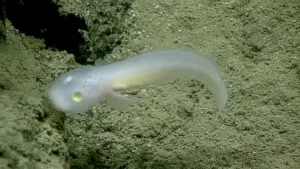
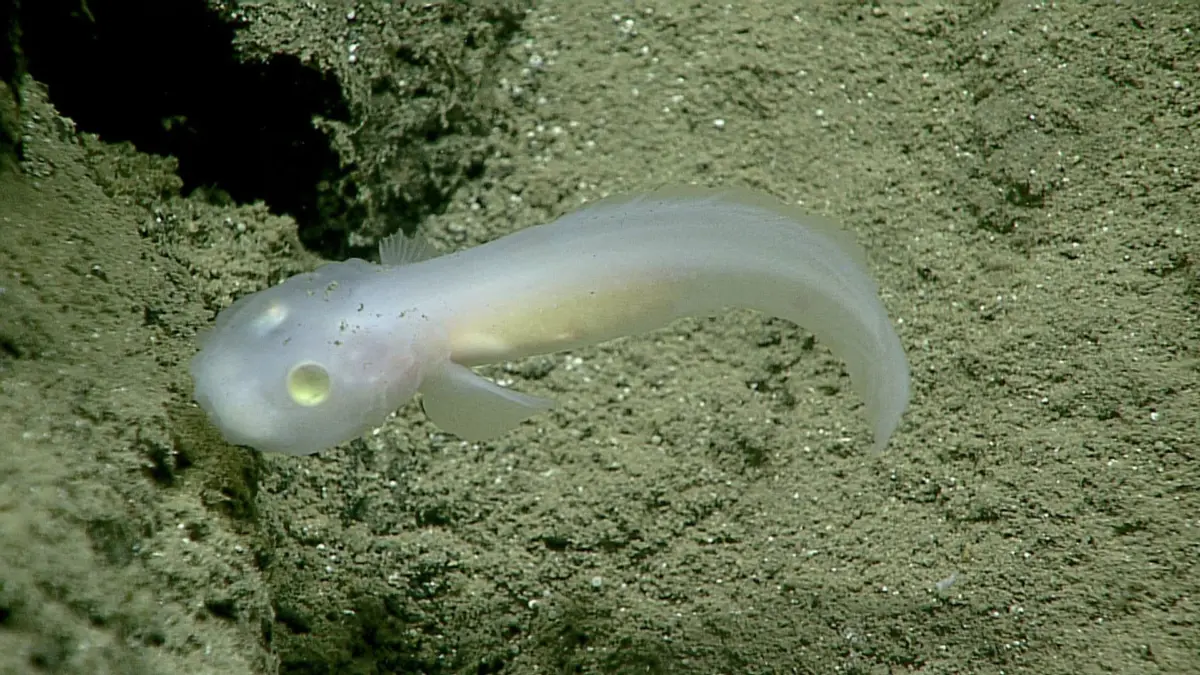
For centuries, the pitch-black depths of this region were thought to be a sterile wasteland devoid of life. Today, modern oceanography has shattered that illusion, revealing a hyper-specialized biosphere operating under crushing pressures and freezing temperatures. Yet, even as scientific ingenuity allows us to glimpse the elusive hadal snailfish and film live specimens of rare ghost fish, this pristine sanctuary faces unprecedented anthropogenic threats. From microplastics settling into the ocean’s deepest trenches to the sweeping impacts of a changing climate, the Mariana Trench serves as both a testament to the resilience of life and a stark warning of humanity’s pervasive planetary footprint.
Detailed Chronology: Unlocking Earth’s Deepest Secret
1875: The HMS Challenger and the First Sounding
The history of deep-sea exploration began not with high-tech submersibles or fiber-optic cameras, but with hemp rope, heavy weights, and boundless curiosity. In 1875, a British Royal Navy expedition aboard the HMS Challenger set out on a historic global oceanographic cruise. While surveying the western Pacific, the crew dropped a weighted sounding rope into the ocean depths and registered an astonishing depth of nearly five miles (approx. 26,850 feet). This monumental discovery stunned the scientific community and birthed the modern era of marine geology. In honor of the vessel that first unveiled its existence, the deepest point of this abyssal trench would later be christened the Challenger Deep.
1960: The Historic Dive of the Trieste
For decades, reaching the bottom of the Challenger Deep was considered an impossible dream. That changed on January 23, 1960, when Swiss oceanographer Jacques Piccard and U.S. Navy Lieutenant Don Walsh climbed into the cramped steel sphere of the bathyscaphe Trieste. Descending into the freezing, pitch-black water, the two explorers endured a grueling five-hour journey to the seafloor. When they finally touched down at nearly 36,000 feet below the surface, they looked out through a single acrylic viewport and made a discovery that would rewrite biology textbooks: they spotted a flatfish swimming peacefully in the gloom, proving definitively that complex vertebrate life could exist under pressures that defied human imagination.
2012: James Cameron’s Solo Descent
More than half a century passed before another human would return to the bottom of the Challenger Deep. In March 2012, filmmaker and National Geographic explorer James Cameron piloted the DEEPSEA CHALLENGER—a state-of-the-art, vertically oriented submersible designed specifically for the extreme conditions of the trench. In just over two and a half hours, Cameron descended solo to the seafloor, capturing unprecedented high-definition footage, collecting geological samples, and setting a milestone for technological innovation in deep-sea engineering.
2022: Dr. Dawn Wright Breaks New Ground
The relentless march of deep-sea exploration continued in 2022, when renowned geographer and oceanographer Dr. Dawn Wright made a historic descent aboard the Limiting Factor submersible. Spending approximately four hours on the descent, Dr. Wright reached the Challenger Deep to map the seafloor and search for seismic anomalies. Notably, her expedition brought an environmental perspective to the forefront, as her team documented human debris—including a discarded plastic bag—resting on the pristine floor of the abyss, forever linking the remote trench to global industrial waste.
2025: A Biodiversity Explosion
In a landmark year for marine biology, coordinated international research expeditions announced the discovery of over 7,000 new species within the Mariana Trench ecosystem. Among these findings was a deeper understanding of the hadal snailfish (Pseudoliparis swirei), formally cementing its status as the deepest-dwelling fish known to science. These discoveries underscored the reality that the trench is not a static geological dead-end, but a dynamic, thriving biological hotspot.
Supporting Context & Metrics: The Scale of the Abyss
To comprehend the Mariana Trench, one must abandon everyday terrestrial frames of reference. The scale of its dimensions and the severity of its physical forces push past human comprehension.
Dimensional Scale: Dwarfing the Grand Canyon
The Mariana Trench is frequently dubbed the "Grand Canyon of the ocean," but this comparison vastly understates its true magnitude. While the Grand Canyon is an awe-inspiring terrestrial feature, its volume is dwarfed by the trench:
- Footprint: The Mariana Trench’s spatial footprint is estimated to be roughly 120 times larger than that of the Grand Canyon.
- Depth: At its deepest point, Challenger Deep plunges nearly 36,000 feet (almost 11,000 meters) below sea level. For context, if Mount Everest (standing at approximately 29,000 feet) were placed inside Challenger Deep, its peak would still be submerged under more than a mile of water.
- Vertical Stack: You would need to stack six Grand Canyons on top of one another to match the vertical drop from the ocean surface to the seafloor of Challenger Deep.
- Width: Adding to its gargantuan proportions, the trench is nearly five times wider than it is deep, stretching approximately 43 miles across at its widest points.
The Physics of Abyssal Pressure
Water pressure in the ocean increases exponentially with depth, compounding by one "atmosphere" (atm) for every 33 feet (10 meters) descended. One atmosphere is equivalent to approximately 14.7 pounds per square inch (PSI)—roughly the standard atmospheric pressure at sea level, or the weight of a single bowling ball resting on a square inch of surface area.

As submersibles descend, the compounding weight becomes incomprehensible:
- At 2,000 feet, the pressure equals roughly 60 bowling balls stacked on every square inch.
- At the bottom of the Challenger Deep, the pressure surges to an astronomical 16,000 PSI.
- To visualize this force: The pressure exerted on every square inch of a vessel at the bottom of the trench is comparable to the weight of an entire full-grown elephant pressing down on a single square inch.
- For a human body exposed to these conditions, the force is equivalent to having 50 commercial jumbo jets piled on top of you.
Official Statements and Expert Perspectives
The exploration and protection of the Mariana Trench require unprecedented international cooperation, technological mastery, and ecological vigilance. Leading scientists, conservationists, and institutional figures have repeatedly emphasized the critical importance of studying and safeguarding this unique ecosystem.
Dr. Dawn Wright, Oceanographer and Geographer, reflected on her 2022 historic dive:
"When you reach the bottom of the Challenger Deep, you are struck by an overwhelming sense of profound silence and utter isolation. But more than that, you are struck by the realization that nowhere on Earth is untouched by humanity. Seeing a piece of trash resting in a place that took us billions of years to understand should serve as an urgent wake-up call for how we manage our planet’s shared waters."
The National Oceanic and Atmospheric Administration (NOAA), in updates regarding the Mariana Trench Marine National Monument, stated:
"The geological complexity found within the Mariana Archipelago—ranging from serpentinite mud volcanoes to unique hydrothermal vent ecosystems—represents an irreplaceable natural laboratory. Protecting these habitats is vital not only for preserving endemic species that exist nowhere else on Earth, but also for maintaining the ecological integrity of the broader Pacific basin."
Ocean Conservancy representatives highlighted the broader implications of deep-sea pollution:
"More than 70 percent of the global ocean remains unmapped and unexplored. When plastic debris, chemical pollutants, and industrial waste find their way into the deepest oceanic trenches, it demonstrates that our pollution crisis is total and planetary. We cannot protect what we do not understand, and we cannot afford to look away from the ocean’s darkest corners."
Future Outlook: Protecting the Last Frontier
As we look toward the future, the Mariana Trench stands at a perilous crossroads between scientific enlightenment and environmental degradation. On one hand, rapid advancements in autonomous underwater vehicles (AUVs), remotely operated vehicles (ROVs), and sensor technology promise to unlock even more secrets of the hadal zone. Biologists anticipate discovering thousands of additional marine species, while geologists hope to gain unprecedented insights into plate tectonics, seismic forecasting, and the earth’s mantle dynamics.
On the other hand, the creeping tide of anthropogenic stressors threatens the very integrity of this remote sanctuary. Climate change is altering deep-ocean circulation patterns, ocean acidification is shifting chemical balances, and persistent marine debris—such as single-use plastics—has proven that no depth is safe from human carelessness. Furthermore, as commercial interests eye the deep sea for potential mineral extraction and seabed mining, the regulatory frameworks governing areas like the Mariana Trench Marine National Monument will face intense political and economic pressure.
Ultimately, the preservation of the Mariana Trench is an extension of our stewardship of the planet as a whole. Defending the ocean requires a comprehensive, unbroken commitment from coastal beaches to the pitch-black abyss of the Challenger Deep. By fostering global scientific collaboration, enacting stringent antipollution policies, and expanding marine protected areas, humanity can ensure that Earth’s deepest frontier remains a wild, resilient, and thriving testament to the power of life.