











Executive Overview
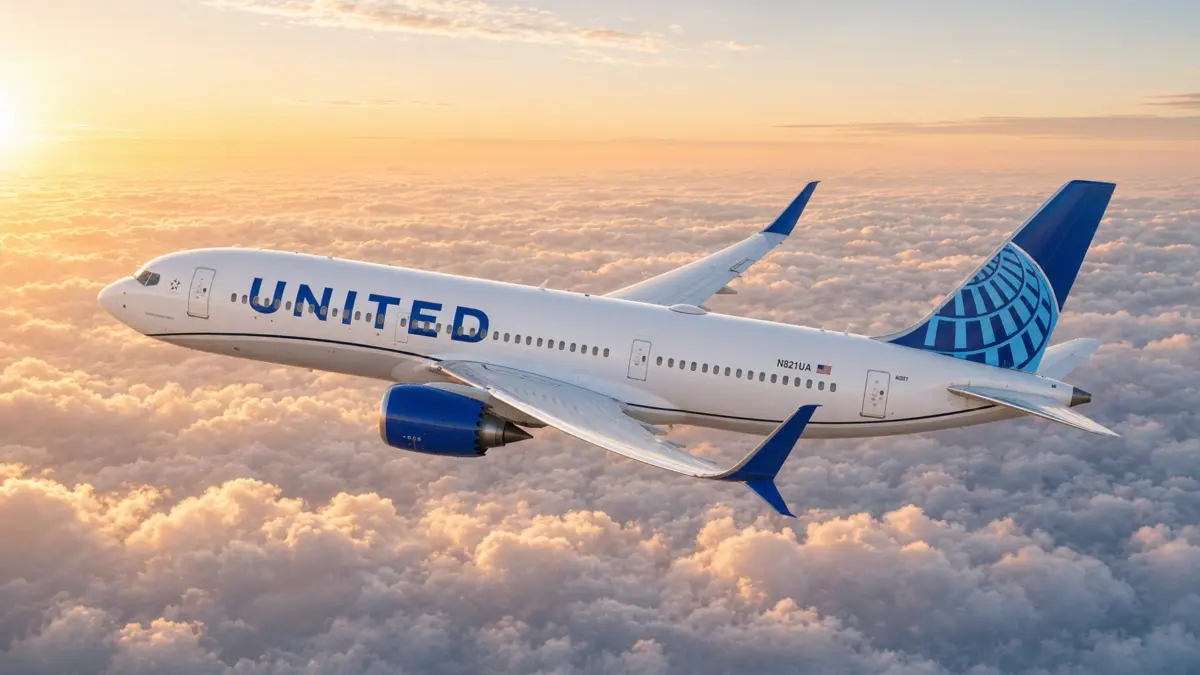
The modern commercial aviation landscape is no longer contested solely on the traditional battlegrounds of seat pitch, lounge quality, and hub dominance. Today, a new and decisive frontier has emerged in the cabin: high-speed, low-latency satellite connectivity. In a bold and opportunistic strategic maneuver, United Airlines has launched an aggressive status-matching campaign explicitly targeting the most lucrative tier of frequent fliers currently anchored to American Airlines and Delta Air Lines.
By leveraging its rapidly expanding deployment of SpaceX’s Starlink Wi-Fi, United is inviting elite competitors to defect, promising not just standard airline status, but an in-flight digital experience that leaves legacy connectivity in the dust.
The timing of United’s offensive is far from accidental. While United accelerates toward a massive fleetwide integration of Starlink—with over 600 aircraft already operational and a target of 1,000 planes equipped by the end of the year—its chief legacy rivals are grappling with glaring strategic vulnerabilities. American Airlines has delayed its connectivity overhaul, with a rollout not slated to begin until 2027. Meanwhile, Delta Air Lines has hitched its wagon to nascent technology, opting for unproven satellite networks that are already drawing skepticism and early criticism from industry analysts and frustrated passengers alike.
For frequent business travelers, digital nomads, and corporate road warriors who spend a substantial portion of their lives airborne, reliable internet access is no longer a luxury amenity; it is an absolute operational necessity. By weaponizing Starlink’s superior bandwidth against its competitors, United is transforming in-flight Wi-Fi from an ancillary passenger service into a primary acquisition engine for high-yield customers. This deep dive examines the mechanics of United’s status-match offensive, the diverging technological bets made by the "Big Three" U.S. carriers, and what this high-stakes dogfight means for the future of commercial aviation.
Detailed Chronology
To understand the gravity of United’s current offensive, one must trace the shifting technological and competitive timeline that brought the U.S. airline industry to this pivotal inflection point.
The Era of Legacy Latency (2010–2020)
For over a decade, commercial airline Wi-Fi was universally characterized by high latency, restrictive bandwidth caps, and exorbitant pricing models. Ground-to-air (ATG) networks and geostationary (GEO) satellite systems struggled to handle the explosive growth of mobile devices and data-heavy applications. Passengers frequently endured sluggish connection speeds, dropped video streams, and convoluted authentication portals. During this era, legacy carriers viewed Wi-Fi as a secondary profit center or a checkbox feature rather than a core component of the passenger value proposition.
The Paradigm Shift: SpaceX Enters Aviation (2021–2023)
As SpaceX rapidly deployed its Low Earth Orbit (LEO) Starlink satellite constellation, forward-thinking aviation executives realized that traditional geostationary systems were becoming obsolete. Unlike GEO satellites orbiting at 22,300 miles—which cause noticeable lags and buffering—LEO satellites operate at an altitude of roughly 340 miles, drastically reducing latency and enabling multi-megabit speeds capable of supporting seamless video conferencing, online gaming, and VPN usage at 35,000 feet. While industry observers debated the feasibility of outfitting commercial aircraft with phased-array antennas, private jets and early regional partners began testing the technology with astonishingly positive results.

Delta’s Amazon Leo Bet and American’s Delay (Early 2024)
As the pressure mounted to modernize cabin connectivity, the "Big Three" split into drastically different strategic directions:
- Delta Air Lines committed to exploring alternative LEO networks, aligning itself with emerging infrastructure ventures, including concepts tied to Amazon’s Project Kuiper (often referred to in industry circles as Amazon Leo). However, this choice immediately raised eyebrows among aviation experts due to the unproven nature of deploying unreleased space assets on commercial aircraft fleets.
- American Airlines adopted a deeply conservative timeline, pushing its comprehensive Wi-Fi modernization and hardware overhaul deep into the decade, with an official rollout not scheduled to begin until 2027. This left American’s premium cabin passengers anchored to legacy providers for years to come.
United’s Lightning Strike (Late 2024–Present)
Recognizing a generational window of vulnerability, United Airlines made a massive, proactive capital investment to partner with SpaceX. Eschewing the cautious timelines of American and the experimental gambles of Delta, United secured an aggressive integration schedule.
By late 2024, United began aggressively outfitting its mainline and regional fleets. Today, more than 600 United aircraft feature fully operational Starlink Wi-Fi—offered completely free of charge to passengers. With a stated goal of reaching 1,000 aircraft by the end of the year, United paired this technological triumph with a targeted, predatory status-match program designed to peel top-tier frequent fliers away from American and Delta while their digital infrastructures lag behind.
Supporting Context & Metrics
The battle for high-value airline customers is won and lost on the margins of loyalty, convenience, and productivity. To appreciate the potency of United’s strategy, one must examine the underlying metrics of passenger behavior, fleet economics, and technological capability.
The Economics of the Business Traveler
Business travelers represent the lifeblood of airline profitability. While leisure travelers book well in advance and hunt for the lowest fare, corporate fliers frequently purchase last-minute, high-yield tickets in First, Business, and Economy Plus cabins. For these individuals, time spent in the air is often expected to be billable work hours.
Studies on frequent flyer habits indicate that in-flight connectivity has risen to become the single most critical cabin amenity, ranking above hot meals, seat recline, and in some cases, even schedule convenience. When a corporate traveler can seamlessly join a Microsoft Teams meeting, upload a massive CAD file, or securely access enterprise cloud networks at Mach 0.8, the airline providing that service instantly secures primary carrier preference.
Fleet Integration Metrics: A Comparison of the Big Three
| Carrier | Primary Wi-Fi Partner / Technology | Current Operational Scale | Projected Full Integration Timeline | Pricing Model |
|---|---|---|---|---|
| United Airlines | SpaceX Starlink (LEO) | 600+ Aircraft Equipped | 1,000 Aircraft by Year-End | Free to all passengers |
| Delta Air Lines | Viasat / GEO / Emerging LEO (Amazon Leo) | Varies by fleet; fragmented | Ongoing / Undefined for new LEO assets | Free for SkyMiles members (legacy tech) |
| American Airlines | Viasat / Intelsat (Legacy GEO/ATG) | Fragmented across mainline | Rollout delayed until 2027 | Paid / Tiered subscriptions |
The Status-Match Mechanics
United’s status-match challenge is specifically engineered to exploit competitive friction. By inviting elite members from American Airlines AAdvantage and Delta SkyMiles programs to cross over, United offers an expedited pathway to equivalent status (Premier Silver, Gold, Platinum, or 1K) provided they meet specific flight segment and revenue thresholds within a 90-day trial period.
By coupling this status match with the immediate, tangible perk of blazing-fast, free Starlink Wi-Fi, United provides an irresistible value proposition: Keep your status, but gain a radically superior in-flight office.
Official Statements and Industry Insights
The rapid escalation of the Wi-Fi arms race has prompted reactions from airline executives, aviation analysts, and technology providers alike.
Industry analysts have noted that United’s bold gamble represents a masterclass in opportunistic marketing. John Strickland, a veteran aviation consultant, observed: "Airlines have historically competed on soft product nuances that are easily copied—a slightly better wine list, a slightly wider pillow. High-speed LEO satellite internet is a hard technological differentiator. When one airline can offer seamless, fiber-optic-grade internet while competitors are still buffering web pages, it creates a massive competitive moat."
While official corporate communications from American Airlines and Delta Air Lines have attempted to downplay the short-term deficit, internal memos and investor calls reveal mounting pressure.
A spokesperson for American Airlines defended the carrier’s deliberate timeline, emphasizing long-term stability and fleet standardization: "Our focus remains on delivering a reliable, comprehensive, and sustainable connectivity experience across our entire narrowbody and widebody fleet. We are taking a measured approach to ensure that our long-term investments meet the rigorous demands of our global network without compromising operational reliability."
Conversely, Delta Air Lines has faced scrutiny over its exploratory relationship with Amazon’s unproven LEO network initiatives. Critics within the tech sector have questioned the wisdom of adopting satellite architectures that lack commercial aviation flight heritage.
Aviation technology insiders point out that certifying hardware for commercial aircraft is notoriously difficult, requiring rigorous testing for electromagnetic interference, structural integrity, and thermal thresholds. By choosing an unproven path, Delta risks a prolonged deployment cycle, leaving its premium customer base vulnerable to churn.
SpaceX executives have continually underscored the transformative nature of aviation connectivity. During initial integration announcements, company representatives highlighted that Starlink’s custom aeronautical terminals are engineered to connect seamlessly to thousands of low-earth-orbit satellites, automatically shifting signals to ensure uninterrupted high-speed coverage even during transoceanic flights over remote oceans and polar regions.
Future Outlook
As the dust settles on United’s initial offensive, the long-term ramifications for the U.S. airline industry are profound. United’s aggressive push toward 1,000 Starlink-equipped aircraft by the end of the year sets a daunting benchmark that competitors cannot easily ignore.
For American Airlines
American faces a perilous multi-year window. With its modernization rollout delayed until 2027, the carrier risks bleeding high-value business accounts and elite frequent fliers to United. To staunch the outflow, American may be forced to accelerate its own technological investments, seek interim partnership deals, or dramatically enhance its ground-level loyalty incentives to offset the severe cabin connectivity deficit.
For Delta Air Lines
Delta must quickly prove that its technological bets will yield a competitive product. If the carrier’s alternative satellite networks experience further delays, technical hurdles, or performance bottlenecks, Delta’s reputation for operational excellence and premium cabin leadership could suffer. Delta’s management team will likely face increasing shareholder pressure to reevaluate partnerships if passenger defection trends accelerate.
For United Airlines
Execution will be the ultimate arbiter of United’s success. As thousands of new elite status-match applicants flood the system, United must maintain its high service standards across lounges, customer support, and gate operations to ensure these newly acquired customers do not churn once the novelty of fast Wi-Fi wears off. Furthermore, as Starlink integration scales toward the 1,000-aircraft mark, network stability and hardware durability will be subjected to the ultimate stress test of daily global operations.
The Broader Passenger Experience
Ultimately, the definitive winner of this corporate warfare is the frequent traveler. The era of agonizingly slow, overpriced, and unreliable in-flight internet is rapidly drawing to a close. United has successfully raised the baseline expectation for commercial aviation, forcing an industry-wide reckoning. As low-latency satellite internet transitions from an elite perk to a universal utility, airlines that fail to adapt will find themselves grounded in the past, watching their most profitable passengers fly away to greener, better-connected pastures.