










Executive Overview
Immersing oneself in a foreign culture often begins at the dinner table. For the intrepid traveler, the vibrant food scenes of Southeast Asia—ranging from bustling street food markets in Hanoi to upscale fusion dining in Ho Chi Minh City—offer an immediate window into the soul of a destination. Yet, transitioning from a curious spectator to a respectful participant requires more than an appetite and a smartphone filled with influencer recommendations. It demands an acute awareness of unspoken cultural norms, traditional etiquette, and ritualistic dining practices that have been cultivated over centuries.
Vietnam’s culinary landscape is celebrated globally for its delicate balance of fresh herbs, complex broths, and harmonious textures. However, for many American tourists venturing into local eateries for the first time, the culinary experience can be fraught with accidental cultural missteps. In fact, sociological studies and hospitality data indicate that uninitiated travelers frequently commit local dining faux pas within the first ten minutes of sitting down.
While these infractions are rarely met with outright hostility, understanding the underlying philosophy of Vietnamese dining enhances the gastronomic experience and demonstrates vital respect for a culture inextricably bound to its food. This report investigates the primary cultural clashes American tourists face in Vietnamese restaurants, dissecting the psychological, logistical, and historical underpinnings of communal dining, food pacing, condiment usage, and chopstick etiquette.

Detailed Chronology: The First Ten Minutes at a Vietnamese Table
To understand how quickly cultural friction can occur, one must map out the chronological timeline of an American tourist’s arrival and initial settling period at a traditional Vietnamese dining establishment. Within minutes of crossing the threshold, the foreign diner is confronted with an entirely foreign operational and social framework.
Minutes 0 to 3: The Ordering Paradox
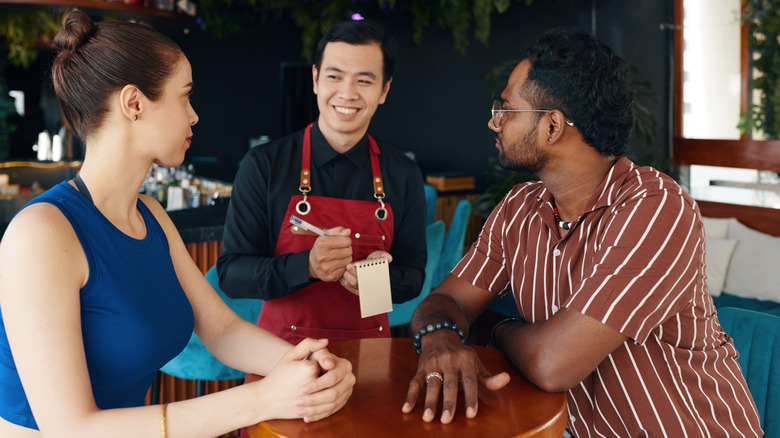
Upon taking a seat, the immediate expectation in Western dining culture is individual autonomy: scanning the menu, selecting a personal appetizer, an independent main course, and perhaps a dedicated side dish. In the United States, dining out is frequently characterized by individualized checks and strictly separated portions.
In contrast, Vietnamese dining is rooted in a collective, communal philosophy. Within the first three minutes, an American traveler often makes their initial mistake: ordering exclusively for themselves.
In traditional settings, particularly those utilizing the cái mâm—a traditional round family tray placed at the center of the table—dishes are selected to be shared among all seated guests. This practice fosters collective harmony and mutual consideration, forcing diners to remain attuned to the portion sizes of their companions. While contemporary urban restaurants feature a hybrid menu containing both individual bowls (such as phở or bún) and shared platters, the initial impulse of Westerners to silo their food orders often disrupts the rhythm of the table and isolates them from the communal spirit of the meal.

Minutes 3 to 6: The Pacing Disconnect
Once the order is submitted to the waitstaff, the next cultural friction point emerges: the timing and arrival of the food. In the American restaurant industry, precision in kitchen timing is paramount. Waitstaff strive to ensure that all members of a party receive their entrées simultaneously, allowing the entire table to commence eating together.
In Vietnam, this standard is routinely absent. Driven by the fast-paced nature of high-turnover local eateries and spatial or equipment constraints inherent in compact kitchens—traits mirrored across many dense Asian culinary hubs—dishes are dispatched from the kitchen the moment they are completed.
Consequently, an American tourist may experience acute discomfort when an appetizer arrives well before someone else’s soup, or when dishes stagger onto the table one by one over a twenty-minute span. Uninitiated diners often exhibit visible anxiety, refusing to touch their food out of perceived politeness until the entire order has materialized—a courteous gesture in the West that, in Vietnam, results in cooling food and a confused waitstaff.
Minutes 6 to 8: The Condiment Dilemma
As the food begins to hit the table, attention turns to seasoning and flavor enhancement. Vietnamese cuisine relies heavily on tableside customization. Platters of fresh herbs, bean sprouts, lime wedges, bird’s eye chilies, and specialized dipping sauces are standard accompaniments.
Within this window, tourists frequently commit one of two polar-opposite errors: treating the condiments with complete neglect or aggressively overwhelming the dish. For example, a bowl of phở served without any alterations is seen by purists as incomplete, yet drowning the aromatic, slow-simmered broth in hoisin sauce or Sriracha before even tasting the base liquid is viewed by local chefs as a culinary tragedy. The golden rule—taste the broth first to understand its foundational integrity before seasoning—is routinely bypassed by tourists eager to replicate heavy-handed adaptations common in Westernized Vietnamese restaurants.
Minutes 8 to 10: Chopstick Taboos
Finally, as the first bites are taken, the management of utensils serves as a minefield of accidental social offenses. Chopsticks are not merely tools for conveyance; they carry deep symbolic weight and strict hygienic codes.
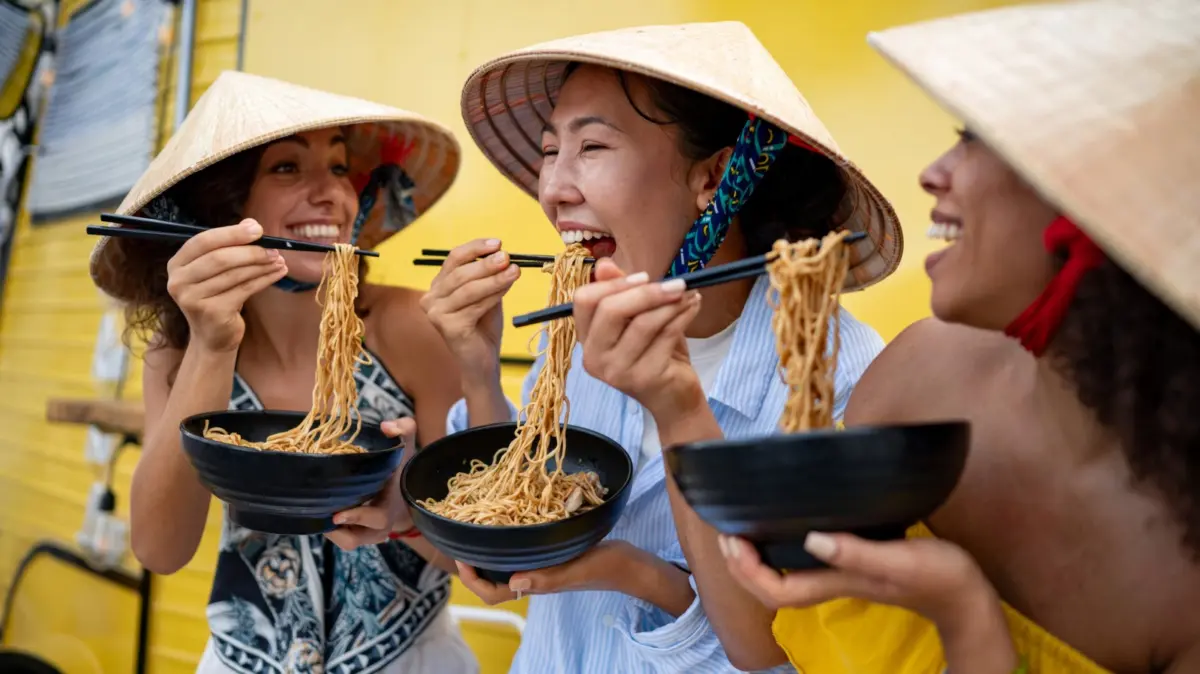
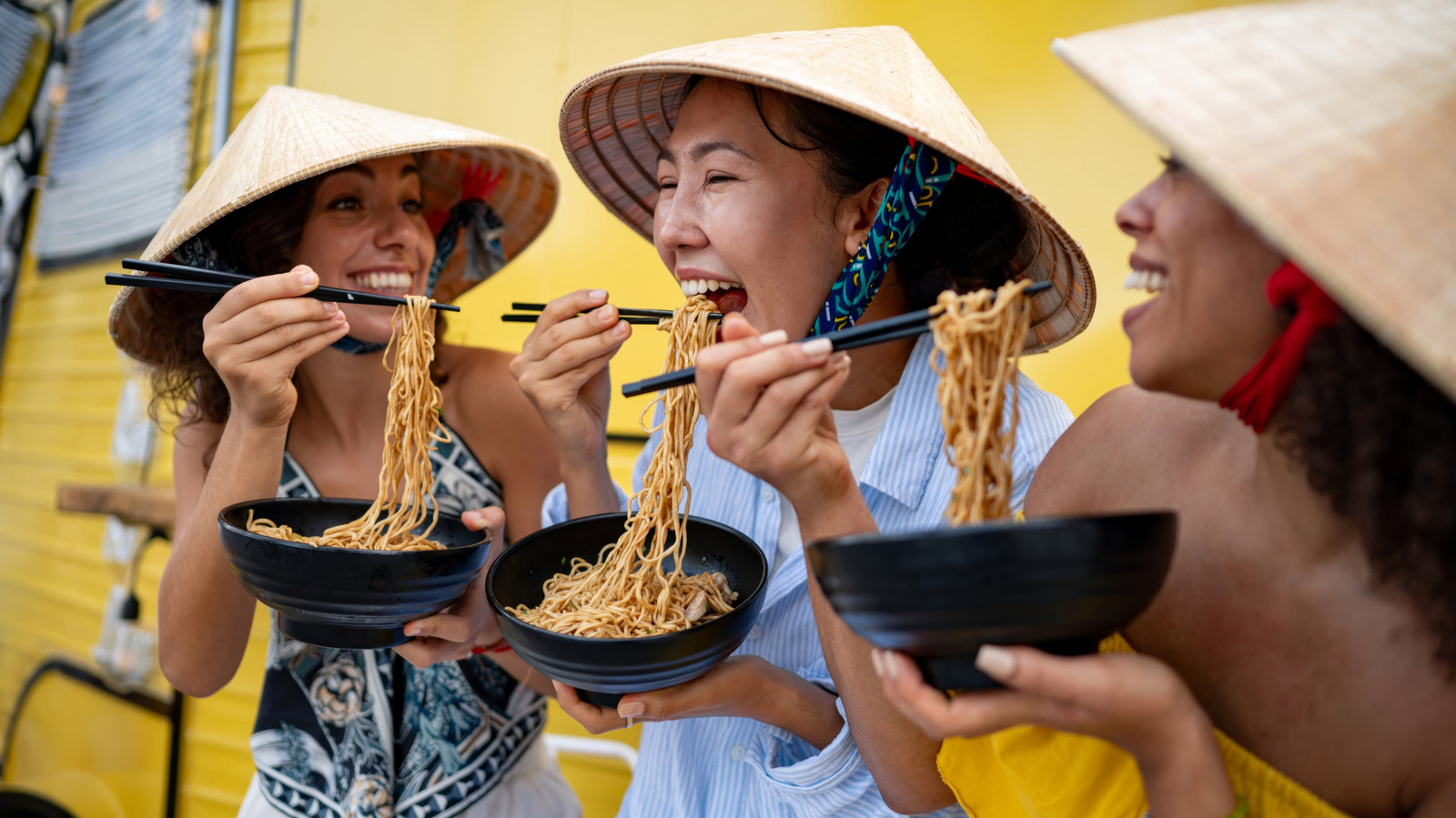
Within the opening ten minutes, a foreign diner may inadvertently violate major taboos: resting chopsticks in a crossed "X" pattern (associated with bad luck or death), using personal eating chopsticks to transfer food from a communal plate without reversing them, or—most egregiously—sticking chopsticks vertically into a bowl of rice. This final act mirrors funeral incense rituals, making it an unsettling sight for local diners.
Supporting Context & Metrics: Cultural Psychology and Kitchen Logistics
To fully comprehend why these friction points occur, it is necessary to analyze the socio-cultural frameworks that dictate dining behavior in North America versus Southeast Asia.
The Individualistic vs. Collectivist Table
According to behavioral psychologists, Western dining habits are direct reflections of individualistic cultural values. In an academic analysis published via Psychology Today by Dr. Karen Wu, family-style and shared dining structures force individuals to confront their social positioning relative to others. Wu noted that in Western social circles, eating out typically involves distinct financial and physical boundaries: "Everyone ordering and paying for their own entrées—nothing less, nothing more."
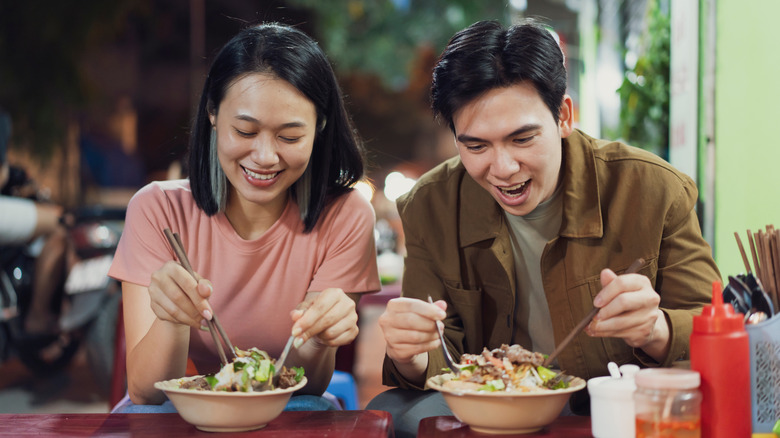
Conversely, Vietnamese society is deeply collectivist. The sharing of food is an act of social bonding, equality, and care. When an American tourist insists on ordering a separate, self-contained meal without sharing, it can inadvertently project an aura of isolationism or self-absorption in a cultural setting where hospitality and communal provisions are paramount.
Spatial Constraints and Kitchen Dynamics
The staggered arrival of food is not a sign of poor service, but rather a logistical adaptation to real-world infrastructure. Commercial kitchen equipment analysis provided by industry leaders like Henny Penny highlights that Asian restaurant kitchens—particularly in high-density urban environments and traditional street-side stalls—frequently operate within highly compact spatial footprints.
Rather than utilizing sprawling, multi-station American-style line kitchens equipped with expansive holding warmers, Vietnamese cooks rely on high-efficiency, multi-purpose burners and rapid-fire preparation. Dishes are cooked à la minute and dispatched instantly to clear prep space. Understanding this operational reality transforms what a tourist might perceive as disorganized service into an appreciation for rapid, high-pressure culinary craftsmanship.
Expert Perspectives & Official Commentary
Prominent culinary figures and gastronomic authorities have frequently weighed in on how foreign palates interact with authentic Vietnamese cuisine. Their insights underline the importance of approaching the meal with humility and open-mindedness.
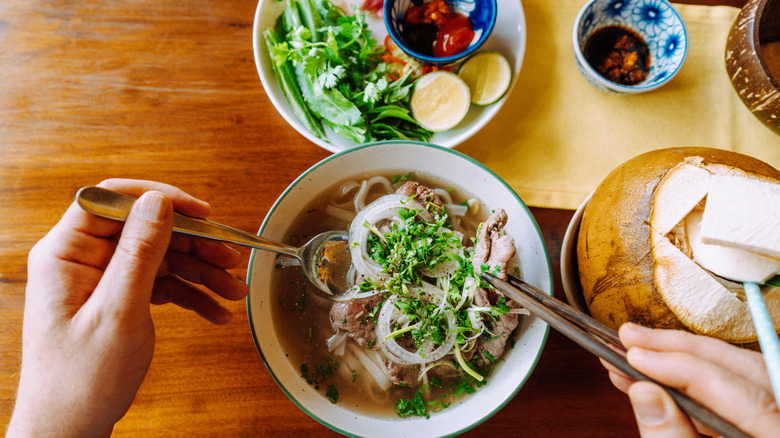
- Chef Jimmy Ly (Madame Vo, New York City): Describing authentic phở as "nostalgia, love, and warmth in a bowl," Ly emphasizes that the dish is meticulously engineered to achieve a delicate equilibrium of sweet, salty, savory, and aromatic notes. Over-saturating the broth with commercial sauces alters the intended flavor profile entirely.
- Chef Viet Hong Le (CieL): In commentary curated by the Michelin Guide, Le stresses the spiritual importance of the broth: "Taste before you season. This lets you catch the soul of the broth before anything else." The philosophy mandates a progressive appreciation of the food, where flavors evolve as herbs and condiments are introduced incrementally.
- Chef Peter Cuong Franklin (Anan Saigon): A pioneer of modern Vietnamese gastronomy, Franklin advocates for an experiential approach to eating. He notes that traditional accompaniments—such as wrapping fried spring rolls (chả giò) in fresh lettuce and herbs before dipping them—are designed to provide textural contrast and herbal balance, elements that tourists miss out on when they consume items in isolation.
Future Outlook: Bridging the Culinary Divide
As global tourism rebounds and international travel becomes increasingly accessible, the culinary exchange between Western nations and Southeast Asia is accelerating. Food tourism is no longer limited to high-end guided excursions; independent travelers are exploring deep into rural farmstays, neighborhood alleyways, and family-run night markets.
To bridge the cultural divide, tourism boards, travel platforms, and hospitality educators are placing a stronger emphasis on pre-trip cultural orientation. Rather than discouraging tourists through rigid lists of "dos and don’ts," modern travel education encourages a mindset of adaptive curiosity.
Ultimately, breaking a rule during the first ten minutes of a Vietnamese meal is rarely an unforgivable sin. Vietnamese hospitality is legendary for its warmth, and local vendors are typically forgiving of well-meaning foreigners navigating an unfamiliar culinary universe. However, by shifting away from hyper-individualistic dining habits, embracing the staggered rhythm of authentic kitchens, respecting the integrity of foundational seasonings, and mastering basic chopstick etiquette, the modern American traveler can transform a simple meal into a profound intercultural connection.