Despite sweeping shifts in federal energy policy and a challenging political climate for vehicle electrification in the United States, General Motors (GM) is pressing forward with a technological lifeline designed to reshape the global electric vehicle (EV) market. Through Ultium Cells—its joint venture with South Korea’s LG Energy Solution—GM is on track to commercialize next-generation lithium manganese-rich (LMR) battery cells.
Announced initially as a conceptual breakthrough and cemented by a recent multi-million dollar plant upgrade in Tennessee, the LMR battery formula promises a potent combination: significantly lower production costs paired with superior performance metrics, including an energy density roughly 33% higher than standard lithium iron phosphate (LFP) alternatives.
This strategic maneuver represents far more than a corporate bet on future consumer demand. It is a direct industrial counterpunch against China’s dominance in affordable battery chemistries, a validation of domestic research and development, and a bold declaration that the American electric vehicle market will ultimately recover—with or without aggressive federal support.
Detailed Chronology: From R&D Breakthrough to Industrial Reality
The road to commercializing LMR chemistry has been paved with a decade of rigorous laboratory research, material science hurdles, and strategic pivots. Understanding how GM reached this milestone requires tracing the timeline of its development against a shifting regulatory backdrop.
Laying the Groundwork (2015–2024)
For years, automakers relied heavily on nickel-manganese-cobalt (NMC) chemistries for long-range performance and lithium iron phosphate (LFP) for budget-conscious applications. However, LFP formulations—while cost-effective and structurally stable—suffered from lower energy densities. Meanwhile, engineers recognized that manganese, an earth-abundant and inexpensive transition metal, held the theoretical potential to bridge this gap.
The primary barrier was practical application. Early iterations of manganese-rich cathodes were plagued by severe voltage decay over time and shortened operational lifespans. GM and its partner, LG Energy Solution, spent roughly ten years quietly working out these microscopic instabilities at the GM Wallace Battery Cell Innovation Center and partnering facilities.
The Political U-Turn and the Public Reveal (March–May 2025)
In early 2025, the U.S. political landscape experienced a dramatic transformation. Following the return of Donald Trump to the White House and shifts in congressional majorities, federal incentives for clean energy suffered a fatal blow. Most notably, the elimination of the $7,500 federal EV tax credit sent nationwide adoption rates into a sharp nosedive.
Conventional wisdom suggested automakers would completely shelve their electrification roadmaps. Instead, in March 2025, GM calculated that the market pullback was temporary. By May 2025, the automaker publicly pulled back the curtain on its LMR initiative. Pitching the chemistry as a game-changing leap forward, GM announced its ambition to become the first Western automaker to deploy LMR batteries at scale in commercial electric vehicles.
Industry Accolades and Strategic Validation (July–October 2025)
By mid-to-late 2025, independent observers began taking notice of GM’s domestic innovation. In July 2025, the Institute of Energy Efficiency at the University of California-Santa Barbara (UCSB) published an analysis framing the LMR battery as America’s strategic "clap-back" against Chinese dominance in low-cost energy storage.
Momentum continued to build through the autumn. In October 2025, GM’s LMR technology captured the prestigious Battery Innovation of the Year award at the 15th annual Battery Show North America, alongside inclusion in Fast Company’s coveted "Next Big Things in Tech" list.
Industrial Execution: The Spring Hill Upgrade (September 2026)
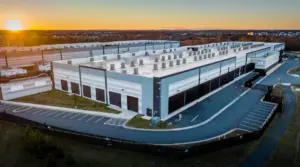
Moving from theory to factory floors, GM announced on September 29, 2026, that the Ultium Cells facility in Spring Hill, Tennessee, would undergo a massive retooling. Upgraded operations will specifically target the commercial production of LMR prismatic battery cells.
According to joint venture timelines, pre-production is slated to kick off at an LG Energy Solution facility by late 2027, with full-scale commercial manufacturing of LMR prismatic cells in the United States targeted for 2028.
Supporting Context & Metrics: Chemistry, Cost, and Competitiveness
To appreciate the significance of GM’s LMR breakthrough, one must examine the underlying chemistry and the macroeconomic pressures driving it.
The Battle of the Chemistries: NMC vs. LFP vs. LMR
Automotive battery development is a constant balancing act among energy density, safety, thermal stability, and raw material expenses.
High-Nickel (NMC): Traditionally championed for maximum driving range, high-nickel cells remain the premier choice for luxury vehicles, heavy-duty electric trucks, and full-sized SUVs where range anxiety is a primary consumer concern. However, reliance on costly cobalt and high-grade nickel keeps production expenses elevated.
Lithium Iron Phosphate (LFP): Widely utilized for entry-level models and stationary energy storage systems, LFP eliminates expensive cobalt entirely. While cheap and safe, LFP falls short when it comes to packing maximum energy into a compact footprint. China currently corners the global market on LFP intellectual property and mass production.
Lithium Manganese-Rich (LMR): GM’s proprietary LMR formulation leverages Earth-abundant manganese, driving down raw material costs akin to LFP. Crucially, however, LMR delivers an energy density roughly 33% higher than LFP while maintaining competitive price points. This allows manufacturers to build lighter, longer-ranging vehicles without the heavy price tags associated with high-nickel packs.
Financial Commitments and Diversification
GM’s pivot is backed by serious capital. The automaker has committed a combined total of $2 billion by 2030 toward scaling both its LFP and LMR investments.
By manufacturing multiple chemistries—including high-nickel, LFP, and LMR—in both pouch and prismatic form factors, Ultium Cells is engineering a hyper-flexible industrial footprint. This adaptability ensures that whether a consumer is buying an affordable commuter car or a long-haul commercial truck, GM can match the vehicle to the optimal, cost-effective battery architecture.
Official Statements and Industry Perspectives
The narrative surrounding LMR technology highlights a fascinating disconnect between corporate long-term strategy and short-term political headwinds in Washington.
GM Leadership and Technological Agility
Kurt Kelty, GM’s Vice President of Battery and Sustainability, has consistently emphasized that battery choice must be driven by vehicle utility. While high-nickel formulations will continue to anchor markets requiring extended driving ranges, LMR steps in whenever affordability becomes the primary consumer objective.
In an official statement regarding the Spring Hill facility upgrades, Ultium Cells underscored its operational flexibility:
"By producing multiple chemistries, including high-nickel, lithium iron phosphate (LFP), and now LMR, in both pouch and prismatic form factors, Ultium Cells demonstrates its ability to adapt quickly as battery technologies evolve to meet a broad range of applications, from electric vehicles to energy storage."
Furthermore, emphasizing the geopolitical stakes of the endeavor, GM executives noted:
"Beyond flexing manufacturing might, bringing this new battery cell to market first is a milestone moment for keeping America competitive globally in EV and battery technology leadership."
The Geopolitical Subtext
This assertive stance on domestic manufacturing runs parallel to high-level diplomatic choreography. While federal energy policies in Washington frequently cater to fossil fuel interests and attempt to dismantle green subsidies, corporate titans are playing a global game.
Notably, GM President and CEO Mary Barra was among the prominent corporate representatives attending a White House state dinner honoring Chinese President Xi Jinping. Observers point to this duality as proof that legacy automakers like GM are preparing for an international marketplace where energy efficiency and advanced battery supply chains will dictate survival—independent of domestic political oscillations.
Future Outlook: The Road Ahead for LMR and the EV Market
As the automotive sector looks toward the late 2020s, several critical questions remain regarding the widespread adoption of LMR technology.
Reclaiming the Affordable EV Market
The elimination of federal EV tax credits temporarily stalled the momentum of mass-market EV adoption in the United States. To reignite consumer interest, automakers must achieve price parity with internal combustion engine (ICE) vehicles without relying on government subsidies.
By successfully integrating LMR batteries into its upcoming electric truck and full-sized SUV lineups—and eventually cascading them down to smaller commuter segments—GM hopes to offer the elusive "sweet spot" combination of long operating range and low purchase price.
The Competitive Landscape: Ford and Tesla
GM is not alone in recognizing manganese’s potential. Rival domestic manufacturer Ford has similarly poured significant research and development capital into mastering manganese-rich battery formulations. The race to iron out voltage decay issues has sparked an intense, behind-the-scenes engineering contest among legacy U.S. brands.
Meanwhile, industry leader Tesla continues to march to the beat of its own drum. As GM heavily prioritizes mass-market affordability and domestic battery innovation, Tesla’s immediate spotlight has turned toward high-end, aspirational product launches—such as the roll-out of its high-priced Roadster. Whether Tesla will eventually pivot its massive manufacturing muscle toward LMR technology remains an open question for industry analysts.
Conclusion
General Motors’ multi-billion-dollar bet on LMR batteries serves as a masterclass in long-term industrial planning. By looking past regulatory U-turns and zeroing in on material science innovations, the company is positioning itself to weather political volatility. If Ultium Cells successfully executes its pre-production timeline by late 2027 and full commercialization by 2028, GM may very well succeed in rewriting the rules of the global electric vehicle economy—securing a vital victory for American battery manufacturing in the process.