







Executive Overview
The global maritime sector is undergoing a profound structural transition, forced to balance stringent greenhouse gas reduction mandates with operational realities. At the center of this transition lies Liquefied Natural Gas (LNG), widely adopted as an immediately available marine fuel capable of drastically reducing sulfur oxides ($textSO_x$), nitrogen oxides ($textNO_x$), and particulate matter. However, the environmental utility of LNG has faced persistent criticism due to "methane slip"—the unburned methane that escapes combustion chambers and enters the atmosphere through vessel exhausts.
Because methane possesses a short-term global warming potential significantly higher than carbon dioxide ($textCO_2$), regulatory frameworks such as the European Union’s Monitoring, Reporting, and Verification (EU MRV) system and the FuelEU Maritime regulation established heavy baseline penalties. By default, regulators assigned a standardized methane slip rate of 3.1% to dual-fuel engines that operate on low-pressure four-stroke cycles.
Recent empirical data, however, is directly challenging these regulatory assumptions. Verified operational trials conducted by major passenger and cruise operators—specifically MSC Cruises and Brittany Ferries—demonstrate that modern, optimized dual-fuel marine engines achieve methane slip rates less than half of the legislative default benchmark.
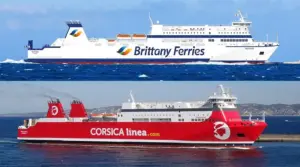
Through independent verification and flag state recognition, these maritime leaders have established a critical regulatory precedent. By securing approval to replace arbitrary statutory default values with actual measured performance metrics, MSC Cruises and Brittany Ferries are reshaping maritime decarbonization strategy. Their efforts emphasize that regulatory frameworks must adapt to empirical science, incentivizing real-world engineering achievements rather than penalizing early adopters with outdated assumptions.
+-----------------------------------------------------------------------------------+
|                        METHANE SLIP BENCHMARK COMPARISON                          |
+-----------------------------------------------------------------------------------+
| Regulatory Default (FuelEU Maritime) | [==================================] 3.10% |
| MSC World Europa (Measured)          | [=================>] 1.67%                 |
| Brittany Ferries Salamanca (Measured)| [================>] 1.57%                  |
| MSC Euribia (Measured)               | [===============>] 1.48%                   |
+-----------------------------------------------------------------------------------+
Detailed Chronology
The movement toward empirical emissions verification in LNG-fueled shipping has accelerated through a series of key technical studies, public calls for regulatory reform, and formal classification society certifications.
Chronological Sequence of Verification Milestones:
------------------------------------------------------------------------------------

[Sept 2025]   Brittany Ferries publishes Salamanca 12-month study (1.57% slip).
              CEO Christophe Mathieu publicly calls for performance-based reporting.
------------------------------------------------------------------------------------
[Sept 2025]   Wärtsilä releases case study on MSC World Europa (1.67%) and
              MSC Euribia (1.48%), confirming measured values beat EU defaults.
------------------------------------------------------------------------------------
[March 2026]  Bureau Veritas formally certifies empirical slip values across
              Brittany Ferries' LNG fleet (Salamanca, Santoña, Saint-Malo,
              Guillaume de Normandie) for EU MRV and FuelEU compliance.
------------------------------------------------------------------------------------
September 2025: Brittany Ferries Exposes the Regulatory Disconnect
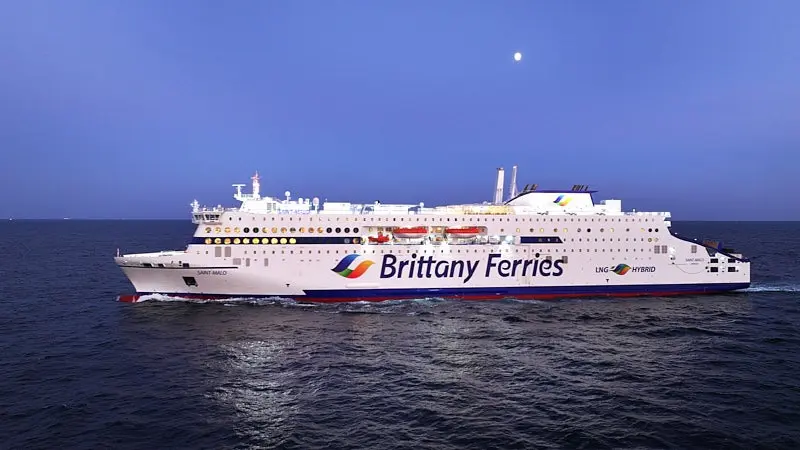
In September 2025, Brittany Ferries released the findings of a comprehensive, 12-month empirical emissions monitoring program conducted aboard its LNG-powered ro-pax vessel, Salamanca. The continuous measurement trial recorded an average methane slip rate of 1.57% under actual operational conditions across cross-Channel routes.
Following the publication of these results, Brittany Ferries Chief Executive Officer Christophe Mathieu publicly challenged European regulators. Mathieu asserted that the statutory 3.1% default value applied under FuelEU Maritime vastly overstated actual environmental impacts, placing an unfair financial burden on operators who had invested heavily in modern dual-fuel technologies. He called for an immediate shift away from static regulatory formulas in favor of verified, performance-based reporting.
September 2025: Wärtsilä Case Study Confirms Breakthrough for MSC Cruises
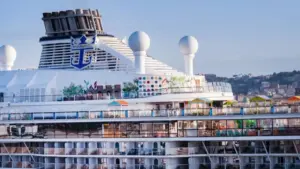
Simultaneously, Finnish technology group Wärtsilä published a pivotal case study detailing verified onboard emission measurements across MSC Cruises’ flagship LNG fleet. The measurements—conducted under rigorous test protocols on the MSC World Europa and MSC Euribia—yielded methane slip rates of 1.67% and 1.48%, respectively.
The study demonstrated that advanced engine tuning, optimized load management, and modern combustion geometries could consistently keep methane slip below half of the EU’s 3.1% baseline. Crucially, MSC Cruises secured independent verification and flag state recognition for these measurements, permitting the cruise line to use its actual empirical performance for formal regulatory compliance reporting.
March 2026: Bureau Veritas Validates Fleet-Wide Empirical Reporting
Building upon the groundwork laid in late 2025, third-party testing culminated in a major regulatory milestone in March 2026. Classification society Bureau Veritas formally issued verification approvals covering Brittany Ferries’ entire current and upcoming LNG-powered fleet:
- Salamanca
- Santoña
- Saint-Malo
- Guillaume de Normandie
This validation enabled Brittany Ferries to formally replace the 3.1% FuelEU Maritime default values with verified, empirical methane performance figures across both EU MRV and FuelEU Maritime compliance mechanisms.
Supporting Context & Metrics
The Science and Physics of Methane Slip
Methane slip occurs in dual-fuel internal combustion engines operating on the Otto cycle (where gas is mixed with air prior to or during compression and ignited by a small pilot injection of liquid fuel). During combustion, small pockets of unburned methane escape ignition. This typically happens in cooler boundary layers near cylinder walls, within piston ring crevices, or during valve overlap periods when intake and exhaust valves are briefly open simultaneously.
Because methane ($textCH_4$) is a potent greenhouse gas—with a Global Warming Potential (GWP) 28 to 36 times greater than $textCO_2$ over a 100-year timescale, and up to 80 times greater over a 20-year timescale—minimizing slip is essential to maximizing the climate benefit of LNG.
Comparative Performance Metrics
The contrast between default regulatory assumptions and empirical field measurements demonstrates the technological progress made by leading marine engine manufacturers, such as Wärtsilä, alongside optimized operational strategies by vessel operators.
| Vessel Name | Operator | Engine / Propulsion System | Regulatory Default Methane Slip (%) | Verified Measured Methane Slip (%) | Reduction Relative to Regulatory Default |
|---|---|---|---|---|---|
| MSC World Europa | MSC Cruises | Modern Wärtsilä Dual-Fuel Series | 3.10% | 1.67% | -46.1% |
| MSC Euribia | MSC Cruises | Modern Wärtsilä Dual-Fuel Series | 3.10% | 1.48% | -52.3% |
| Salamanca | Brittany Ferries | Wärtsilä 12V46DF Dual-Fuel | 3.10% | 1.57% | -49.4% |
| Santoña | Brittany Ferries | Wärtsilä 12V46DF Dual-Fuel | 3.10% | Empirically Verified | Approx. -50% |
| Saint-Malo | Brittany Ferries | Wärtsilä Dual-Fuel Hybrid | 3.10% | Empirically Verified | Approx. -50% |
| Guillaume de Normandie | Brittany Ferries | Wärtsilä Dual-Fuel Hybrid | 3.10% | Empirically Verified | Approx. -50% |
Economic and Compliance Impacts
Under FuelEU Maritime regulations, vessels operating in European waters are assessed based on the Greenhouse Gas (GHG) intensity of the energy used on board, expressed in grams of $textCO_2$ equivalent per megajoule ($textgCO_2texte/MJ$). The inclusion of methane slip in this equation heavily impacts an operator’s overall compliance balance.
FuelEU Maritime GHG Intensity Equation Simplified Impact:
+-------------------------------------------------------------------------------+
|  Higher Methane Slip Default (3.1%)  -->  Inflated GHG Intensity Score         |
|  --> Potential Non-Compliance Penalties / Higher Compliance Costs             |
+-------------------------------------------------------------------------------+
                                       VS
+-------------------------------------------------------------------------------+
|  Empirical Verified Slip (~1.5%)    -->  Reduced GHG Intensity Score          |
|  --> Preserved Compliance Balances / Lower Penalties / Compliance Banking     |
+-------------------------------------------------------------------------------+
Using a default 3.1% slip assumption artificially inflates the reported GHG intensity of an LNG-fueled ship. This exposes operators to severe financial penalties or forces them to purchase expensive bio-LNG or synthetic e-methane blends earlier than necessary. By proving an actual slip rate of ~1.5%, operators effectively cut the calculated methane-driven portion of their GHG intensity score in half. This protects early investors in LNG from unwarranted regulatory penalties.
Official Statements and Industry Perspectives
The empirical findings from MSC Cruises and Brittany Ferries have energized shipowners, engine designers, and class societies, who argue that environmental legislation must reward technological accuracy.
The Shipowner Perspective: Overcoming Unfair Regulatory Assumptions
Speaking following the release of the Salamanca operational data, Christophe Mathieu, Chief Executive Officer of Brittany Ferries, highlighted the need for regulation to reflect real-world operational performance:
"When we made the strategic investment in LNG technology, we did so based on real engineering capabilities, knowing that modern dual-fuel engines were vastly superior to legacy models. The broad application of a 3.1% methane slip default under European regulations penalized forward-thinking operators. Our year-long empirical study on the Salamanca proved beyond doubt that actual operational slip is less than half the legislative assumption. Regulatory mechanisms must mirror verified performance—not hypothetical worst-case scenarios."
The Technology & Engine Designer Perspective
Representatives and technical analysts from Wärtsilä emphasized that continuous engineering refinement—including combustion chamber optimization, variable valve timing, and high-efficiency engine control software—has fundamentally changed the emissions profile of modern LNG engines:
"The data compiled from operational sea trials on vessels such as MSC World Europa, MSC Euribia, and Salamanca demonstrates the progress achieved in dual-fuel engine design. Static regulatory defaults were derived from older-generation engines. Our latest case studies prove that modern low-pressure dual-fuel engines running on optimized duty cycles deliver significantly lower slip rates. Independent verification validates these engineering advances."
The Verification Body Perspective
In confirming the regulatory approvals for Brittany Ferries in March 2026, representatives from classification society Bureau Veritas outlined the importance of rigorous monitoring frameworks:
"Verification of empirical methane slip requires stringent data collection standards, certified portable emission measurement systems (PEMS), and meticulous auditing against EU MRV guidelines. By providing robust, verified measurement data, operators like Brittany Ferries and MSC Cruises establish a clear, compliant path to substitute default emissions factors with actual performance metrics."
Future Outlook
The empirical validation achieved by MSC Cruises and Brittany Ferries marks a turning point in maritime environmental regulation. As the European Union continues to ramp up decarbonization mandates through the EU Emissions Trading System (EU ETS) and FuelEU Maritime, the maritime sector is shifting toward empirical, performance-based compliance frameworks.
       TRANSITIONING MARITIME EMISSIONS COMPLIANCE

 [ Legacy Approach ]                   [ Future Paradigm ]
 Static Statutory Defaults             Empirical Measurement
 (e.g., Fixed 3.1% CH4 Slip)          (CEMS & PEMS Certification)
          |                                     |
          v                                     v
 Conservative Assumptions               Accurate GHG Accounting
 Penalty-Heavy Compliance              Incentivized Innovation
1. Widespread Adoption of Continuous Monitoring Systems (CEMS)
The success of these direct measurement initiatives will likely accelerate the adoption of onboard Continuous Emissions Monitoring Systems (CEMS) and standardized Portable Emissions Measurement Protocols (PEMS) across global fleets. Rather than relying on static tables, future vessels will routinely log real-time exhaust compositions. These verified logs will be directly uploaded to regulatory portals to ensure accurate tax and penalty calculations.
2. Regulatory Adjustments at the EU and IMO Levels
The demonstrated discrepancy between default and real-world emissions puts pressure on regulatory bodies. The European Commission and the International Maritime Organization (IMO) face growing calls to review baseline values for dual-fuel engines. Updated defaults would better reflect modern engine standards, while clearer pathways would allow operators to gain credit for empirical performance.
3. Accelerated Transition to Bio-LNG and E-LNG
Lowering the baseline methane slip rate improves the overall efficiency of LNG-fueled vessels. This enhances the economic case for dropping in renewable fuels like bio-LNG (biomethane) and synthetic e-LNG (e-methane). Because these renewable fuels share the exact molecular structure of fossil LNG, minimizing slip ensures that every gigajoule of expensive, zero-carbon synthetic fuel burned delivers maximum climate benefit and regulatory value.
4. Engine Retrofits and Catalyst Innovations
Engine manufacturers are continuing to develop hardware retrofits and secondary exhaust abatement technologies, such as methane oxidation catalysts (MOCs). These technologies aim to lower methane slip even further—targeting levels below 1.0% across all load profiles. Operators with verified measurement frameworks already in place will be positioned to immediately claim regulatory credits as these new abatement solutions come online.
Conclusion
By challenging static regulatory defaults through rigorous empirical testing, MSC Cruises and Brittany Ferries have established a critical principle for shipping’s clean energy transition: decarbonization policy must be grounded in verified real-world performance. As accurate measurement technology becomes standard across the global fleet, the maritime industry moves closer to transparent, science-based emissions accounting.