







Executive Overview
For generations, the American urban landscape has been tethered to a singular, inflexible premise: that cities are built for cars, and human beings are merely drivers navigating a concrete grid. This asphalt-heavy reality consumes trillions of dollars, devours vast swaths of valuable urban land, and creates enduring public health and environmental crises. Yet, the core barrier to changing this paradigm is not merely economic or logistical; it is a profound failure of collective imagination.
Recent cultural conversations, sparked by essays such as Solitaire Townsend’s “We Have a Climate Imagination Problem” in Time, highlight a critical truth: warning of apocalyptic climate outcomes ad nauseam fails to inspire lasting systemic change. Instead, climate advocacy—particularly in the transportation sector—suffers from a distinct lack of visionary storytelling. While transportation infrastructure feels permanent, unyielding, and deeply personal to everyday drivers, it holds the greatest untapped potential to redefine modern life.
By shifting the narrative away from doom and toward a future where driving is a choice rather than a mandatory burden, urban reformers can spark a revolution in how Americans view their streets. Overcoming this imagination crisis requires leveraging temporary disruptions, scaling up tactical urbanism, and painting a vivid, joyful picture of what life looks like when communities are built for people rather than internal combustion engines.
Detailed Chronology: The Century-Long Paving of America
To understand why modern Americans find it nearly impossible to envision cities without omnipresent vehicular traffic, one must look back at how the nation’s transportation landscape was systematically engineered over the past century.
The Early Decades: The Rise of the Automobile Lobby
- The 1920s–1930s: As the mass production of automobiles democratized travel, corporate alliances among auto manufacturers, oil refiners, and tire companies—frequently referred to by critics as "Big Auto"—began reshaping municipal policies. Streetcar networks were systematically dismantled or bought out, replaced by municipal bus lines that shared the road with private cars, setting the stage for congestion.
- The Post-WWII Expansion (1950s): The passage of the Federal-Aid Highway Act of 1956 authorized the construction of the 41,000-mile Interstate Highway System. While framed as a defense initiative, it funneled unprecedented federal capital into urban and rural highway projects. This era saw historic, vibrant neighborhoods bulldozed to make way for high-speed concrete corridors, deeply entrenching the car as the primary symbol of American mobility and freedom.
The Shift Toward Resistance and Redesign
- The Late 20th Century: Grassroots pushback emerged in movements like the "Highway Revolts," where citizens successfully blocked destructive urban freeway projects in cities like San Francisco, New York, and Baltimore. However, these victories remained localized and defensive, rarely offering a cohesive nationwide alternative to car dependency.
- The 2010s–Present (The Tactical Urbanism Era): Frustrated by bureaucratic inertia, urban activists began taking matters into their own hands. Utilizing low-cost, temporary interventions—such as pop-up bike lanes, parklets, and tactical "open streets" initiatives—reformers started demonstrating what pedestrian-first spaces could look like. Concurrently, the advent of digital mapping tools, open-source data, and generative artificial intelligence (such as Midjourney and Gemini) allowed advocates to instantly render stroads as vibrant public plazas, bridging the gap between abstract policy and visual reality.
Supporting Context & Metrics: The Cost of Car Dependency
The physical and financial toll of America’s car-centric infrastructure is staggering, supported by mounting quantitative data regarding urban land use, economics, and public safety.
- Trillions in Infrastructure: The United States has spent trillions of dollars constructing and maintaining a roadway network designed for maximum vehicular throughput. According to transportation analysts, redirecting even a fraction of these vast sums toward world-class mass transit and active transportation networks could revolutionize mobility in every major American city.
- The Parking Footprint: A significant portion of urban land is dedicated entirely to vehicle storage. Studies indicate that many American cities devote up to a third of their downtown acreage to surface parking lots and structured garages—land that could otherwise house affordable residential developments, green spaces, or local businesses.
- The Visceral Politics of Space: Unlike other forms of fossil fuel infrastructure—such as remote oil fields or hidden pipelines—highways, stroads, and parking spots are ubiquitous. This proximity breeds intense emotional attachment. Research into urban civic engagement shows that communities will frequently mobilize with fierce opposition against minor modifications, such as the removal of a single curbside parking space to install a protected bike lane, far outpacing the pushback seen against unseen industrial emissions.
- Economic and Health Disparities: Car dependency imposes a crushing financial burden on households. The average cost of owning, insuring, and fueling a personal automobile now exceeds $10,000 annually, operating as a regressive tax on lower-income families. Furthermore, sedentary lifestyles driven by car-dominated routines correlate directly with rising rates of chronic health conditions, while traffic violence remains a leading cause of preventable death.
Official Statements & Expert Perspectives
Urban planners, policymakers, and environmental entrepreneurs agree that the path forward requires a fundamental evolution in public communication and systemic power dynamics.
Solitaire Townsend, Entrepreneur and Author:
In her viral essay We Have a Climate Imagination Problem, Townsend emphasized that standard apocalyptic rhetoric is no longer sufficient to drive political will. She argues:
"We won’t avert planetary disaster if the fight to do it remains merely an ad nauseam echo of ‘climate change is real, humans are to blame, and the consequences are catastrophic.’ The magic of storytelling is an essential ingredient in any fight for systemic change, not just the spoonful of sugar to help the scientific medicine go down."
US Transportation Secretary Pete Buttigieg:
Reflecting on international models of urban design during discussions on modernizing American infrastructure, Buttigieg noted the foundational flaw in starting from a car-first perspective:
"If you were starting from scratch, cars wouldn’t make sense."
Urban Mobility Advocates and Analysts:
Transportation reformers increasingly stress that systemic reform is deeply tied to the redistribution of political and financial power. Industry analysts note that America’s car-centric landscape is the direct result of a century-long, multi-billion-dollar lobbying effort by automotive and fossil fuel interests. Consequently, shifting this paradigm requires an equally deliberate, sustained narrative counter-offensive. Advocates argue that reframing public transit not as a punitive alternative, but as an upgrade to human freedom, is essential for breaking the psychological monopoly of the automobile.
Future Outlook: Reimagining the Urban Experience
If American cities are to break free from the cycle of congestion, pollution, and staggering infrastructure maintenance costs, they must embrace a bold new vision of the future—one where transportation choice is universally accessible.
Capitalizing on Temporary Disruption
The lowest-lift strategy for modern urban planners is to harness moments when cars are naturally displaced from the urban core. Major events—ranging from global spectacles like the World Cup and the Olympic Games to massive regional mega-concerts (such as Taylor Swift’s Eras Tour)—consistently prove that cities can function efficiently when mass transit is prioritized.
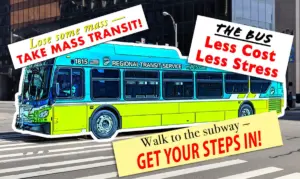
However, cities must move beyond temporary accommodations. Mega-events should serve as living laboratories. Subways can be papered with transit-positive urbanist campaigns, and regional transit systems can use these high-ridership weekends to gather data, sign up new monthly pass holders, and permanently shift commuter habits.
Scaling Tactical Urbanism
In smaller communities and sprawling suburbs alike, grassroots tactical urbanism must evolve from one-day novelties into permanent fixtures. Initiatives like Park(ing) Day—which temporarily transforms curbside car storage into pocket parks and outdoor cafes—should be expanded into weekly, seasonal, and eventually permanent downtown pedestrian zones.
Similarly, pop-up bike lanes and transit-only corridors should be tested through aggressive, week-long civic blitzes. When citizens experience firsthand how safe, quiet, and efficient a street can be without roaring engines and endless idling traffic, the political appetite for permanent redesigns naturally follows.
The Promise of Freedom of Choice
Ultimately, the goal of the modern urban movement is not to ban cars or strip citizens of their mobility. As transportation visionaries point out, a city where you do not depend on a car is not a place where you are barred from visiting distant family or exploring the region. Rather, it is a community designed so that you are no longer forced to drive for every mundane, daily task.
Imagine a neighborhood where your aging grandmother can afford to live around the corner, allowing you to walk to her home with the sun on your face and the wind in your hair. Imagine children playing safely on residential streets, air free from heavy smog, and public spaces bustling with human interaction rather than metal and exhaust.
When enough people can visualize—and then experience—this future, our cities will transform. They will become more joyful, peaceful, healthy, safe, and profoundly fun. Telling that story is the ultimate challenge for the next generation of urban leaders, and mastering it is the key to making that future a reality.