








Executive Overview
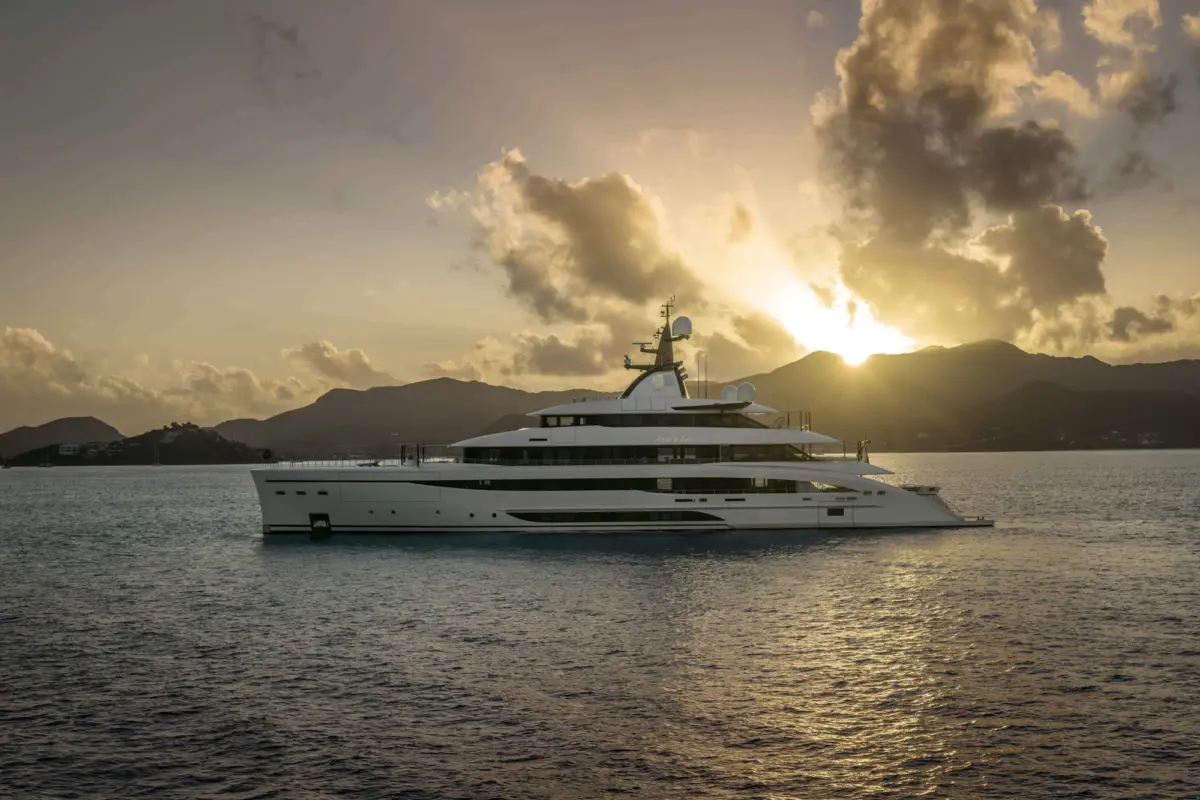
In the upper echelons of maritime architecture, the unveiling of a truly full-custom superyacht is an event that commands global attention. Italian shipyard CRN—a renowned brand within the Ferretti Group—has once again pushed the boundaries of bespoke design and environmental engineering with its latest masterpiece: the 221-foot (67-meter) Amor À Vida. Built from a robust steel hull and a lightweight aluminum superstructure, this majestic six-deck vessel represents a harmonious fusion of advanced naval engineering and visionary aesthetics, realized through a close collaboration with the esteemed design studio Nuvolari Lenard.
Named Amor À Vida—a Portuguese phrase translating to "Love for Life"—the superyacht is much more than a floating palace; it is a statement of intent for the future of luxury cruising. Designed to accommodate up to 12 guests across a series of hyper-luxurious suites, supported by a meticulous crew of 17, the vessel balances grand-scale entertaining with intimate personal sanctuaries.
What sets Amor À Vida apart in an increasingly crowded superyacht market is its uncompromising commitment to sustainable innovation. Beneath its striking exterior lies a state-of-the-art hybrid propulsion system, paired with intelligent energy-recovery technologies that drastically reduce its environmental footprint without sacrificing performance. From its transparent-bottom swimming pool that floods the lower-deck beach club with natural light to its sophisticated heat-recovery systems, Amor À Vida encapsulates the pinnacle of modern maritime craftsmanship, setting a new benchmark for bespoke, eco-conscious superyacht design.
Detailed Chronology: From Concept to Launch
The genesis of Amor À Vida is a story of meticulous planning, multidisciplinary collaboration, and peerless Italian craftsmanship. While the public unveiling marks the culmination of the project, the journey of this 221-foot marvel spans several years of intense design, engineering, and construction phases at CRN’s state-of-the-art facilities in Ancona, Italy.
Phase 1: Conceptualization and Exterior Architecture
The project began when an experienced client approached CRN with a vision for a vessel that could offer complete autonomy, exceptional comfort, and a seamless connection to the marine environment. To bring this vision to life, CRN enlisted the Venice-based design studio Nuvolari Lenard, renowned for their ability to craft timeless, aggressive yet elegant exterior profiles.
During the initial concept phase, the primary challenge was accommodating six distinct decks within a 67-meter envelope without compromising the sleek, dynamic lines of the profile. Nuvolari Lenard achieved this by meticulously proportioning the superstructure, utilizing expansive panes of full-beam glazing, and integrating sweeping architectural curves that lead the eye organically from the bow to the expansive aft sections. The steel and aluminum construction was chosen not only for its structural integrity in transoceanic voyages but also for its ability to maintain a low center of gravity, ensuring supreme stability both underway and at anchor.
Phase 2: Interior Architecture and Bespoke Customization
Once the naval architecture and exterior styling were locked in, the focus shifted to the interior spaces. As a full-custom superyacht, every square inch of Amor À Vida was tailored to the owner’s exacting lifestyle and aesthetic preferences.
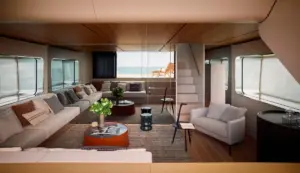
The layout was strategically mapped across the six decks to optimize guest flow and privacy. The upper deck was designated as the exclusive domain of the owner, featuring a sprawling master suite that offers panoramic views and private outdoor terraces. Meanwhile, the main deck welcomes guests with a magnificent full-beam VIP suite, complemented by four additional VIP cabins located on the lower deck.
The interior design team worked hand-in-hand with artisans to select rare materials, bespoke furnishings, and custom lighting fixtures. The overarching design philosophy centered on blurring the boundaries between interior luxury and the natural marine world outside. This was executed through the widespread use of floor-to-ceiling windows, sliding glass bulkheads, and reflective surfaces that amplify natural light.
Phase 3: Engineering, Propulsion Integration, and Sea Trials
While the interior and exterior took shape, CRN’s internal engineering division was hard at work integrating the complex hybrid propulsion system. Merging traditional diesel power with cutting-edge electric propulsion requires surgical precision, particularly on a vessel of this scale.
Following the successful joining of the steel hull and aluminum superstructure—a major milestone in the shipyard’s construction timeline—the technical systems were installed. This included the twin MTU main engines, the Siemens Energy electric motors, and the comprehensive heat-recovery infrastructure.
Before delivery, Amor À Vida underwent rigorous sea trials in the Adriatic Sea. These trials tested the vessel’s structural resilience, maneuverability, noise and vibration levels, and hybrid operational modes. The yacht passed all performance benchmarks with flying colors, demonstrating exceptional hydrodynamic efficiency, a remarkable top speed of 16 knots, and a silent, vibration-free cruising capability when operating on electric propulsion.
Supporting Context & Metrics: Specifications and Amenities
To fully appreciate the scale and capability of Amor À Vida, one must examine the hard metrics and specialized architectural features that define her design.
General Specifications & Dimensions
- Builder: CRN (Ferretti Group)
- Exterior & Interior Design: Nuvolari Lenard
- Hull Material: Steel
- Superstructure Material: Aluminum
- Length Overall (LOA): 221 feet (67 meters)
- Decks: 6
- Guest Capacity: 12 guests (accommodated in an owner’s suite, a main-deck full-beam VIP suite, and four lower-deck VIP cabins)
- Crew Capacity: 17 crew members
Performance & Propulsion Metrics
- Propulsion Type: Hybrid propulsion system
- Main Engines: 2 x MTU diesel engines
- Electric Motors: 2 x Siemens Energy electric motors
- Top Speed: 16 knots
- Cruising Speed: 15 knots
- Energy Efficiency Feature: Integrated heat-recovery system designed to capture waste thermal energy, reducing overall fuel consumption and powering onboard hot-water requirements.
Noteworthy Design & Amenity Features
- The Translucent Main-Deck Pool: One of the most striking architectural features of Amor À Vida is the swimming pool located on the main deck. Equipped with a transparent bottom, it serves a dual purpose: it provides an exceptional aquatic experience for guests on the main deck while casting shimmering, natural light down into the lower-deck beach club below.
- The Lower-Deck Wellness Sanctuary: Recognizing the modern yacht owner’s emphasis on health and wellness, CRN and Nuvolari Lenard designed a sprawling beach club that doubles as a holistic health retreat. It features a fully equipped fitness area, a dedicated spa, a traditional sauna, and a steam room, all positioned mere feet from the water’s edge via fold-down transom and shell doors.
- Indoor-Outdoor Continuity: The superstructure design utilizes extensive full-beam glazing, allowing natural light to flood the interior living spaces while offering unobstructed panoramic views of the ocean. Social areas on both the interior and exterior are designed to flow seamlessly into one another, creating an expansive environment for entertaining large parties or enjoying quiet solitude.
Official Statements and Industry Perspectives
The debut of Amor À Vida has generated significant discourse within the global maritime community, drawing praise for its innovative approach to hybrid engineering and custom luxury.
Representatives from CRN emphasized the shipyard’s dedication to turning an owner’s abstract dreams into tangible, floating realities. In a statement regarding the collaboration, a CRN spokesperson noted:
“Amor À Vida represents the absolute zenith of our engineering capabilities and our philosophy of bespoke craftsmanship. Working alongside Nuvolari Lenard allowed us to push creative boundaries while maintaining the uncompromising technical standards that define the CRN legacy. This yacht is a testament to what can be achieved when visionary design meets decades of Italian shipbuilding expertise.”
Carlo Nuvolari and Dan Lenard, co-founders of the eponymous design studio, shared their perspective on the aesthetic and spatial philosophy behind the project:
“Our goal with Amor À Vida was to create a timeless vessel that honors the classic traditions of yachting while embracing modern lifestyles. The emphasis on spatial continuity—connecting the interior spaces directly to the sea through glazing, light wells, and open-air decks—ensures that those on board are never disconnected from the natural world. It is a design driven by a love for life on the water.”
Industry analysts have also highlighted the significance of Amor À Vida in the broader context of the superyacht market. As environmental regulations tighten and client expectations shift toward sustainable luxury, vessels equipped with hybrid propulsion and energy-recovery systems are no longer just niche experiments—they are becoming the gold standard for high-end custom builds. Naval architects have particularly lauded the integration of the Siemens Energy electric motors with the MTU main engines, noting that the setup provides the necessary redundancy and range required for global cruising while significantly lowering emissions in sensitive marine ecosystems.
Future Outlook: The Evolution of Custom Hybrid Superyachts
The delivery and public presentation of Amor À Vida mark a pivotal moment not only for CRN but for the entire custom superyacht sector. As environmental consciousness permeates the ultra-high-net-worth demographic, the demand for vessels that marry unbridled opulence with eco-friendly engineering is projected to accelerate exponentially over the coming decade.
Historically, the superyacht industry faced criticism for its heavy carbon footprint and reliance on fossil fuels. However, projects like Amor À Vida demonstrate that the industry is actively engineering its own sustainable evolution. The successful implementation of hybrid propulsion systems on a 221-foot steel-and-aluminum hull proves that efficiency does not require a compromise in luxury, performance, or transoceanic range.
Looking forward, technologies such as heat-recovery systems, advanced battery banks for silent-at-anchor operations, and lightweight composite or metal alloys will likely become standard prerequisites for new custom builds. CRN’s successful execution of this complex engineering feat positions the Ancona-based shipyard at the vanguard of this green transition.
As Amor À Vida embarks on her maiden voyages across the globe’s most breathtaking cruising grounds, she carries with her a powerful message. She is both a private sanctuary for her owner and a harbinger of a more sustainable, design-forward future for maritime architecture—proving that a true "love for life" on the water must inherently include a commitment to preserving the oceans that make such voyages possible.