






Executive Overview
A comprehensive analysis of shipping data, port operations, and intelligence from industry insiders reveals a stark dichotomy in Russia’s maritime export capabilities: should diplomatic efforts successfully broker a ceasefire in the Black Sea, Russia could rapidly reactivate up to 80% of its grain export terminal capacity in the Black Sea and the Sea of Azov. However, the remaining 20% of this critical logistical network lies severely crippled. Precision Ukrainian strikes have inflicted heavy, structural damage on key deep-water terminals, rendering them inoperable for months to come.
As the world’s leading exporter of wheat, Russia’s ability to ship agricultural commodities is not merely a domestic economic concern, but a cornerstone of global food security. The ongoing hostilities have transformed the Black Sea from a commercial highway into a highly contested combat zone. This transformation has forced shipping lines to navigate skyrocketing insurance premiums, physical hazards, and unpredictable port closures.
Currently, terminals with a combined annual handling capacity of approximately 53 million metric tons sit idle due to acute security risks. Yet, they remain structurally intact and primed for an immediate resumption of activities. Conversely, three major terminals—accounting for roughly 14 million metric tons of annual capacity—have suffered extensive structural damage. Rebuilding these facilities will require specialized engineering, significant capital, and time, all of which are complicated by international sanctions.
Total Russian Black Sea/Azov Grain Export Capacity: ~67 Million Metric Tons (MMT)
┌─────────────────────────────────────────────────────────┐
│ ████████████████████████████████████████      ░░░░░░░░░ │
└─────────────────────────────────────────────────────────┘
  Active/Ready to Resume (80% / ~53 MMT)        Damaged/Offline (20% / ~14 MMT)
Against this backdrop of physical disruption, a complex diplomatic chess game is unfolding. Led by Turkish President Recep Tayyip Erdogan and supported by key importing nations such as India and Egypt, international intermediaries are working to establish a maritime truce. While Kyiv expresses openness to a structured maritime ceasefire to protect its own shipping corridors, Moscow is publicly projecting resilience by seeking alternative overland and northern export routes. Nonetheless, the reality remains: the global grain market is inextricably bound to the deep-water ports of the Russian south.
Detailed Chronology of Maritime Strikes
The current paralysis of the Black Sea grain trade is the direct result of a calculated campaign of maritime interdiction and retaliatory strikes that escalated dramatically following the collapse of the United Nations-brokered Black Sea Grain Initiative. The transition from a regulated shipping corridor to active kinetic warfare has severely impacted Russia’s port infrastructure.
2026 Strike Timeline & Operational Impacts:
────────────────────────────────────────────────────────────────────────────────
July 30: Strike on ZTKT Terminal (Taman)
         ↳ Status: Inoperable | Capacity Affected: 5.5 MMT/year
────────────────────────────────────────────────────────────────────────────────
August 12: Precision Attack on NKHP Terminal (Novorossiysk)
         ↳ Status: Severely Damaged (Conveyor Collapsed) | Capacity Affected: 7.1 MMT/year
────────────────────────────────────────────────────────────────────────────────
Late August: Strikes on Taganrog Port (Sea of Azov)
         ↳ Status: Suspended | Capacity Affected: Feeder networks compromised
The July 30 Strike on the Taman Peninsula
The first major blow to Russia’s high-capacity export infrastructure occurred on July 30, when the Grain Terminal Complex Taman (ZTKT) was targeted. Located on the Kerch Strait, Taman is a modern, deep-water port capable of loading large bulk carriers. The strike successfully compromised the terminal’s automated loading arms and pier-side infrastructure.
With an annual capacity of 5.5 million metric tons, ZTKT was immediately rendered incapable of loading vessels. Due to the highly specialized nature of the damaged loading systems, industry sources report that operations have been suspended indefinitely, with no clear timeline for a restart.

The August 12 Novorossiysk Disaster
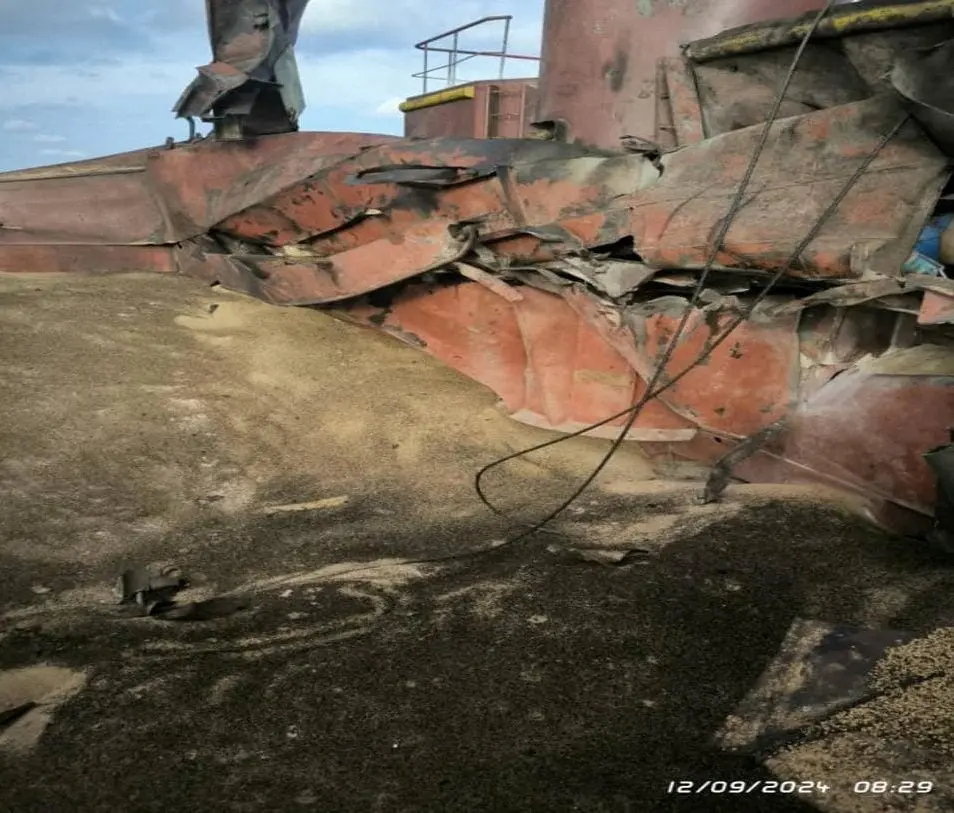
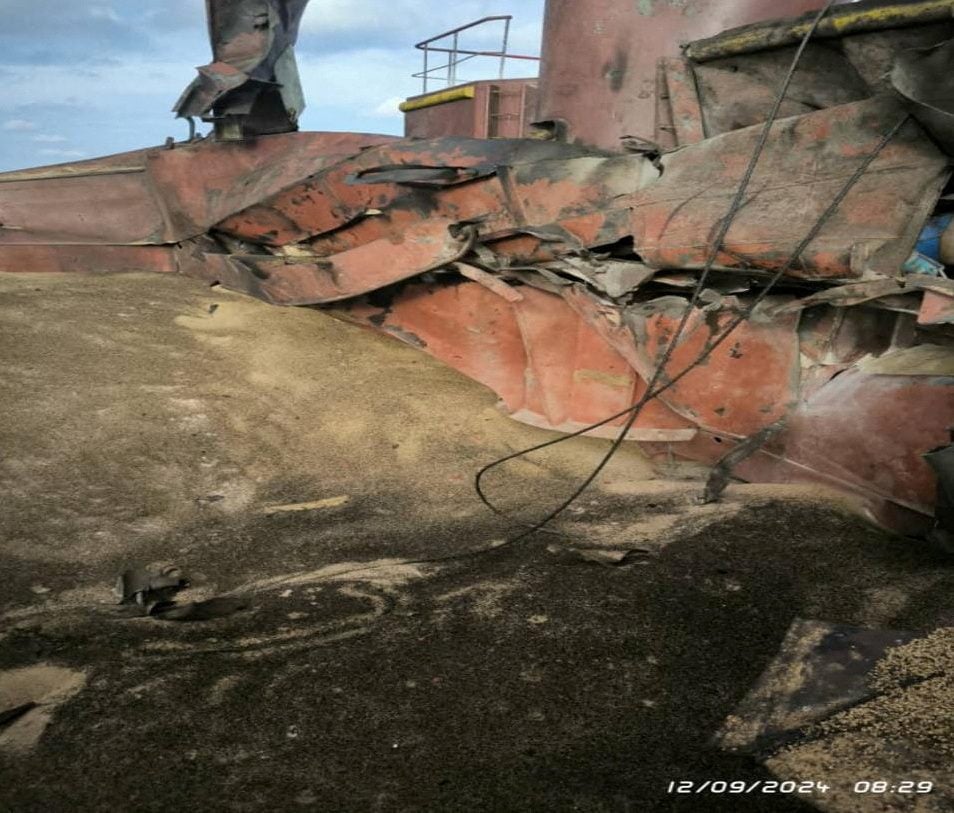
Less than two weeks after the Taman attack, a precision strike targeted the Novorossiysk Grain Port (NKHP), one of Russia’s three largest agricultural export hubs. On August 12, the terminal’s critical conveyor gallery—the overhead structural artery that transports grain from storage silos directly to ship loaders—was struck and completely destroyed.
"At NKHP, that conveyor gallery was completely destroyed. It actually collapsed onto the road and was lying across it," an operations source based in Novorossiysk told Reuters. The physical collapse of this infrastructure brought operations to an immediate halt.
The terminal’s management was forced to furlough the bulk of its operational staff for an estimated six months. While the operating company officially estimates that repairs could be completed within four months, independent engineering assessments suggest that under current economic conditions and import restrictions, a full restoration could take up to half a year.
The Taganrog and Azov Sea Campaigns
Simultaneously, smaller-scale strikes targeted the shallower waters of the Sea of Azov and the Don River delta. The port of Taganrog, which serves as a vital conduit for smaller feeder vessels transporting grain to larger anchorage points for transshipment, was hit in late August.
While the individual capacity of Taganrog is modest compared to the Black Sea giants, its closure, combined with the damage at ZTKT, sidelined a collective 6.7 million metric tons of annual export capacity. This effectively severed the logistical connections that northern Caucasian and southern Russian farms rely on to access international waters.
Supporting Context & Metrics
To understand the scale of the disruption, one must examine the geography and capacity of Russia’s southern grain export network. Prior to the escalation of hostilities, this maritime route handled up to 70% of Russia’s total grain exports.
Russian Grain Export Terminal Status (Southern Region)
┌──────────────────────┬────────────────────┬──────────────────────┬────────────────────────┐
│ Terminal Name        │ Location           │ Annual Capacity      │ Current Operational    │
│                      │                    │ (Million Metric Tons)│ Status                 │
├──────────────────────┼────────────────────┼──────────────────────┼────────────────────────┤
│ NKHP                 │ Novorossiysk       │ 7.1 MMT              │ Offline (Heavy Damage) │
│ ZTKT                 │ Taman              │ 5.5 MMT              │ Offline (Heavy Damage) │
│ Taganrog / Small     │ Sea of Azov        │ 1.2 MMT              │ Offline (Moderate)     │
│ KSK                  │ Novorossiysk       │ 8.5 MMT              │ Idle (Slight/No Damage)│
│ NZT                  │ Novorossiysk       │ 6.0 MMT              │ Idle (Slight/No Damage)│
│ Other Gulf/Azov Ports│ Various            │ 38.7 MMT             │ Idle (Slight/No Damage)│
├──────────────────────┼────────────────────┼──────────────────────┼────────────────────────┤
│ Total Regional Capacity:                  │ ~67.0 MMT            │                        │
└──────────────────────┴────────────────────┴──────────────────────┴────────────────────────┘
The Deep-Water Giants: Novorossiysk and Taman
The southern export strategy relies on deep-water berths capable of hosting Panamax-class vessels. These ships are essential for cost-effectively transporting grain to distant markets in East Asia, North Africa, and the Middle East. Novorossiysk hosts three major terminals: NKHP, KSK, and NZT.
While NKHP remains offline, the KSK and NZT terminals suffered only negligible, cosmetic damage during the summer campaigns. According to port operators, both KSK and NZT are fully prepared to resume high-volume loading operations almost immediately, provided safe passage guarantees are established and war risk insurance premiums return to commercially viable levels.
The Shallow-Water Feeder Network
In contrast to the deep-water facilities, the Sea of Azov and Don River ports (including Rostov-on-Don, Azov, and Taganrog) utilize smaller, shallow-draft river-sea vessels. These ports are highly flexible but vulnerable to localized security disruptions and the mining of shallow straits.
Currently, about 38.7 million tons of capacity across these smaller terminals and secondary Black Sea berths are idle solely due to security risks, rather than structural damage. This confirms that a diplomatic resolution could rapidly restore a massive portion of Russia’s export capacity.
Logistics Flow: Russian Grain Export Bottleneck

 [ Southern Russian Wheat Belts ]
               │
               ▼ (Rail & Road Transport)
 ┌───────────────────────────────────────────┐
 │   Regional Storage Silos & Inland Hubs    │
 └─────────────────────┬─────────────────────┘
                       │
         ┌─────────────┴─────────────┐
         ▼                           ▼
 ┌──────────────┐            ┌──────────────┐
 │ Deep-Water   │            │ Shallow-Water│
 │ Ports        │            │ Azov Ports   │
 │ (Novorossiysk│            │ (Taganrog,   │
 │ & Taman)     │            │ Rostov)      │
 └──────┬───────┘            └──────┬───────┘
        │                           │
 ┌──────▼───────────────────┐ ┌──────▼───────────────────┐
 │ NKHP & ZTKT (20%):       │ │ Feeder Vessels           │
 │ Structural Bottleneck    │ │ (80% Ready but Idle):    │
 │ (Conveyors Destroyed)    │ │ Security/Insurance Block │
 └──────────────────────────┘ └──────────────────────────┘
Official Statements & Diplomatic Maneuvers
The paralysis of Black Sea grain shipping has triggered intense diplomatic activity behind closed doors, as importing nations seek to protect their supply chains from further disruption.
Turkey’s Mediation and the Montreux Convention
Turkish President Tayyip Erdogan has positioned Ankara at the center of mediation efforts. Turkey’s role is defined not only by its geographic position bordering the Black Sea, but also by its stewardship of the Bosporus and Dardanelles straits under the 1936 Montreux Convention.
Turkish diplomats are working on a framework that decouples agricultural and humanitarian shipping from active military operations. Ankara’s primary objective is to secure a mutual pledge from both Kyiv and Moscow to cease strikes on port infrastructure and merchant vessels.
The Coalition of Importers
The diplomatic push has gained support from a broader coalition of importing nations. Ukrainian President Volodymyr Zelenskiy confirmed that India and Egypt—two countries highly exposed to fluctuations in global wheat prices—have actively engaged in the discussions.
For Egypt, the world’s largest wheat importer, the stability of Black Sea shipments is a matter of domestic social stability. New Delhi’s involvement reflects its broader geopolitical ambition to act as a bridge between the Global South and the warring European powers, ensuring that food supply chains remain uninterrupted.
The Kremlin’s Pivot and Public Posture
The Kremlin has adopted a dual-track approach. While acknowledging diplomatic contacts regarding the Black Sea, Russian officials have sought to project economic independence. Kremlin spokesperson Dmitry Peskov indicated that while Russia remains open to constructive dialogue, the state is actively developing alternative export corridors.
These alternative routes include shipping grain through northern ports, such as Murmansk, by repurposing bulk fertilizer terminals, as well as expanding rail corridors to Baltic ports and southern routes toward Caspian Sea ports. However, logistics experts note that these alternative corridors are significantly more expensive and lack the throughput capacity required to fully replace the Black Sea route.
Future Outlook & Alternative Supply Chains
The medium-term outlook for global grain markets depends on two key factors: the geopolitical viability of a maritime truce and Russia’s ability to bypass sanctions to repair its damaged infrastructure.
Reconstruction & Logistics Forecast (Next 12–18 Months):
┌───────────────────────────────┐
│ Import Substitution Hurdles   │ ──► High reliance on Chinese/domestic heavy machinery.
└───────────────────────────────┘
┌───────────────────────────────┐
│ Baltic & Arctic Diversification│ ──► High rail tariffs limit Murmansk & Baltic viability.
└───────────────────────────────┘
┌───────────────────────────────┐
│ War Risk Insurance Premiums   │ ──► Ceasefire must precede any reduction in premiums.
└───────────────────────────────┘
The Sanctions Hurdle in Port Reconstruction
While Russia’s undamaged terminals could resume operations quickly under a ceasefire, the damaged 20% of its capacity faces a more difficult recovery. The destruction of specialized conveyor systems, automated loading arms, and high-capacity marine loaders at NKHP and ZTKT presents a significant challenge. Historically, these advanced port systems were sourced from Western European engineering firms.
Under current sanction regimes, direct access to European replacement parts is restricted. Consequently, Russian port operators must rely on domestic manufacturing or source equipment from Chinese suppliers. This transition is likely to extend repair timelines, meaning that even under a ceasefire, Russia’s peak export capacity will remain restricted well into next year.
The Viability of Alternative Routes
Russia’s attempts to diversify its export routes away from the Black Sea face major logistical challenges:
- The Arctic Route (Murmansk): While northern ports offer year-round, ice-free deep-water berths, the cost of transporting grain thousands of miles north from southern agricultural regions via rail is economically prohibitive for standard commercial transactions.
- The Baltic Terminals: Ports in the Gulf of Finland can handle panamax vessels, but they are already heavily utilized for fertilizer and coal exports, leaving little surplus capacity for agricultural products.
- The Caspian Sea Corridor: This route offers access to Iranian and Middle Eastern markets, but it relies on shallow-draft vessels and underdeveloped rail networks, limiting its overall capacity.
The Insurance Bottleneck
Ultimately, the resumption of Black Sea shipping will depend as much on maritime underwriters as on physical repairs. Even if a diplomatic agreement is reached, international insurers will remain cautious about underwriting vessels entering the Black Sea without clear, enforceable security guarantees.
A lasting reduction in war risk premiums will require verifiable de-escalation, including the clearing of naval mines and a sustained pause in drone and missile attacks. Until these conditions are met, the Black Sea grain trade will remain a high-risk, high-cost endeavor, leaving global food markets vulnerable to ongoing volatility.