










Executive Overview
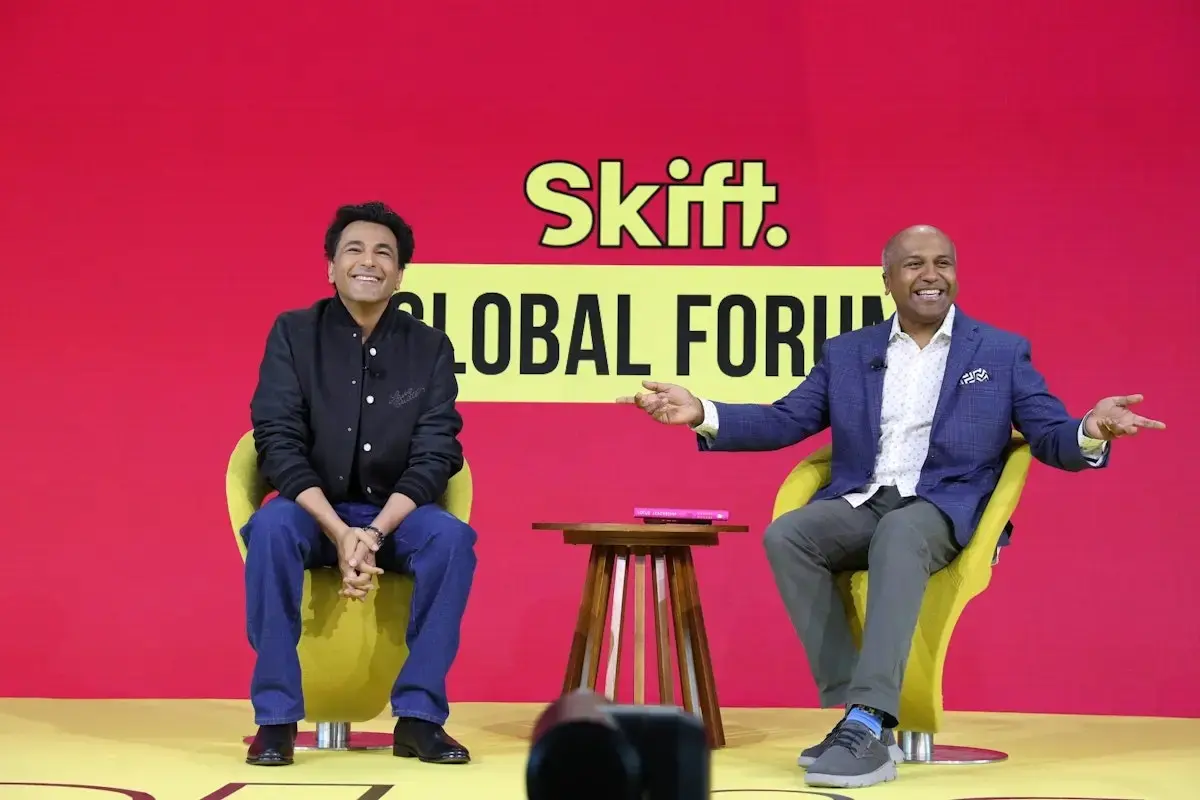
In an era dominated by algorithmic itinerary planning, hyper-personalized hotel booking apps, and sleek, frictionless aviation logistics, the modern tourism industry often risks losing sight of the very thing that moves human beings to pack a bag in the first place: raw, emotional, sensory connection. At the prestigious Skift Global Forum, renowned Michelin-starred chef, celebrated author, and tireless humanitarian Vikas Khanna took the stage to offer a grounding, radical proposition to travel industry leaders. Moderated by Sree Sreenivasan of Digimentors, Khanna’s keynote shifted the paradigm away from standard hospitality metrics and squarely onto the plate.
According to Khanna, while hotels, pristine beaches, and efficient transportation infrastructure are necessary functional components of a trip, they are no longer enough to inspire transformative journeys. Instead, culinary tourism has emerged as the single most powerful driving force for modern travelers. "Hotels, beaches — that’s all okay," Khanna told the rapt audience of global travel executives. "But if you know that there is something being cooked or giving you an experience from food, there’s a chance the family would travel."
This insight cuts to the heart of contemporary consumer behavior. Today’s travelers—spanning generational divides from experience-hungry Gen Zers to multi-generational family units—are increasingly rejecting sanitized, cookie-cutter vacation packages. They are trading static sightseeing for visceral, place-based cultural immersion, where a destination’s identity is tasted, smelled, and shared around a communal table.
This comprehensive report explores Khanna’s compelling thesis at the Skift Global Forum, analyzing the evolving landscape of food tourism, the intersection of cutting-edge travel technology and sensory hospitality, and what the future holds for a travel economy that must increasingly cater to the appetite for authenticity.
Detailed Chronology: The Skift Global Forum Session
The atmosphere inside the main auditorium at the Skift Global Forum crackled with anticipation as Sree Sreenivasan introduced Vikas Khanna. Widely recognized not only for his culinary mastery and critically acclaimed New York City restaurants but also for his massive global humanitarian efforts during the COVID-19 pandemic, Khanna brings a uniquely philosophical and human-centric perspective to the hospitality sector.
The session, titled "The Decision Brief," moved fluidly from personal anecdotes of Khanna’s culinary journey across the globe to high-level strategic takeaways for travel industry stakeholders. Sreenivasan steered the conversation toward a fundamental industry dilemma: As travel brands pour billions of dollars into artificial intelligence, seamless booking engines, and digital loyalty programs, how do they ensure that the human soul of travel isn’t lost in translation?
Khanna’s response was immediate and unequivocal. He redirected the focus from the digital apparatus back to the physical and emotional destination. He recounted observations from his travels across remote villages and bustling metropolises alike, noting that while luxury accommodations can provide comfort, a lasting memory is almost invariably anchored to a culinary encounter.

The conversation then pivoted to the mechanics of modern trip-planning. Khanna argued that the ultimate goal of all the sophisticated technology currently being deployed by airlines, hoteliers, and destination marketing organizations (DMOs) is not just to sell a ticket or a room night. Rather, the entire tech stack—from predictive search algorithms to immersive virtual reality previews—is ultimately designed to shepherd the traveler toward a specific, resonant moment of human connection, most often materialized through shared food.
As the discussion unfolded, the dialogue illuminated a stark contrast between traditional tourism marketing—which has historically relied on visual imagery of landscapes and architecture—and the rising dominance of gastronomy as a primary marketing tool. Khanna emphasized that food acts as an equalizer, a universal language that bypasses cultural and linguistic barriers, making it the most potent catalyst for family and group travel in the modern era.
Supporting Context & Metrics: The Rise of Gastronomic Tourism
To understand the weight of Vikas Khanna’s assertions at the Skift Global Forum, one must examine the broader macro-economic trends reshaping the global tourism market. Culinary tourism is no longer a niche hobby reserved for high-end epicureans or adventurous backpackers; it has matured into a multi-billion-dollar economic engine that dictates travel flows, influences regional development, and drives destination branding.
The Shift Toward Experiential Spending
According to recent global tourism studies, international travelers are allocating a significantly higher percentage of their discretionary budgets to food and beverage experiences than they were a decade ago. While spending on standard retail shopping has plateaued or declined among younger demographics, spending on culinary tours, cooking classes, farm-to-table dining experiences, and street food excursions has surged exponentially.
This behavioral pivot aligns precisely with Khanna’s observation that families and independent travelers alike are motivated by the promise of an authentic culinary narrative. When a traveler chooses a destination because of its culinary heritage—be it the complex spice profiles of regional Indian cuisine, the slow-cooked traditions of the American South, or the delicate fermentation arts of Scandinavia—they are seeking an active form of participation. They do not want to merely observe a culture; they want to consume it, literally and metaphorically.
Technology as the Bridge to the Table
Khanna’s commentary on travel technology introduces a fascinating paradox: while consumers are increasingly fatigued by digital noise, the travel industry is deploying more technology than ever to capture their attention. However, Khanna reframes the utility of this technology.
In the modern travel ecosystem, tech investments are shifting from transactional infrastructure (faster booking engines, automated check-ins) to experiential matchmaking. Platforms are utilizing machine learning to curate hyper-localized food itineraries based on a traveler’s specific dietary preferences, curiosity levels, and aesthetic desires. From apps that connect travelers with home cooks for authentic neighborhood dinners to augmented reality guides that explain the historical provenance of a street food dish, technology is increasingly being deployed as a bridge to sensory engagement.

The industry recognizes that if an algorithm can successfully connect a traveler to a transformative meal, the likelihood of customer loyalty, positive reviews, and repeat visitation skyrockets. In this sense, food is the ultimate payoff for digital travel planning.
Official Statements and Industry Perspectives
The sentiments shared by Vikas Khanna at the Skift Global Forum resonate deeply with a broader chorus of industry leaders, economists, and cultural historians who recognize that tourism is undergoing a fundamental structural transformation.
"Hotels, beaches — that’s all okay. But if you know that there is something being cooked or giving you an experience from food, there’s a chance the family would travel."
— Vikas Khanna, Chef, Author & Humanitarian
This core thesis challenges destination marketing organizations (DMOs) to rethink their promotional strategies. For decades, tourism boards relied on postcard-perfect imagery of white-sand beaches, mountain vistas, and historic monuments. Today, progressive DMOs are completely restructuring their campaigns around culinary trails, indigenous ingredients, and chef-led storytelling.
Industry analysts attending the forum noted that Khanna’s perspective underscores the vulnerability of destinations that rely solely on physical infrastructure. A luxury hotel can be replicated anywhere in the world; a pristine beach can suffer from environmental degradation or adverse weather. But a culinary tradition rooted in centuries of local history, geography, and cultural exchange is entirely inimitable. It provides a destination with an unassailable competitive advantage.
Furthermore, Sree Sreenivasan’s moderation highlighted the intersection of culinary tourism and humanitarianism—a topic central to Khanna’s life work. By viewing food not merely as a commercial commodity, but as a medium for empathy, storytelling, and community building, the travel industry has the opportunity to foster deeper, more respectful cross-cultural exchanges. When travelers engage with local food economies, their spending directly supports smallholder farmers, independent restaurateurs, and indigenous food artisans, thereby promoting sustainable and equitable tourism development.
Future Outlook: What to Watch in Food Tourism
As the travel and hospitality sectors look toward the horizon, the principles articulated by Vikas Khanna point toward several critical trends and trajectories that industry stakeholders must monitor closely.
1. Hyper-Localization and Indigenous Revivalism
The era of generalized international cuisine in tourist hubs is rapidly giving way to hyper-localization. Travelers are increasingly seeking out indigenous ingredients, forgotten ancestral recipes, and micro-regional dishes that cannot be found anywhere else. Destination managers and hospitality operators must work hand-in-hand with local food producers to preserve and showcase these culinary heritages authentically, avoiding the pitfalls of cultural commodification.
2. The Fusion of Tech and Taste
As artificial intelligence and spatial computing continue to mature, the ways in which travelers discover culinary experiences will become even more immersive. Expect to see a rise in predictive culinary itineraries, virtual reality farm visits prior to booking, and smart-destination platforms that allow travelers to trace the journey of their food from farm to plate in real-time. The most successful travel tech platforms will be those that use digital tools to drive physical, sensory engagement rather than keeping travelers glued to their screens.
3. Sustainability as a Culinary Imperative
Food tourism is inextricably linked to environmental sustainability. With consumers becoming hyper-aware of food miles, waste, and ethical sourcing, the future of culinary travel will depend heavily on regenerative practices. Restaurants and hotels that champion zero-waste kitchens, regenerative agriculture, and closed-loop food systems will capture the loyalty of conscious travelers who view dining as an ethical choice as well as a pleasure.
4. Multi-Generational Culinary Travel
As Khanna noted, the desire for a shared food experience is often what tips the scale for family travel decisions. Planning trips that cater to diverse age groups—ranging from interactive cooking workshops for children to wine and heritage tastings for grandparents—will become a major focal point for tour operators and resort developers seeking to capture the lucrative multi-generational market.
Conclusion
Vikas Khanna’s appearance at the Skift Global Forum served as a timely and necessary reminder that the heart of travel beats strongest around the dining table. While the mechanics of the tourism industry will continue to evolve through technological innovation, logistical optimization, and digital transformation, the fundamental human desire for connection, memory, and sensory delight remains unchanged.
By placing culinary experiences at the very center of the travel narrative, the industry can move beyond transactional hospitality and into a new era of transformative, culturally enriching journeys. For travel brands, destination marketers, and hospitality leaders listening to Khanna’s verdict, the mandate is clear: invest in the plate, honor the story behind the food, and give travelers a reason not just to visit a place, but to truly taste it.