









By Blake Aued
Published: September 25, 2026
Executive Overview
American infrastructure has long carried a reputation for staggering price tags, but a troubling new benchmark has officially redefined the economics of civil engineering: the nation’s 10 most costly highway projects now carry an average price exceeding half a billion dollars per single mile.
As federal, state, and local agencies grapple with dwindling transportation trust funds, escalating material costs, and complex urban planning hurdles, the financial threshold for highway expansion has reached historic heights. What was once considered an unthinkable expenditure for cross-country transit networks is now standard operating cost for widening congested urban corridors, constructing complex multi-level interchanges, and tunneling beneath densely populated metropolitan cores.
This report investigates the fiscal realities driving these exorbitant budgets. By examining the structural factors behind skyrocketing per-mile costs—ranging from land acquisition and environmental mitigation to protracted legal battles and administrative bloat—we examine whether these investments genuinely solve urban congestion or merely lock municipalities into generations of financial and spatial liability.
Detailed Chronology: The Evolution of Mega-Highway Inflation
To understand how American highway costs ballooned to over $500 million per mile, it is necessary to trace the convergence of federal policy, engineering scope creep, and changing urban landscapes over the past several decades.
Phase 1: The Post-Interstate Era and Initial Scope Expansion (1990s–2000s)
Following the completion of the core Interstate Highway System, state departments of transportation (DOTs) shifted their focus from greenfield construction to urban reconstruction, widening, and bottleneck mitigation. During this period, projects like Boston’s Central Artery/Tunnel project (commonly known as "The Big Dig") set a cautionary precedent. Originally projected at $2.6 billion, the project ultimately surpassed $22 billion—roughly equivalent to billions per mile due to its heavy reliance on underground tunneling in a historic urban center.
The Big Dig proved that urban highway megaprojects were uniquely susceptible to catastrophic cost overruns, yet transportation agencies across the country continued to adopt increasingly complex, high-cost engineering blueprints.
Phase 2: The Rise of Managed Lanes and Complex Interchanges (2010s)
As simple lane-widening projects faced mounting public pushback and diminishing returns against induced demand, state DOTs pivoted toward technologically complex solutions. Projects began incorporating High-Occupancy Toll (HOT) lanes, express toll lanes, flyover ramps, and automated tolling infrastructure.
Concurrently, acquiring right-of-way in booming metropolitan areas became astronomically expensive. Purchasing commercial and residential properties adjacent to existing freeways drove up baseline costs long before a single yard of concrete was poured.
Phase 3: The Modern Megaproject Era and Post-Pandemic Inflation (2020–Present)
Entering the mid-2020s, supply chain disruptions, labor shortages, and inflationary pressures on raw materials—such as structural steel, asphalt, and concrete—compounded the baseline expenses of civil construction. Today, megaprojects routinely cross the multi-billion-dollar threshold while covering surprisingly short geographical distances.
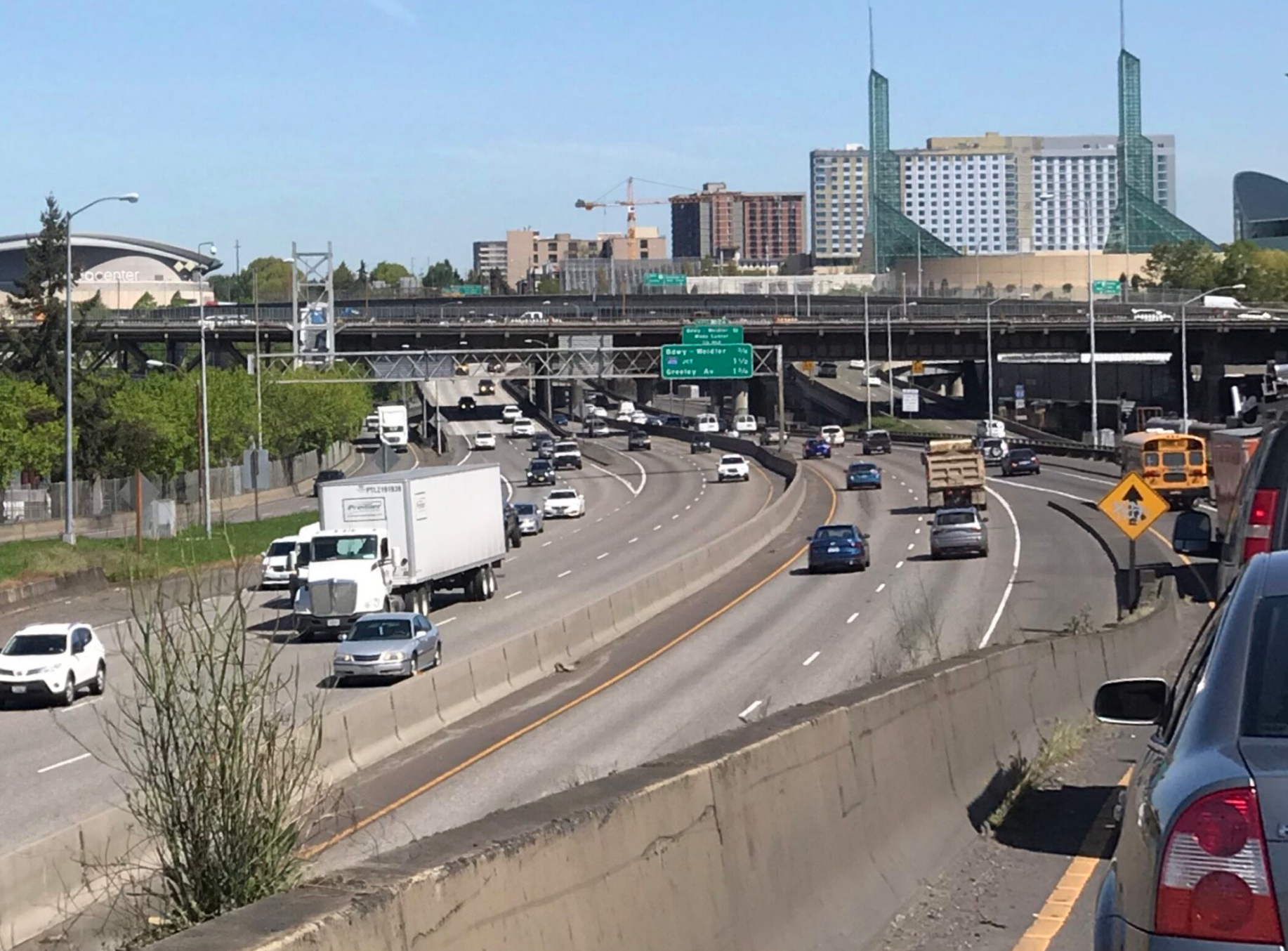
The threshold of $500 million per mile is no longer an anomaly limited to underground tunneling or complex mountain passes; it is increasingly characteristic of major urban interstate retrofits, such as the contentious Interstate 5 Rose Quarter project in Portland, Oregon, and parallel expansions in Texas, California, and the Northeast.
Supporting Context & Metrics: The Math Behind the Madness
The financial mechanics of modern highway building reveal an alarming disparity between capital input and mobility output. To contextualize a half-billion-dollar-per-mile price tag, consider the following metrics and structural cost drivers:
1. The Per-Mile Breakdown
When a two-mile urban highway expansion project costs $1.1 billion, the math yields a stark reality:
- Land Acquisition: Often accounts for 20% to 35% of total initial outlays in dense urban cores.
- Utility Relocation: Moving subterranean water, electrical, gas, and fiber-optic lines frequently exceeds the cost of actual road paving.
- Environmental Mitigation & Overbuilds: Modern projects must routinely include stormwater management systems, noise walls, pedestrian land bridges (caps), and air filtration systems.
2. Induced Demand vs. ROI
Transportation economists and urban planners frequently point out the paradox of high-cost highway expansions. According to data compiled by transit advocacy groups and academic researchers, adding lanes to alleviate traffic congestion often fails to yield long-term time savings. Within a few years of completion, induced demand—the phenomenon where increased road capacity encourages more drivers to use the route—brings congestion back to baseline levels, leaving municipalities with billions in debt and ongoing maintenance liabilities.

3. Maintenance Liabilities
Constructing high-cost highway infrastructure creates a compounding fiscal trap. State DOTs are already struggling to maintain existing pavement and bridges. Adding elevated viaducts, complex drainage systems, and automated toll infrastructure exponentially increases long-term operations and maintenance (O&M) budgets, drawing funds away from alternative transit modes like rail, bus rapid transit (BRT), and active transportation networks.
Official Statements and Perspectives
The debate surrounding half-billion-dollar-per-mile highway projects has polarized urban planners, state transportation officials, and taxpayer advocacy organizations.
State Department of Transportation Officials:
Defenders of major highway investments argue that these projects are essential for maintaining national supply chains, supporting regional economic growth, and accommodating growing populations.
"Our urban corridors are the economic lifeblood of our states," noted a representative from a western state DOT. "When we invest in widening these arteries, we are addressing decades-old geometric deficiencies, improving safety standards, and ensuring that freight and commercial traffic can move efficiently. The costs reflect the immense complexity of building within fully developed urban environments without shutting down regional commerce."
Urban Planners and Transit Advocates:
Conversely, critics argue that pouring half a billion dollars or more into a single mile of highway represents a profound misallocation of public funds, particularly at a time when cities face climate targets and housing affordability crises.
"Spending $500 million per mile on highway expansion is an unsustainable fiscal strategy," stated a policy analyst specializing in sustainable transportation. "We are mortgaging our transportation future on infrastructure designs from the mid-20th century. For the cost of a single congested freeway megaproject, regions could build robust, comprehensive transit networks that move significantly more people at a fraction of the long-term maintenance cost."
Taxpayer Watchdog Groups:
Fiscal conservatives have also raised alarms over the frequency of budget overruns, demanding greater transparency, independent audits, and rigorous cost-benefit analyses before federal highway dollars are committed to projects exceeding the half-billion-per-mile threshold.

Future Outlook: Where Do We Go From Here?
As the United States looks toward the remainder of the 2020s and into the 2030s, the trajectory of highway financing faces a reckoning. Several critical trends are poised to shape the future of American civil infrastructure:
1. The Shift Toward Multimodal Alternatives
With highway construction costs spiraling out of control, federal and state planners are facing increased pressure to diversify funding portfolios. Investments in rail modernization, intercity passenger rail, dedicated bus lanes, and safe cycling and pedestrian infrastructure are increasingly viewed as more cost-effective ways to manage congestion and reduce per-capita carbon emissions.
2. Emerging Funding Models and Toll Resistance
As traditional gas tax revenues decline due to the proliferation of electric vehicles (EVs), states are exploring vehicle-miles-traveled (VMT) fees and toll-financed megaprojects. However, public resistance to toll roads is fierce, particularly when local residents feel they are being taxed to fund highways that displace neighborhoods or fail to resolve traffic issues.
3. Re-evaluating the "Megaproject" Mindset
The milestone of $500 million per mile serves as an inflection point. Industry experts suggest that the era of massive urban highway expansions may eventually give way to "fix-it-first" maintenance policies, technological optimization of existing lanes (such as dynamic pricing and intelligent transportation systems), and targeted investments in public transit corridors.
Ultimately, the question facing American cities is not merely how to afford the next billion-dollar mile, but whether continuing down this fiscal path serves the long-term prosperity, mobility, and livability of the nation’s communities.