








Executive Overview
The Southeastern Pennsylvania Transportation Authority (SEPTA) has officially drawn a line in the sand. Amid an era defined by post-pandemic ridership shifts, acute fiscal cliffs, and decades of deferred maintenance, Philadelphia’s primary transit agency has unveiled Accelerate—an ambitious, multi-year strategic vision designed to transform the region’s public transportation network. Serving an estimated 800,000 daily riders, SEPTA is positioning this initiative not merely as a capital improvement program, but as an existential pivot away from what leadership bluntly terms "managed decline."
For years, the narrative surrounding SEPTA has been bogged down by the realities of chronic underfunding, escalating operating deficits, and public safety concerns. Accelerate aims to rewrite that narrative. The initiative establishes a comprehensive blueprint focused on delivering modernized stations, state-of-the-art vehicle fleets, enhanced security measures, and frictionless, accessible service across the five-county region.
However, this vision arrives at a moment of profound financial vulnerability. With federal pandemic relief funds fully depleted and state-level funding negotiations frequently stalling in Harrisburg, SEPTA’s leadership is making a calculated bet. By laying out a rigorous roadmap for accountability, operational efficiency, and capital investment, the Authority hopes to prove to state lawmakers, municipal partners, and the riding public that it is worthy of sustained, long-term financial investment.
This article provides an in-depth examination of the Accelerate initiative, tracing its origins, dissecting its core pillars, analyzing the underlying economic and operational metrics, evaluating official stakeholder responses, and forecasting the high-stakes future of public mobility in the Greater Philadelphia area.
Detailed Chronology: The Road to ‘Accelerate’
To understand the weight and urgency of the Accelerate initiative, it is necessary to examine the timeline of events, crises, and strategic pivots that brought SEPTA to this critical juncture.
The Post-Pandemic Fiscal Cliff (2020–2022)
When COVID-19 swept across the United States in the spring of 2020, SEPTA, like every major transit agency in the nation, experienced an unprecedented cratering of ridership. While federal relief packages—most notably the CARES Act, the Coronavirus Response and Relief Supplemental Appropriations Act (CRRSAA), and the American Rescue Plan Act (ARPA)—threw a vital financial lifeline to the agency, these funds were inherently temporary.
As remote work models solidified for white-collar workers and commuting patterns shifted permanently, SEPTA’s farebox recovery revenue plummeted. By 2022, even as ridership began a slow, uneven recovery—stabilizing at roughly 60% to 70% of pre-pandemic levels—the looming expiration of federal emergency aid signaled an impending structural deficit, commonly referred to by transportation economists as the "fiscal cliff."
The Budget Battles and Service Plan Approvals (2023–2024)
Throughout 2023 and early 2024, the structural deficit transformed from an abstract warning into an immediate operational crisis. SEPTA administrators faced the grim prospect of enacting sweeping, catastrophic service cuts—slashing routes by up to 20% and hiking fares by double-digit percentages—just to balance the annual operating budget.
While temporary legislative stopgaps in Harrisburg narrowly averted the worst of these doomsday cuts, the uncertainty paralyzed long-term capital planning. It was against this backdrop of fiscal precarity that the SEPTA Board of Directors approved the Annual Transit Service Plan, setting the stage for a more radical, forward-looking strategic response. Leadership realized that incremental budgeting and defensive cost-cutting were failing strategies; the agency needed an offensive playbook.
The Launch of ‘Accelerate’ (Late 2024–Present)
Culminating months of internal strategy sessions, stakeholder consultations, and operational audits, SEPTA officially introduced Accelerate. Formulated to counteract the narrative of managed decline, the initiative was presented to the public and regional stakeholders as a definitive statement of intent. Rather than shrinking service to match shrinking revenues, Accelerate challenges state and local leaders to invest proactively in the transit network, arguing that a world-class public transportation system is the non-negotiable foundation of southeastern Pennsylvania’s economic competitiveness.
Supporting Context & Metrics: The Anatomy of Greater Philadelphia’s Transit Ecosystem
To evaluate the feasibility and necessity of Accelerate, one must examine the hard data governing SEPTA’s operations, its efficiency rankings, and the socioeconomic footprint it leaves across the region.
Efficiency vs. Underfunding: The Paradox of SEPTA
Critics of public transit often point to operating subsidies as evidence of waste. However, empirical data tells a vastly different story regarding SEPTA. As SEPTA Board Chair Kenneth E. Lawrence Jr. noted during the rollout of Accelerate, the Authority stands proudly as one of the most efficient transit systems in the United States.
Efficiency in public transit is frequently measured by cost per passenger mile, administrative overhead relative to operational output, and farebox recovery ratios relative to peer agencies of comparable size (such as Chicago’s CTA, Boston’s MBTA, or Washington D.C.’s WMATA). SEPTA consistently ranks near the top of its peer group in cost-containment.
The paradox facing SEPTA is not operational inefficiency, but structural underfunding. Historically, Pennsylvania has relied on complex, and at times volatile, mechanisms to fund public transportation—often tethering transit funding to state sales tax revenues or vehicle-related fees. When compared to peer metropolitan regions that enjoy dedicated regional sales taxes, real estate transfer taxes, or state-level capital bonding programs dedicated entirely to transit, Philadelphia’s funding ecosystem lags significantly behind.
The 800,000 Daily Riders: Who Relies on SEPTA?
The impact of SEPTA extends far beyond downtown commuters. On any given pre-pandemic-equivalent weekday, roughly 800,000 passenger trips are taken across SEPTA’s multi-modal network, which includes:
- Heavy Rail: The Broad Street Line (BSB) and Market-Frankford Line (MFL), serving as the high-capacity spines of the city.
- Regional Rail: A sprawling commuter rail network connecting Center City Philadelphia to the surrounding counties (Bucks, Chester, Delaware, Montgomery) and extending into neighboring Delaware and New Jersey.
- Trolleys and Subways-Surface: One of the largest historic and modern light rail networks in the country.
- Bus Network: An extensive web of urban and suburban bus routes that form the literal lifeline for essential workers, students, and populations without access to private automobiles.
Demographic studies of SEPTA ridership reveal that a disproportionate share of daily riders are low-to-moderate-income workers, healthcare professionals, hospitality employees, and students who cannot afford the high costs of vehicle ownership, parking, and insurance in the urban core. For these populations, service reliability is not a matter of convenience; it is a matter of economic survival and upward mobility.
The Economic Multiplier Effect
Urban economists frequently cite transit as the ultimate economic multiplier. A robust transit system reduces traffic congestion, lowers municipal road maintenance costs, improves regional air quality, and unlocks commercial and residential real estate development around transit nodes (Transit-Oriented Development, or TOD).
According to regional economic impact studies, every dollar invested in SEPTA generates multiple dollars in economic activity throughout Pennsylvania. When businesses consider relocating to or expanding within the Philadelphia metropolitan area, proximity to a reliable, modern, and safe transit network consistently ranks among the top decision-making criteria for corporate site selectors and modern workforces alike.
Official Statements: Leadership’s Vision for the Future
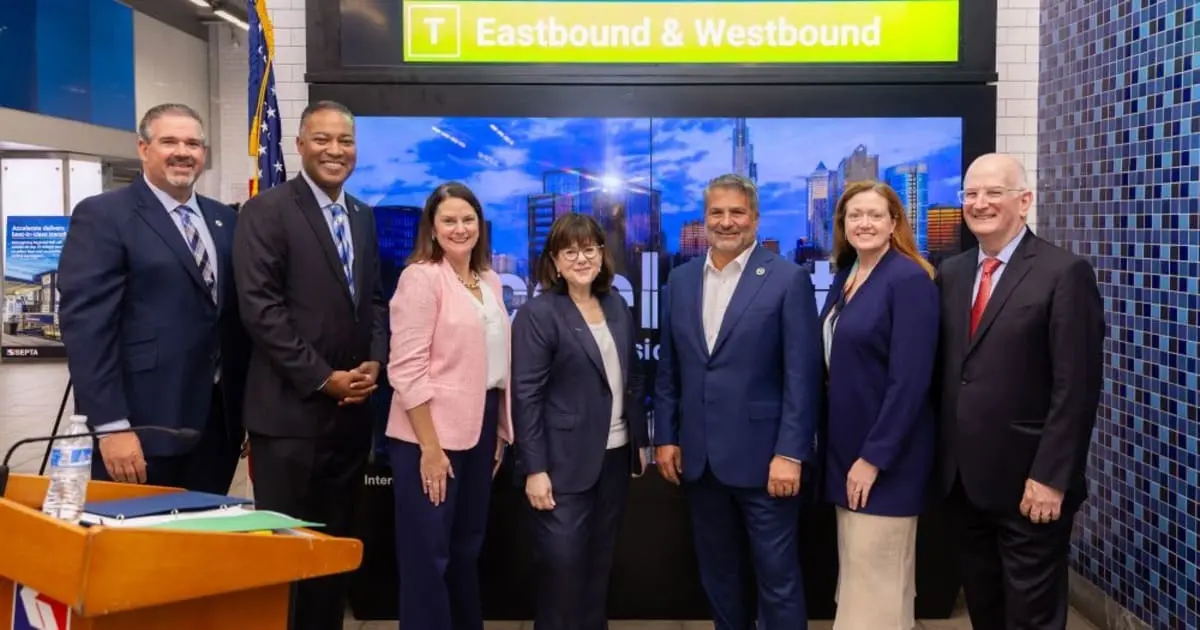
The rollout of Accelerate has been underscored by a unified, urgent message from SEPTA’s governance and executive management. The leadership team is attempting to strike a delicate balance: acknowledging past criticisms and operational challenges while aggressively demanding the financial partnership required to secure the region’s future.
Kenneth E. Lawrence Jr., Board Chair
Board Chair Kenneth E. Lawrence Jr. did not mince words when diagnosing the structural ailments that have plagued the agency, while simultaneously defending the integrity of the workforce and management team:
"After years of chronic underfunding, the moment to choose acceleration over managed decline is now. We recognize that if greater investment is the key to our future success, then SEPTA must demonstrate that we are worthy investment partners. We are proud to be one of the most efficient transit systems in the country, and while there remains more work to do, the evidence demonstrates that we are good stewards of the public funding we receive."
Lawrence’s statement serves a dual purpose. First, it places direct political pressure on state lawmakers in Harrisburg by framing budget stalemates not as accounting disagreements, but as active choices between regional growth and managed decline. Second, it acknowledges that public trust must be earned. By emphasizing SEPTA’s operational efficiency, Lawrence signals that management is fully committed to fiscal transparency and maximizing the value of every taxpayer dollar entrusted to the agency.
Scott A. Sauer, General Manager
General Manager Scott A. Sauer focused his remarks on the qualitative transformation that Accelerate aims to bring to the everyday rider’s lived experience. Sauer’s vision links transit quality directly to regional economic development and civic pride:
"Imagine a world where SEPTA is a reason to move here, work here, and locate or expand a business here. Our region deserves and demands a transit system that works better for more people. From planning their trip to reaching their destination, every part of the journey will be safer, more reliable, and fully accessible. We are already at work to bring this vision to reality."
Sauer’s emphasis on "a reason to move here" reframes transit from a social service of last resort into an aspirational asset. In a competitive national landscape where cities like Denver, Seattle, and Austin are investing heavily in modern transit and urban mobility infrastructure, Philadelphia must keep pace to retain and attract young talent and innovative industries.
Future Outlook: Pillars of the ‘Accelerate’ Vision
Looking ahead over the next decade, the successful execution of Accelerate depends on translating high-level strategic goals into concrete, capital-intensive milestones. While the full vision document outlines a vast array of system-wide upgrades, the core tenets of the program can be categorized into four foundational pillars:
1. Modernized Infrastructure and Stations
Decades of deferred maintenance have left many of SEPTA’s legacy stations—particularly underground concourses and older Regional Rail platforms—aging, poorly lit, and difficult to navigate. Accelerate prioritizes a sustained capital investment schedule to overhaul station architecture. This includes upgrading lighting, implementing modern wayfinding signage, improving passenger information display systems (PIDS) with real-time data feeds, and ensuring full compliance with the Americans with Disabilities Act (ADA). Making every station fully accessible is not only a legal mandate but a moral imperative for an equitable transit network.
2. State-of-the-Art Vehicle Fleets
A transit system is only as reliable as the vehicles moving along its tracks and roadways. SEPTA’s capital plans under Accelerate call for the aggressive procurement and rollout of next-generation equipment. This encompasses purchasing modern, high-capacity hybrid and zero-emission electric buses to green the fleet, replacing aging railcars on the Market-Frankford and Broad Street lines, and acquiring new multi-level Regional Rail cars to increase passenger capacity and comfort. Newer fleets drastically reduce maintenance downtime, leading to fewer service cancellations and dramatically improved schedule adherence.
3. Safety, Security, and Cleanliness
No transit strategy can succeed if riders do not feel secure and respected while riding the system. In recent years, public safety, cleanliness, and the visible presence of social crises (such as homelessness and substance abuse on transit property) have emerged as primary deterrents for ridership recovery. Accelerate integrates enhanced security protocols, increased deployment of transit police and transit ambassadors, expanded mental health outreach partnerships, and rigorous station sanitation schedules. Restoring a baseline of cleanliness and order is viewed by management as an absolute prerequisite for bringing choice riders back to the system.
4. Technological Integration and Seamless Mobility
Modern riders expect frictionless digital experiences. Accelerate incorporates continued investments in SEPTA Key card technology, contactless payment integrations (allowing riders to tap credit cards and smartphones directly at turnstiles), and unified trip-planning applications. By integrating various modes of transit—buses, subways, regional rail, and micro-mobility options like bike-shares—into a single, cohesive digital ecosystem, SEPTA aims to make multi-modal commuting as intuitive and seamless as driving a personal car.
Conclusion
SEPTA’s Accelerate initiative represents a critical crossroads for the Greater Philadelphia region. For too long, public transit planning in the commonwealth has been characterized by defensive maneuvering, fiscal emergency management, and the slow, painful erosion of service hours and capital assets.
By forcefully rejecting managed decline and demanding a seat at the table of regional economic development, SEPTA leadership has laid down a definitive challenge. The vision is clear, the operational efficiencies are documented, and the blueprint for modern, safe, reliable, and accessible transit has been drawn.
Yet, the ultimate realization of Accelerate does not rest within SEPTA headquarters alone. It requires political courage in Harrisburg, sustained municipal partnership, and an unwavering commitment from the public and business communities to fund the infrastructure of tomorrow. If successful, Accelerate will not only rescue a transit network; it will power the economic engine of southeastern Pennsylvania for generations to come. If ignored, the region risks sliding into a transportation deficit from which recovery may prove impossible. The time to choose acceleration is now.