





Executive Overview
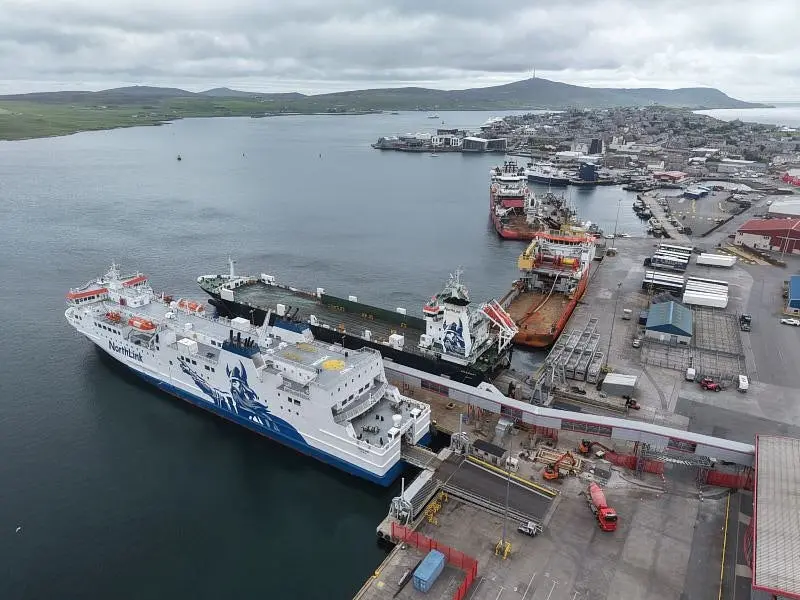
In a decisive step forward for maritime decarbonization across the United Kingdom’s northern waters, ABB Marine & Ports UK has been awarded the comprehensive engineering, procurement, construction, commissioning, and testing contract for a state-of-the-art shore power installation at Lerwick Port’s Holmsgarth Berth 3 in Shetland.
The turnkey project will equip Holmsgarth Berth 3 with high-voltage shore connection (HVSC) technology, enabling NorthLink Ferries’ passenger vessels—and subsequently next-generation freight ships—to plug directly into the local onshore electrical grid. By drawing power from the land-based network while docked, these vessels can fully deactivate their auxiliary diesel generators, eliminating berth-side exhaust emissions and dramatically reducing acoustic pollution in the harbour basin.
+-----------------------------------------------------------------------------------+
|                           ABERDEEN – LERWICK GREEN CORRIDOR                       |
+-----------------------------------------------------------------------------------+
|                                                                                   |
|   [ Aberdeen Port Shore Power ] <====== Green Maritime Corridor ======> [ Lerwick Port Shore Power ]
|      (Commissioned 2026)                                                  (Holmsgarth Berth 3)   |
|                                                                                   |
|                                   Vessel Plugged In                               |
|                        Auxiliary Diesel Engines Powered Down                      |
|                      Zero Local Emissions | Zero Harbour Noise                        |
+-----------------------------------------------------------------------------------+
This installation completes the missing link in a dual-port zero-emission maritime corridor. Paired with a complementary shore power infrastructure commissioned at the Port of Aberdeen earlier in 2026, the Lerwick project ensures that vessels navigating the challenging 200-nautical-mile Aberdeen–Lerwick route will be capable of connecting to landside electricity at both ends of their journey.
The infrastructure is being developed by the Lerwick Port Authority in close collaboration with Caledonian Maritime Assets Limited (CMAL), with principal capital funding provided by CMAL and Transport Scotland. Beyond serving the immediate operational needs of the existing passenger fleet, the system is explicitly engineered to accommodate the upcoming Northern Isles Freight Flex vessels, future-proofing Shetland’s vital supply chain links against tightening international maritime emission regulations.
Detailed Chronology
The development of the Holmsgarth Berth 3 shore power project represents the culmination of multi-year strategic planning between port authorities, government bodies, and technology partners aimed at decarbonizing Scotland’s island ferry network.
+-----------------------------------------------------------------------------------+
|                               PROJECT TIMELINE                                    |
+-----------------------------------------------------------------------------------+
| [ Phase 1: Planning & Strategy ]  --> Strategic alignment between LPA, CMAL,  |
|                                       and Transport Scotland.                     |
|                                                                                   |
| [ Phase 2: Aberdeen Milestone ]   --> Commissioning of Aberdeen shore power       |
|                                       facility (Early 2026).                      |
|                                                                                   |
| [ Phase 3: Contract Award ]       --> ABB Marine & Ports UK awarded turnkey contract|
|                                       for Holmsgarth Berth 3.                     |
|                                                                                   |
| [ Phase 4: Implementation ]       --> 14-Month Rollout: Engineering, grid tie-in, |
|                                       installation, and full compliance testing.   |
+-----------------------------------------------------------------------------------+
Phase 1: Strategic Conception and Infrastructure Audits
Initiated under the Scottish Government’s overarching target to achieve net-zero greenhouse gas emissions by 2045, CMAL and the Lerwick Port Authority conducted feasibility studies to assess the electrical capacity, structural integrity, and vessel interface requirements across the Shetland archipelago’s key quaysides. Holmsgarth Berth 3 was identified as the primary operational hub requiring immediate intervention due to its heavy utilization by daily passenger and freight ro-pax services.
Phase 2: The Aberdeen Precedent (Early 2026)
Earlier in 2026, the southern terminus of the Northern Isles ferry route achieved operational shore power status at the Port of Aberdeen. This milestone established the operational standards and technical protocols for high-voltage vessel connections on the route, proving the viability of cold-ironing technology for long-distance sub-Arctic ferry crossings and setting the stage for a corresponding landside connection in Shetland.
Phase 3: Contract Award and Engineering Procurement
Following a competitive tender process focused on system reliability, grid compliance, and marine engineering expertise, ABB Marine & Ports UK was selected to deliver the complete end-to-end shore-to-ship power solution. The scope of work encompasses total system design, switchgear delivery, transformer installation, civil works, system integration, safety commissioning, and final operational testing.
Phase 4: The 14-Month Execution Roadmap
The project will run across an estimated 14-month construction and integration timeline from the contract award date. The major milestones scheduled within this window include:
- Months 1–4: Detailed electrical engineering, grid interconnection design, and offshore equipment procurement.
- Months 5–8: Civil quay engineering at Holmsgarth Berth 3, containment path routing, and sub-station foundation work.
- Months 9–11: Delivery and installation of high-voltage transformers, frequency conversion systems, and cable management positioning systems.
- Months 12–14: High-voltage integration testing, vessel interface trials with NorthLink tonnage, crew training, and official operational handover.
Supporting Context & Metrics
Technical Integration and High-Voltage Shore Connection (HVSC)
Operating a cold-ironing facility in an island environment presents distinct engineering challenges. Ships operate on complex internal electrical networks, often requiring continuous voltage and frequency control. The ABB system engineered for Lerwick will bridge the gap between Shetland’s onshore distribution network and the ships’ onboard marine architecture.
| Parameter | Technical Specification / Target Metric |
|---|---|
| Location | Holmsgarth Berth 3, Lerwick Harbour, Shetland |
| Primary System Integrator | ABB Marine & Ports UK |
| Turnkey Project Duration | ~14 months from contract award |
| Primary Funding Agencies | Caledonian Maritime Assets Limited (CMAL) & Transport Scotland |
| Primary Target Vessels | NorthLink Passenger Ferries (MV Hjaltland, MV Hrossey) |
| Future Fleet Compatibility | Northern Isles Freight Flex Ferries |
| Operational Corridor | Aberdeen Port – Lerwick Port (Dual-Ended Shore Power) |
| Primary Environmental Impact | Near 100% reduction in berth-side NOx, SOx, PM, and direct CO2 emissions |
The installation at Holmsgarth Berth 3 features custom-engineered step-down transformers, marine-grade switchgear, and an automated cable management system designed to withstand extreme North Sea weather conditions. The system guarantees "bumpless" or seamless power transfer, allowing onboard systems to switch from vessel generator power to the landside grid without interrupting critical shipboard services, navigation instruments, or passenger safety systems.
+-----------------------------------------------------------------------------------+
|                        SHORE POWER FLOW ARCHITECTURE                              |
+-----------------------------------------------------------------------------------+
|                                                                                   |
|   [ Local Grid ]  ==>  [ Isolation Transformer ]  ==>  [ ABB Frequency Converter ]|
|                                                                  ||               |
|                                                                  /               |
|   [ Onboard Power Distribution ] <== [ Marine Cable Reel ] <== [ Quayside HV Switch ]|
|   (Auxiliary Engines OFF)            (Self-Positioning Arm)                       |
+-----------------------------------------------------------------------------------+
Local Environmental Footprint and Harbour Air Quality
When docked at Holmsgarth Berth 3, passenger ferries historically rely on auxiliary diesel engines to run lighting, heating, ventilation, galley equipment, and emergency systems. Running these engines consumes hundreds of litres of marine gas oil (MGO) per hour while at berth.
The installation of ABB’s shore power technology yields immediate, measurable environmental benefits:
- Air Quality Preservation: Near-total elimination of nitrogen oxides ($textNO_x$), sulphur oxides ($textNOx$), and fine particulate matter ($textPM2.5$ and $textPM_10$) in the immediate Lerwick town and harbour vicinity.
- Acoustic Decarbonization: Elimination of low-frequency engine hum and mechanical vibration, dramatically improving quality of life for nearby residents and local wildlife.
- Direct Carbon Offsetting: Substantial net reductions in carbon dioxide ($textCO_2$) emissions while docked, directly scaling with the renewable energy mix of the Scottish grid network.
Grid Dynamics and Shetland’s Energy Transition
The timing of the Lerwick shore power project coincides with a transformative shift in Shetland’s energy supply. Historically dependent on localized hydrocarbon generation from the Gremista Power Station, the Shetland archipelago is increasingly integrated into the UK national grid via subsea high-voltage direct current (HVDC) interconnectors, alongside significant onshore wind power developments (such as the Viking Wind Farm).
Consequently, the electricity supplying Holmsgarth Berth 3 will draw increasingly from regional renewable assets, maximizing the lifecycle greenhouse gas reductions achieved when NorthLink vessels plug in.
+-----------------------------------------------------------------------------------+
|                     GREEN CORRIDOR METRICS & BENEFIT PROFILE                      |
+-----------------------------------------------------------------------------------+
|  [ Berth Air Quality ]    --> Zero berth-side diesel combustion emissions         |
|  [ Noise Reduction ]     --> Significant reduction in ambient quayside decibels    |
|  [ Operational Target ]  --> Dual-ended grid connections (Aberdeen & Lerwick)     |
|  [ Fleet Evolution ]     --> Built-in capacity for Northern Isles Freight Flex    |
+-----------------------------------------------------------------------------------+
Official Statements
Commenting on the contract award and technical integration, John Hill, Lead Infrastructure Engineer at ABB Marine & Ports UK, highlighted the technical rigour required for the project:
"Delivering high-voltage shore power connections in coastal locations like Shetland requires robust engineering capable of executing seamless transfers in demanding operational environments. Our turnkey solution for Holmsgarth Berth 3 will ensure that NorthLink vessels can turn off their engines with absolute operational confidence. By connecting Lerwick to the green corridor already anchored in Aberdeen, we are providing a reliable, field-proven electrical foundation that aligns perfectly with the UK’s broader maritime decarbonization objectives."
Emphasizing the infrastructure value for Shetland’s primary port, Captain Calum Grains, Chief Executive of Lerwick Port Authority, noted:
"The quay at Holmsgarth Berth 3 is the lifeline of our island’s connectivity, handling high volumes of passenger and freight traffic every single day of the year. Installing ABB’s shore power system marks a major step forward in our harbour masterplan. Crucially, this initiative gives us dual-end shore connectivity on the Aberdeen route, removing thousands of hours of unnecessary diesel generator operation in our port every year while safeguarding our local marine and urban environment."
Highlighting the long-term capital strategy behind the investment, Kevin Hobbs, Chief Executive at Caledonian Maritime Assets Limited (CMAL), stated:
"CMAL is committed to funding and delivering transport infrastructure that actively reduces the carbon profile of Scotland’s ferry network. Partnering with Transport Scotland to fund this development at Lerwick represents a crucial strategic investment. Not only does it deliver immediate zero-emission capability for the current NorthLink passenger ferries, but it also establishes the necessary grid infrastructure to seamlessly support the future Northern Isles Freight Flex vessels as they enter service."
Future Outlook
Completing the Green Corridor and Scaling Fleet Compatibility
The installation of ABB shore power technology at Holmsgarth Berth 3 solidifies one of the UK’s first fully functional, long-distance green maritime corridors. Ships servicing the Aberdeen–Lerwick route will no longer need to burn fossil fuels at berth at either end of their journey, establishing a clean operational model for regional ferry networks across Europe.
+-----------------------------------------------------------------------------------+
|                        FUTURE FLEET ADAPTABILITY ROADMAP                          |
+-----------------------------------------------------------------------------------+
|                                                                                   |
|  Current Fleet:               Future Fleet Integration:                           |
|  +-----------------------+    +-----------------------------------------------+   |
|  | NorthLink Ferries     |    | Northern Isles Freight Flex Vessels           |   |
|  | - MV Hjaltland        | => | - Higher capacity electrical connections      |   |
|  | - MV Hrossey          |    | - Plug-and-play modular grid interface        |   |
|  +-----------------------+    | - Hybrid/battery capability enablement        |   |
|                               +-----------------------------------------------+   |
+-----------------------------------------------------------------------------------+
Furthermore, the design provisions built into the ABB power system ensure that Holmsgarth Berth 3 will not suffer from rapid technical obsolescence. The system’s flexible voltage step-down and modular power electronics are tailored to accommodate the incoming Northern Isles Freight Flex vessels. These next-generation freight carriers are expected to feature advanced hybrid propulsion systems and higher-capacity onboard battery packs, requiring rapid, high-throughput quayside charging while loading and unloading cargo.
Strategic Alignment with National Decarbonization Targets
The Holmsgarth project directly serves key policy mandates outlined in both the Scottish Government’s Net Zero Strategy and the UK Department for Transport’s Maritime 2050 policy paper. By de-risking shore-side power investments through public capital allocation (via CMAL and Transport Scotland) and utilizing turn-key industry technology from ABB, the initiative creates a replicable framework for island communities across the Hebrides, Orkney, and broader European archipelagos.
As the 14-month engineering schedule progresses toward commissioning and final compliance testing, Lerwick Port stands to consolidate its position as a modern, environmentally proactive maritime hub—demonstrating that essential island supply lines can be maintained while driving local emissions down to zero.