








Executive Overview
In an era defined by global supply chain volatility and localized economic vulnerabilities, securing critical infrastructure requires more than physical assets—it demands a highly skilled, resilient workforce. Recognizing this systemic necessity, Crowley, a leading maritime, logistics, and energy solutions provider, has announced a major expansion of its partnership with Junior Achievement Americas (JAA). This strategic alliance is specifically engineered to bridge the gap between classroom education and the high-stakes maritime and logistics sectors in Puerto Rico.
By formalizing a tripartite collaboration that integrates the Puerto Rico Department of Education, this initiative targets public high schools offering Career and Technical Education (CTE) programs. The program aims to equip the island’s youth with the specialized skills required to navigate and manage modern supply chains. For Puerto Rico—an archipelago uniquely dependent on maritime trade—the initiative represents a critical investment in socioeconomic mobility and infrastructure resilience.
By introducing JAA’s proven workforce-readiness curriculum to students aged 15 to 19, the partners aim to demystify the maritime industry, cultivate practical vocational skills, and establish a reliable pipeline of local talent. This talent will support an economy where maritime transport is not merely a business sector, but an absolute lifeline.
Detailed Chronology: The Evolution of a Strategic Alliance
The expansion of this program into Puerto Rico is the latest milestone in a rapidly growing, multi-year relationship between Crowley and Junior Achievement. Understanding the trajectory of this partnership highlights why this Caribbean expansion is a natural step in their joint efforts.
[2022: Alliance Formed]
   │
   ├── Focus: Career readiness & financial literacy
   └── Geography: US Mainland & Central America
   │
[2022–2024: Operational Scaling]
   │
   ├── Deliverables: 418 experiential learning events & 174 classroom programs
   └── Impact: 9,000+ students reached across ~60,000 instructional hours
   │
[Early 2025: Regional Recognition]
   │
   └── Crowley named Junior Achievement of Northeast Florida's "Company of the Year"
   │
[Mid-2025: Puerto Rico Expansion]
   │
   └── Tripartite agreement with PR Department of Education launched
2022: The Genesis of the Alliance
The partnership began in 2022, born out of a mutual recognition that the global logistics sector was facing a severe talent shortage, while youth in underserved markets lacked clear pathways to stable, high-paying careers. Crowley committed its corporate social responsibility (CSR) resources and industry expertise to JAA, launching pilot programs across the United States mainland and key markets in Central America. The early focus centered on basic career readiness, financial literacy, and introducing high school students to the fundamentals of global commerce.
2022–2024: Operational Scaling and Regional Integration
Over its first two years, the collaboration scaled rapidly. Leveraging Crowley’s regional footprint and JAA’s localized networks, the partners systematically expanded their educational reach.
By deploying corporate volunteers directly into classrooms and hosting students at operational marine terminals, the program converted abstract supply chain concepts into tangible career objectives. During this period, the partnership delivered 418 experiential learning experiences and 174 structured classroom programs. This effort drew on the expertise of more than 100 industry volunteers and reached approximately 9,000 students across nearly 60,000 cumulative instructional hours.

Early 2025: Institutional Validation
The systemic impact of these initiatives did not go unnoticed. In early 2025, Crowley’s dedication to youth development and community integration was formally recognized when the company was named Junior Achievement of Northeast Florida’s Company of the Year. This accolade validated Crowley’s hands-on, volunteer-driven approach to corporate citizenship and set the stage for its next phase of growth.
Mid-2025: The Puerto Rico Expansion
Building on its established momentum, Crowley and JAA identified Puerto Rico as the optimal landscape for their next targeted intervention. By signing a formal agreement with the Puerto Rico Department of Education, the coalition transitioned from an external extracurricular program to an integrated educational partner within the island’s public vocational high school system. This development marked the official launch of the current initiative, tailored to address the unique economic realities of the island.
Supporting Context & Metrics: The Geopolitical and Economic Imperative
To understand the strategic importance of this initiative, one must analyze the unique macroeconomic landscape of Puerto Rico. The island’s geographic isolation makes it highly dependent on maritime import networks, creating a compelling case for robust local maritime training.
PUERTO RICO PORT DEPENDENCY METRICS
┌────────────────────────────────────────────────────────┐
│  Import Reliance via Ports: 80%                         │
├────────────────────────────────────────────────────────┤
│  Target Student Cohort: 350+ (Ages 15-19)              │
├────────────────────────────────────────────────────────┤
│  Annual Mentorship/Shadowing Target: 50-100 Students   │
└────────────────────────────────────────────────────────┘
The 80% Import Reality
According to data from the Puerto Rico Ports Authority, the island receives approximately 80% of its inbound cargo and consumer goods through its maritime ports. This statistic highlights a profound vulnerability: any disruption in port operations, maritime logistics, or supply chain management directly threatens the island’s food security, healthcare systems, energy distribution, and overall economic stability.
From the recovery efforts following devastating hurricanes to the day-to-day distribution of basic commodities, the maritime sector serves as the island’s primary economic engine. Consequently, developing a highly skilled, domestic workforce to manage these operations is a matter of long-term economic security.
Direct Financial and Human Capital Investments
To ensure the program’s successful launch, Crowley has committed a $40,000 sponsorship to fund the direct implementation of JAA’s workforce-readiness curriculum across selected public high schools. However, the corporate commitment extends beyond financial sponsorship.
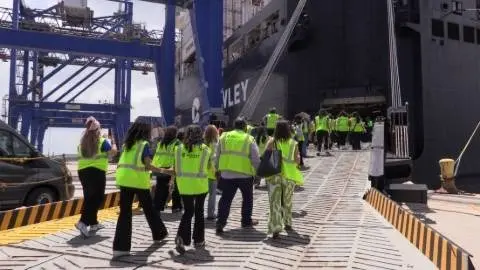
Crowley is also deploying its local workforce to provide hands-on mentorship. Crowley employees will participate in career panels, facilitate guided port tours, and lead job-shadowing activities. These immersive, real-world experiences are designed to engage 50 to 100 students annually, offering them an insider’s view of active maritime terminals, vessel operations, and administrative logistics offices.
Demographics and Targeted Academic Reach
The program specifically targets public high school students enrolled in specialized Career and Technical Education (CTE) tracks. The curriculum is expected to reach more than 350 students aged 15 to 19. This cohort is at a pivotal transitional point, where practical career guidance and professional networking can directly influence their post-secondary choices—guiding them away from underemployment and toward high-demand, high-wage technical careers.
Program Implementation: The Pedagogical Framework
The collaboration between Crowley, JAA, and the Puerto Rico Department of Education is built around a structured, multi-dimensional curriculum designed to prepare students for the modern workforce. Rather than focusing solely on theoretical knowledge, the program emphasizes practical, real-world skills through three primary pillars:
                  ┌─────────────────────────────────┐
                  │   WORKFORCE-READINESS ENGINE    │
                  └────────────────┬────────────────┘
                                   │
         ┌─────────────────────────┼─────────────────────────┐
         ▼                         ▼                         ▼
┌─────────────────┐       ┌─────────────────┐       ┌─────────────────┐
│  Pillar I:      │       │  Pillar II:     │       │  Pillar III:    │
│  Core Workplace │       │  Industry-Spec. │       │  Direct Exper.  │
│  Competencies   │       │  Contextualiz.  │       │  Engagement     │
└─────────────────┘       └─────────────────┘       └─────────────────┘
Pillar I: Core Workplace Competencies
Before diving into industry-specific technical concepts, students undergo intensive training in fundamental professional skills. JAA’s workforce-readiness curriculum focuses heavily on:
- Self-Awareness and Career Mapping: Helping students identify their personal strengths, cognitive styles, and professional interests, and aligning them with viable labor market opportunities.
- Professional Communications and Networking: Teaching the nuances of workplace etiquette, professional writing, and building a professional network.
- Interview Preparation and Resume Building: Conducting mock interviews, resume-writing workshops, and offering guidance on professional presentation.
Pillar II: Industry-Specific Contextualization
Once grounded in core professional competencies, the curriculum introduces students to the fundamentals of global trade, maritime transport, and supply chain logistics. Students explore:
- The Mechanics of Global Trade: Understanding how raw materials and finished goods move across international borders and the role of maritime corridors.
- Intermodal Logistics: Analyzing how cargo transitions from container ships to ports, and ultimately to trucks, warehouses, and consumers.
- The Digitalization of Supply Chains: Introducing students to the technology driving modern logistics, including inventory management software, port automation, and real-time tracking systems.
Pillar III: Direct Experiential Engagement
The program’s third pillar moves learning beyond the classroom. By interacting directly with Crowley professionals, students gain firsthand insight into active operations. Through job shadowing and port tours, students observe terminal operations, cargo handling, and the administrative workflows that keep global commerce moving. This direct exposure helps demystify the maritime sector, transforming it from an abstract concept into a tangible, accessible career path.
Official Perspectives: Strategic Alignment and Leadership Voices
The expansion of this program highlights a shared vision among corporate, non-profit, and public-sector leaders. Each stakeholder views the initiative as a critical step toward addressing systemic economic and educational needs in Puerto Rico.
In designing this curriculum, representatives from Junior Achievement Americas have emphasized that youth empowerment must align with the actual economic engines of their home communities. By focusing on logistics and maritime transport, the program provides students with practical skills that match real, local career opportunities, preparing them to contribute directly to the island’s economic stability.
Spokespersons for Crowley have consistently highlighted that their corporate social responsibility strategy goes beyond financial support. The company views the program as a long-term investment in the community and its own talent pipeline. By involving its own employees as mentors, Crowley aims to build a sustainable workforce of local professionals who will eventually manage the critical infrastructure supporting Puerto Rico’s commerce.
The Puerto Rico Department of Education has welcomed the partnership as a vital enhancement to its Career and Technical Education (CTE) curriculum. Department officials note that collaborating with industry leaders like Crowley allows public schools to offer students up-to-date, practical training. This ensures that vocational education remains highly relevant to the demands of the modern labor market, preparing graduates to transition smoothly into rewarding careers.
Future Outlook: Building Long-Term Economic Resilience
As the partnership between Crowley, JAA, and the Puerto Rico Department of Education rolls out across the island’s public schools, its success will likely serve as a model for similar initiatives across the Caribbean and Latin America. The long-term benefits of this program extend far beyond immediate classroom metrics.
PROJECTED MULTIPLIER EFFECT OF THE INITIATIVE
┌────────────────────────────────────────────────────────┐
│  1. Local Talent Retention                              │
│     Decreases skilled youth out-migration.              │
├────────────────────────────────────────────────────────┤
│  2. Operational Resilience                             │
│     Establishes a domestic talent pool for ports.       │
├────────────────────────────────────────────────────────┤
│  3. Economic Mobility                                  │
│     Creates clear paths to stable, high-paying jobs.    │
└────────────────────────────────────────────────────────┘
Mitigating Brain Drain and Fostering Local Talent
For decades, Puerto Rico has faced challenges with youth out-migration, as talented young professionals frequently leave the island to seek opportunities on the US mainland. By showcasing high-potential, technology-driven career paths within the domestic maritime and logistics sectors, this initiative provides a compelling reason for talented youth to remain in Puerto Rico, helping to retain valuable skills and energy within the local economy.
Strengthening Disaster Response and Infrastructure Security
In an era of intensifying climate change and frequent extreme weather events, Puerto Rico’s supply chain resilience is constantly tested. A domestic workforce trained in modern logistics, emergency distribution, and port operations is critical to the island’s disaster readiness. The students trained through this initiative will become the future logistics managers, port directors, and supply chain analysts who design and run the resilient networks of tomorrow.
A Model for Public-Private Educational Integration
The structured, tripartite model established by Crowley, JAA, and the Department of Education offers a clear blueprint for other vital industries—such as renewable energy, advanced manufacturing, and agricultural technology. By demonstrating that corporate expertise can successfully integrate with public school curricula, this initiative paves the way for wider systemic reforms in vocational training, ensuring that Puerto Rico’s youth are well-prepared to lead and support the island’s key economic sectors.