




Executive Overview
Beneath the deceptively quiet surface of a brisk New England February, Portland, Maine’s historic Casco Bay Lines is undergoing one of the most significant structural and operational leadership evolutions in its modern history. While island residents bundle up with hot coffee on less-crowded winter ferry runs and familiar neighbors exchange quiet nods in the terminal, a formidable transition is quietly reshaping the backbone of the organization. As 2026 unfolds, Casco Bay Lines (CBL) is officially inaugurating a new chapter in executive stewardship, marked by the arrival of General Manager and CEO Ben Dinsmore, alongside the internal promotions of longtime maritime veterans Mike Bryand to Operations Manager and Pat Donovan to Assistant Operations Manager.
This leadership refresh follows the poignant conclusion of an era: the retirement of Nick Mavodones, who stepped down after a staggering 47-year tenure with the company. Mavodones’ departure closed out half a century of hands-on institutional memory, forcing the organization to reflect on its deep-seated roots while aggressively preparing for the complex logistical, infrastructural, and environmental challenges of the mid-21st century.
Rather than importing corporate outsiders unfamiliar with the icy squalls and unpredictable tides of Casco Bay, the transit authority has doubled down on internal and regional expertise. By elevating individuals who possess decades of deckhand, captaincy, and marine engineering experience, CBL is signaling that while its fleet may modernize and its terminals may expand, its cultural DNA remains anchored in the tight-knit, resilient communities of the Maine coast.
Detailed Chronology: From Hand-Rolled Freight to Modern Maritime Logistics
To understand the weight of the current leadership transition at Casco Bay Lines, one must first trace the historical trajectory of the service—a evolution vividly embodied by the career of outgoing legend Nick Mavodones.
The Mavodones Era (1978–2024)
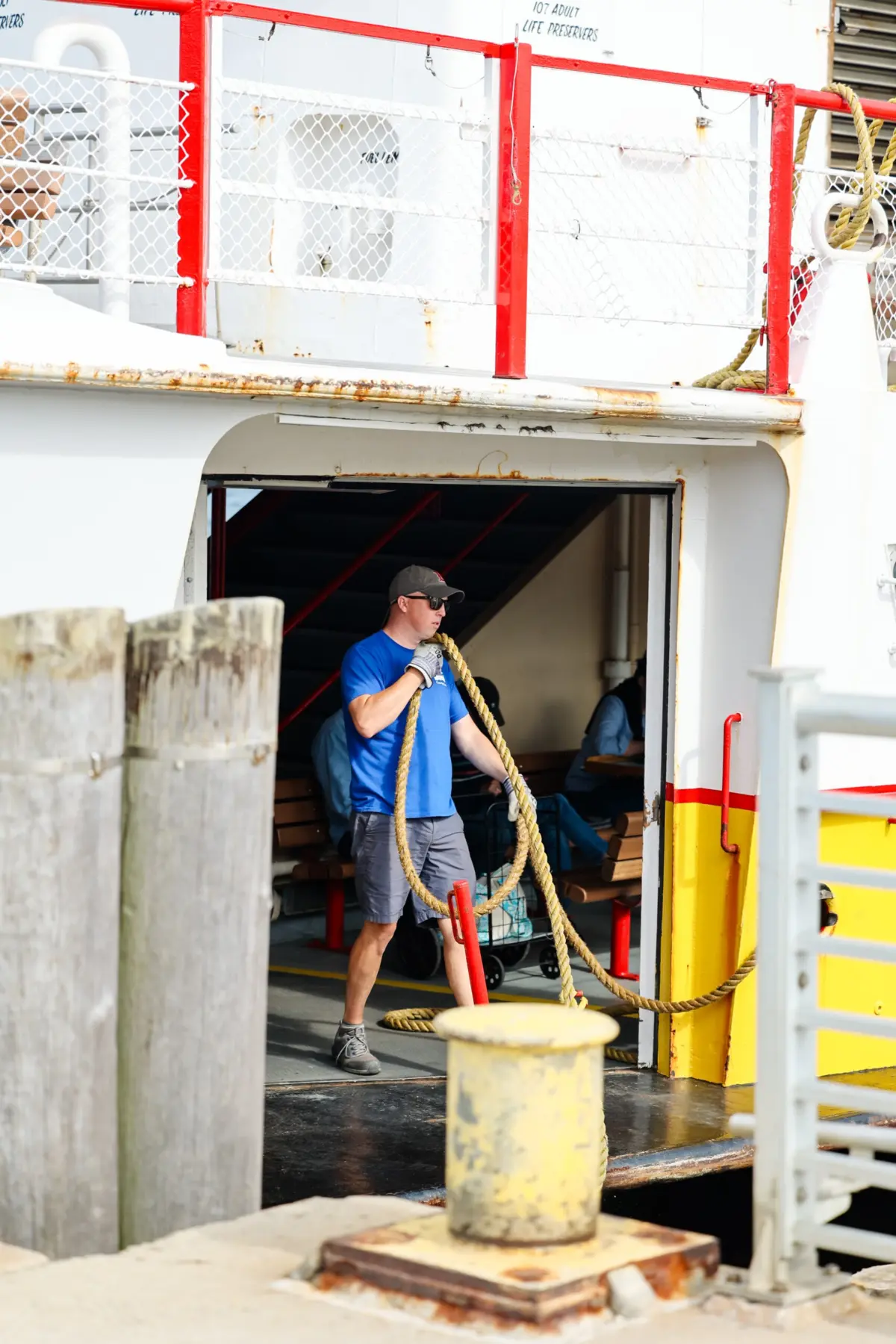
When Nick Mavodones first stepped onto a Casco Bay Lines vessel as a teenage deckhand in 1978, the maritime trade was an exercise in raw, unyielding physical endurance. In a retrospective interview with News Center Maine’s 207 program, Mavodones recounted an era of ferry operations that modern passengers would scarcely recognize.
[1978: Deckhand Era]
   └── Heavy manual freight handling (94-lb cement bags, milk cases, coal, lumber) under harsh tidal constraints.
       ↓
[Age 21: Promotion to Captain]
   └── Rapid ascent through rigorous hands-on operational mastery.
       ↓
[1990s–2024: Operations Manager]
   └── Overseeing vessel maintenance, regulatory compliance, personnel, and customer relations.
"Freight would get rolled out on a cart close to the boat, and unless the tide was perfect, we lifted or threw it onto the boat," Mavodones recalled. Crews routinely hoisted everything from 94-pound bags of Portland cement and towering cases of fresh milk to heavy timber and raw coal, battling the punishing North Atlantic elements without the mechanical assist systems common on today’s modern double-enders.
Thriving in this demanding environment, Mavodones earned his captain’s license and command responsibilities by the age of 21. By the 1990s, he transitioned from the wheelhouse to the administrative offices, assuming the critical role of Operations Manager. For over three decades in this capacity, Mavodones served as the ultimate master of logistics: orchestrating complex vessel maintenance schedules, managing human resources, navigating stringent U.S. Coast Guard compliance, and maintaining a fragile peace between seasonal tourism booms and the year-round supply needs of island residents. When he officially retired last fall, he left behind a 47-year legacy that became the gold standard for public service in coastal Maine.
The 2026 Succession and Search
Mavodones’ departure necessitated a rigorous, multi-tiered public search for a successor capable of maintaining the operational integrity of a system that moves millions of passengers and tons of critical freight annually. The search ultimately yielded an internal candidate whose life has literally been shaped by the bay: Mike Bryand.
Raised on Peaks Island, Bryand’s appointment represents the ultimate convergence of grassroots community investment and professional maritime competence. Having spent 33 years working his way through the ranks as a CBL deckhand and commercial captain, Bryand subsequently served three years as Assistant Operations Manager directly under Mavodones. When the Operations Manager position opened, Bryand’s deep familiarity with the bay’s bathymetry, weather patterns, and human geography made him the standout choice among a competitive pool of applicants.
Following Bryand’s promotion, a secondary public search was initiated to fill the vacant Assistant Operations Manager position. The role was secured by Captain Pat Donovan, a 20-year veteran of Casco Bay Lines. For Donovan, the transition from the wheelhouse to the management suite marks a profound lifestyle shift born of changing personal priorities.
"It’s definitely a different life," Donovan remarks with a smile. "On the boats, there’s no typical nine-to-five. You’re either working late or getting up very early. This role brings more consistency—and a new kind of challenge."
Supporting Context & Metrics: The Human and Economic Scale of Casco Bay Lines
Casco Bay Lines is frequently romanticized by tourists as a scenic excursion route past picturesque lighthouses and lobster boats, but for the residents of Peaks Island, Chebeague Island, Long Island, Great Diamond Island, and Little Diamond Island, the ferry system is quite literally an existential lifeline.
Operational Footprint
- Annual Passenger Volume: Millions of commuters, students, workers, and tourists transported annually.
- Geographic Reach: Year-round service connecting mainland Portland to multiple inhabited islands across Casco Bay.
- Freight and Commerce: Hauling heating oil, construction materials, municipal waste, mail, groceries, and emergency medical supplies.
- Regulatory Environment: Continuous compliance oversight involving the U.S. Coast Guard, state environmental agencies, and municipal infrastructure standards.
The institutional knowledge embedded within the new leadership trio—Bryand, Donovan, and Dinsmore—is not merely a nice-to-have corporate asset; it is a vital safety buffer. Operating passenger-carrying vessels through freezing winter fogs, nor’easters, and congested commercial shipping lanes requires split-second decision-making that can only be cultivated through decades of sea-time.
Official Statements & Leadership Profiles
The 2026 administrative restructuring is anchored by a deliberate blend of internal institutional veterans and a visionary new chief executive whose maritime roots run deep into the coast of Maine.
Ben Dinsmore, General Manager and CEO
Assuming the role of General Manager and CEO last September, Ben Dinsmore brings a comprehensive, multi-disciplinary background in marine engineering, vessel construction, and corporate leadership. The son of a Maine State Ferry Service captain, Dinsmore was raised along the rugged Maine coast, absorbing the unwritten codes of the working waterfront from childhood.
Before taking the helm at Casco Bay Lines, Dinsmore commanded large commercial vessels, managed complex commercial shipyard construction projects, and held executive positions overseeing marine operations. Furthermore, his entrepreneurial background includes prior ownership of R.E. Thomas Marine Hardware, a renowned Downeast Maine engineering firm specializing in precision marine driveline components for everything from commercial draggers to iconic Maine lobster boats.
"Growing up on the coast of Maine, I developed a deep respect for the working waterfront and island communities," Dinsmore stated upon taking office. "I understand the seasonal rhythms of life on the islands and the unique challenges they bring. Casco Bay Lines is more than a ferry service; it’s a lifeline, a connector of communities, and a reflection of the people who call these islands home."
Mike Bryand, Operations Manager
Stepping into the shoes of a 47-year legend is no small feat, but Mike Bryand approaches the challenge with a grounded, community-centric perspective honed by a lifetime on the water. Having grown up on Peaks Island, Bryand’s perspective bridges the gap between management policy and passenger reality.
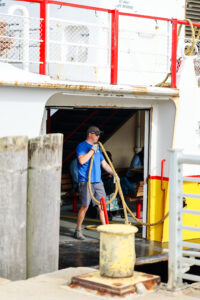
"This is a new era, in the sense that we have new people in upper levels of management," Bryand noted. "लेकिन [But] this is very much the same Casco Bay Lines. We’ve grown; we’ve added bigger boats and a new terminal, but this is still a small community. With so many people working here for so long, we have a huge amount of institutional knowledge to build upon."
Pat Donovan, Assistant Operations Manager
For Pat Donovan, two decades of deck and wheelhouse experience provide an unshakeable foundation for his new administrative duties. Moving from the unpredictable, around-the-clock shift work of a ferry captain to the strategic oversight of assistant operations allows Donovan to balance his dedication to the marine trade with his commitments as a father of young school-aged children.
Future Outlook: Navigating Challenges Ahead
As Casco Bay Lines looks toward the remainder of the decade and beyond, the newly minted leadership team faces a series of complex operational hurdles. Chief among these is the ongoing modernization of the fleet and terminal infrastructure to accommodate increasing passenger volumes while meeting aggressive environmental sustainability benchmarks.
Furthermore, regional climate change impacts—manifesting as rising sea levels, increasingly severe coastal storm surges, and unpredictable winter weather patterns—place extraordinary demands on ferry terminal piers, vessel moorings, and navigational safety protocols. The integration of Dinsmore’s engineering acumen with Bryand and Donovan’s hands-on tactical experience positions the agency well to tackle these capital-intensive projects without losing sight of its primary mission: reliable, safe, and equitable public transportation for island residents.
Ultimately, while the faces in the corner offices may have changed, the core ethos of Casco Bay Lines remains steadfast. Whether navigating a blinding snow squall off Cushing Island or coordinating emergency freight delivery at the Portland terminal, the new leadership team represents a seamless synthesis of generational stewardship and forward-looking vision. For commuters, islanders, and maritime historians alike, the message from the bay is clear: Casco Bay Lines is in exceptionally capable hands.