





Executive Overview
When travelers picture the quintessential Caribbean escape, images of sweeping white-sand expanses, bustling resort strips, and lively beach bars usually come to mind. In Grenada—affectionately known as the "Spice Isle"—that quintessential image is dominated by Grand Anse Beach. Stretching across two miles of powdery white sand along the island’s southwestern coast, Grand Anse is a postcard icon, a tourism powerhouse, and a definitive fixture on any Caribbean itinerary.
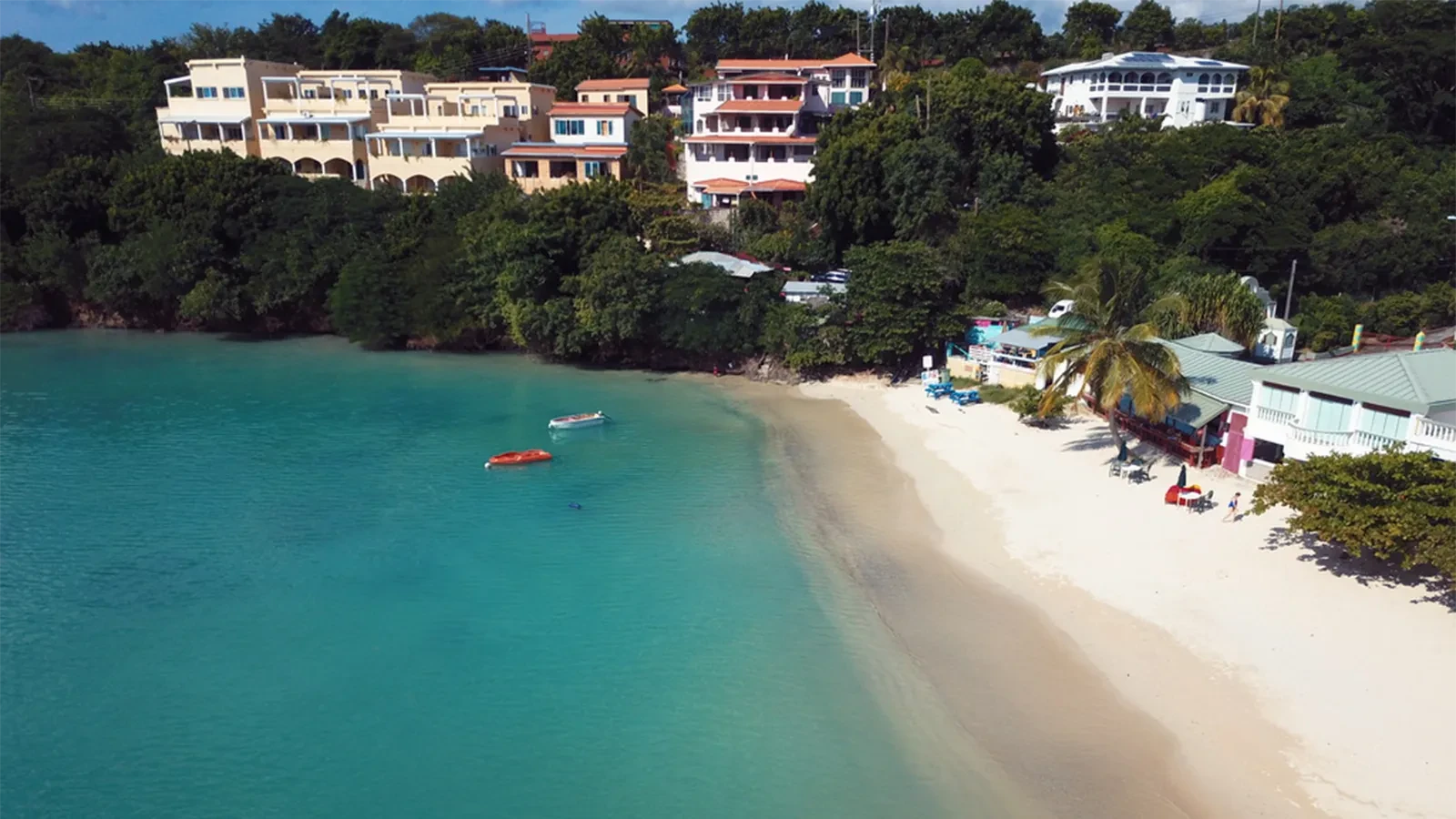
Yet, just a few minutes away by car, tucked safely around a green headland, lies a completely different world. Officially named Morne Rouge Beach but universally beloved by locals and savvy travelers as BBC Beach, this hidden gem represents the very best of under-the-radar Caribbean travel. Featuring a remarkably curved, sheltered bay, impossibly calm turquoise waters, and one of the region’s most unpretentious beach bars—La Plywood—BBC Beach offers a masterclass in low-key coastal serenity.
This comprehensive report examines the appeal of BBC Beach, contrasting its intimate charm with its more famous neighbor. Through traveler metrics, geographic analysis, and cultural context, we explore why this easily accessible hideaway continues to elude the mass-tourism radar, offering an authentic slice of island life to those who know just where to look.
Detailed Chronology: From Local Secret to Regional Hideaway
To understand the current status of BBC Beach, it is helpful to trace its evolution within Grenada’s broader tourism landscape.
- Pre-Tourism Era (Mid-20th Century and Earlier): Long before Grenada became a staple of the international luxury cruise and resort market, Morne Rouge Bay served primarily as a quiet mooring spot for local fishermen. Its sheltered geography—naturally protected from heavy Atlantic swells and harsh Caribbean currents—made it an ideal, safe harbor for small wooden boats.
- The Rise of Grand Anse (1970s–1990s): As Grenada began developing its tourism sector, capital and infrastructure investments concentrated heavily on the expansive, two-mile stretch of Grand Anse. Major international properties, restaurants, and water-sport operators established roots there, cementing Grand Anse as the undisputed commercial heartbeat of the island’s tourism corridor.
- The "BBC" Moniker Emerges: During the latter half of the 20th century, a popular local establishment known as the "BBC Club" sat near the shoreline, permanently altering the colloquial nomenclature of Morne Rouge Beach. Even though the original club has evolved, the name "BBC Beach" stuck, transforming from localized slang into a recognized geographic descriptor.
- Modern Recognition (2020s–Present): In recent years, travel publications and regional experts—including Carib Journal—have increasingly spotlighted BBC Beach as one of the Caribbean’s premier hideaways. Rather than being buried on a remote, hard-to-reach stretch of coastline, its modern appeal lies in a delightful paradox: it remains intensely secluded despite sitting right in the backyard of the island’s busiest tourism district.
Supporting Context & Metrics: Geographic and Tourism Analysis
The Geography of Shelter
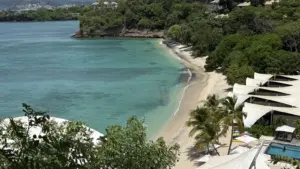
The defining characteristic of BBC Beach is its physical geometry. Carved into the southwestern coast of Grenada, the bay forms a compact, near-perfect crescent. Lush, emerald-green hills wrap tightly around the northern and southern flanks of the strand, acting as a natural amphitheater and windbreak.
This unique geological formation yields distinct environmental metrics:
- Wave Action: Unlike windward-facing beaches that experience robust surf and strong currents, the waters of BBC Beach are exceptionally calm, often mimicking the surface tension of a natural saltwater swimming pool.
- Bathymetry: The sea floor slopes gently away from the shore. Swimmers can wade out considerable distances while maintaining a comfortable, shallow depth, making it ideal for casual floaters, families, and leisure swimmers.
- Accessibility Index: Located merely a 5-to-10-minute drive south of Grand Anse, BBC Beach requires no rugged four-wheel-drive vehicles or arduous hiking trails. It is seamlessly integrated into the island’s primary transit network, yet it feels completely disconnected from urban noise.
Comparative Metrics: Grand Anse vs. BBC Beach
| Metric | Grand Anse Beach | BBC Beach (Morne Rouge) |
|---|---|---|
| Length | Approximately 2 miles | Compact, intimate crescent |
| Atmosphere | Vibrant, energetic, resort-lined | Secluded, rustic, serene |
| Water Conditions | Gentle ripples with occasional open-sea breeze | Mirror-flat, highly sheltered, pool-like |
| Commercial Density | High (hotels, dive shops, vendors, restaurants) | Low (dominated by nature, anchored by La Plywood) |
| Crowd Factor | Moderate to high during peak cruise ship hours | Consistently low to moderate |
The Social Center: La Plywood Beach Bar
No discussion of BBC Beach is complete without examining its cultural anchor: La Plywood.
In an era where many Caribbean destinations are seeing their iconic, rustic beach shacks replaced by upscale, minimalist beach clubs or corporate chains, La Plywood remains a triumphant holdout of authentic Caribbean culture. Situated directly at the edge of the soft sand, the bar is defined by its utter lack of pretension.
The Experience
The operational philosophy of La Plywood can be summed up in a single word: simplicity. Patrons step out of the crystal-clear water, shed their sea salt in the warm sun, and wander over to the rustic wooden structure without ever needing to put on shoes or a shirt.
The beverage menu highlights regional staples:
- Carib Beer: Served ice-cold, the quintessential Caribbean lager remains the beverage of choice for afternoon lounging.
- Rivers Rum: Produced locally on the island using traditional water-wheel crushing methods, Grenada’s famous Rivers rum is notoriously potent. A glass enjoyed while gazing across the glassy bay serves as a quintessential Grenadian rite of passage.
By offering just enough of a social focal point without altering the tranquil ecosystem of the bay, La Plywood bridges the gap between total isolation and civilized comfort. It allows visitors to spend hours floating in the bay, grab a quick bite and a drink, and dive right back into the warm sea.
Official Perspectives & Industry Insights
Tourism boards and hospitality experts increasingly emphasize the value of "experiential contrast"—the idea modern travelers do not simply want one type of beach experience; they want variety.
According to regional travel analysts, properties and destinations that offer dual experiences—the high-energy resort beach paired with the low-impact hideaway—hold a distinct competitive advantage.
"Grenada’s greatest strength has always been its diversity of landscapes," notes a regional tourism consultant. "You can scale the rainforest peaks of Grand Etang in the morning, tour a historic nutmeg estate at noon, and spend your afternoon floating in the glassy, sheltered waters of Morne Rouge. BBC Beach provides that rare sanctuary where time seems to slow down, even though you are only minutes away from modern amenities."
Furthermore, environmental stewards praise BBC Beach for retaining its natural state. Because heavy commercial development has largely bypassed the immediate shoreline of the bay, the ecological health of the nearshore marine environment remains vibrant, supporting local fish populations and healthy coastal flora along the surrounding hills.
Future Outlook: Protecting the Quiet Charm of Morne Rouge
As international interest in Grenada continues to climb—spurred by increased airlift, boutique hotel investments, and growing awareness of the Spice Isle’s culinary and cultural heritage—the preservation of spots like BBC Beach becomes a critical priority.
The Balancing Act
The primary challenge moving forward will be managing foot traffic without commercializing the space. The very charm of BBC Beach lies in its unprogrammed, spontaneous nature:
- Avoiding Over-Development: Local authorities and community stakeholders face ongoing pressure to maintain zoning laws that protect the verdant hillsides surrounding the bay from high-rise construction.
- Infrastructure Management: Ensuring proper waste management and parking availability without paving over the natural aesthetics of the coastline will be vital as word spreads globally.
- The Traveler’s Pledge: Visitors play an active role in maintaining the integrity of BBC Beach. Practicing "Leave No Trace" principles ensures that the soft sand and pristine waters remain unblemished for future generations of wanderers.
Conclusion: The Ultimate Detour
Ultimately, BBC Beach serves as a gentle reminder that the most rewarding discoveries in travel are rarely found at the end of an arduous expedition. Sometimes, they are hidden entirely in plain sight—tucked just around the corner from fame.
For the traveler willing to make the brief detour off the beaten path of Grand Anse, BBC Beach offers an invaluable commodity: space, silence, and the simple luxury of a timeless Caribbean afternoon. Bring a towel, find a patch of shade under the coastal trees, step into the mirror-flat sea, and let the rest of the world fade away.