






Executive Overview
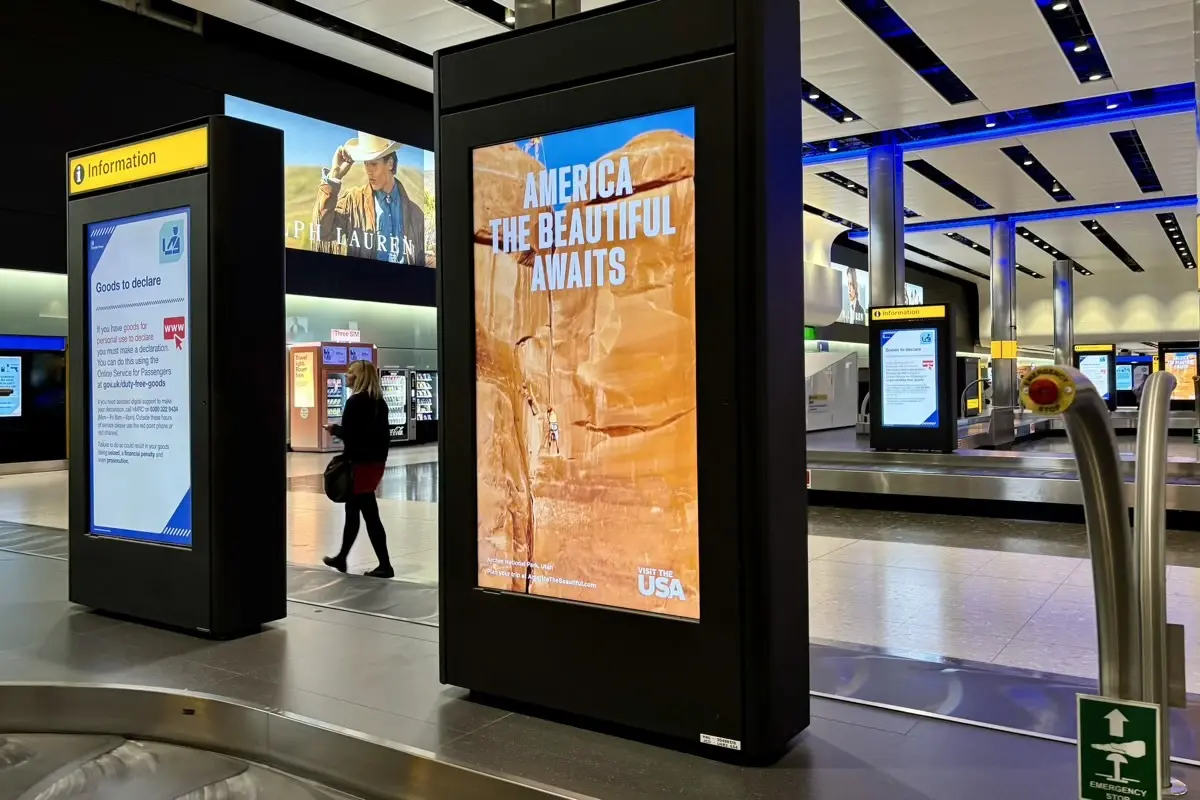
Brand USA, the nation’s official destination marketing organization, is bracing for a profound financial reckoning. Following a turbulent half-decade defined by the catastrophic collapse of international travel during the COVID-19 pandemic and a subsequent multi-million-dollar federal rescue package, the organization’s fiscal runway is rapidly shortening.
A temporary $250 million federal injection that insulated the agency from immediate budget austerity is nearly exhausted. This temporary relief has long masked the sting of a severe, structural federal funding reduction passed in recent years, which permanently erased as much as $80 million from Brand USA’s annual operating budget. While the organization has managed to steady its balance sheet in the short term—projecting expenditures of $158 million for fiscal 2026 and $165 million for fiscal 2027, which begins next month—fiscal 2028 looms as a critical inflection point.
By September 2027, the agency anticipates its cash reserves will plummet from a post-pandemic peak of $165.1 million down to roughly $51 million. Worse still, the vast majority of those remaining funds are legally or operationally ring-fenced as emergency reserves, leaving virtually no margin for error. With diminished federal allocations, a lagging recovery in international visitor volume compared to global competitors, and shrinking partner contributions, Brand USA faces an uphill battle to maintain the United States’ competitive edge in the fiercely contested global tourism marketplace.

Detailed Chronology: From Pandemic Paralysis to the 2022 Rescue and Beyond
To understand Brand USA’s current financial vulnerability, one must examine the cascading crises that have shaken the organization’s funding mechanisms since early 2020.
The Pandemic Shock (2020–2021)
When global borders slammed shut in March 2020 to curb the spread of COVID-19, the economic impact on the U.S. travel and tourism sector was immediate and devastating. Brand USA—whose operational model relies on a unique public-private partnership funded largely by a fee levied on international visitors through the Electronic System for Travel Authorization (ESTA), matched by private-sector contributions—saw its revenue streams virtually evaporate. With international air arrivals down by more than 70% globally, ESTA fee collections nosedived. The organization was forced to furlough staff, pause global marketing campaigns, and slash operational expenditures just as destinations around the world began plotting aggressive post-pandemic campaigns to lure back high-spending travelers.
The $250 Million Lifeline (2022)
Recognizing that destination marketing would be the linchpin of economic recovery, the federal government stepped in with a monumental, one-time funding boost. In 2022, a $250 million injection was funneled into Brand USA. This capital infusion acted as a financial shock absorber. It allowed the organization to aggressively re-enter international markets, launch major promotional campaigns in key feeder countries, and rebuild partnerships with airlines, hotel chains, and tour operators that had been severely strained by the pandemic.
Importantly, this influx of cash allowed Brand USA to continue operating with a near-normal budget during the 2023 and 2024 fiscal years, obscuring the reality that its core, recurring revenue model was structurally impaired.

The Quiet Budget Cuts (2023–2025)
Even as the $250 million special appropriation was being deployed, underlying policy and administrative shifts began reducing Brand USA’s baseline funding. Legislative adjustments and shifting government priorities chipped away at the organization’s predictable revenue streams. By 2024, the cumulative effect of these federal funding reductions had erased as much as $80 million from Brand USA’s annual operating budget.
While the organization was able to draw down its swollen cash reserves to bridge the gap, industry experts warned that this strategy was inherently finite. That finite window is now slamming shut.
The Immediate Horizon (2026–2027)
According to recent financial disclosures, Brand USA plans to spend $158 million in fiscal 2026, followed by $165 million in fiscal 2027. These figures appear robust on the surface—roughly in line with pre-pandemic annual spending levels outlined in historical tax filings. However, these budgets are heavily subsidized by the rapid depletion of the remaining emergency cash reserves rather than a true recovery of baseline operational income.
By the time fiscal 2027 draws to a close in September of that year, Brand USA’s cash cushion will have absorbed a $114.1 million drawdown, leaving total reserves at approximately $51 million.
Supporting Context & Metrics: The Numbers Behind the Crisis
A deeper dive into Brand USA’s financial disclosures, statutory funding frameworks, and tourism economics reveals the true magnitude of the challenge facing the agency.
The ESTA Funding Mechanism
Brand USA was established by the Travel Promotion Act of 2009. Unlike traditional government agencies funded entirely through congressional appropriations, Brand USA operates on a matching-funds model. It receives up to $100 million annually from a portion of the $21 fee collected from international travelers entering the U.S. via the ESTA visa-waiver program. This federal contribution must be matched dollar-for-dollar (up to specific statutory caps) by cash and in-kind contributions from private-sector travel industry partners.
When international travel ground to a halt, ESTA collections plummeted. Even as travel has rebounded, the volume of visitors from key visa-waiver nations—particularly parts of Asia, such as China, where recovery has lagged significantly due to sluggish outbound flight capacity and visa processing backlogs—has failed to return to 2019 benchmarks. Consequently, baseline federal matching revenues have not fully recovered to pre-pandemic trajectories.
Reserve Depletion Trajectory
The arithmetic of Brand USA’s reserves illustrates an unsustainable path:
- Peak Post-Pandemic Reserves (2022–2023): ~$165.1 million (bolstered by the $250 million federal relief package).
- Projected Drawdown (Through September 2027): ~$114.1 million utilized to artificially inflate operating budgets.
- Projected Remaining Reserves (End of Fiscal 2027): ~$51 million.
- The Emergency Caveat: Of that remaining $51 million, regulatory constraints and prudent financial governance dictate that the vast majority must remain untouched as a statutory rainy-day fund to manage cash flow volatility and unforeseen global disruptions.
Global Competition and Market Share
Compounding Brand USA’s financial squeeze is the aggressive posture of international competitors. While the U.S. has historically relied on its natural and cultural allure to attract visitors organically, rival nations are outspending the U.S. on coordinated, state-backed tourism campaigns.
Countries across Europe, the Middle East, and Asia-Pacific have dramatically increased their destination marketing budgets to capture the pent-up demand of global travelers. According to international tourism bodies, the U.S. share of global long-haul travel has faced persistent headwinds, exacerbated by high visa wait times, exchange rate fluctuations, and a perception that the U.S. is a difficult or expensive destination to navigate. In this hyper-competitive environment, cutting Brand USA’s marketing footprint risks ceding valuable market share to countries with expanding promotional war chests.
Official Statements and Industry Reactions
As news of the impending financial cliff spreads through the tourism sector, travel industry leaders, destination marketing executives, and legislative stakeholders are voicing deep concern over the long-term competitiveness of the United States.
In recent industry briefings, representatives for Brand USA have emphasized their commitment to fiscal responsibility while acknowledging the difficult road ahead. Leadership has maintained that the organization is actively re-evaluating its operational efficiencies, streamlining marketing delivery, and exploring innovative digital-first strategies to stretch every remaining dollar.
"We have navigated unprecedented turbulence over the past five years with resilience and strategic agility," noted a senior coalition insider familiar with Brand USA’s budgetary planning. "The $250 million injection was a vital bridge that kept America top-of-mind globally when our competitors were going dark. However, bridges are meant to get you to the other side—not to live on. As we approach fiscal 2028, the reality of a diminished baseline budget and exhausted reserves means the U.S. travel industry must confront hard questions about how we fund international promotion moving forward."
Hospitality associations and destination marketing organizations (DMOs) across the country have also sounded the alarm. The U.S. Travel Association, which played a pivotal role in the creation of Brand USA, has consistently argued that international inbound travel is America’s top service export, generating hundreds of billions of dollars in economic output and supporting millions of American jobs.
"Every dollar invested in Brand USA returns a massive multiplier in economic impact, tax revenues, and job creation," said a spokesperson for a prominent regional tourism advocacy group. "Cutting off the marketing engine that drives international visitors to our shores is economic self-harm. When you underfund destination marketing, you aren’t just hurting hotels and airlines; you are impacting small businesses, restaurants, tour operators, and cultural institutions in every single state."
Private-sector partners, who are required to provide matching funds, are also feeling their own post-pandemic economic pressures. With inflation, rising operational costs, and labor shortages squeezing corporate bottom lines, securing robust private-sector contributions to meet federal matching thresholds has become increasingly difficult. This creates a vicious cycle: as private contributions shrink, the statutory cap on federal matching funds becomes harder to attain, further depressing total available revenue.
Future Outlook: Fiscal 2028 and the Search for Sustainable Solutions
Looking beyond the immediate horizon of fiscal 2026 and 2027, fiscal 2028 stands as a watershed moment for Brand USA and the broader U.S. travel economy. Without intervention, the organization will enter that fiscal year stripped of its financial cushion, facing a permanently reduced federal baseline, and struggling against fully funded international rivals.
To avert a structural crisis, industry analysts and policy experts point to several potential pathways for long-term sustainability:
1. Legislative Reform of the ESTA Fee Structure
One of the most frequently discussed solutions is modernizing the funding mechanism established by the 2009 legislation. Adjusting the ESTA fee—or modifying the allocation percentage that flows directly to Brand USA—could restore baseline revenues to match modern promotional costs and inflationary pressures. However, any move involving fees designated for travel authorization requires congressional action, navigating a notoriously polarized legislative environment where passing fee adjustments or appropriations measures is exceptionally challenging.
2. Diversification of Private-Sector Revenue
Brand USA may need to radically innovate its partnership models. Moving beyond traditional cash and in-kind matching contributions, the organization could explore proprietary digital monetization strategies, expanded cooperative marketing programs with global tech platforms, and broader coalition models that bring in non-traditional partners from the retail, financial services, and entertainment sectors who benefit directly from international visitor spending.
3. Hyper-Targeted, High-Yield Marketing
With fewer dollars available, Brand USA will likely be forced to abandon broad-brush promotional campaigns in favor of hyper-targeted, data-driven initiatives. By focusing marketing spend exclusively on high-yield international markets—where visitors stay longer, spend more, and demonstrate a high propensity for travel—the agency can maximize its return on investment, even with a constrained budget.
4. Bipartisan Advocacy for Federal Recognition
Ultimately, industry stakeholders argue that sustainable destination marketing must be recognized as a matter of national economic security. Proponents of federal investment emphasize that international tourism is not merely a discretionary marketing expense, but a vital export-driven stimulus that supports regional economies across all 50 states. Building a renewed bipartisan consensus in Washington to secure stable, long-term federal funding will be the ultimate test for the U.S. travel coalition in the coming years.
Conclusion
Brand USA has proven its agility through the crucible of a global pandemic and the subsequent financial restructuring of its operations. Yet, as the safety net of 2022 relief funds dissolves and cash reserves dwindle toward a bare $51 million baseline by late 2027, the organization stands at a critical crossroads. How policymakers, industry leaders, and Brand USA executives navigate the structural funding cliff of fiscal 2028 will determine whether the United States can successfully defend its position as a premier global destination or watch its market share slip away to better-funded international competitors.