










Executive Overview
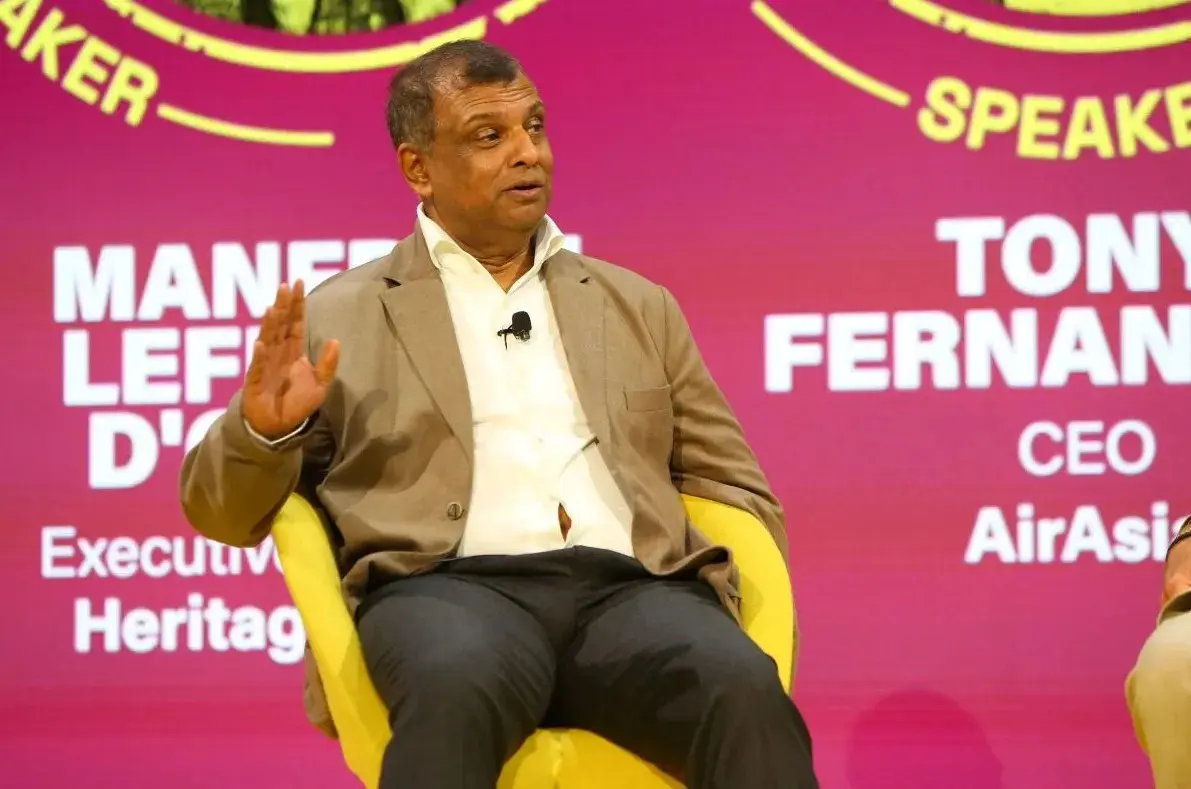
AirAsia Co-Founder Tony Fernandes has forcefully pushed back against circulating media reports suggesting that the Malaysian government has been actively engaged in discussions to allow rival carriers to absorb domestic capacity currently operated by the budget airline. Speaking during a high-stakes press conference in Bangkok—a key stop on his comprehensive tour of AirAsia’s core Southeast Asian operational hubs—Fernandes dismissed the reports as baseless "misinformation" designed to cast unwarranted doubt on the financial health and competitive dominance of the region’s premier low-cost carrier.
The rumors, which have stoked considerable debate across Malaysia’s aviation sector, come at a time of immense macroeconomic volatility. Global aviation markets are currently grappling with severe cost-push inflation, driven primarily by soaring jet fuel prices that have escalated sharply in the wake of geopolitical conflict involving Iran and broader Middle Eastern instability. In response to these unprecedented cost pressures, Fernandes confirmed that AirAsia has strategically pruned unprofitable routes and accelerated the return of leased aircraft to lessors to preserve liquidity and safeguard its balance sheet.
However, Fernandes drew a hard line against the notion that competing airlines could seamlessly step into AirAsia’s operational footprint. Pointing to the carrier’s proprietary ultra-low-cost structure, high aircraft utilization rates, and deeply entrenched market share, he argued that rivals simply lack the structural agility to replicate AirAsia’s fares or absorb its capacity without significant disruption to the wider domestic travel market.
This investigative report examines the genesis of the capacity-transfer rumors, analyzes the macroeconomic pressures currently bearing down on the carrier, evaluates AirAsia’s financial resilience, and provides an authoritative outlook on the future of low-cost aviation in Southeast Asia.
Detailed Chronology of Events
The Genesis of the Capacity Transfer Rumors
The controversy began earlier in the week when unverified reports emerged in domestic financial circles suggesting that Malaysian transport and economic ministries were holding exploratory talks with competing domestic airlines—such as Malaysia Airlines and Batik Air—regarding contingency plans. The rumored contingency supposedly involved reallocating or absorbing portions of AirAsia’s domestic flight frequencies and slot allocations should the carrier require structural restructuring or face acute cash flow bottlenecks.
For an airline that commands the lion’s share of Malaysia’s domestic low-cost travel market, any suggestion of state-managed capacity redistribution carries profound competitive and psychological weight. The rumors immediately triggered intense speculation among financial analysts, institutional investors, and consumer advocacy groups regarding the true state of AirAsia’s operational capacity and its ongoing negotiations with aircraft lessors and financial institutions.
The Bangkok Press Conference and Direct Pushback
Sensing the need to quell market anxiety directly, Tony Fernandes convened an impromptu media briefing during his executive tour of AirAsia’s regional headquarters in Bangkok, Thailand. Addressing a packed room of journalists, aviation analysts, and institutional investors, Fernandes did not mince words.

"We are a unique brand—you can’t just step in," Fernandes asserted, directly addressing the feasibility of rivals absorbing AirAsia’s market share. He characterized the reports as malicious or profoundly misinformed attempts to destabilize passenger confidence and undermine the airline’s hard-fought post-pandemic recovery trajectory.
Fernandes elaborated on the proactive measures the airline has taken to weather the current macroeconomic storm, framing the reduction of peripheral routes not as a sign of retreat, but as a disciplined commercial maneuver designed to maximize yield on high-demand trunk routes.
Fleet Rationalization and Route Optimization
Over the preceding months, Capital A (AirAsia’s parent entity) and its airline operating subsidiaries have quietly executed a series of operational adjustments. These steps include:
- Strategic Route Pruning: Suspending underperforming secondary and tertiary routes where demand recovery has lagged behind pre-pandemic benchmarks.
- Fleet Rebalancing: Returning mature or inefficiently configured aircraft to lessors ahead of schedule to optimize lease liabilities and reduce maintenance reserve burdens.
- Capacity Concentration: Redirecting available aircraft to high-density, highly profitable domestic and regional corridors in Malaysia, Thailand, Indonesia, and the Philippines, where load factors continue to exceed 85%.
Supporting Context & Metrics
The Middle East Geopolitical Shock and Jet Fuel Volatility
To fully understand AirAsia’s current operational adjustments, one must analyze the external shocks battering the global airline industry. The escalation of conflict involving Iran and the broader Middle East has sent shockwaves through international crude oil and refined petroleum product markets.
Jet fuel historically accounts for between 30% and 40% of an airline’s total operating expenses. The sudden spike in Singapore jet fuel benchmark prices—the primary pricing index for Southeast Asian carriers—has compressed operating margins across the board. While legacy carriers can often absorb such shocks temporarily through higher yield premiums and corporate travel contracts, low-cost carriers operate on razor-thin margins where every dollar shift in fuel cost directly impacts net profitability.
[Geopolitical Conflict (Middle East)]
       │
       ▼
[Surging Crude Oil & Refined Products]
       │
       ▼
[Spike in Singapore Jet Fuel Benchmarks]
       │
       ▼
[Compressed Operating Margins for LCCs]
       │
       ▼
[AirAsia Strategic Response: Capacity Pruning & Liquidity Preservation]
The Unreplicable Cost Structure of AirAsia
Fernandes’s core argument during the Bangkok press conference centered on the sheer complexity of low-cost operational models. To the casual observer, an airplane flying a domestic route is a fungible asset; if one airline stops flying it, another can simply take its place. However, Fernandes dismantled this oversimplification by highlighting the intricate mechanics of AirAsia’s cost advantage:
- Point-to-Point Network Efficiency: Unlike hub-and-spoke legacy carriers, AirAsia’s point-to-point model eliminates costly layovers, minimizes ground time, and maximizes daily aircraft utilization—often keeping planes airborne for 12 to 14 hours a day.
- Single-Type Fleet Fleet: Operating an exclusive fleet of Airbus A320 and A321 aircraft yields massive economies of scale in pilot training, maintenance scheduling, and spare parts inventory management.
- Ancillary Revenue Ecosystem: AirAsia has evolved far beyond a pure air transport company into a digital travel and lifestyle ecosystem (encompassing logistics via Teleport, fintech via BigPay, and travel booking through the AirAsia MOVE app). This integrated ecosystem subsidizes core aviation operations in ways traditional airlines cannot replicate.
"You can’t just snap your fingers and absorb our capacity," Fernandes emphasized. "Our cost per available seat kilometre (CASK) is among the lowest in the world. Rivals cannot match our fares without incurring catastrophic financial losses on those routes."
Official Statements & Industry Reactions
Tony Fernandes: Defending the Brand and Market Position
Throughout the briefing, Fernandes maintained an assertive, confident posture, projecting absolute faith in the airline’s ability to navigate the current turbulence. Key takeaways from his official statements include:
- On Government Interference: "There are no discussions with the government about handing over our capacity. That is pure fiction. The Malaysian government understands the vital role aviation plays in national connectivity and economic velocity; they support efficient operators, not market distortion."
- On Financial Resilience: "We have navigated pandemics, currency crashes, and oil shocks before. The actions we are taking right now—returning aircraft, cutting fat, focusing on muscle—are textbook operational management. We are preserving cash not out of desperation, but out of strategic prudence."
- On Future Commitment: "AirAsia was built on the premise of democratizing air travel in ASEAN. We remain 100% committed to the Malaysian market. Our core domestic and regional routes are performing exceptionally well, and consumer demand remains robust despite inflationary pressures."
Industry Analyst Perspectives
Independent aviation analysts across Southeast Asia have largely validated Fernandes’s core thesis, noting that transferring domestic LCC capacity to a higher-cost rival would inevitably lead to a surge in airfares for everyday consumers.
"AirAsia operates at a scale that no other regional low-cost carrier has successfully duplicated outside of perhaps Lion Air in Indonesia," noted a Singapore-based aerospace analyst who requested anonymity. "If AirAsia were to shrink its domestic footprint significantly, Malaysian consumers would immediately face higher ticket prices and reduced flight frequencies. The regulatory authorities are acutely aware of this, making any forced capacity reallocation highly unlikely."
Future Outlook
Navigating Near-Term Headwinds
As AirAsia looks toward the remainder of the fiscal year, management’s primary focus remains laser-focused on three operational pillars:
- Fuel Hedging and Risk Management: Implementing disciplined hedging strategies to cushion the blow of ongoing Middle Eastern oil price volatility.
- Fleet Modernization and Delivery Integration: Gradually accepting delivery of next-generation Airbus A321neo aircraft, which offer a 20% reduction in fuel consumption and extended range capabilities, thereby structurally lowering future operational costs.
- Digital Ecosystem Monetization: Accelerating the cross-selling of non-ticket ancillary services through the AirAsia MOVE super-app to insulate top-line revenue from ticket-price sensitivity.
Long-Term Dominance in ASEAN Aviation
Despite the noise generated by recent rumors, AirAsia’s foundational competitive moat remains intact. The burgeoning middle class across Southeast Asia continues to view air travel as an essential utility rather than a luxury. With intra-ASEAN tourism rebounding strongly and key regional economies registering healthy GDP growth, the fundamental demand drivers for low-cost air travel are stronger than ever.
Tony Fernandes’s decisive intervention in Bangkok has successfully re-anchored the narrative. By directly confronting misinformation, clarifying the rationale behind fleet adjustments, and reaffirming the unassailable economics of the AirAsia model, leadership has signaled to investors, regulators, and passengers alike that the region’s pioneering low-cost carrier is not merely surviving the current storm—it is positioning itself to emerge from it leaner, stronger, and more dominant than ever.