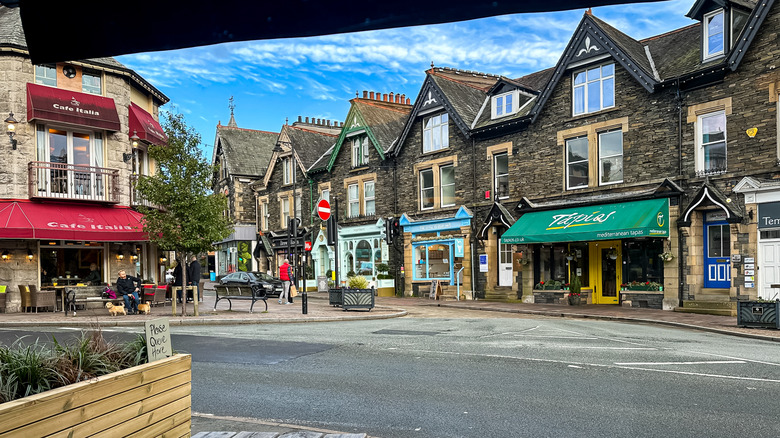
Nestled within the rugged, undulating folds of Cumbria in the northwest of England, the town of Windermere stands as an enduring emblem of British romanticism and natural majesty. Serving both as a bustling, culturally rich destination and the ultimate gateway to England’s most celebrated protected sanctuary—the Lake District National Park—Windermere captures the collective imagination of travelers, environmentalists, and culture enthusiasts alike. Boasting traditional Lakeland stone architecture, an ecosystem that has inspired artists and poets for centuries, and a vibrant local economy powered by independent commerce and world-class gastronomy, the town commands a rare position in global tourism.
Recent evaluations by urban planners and lifestyle analysts, highlighted by national publications like Business Insider, reveal a fascinating socioeconomic phenomenon: an extraordinarily high percentage of visitors are so profoundly captivated by Windermere’s atmospheric charm that they harbor long-term ambitions of permanent relocation. From Hollywood productions choosing its shores for cinematic storytelling to discerning international travelers crowning it their favorite European village, Windermere represents a masterclass in balancing historic preservation with contemporary destination management.
This in-depth investigative feature explores the multifaceted identity of Windermere. Drawing on over two decades of localized expertise, comprehensive market metrics, and an analysis of its evolving role within the Lake District National Park, this report unpacks the town’s distinct independent retail landscape, its burgeoning culinary prestige, its world-renowned aquatic and terrestrial recreational infrastructure, and the strategic outlook for its sustainable future.
Detailed Chronology: From Glacial Valley to Modern Cultural Sanctuary
To truly comprehend the gravitational pull of Windermere, one must trace its journey through deep geological time, industrial transformation, and the dawn of modern conservation.
The Geological Genesis and Early Settlement
The theater in which Windermere sits was carved millennia ago during the Devensian glaciation, when massive ice sheets scoured the Cumbrian fells, leaving behind a magnificent ribbon lake spanning over 11 miles. Long before it became a haven for leisure seekers, the basin was shaped by ancient Norse and Celtic settlers who utilized the surrounding woodlands for timber and the waters for sustenance. Place names throughout the region—such as "Windermere" itself, derived from the Old Norse Vinandr mere (meaning "lake of the winding river" or bearing the personal name Vinandr)—serve as a permanent linguistic monument to these early inhabitants.
The Victorian Leisure Revolution
For centuries, the area remained a rugged, isolated expanse known primarily to sheep farmers, charcoal burners, and slate quarriers. However, the 19th century fundamentally altered the destiny of Windermere and its neighbor, Bowness-on-Windermere. The arrival of the Kendal and Windermere Railway in 1847 shattered geographic isolation, injecting a wave of Victorian tourists eager to escape the soot-choked industrial cities of northern England.
Visionaries, romantic poets—most notably William Wordsworth and his contemporaries—and wealthy industrialists recognized the therapeutic value of the landscape. They began constructing grand summer estates along the wooded shores. The introduction of steam-powered vessels on the lake transformed Windermere from a working industrial waterway into England’s premier aquatic playground, establishing a hospitality infrastructure that continues to evolve today.
As tourism burgeoned into the 20th century, the imperative to protect the fragile ecosystem of the Cumbrian fells became paramount. The formal establishment of the Lake District National Park in 1951 placed Windermere at the heart of a rigorously protected landscape. Over the subsequent decades, strict planning regulations were enacted to protect the traditional stone aesthetic of the town, ensuring that modern commercial sprawl could not dilute its historic character. Today, Windermere navigates a delicate, highly scrutinized equilibrium: honoring its legacy as a sanctuary of poetic inspiration while accommodating millions of annual visitors seeking modern luxury, outdoor adventure, and cultural enrichment.
Supporting Context & Metrics: The Anatomy of a Destination
Understanding Windermere requires a granular look at the data governing its geography, economy, and tourism patterns.
Geographic and Ecological Metrics
Lake Dimensions: Windermere is England’s largest natural lake, stretching an impressive 11.25 miles (18.1 kilometers) in length and reaching a maximum depth of 219 feet (67 meters).
Biodiversity and Watershed: The lake is fed by several major rivers, including the Brathay and the Troutbeck, and drains via the River Leven into Morecambe Bay. The surrounding catchment area represents a complex, biodiverse ecosystem of ancient oak woodlands, upland heaths, and wetland habitats.
Proximity and Access: Situated in the southeast sector of the Lake District National Park within the county of Cumbria, the town is easily accessed via the A591 road corridor and the Windermere railway branch line, which connects seamlessly to the West Coast Main Line via Oxenholme.
Tourism Dynamics and Visitor Demographics
Volume and Impact: The broader Lake District National Park attracts upwards of 15 to 18 million visitors annually, with Windermere and its adjoining twin town, Bowness-on-Windermere, acting as the primary reception hub for a significant majority of these travelers.
Seasonality Trends: Summer months (July and August) experience peak congestion, driving local experts and conservation bodies to actively promote shoulder-season travel during spring (April to May) and autumn (September to October). These transitional periods offer optimal conditions for ecological preservation and a superior, unhurried visitor experience.
Economic Footprint: Independent commerce forms the lifeblood of Windermere’s local economy. Unlike mass-market resort towns dominated by homogenized corporate chains, Windermere’s commercial streets are defined by family-run boutiques, artisan food producers, independent galleries, and boutique hospitality ventures that retain a high percentage of tourist expenditure within the local Cumbrian economy.
Independent Shops, Culinary Excellence, and Gastronomic Innovation
Windermere has quietly evolved into a powerhouse of independent retail and high-end gastronomy. Eschewing generic high-street brands, the town’s commercial arteries showcase the very best of Cumbrian craftsmanship, artistic vision, and culinary ambition.
The Artisan Retail Landscape
For visitors seeking authentic souvenirs and locally crafted memorabilia, Windermere offers an eclectic array of independent shops.
The Northern Line: A premier destination for eclectic home decor and striking, locally inspired graphic prints that capture the moody, atmospheric topography of the national park.
Cook House Gallery: A sophisticated space dedicated to showcasing original works by established and emerging Cumbrian artists, capturing the shifting light and rugged textures of the surrounding fells.
The Corner Shop: A beloved local institution offering a charming curation of traditional gifts, bespoke local soaps, and nostalgic postcards.
Sugarfinery London Limited: A haven for sweet-toothed travelers looking to stock up on artisanal confections to fuel rigorous outdoor excursions.
Casual Dining and Pub Culture
When it comes to dining, Windermere balances hearty, traditional British comfort food with vibrant international flavors.
The Crafty Baa: Renowned for delivering an energetic evening atmosphere accompanied by live acoustic music. Its extensive drink menu boasts an elite selection of craft beers and international whiskies, perfectly paired with traditional pub fare such as slow-cooked steak pies and heavily loaded artisan nachos.
Tapios: Brings the warmth of the Mediterranean to the Cumbrian hills, serving authentic Spanish tapas ranging from tender tomato-infused meatballs to perfectly crisp patatas bravas.
Opa Restaurant: Transports diners straight to the Greek Isles through immersive Mediterranean decor and a menu featuring robust meze platters and rich, homemade moussaka.
Michelin-Starred and Farm-to-Fork Fine Dining
For the gastronomically adventurous, the outer peripheries of Windermere house some of the most celebrated dining establishments in the United Kingdom.
Source (Gilpin Hotel): Situated just outside the town center, this Michelin-starred restaurant is a destination for special occasions. Its forward-thinking menu champions hyper-local Cumbrian produce, featuring world-class iterations of Cumbrian lamb and aged Longhorn beef.
Henrock (Linthwaite House Hotel): Spearheaded by renowned culinary visionary Simon Rogan, Henrock operates on a strict farm-to-fork ethos. The menu utilizes hyper-local ingredients infused with global culinary techniques and international flavor profiles, cementing the Lake District’s status as a global epicurean capital.
Boating, Hiking, and Outdoor Recreation
The true magic of Windermere lies in its seamless integration of aquatic exploration and terrestrial mountaineering. The landscape offers activities tailored to every physical ability, from leisurely lake cruises to demanding fell runs.
Aquatic Adventures on England’s Greatest Lake
Given its sheer scale, exploring the waters of Windermere is an essential ritual for any visitor.
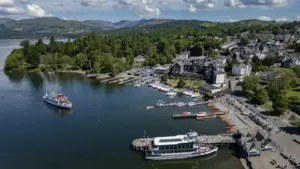
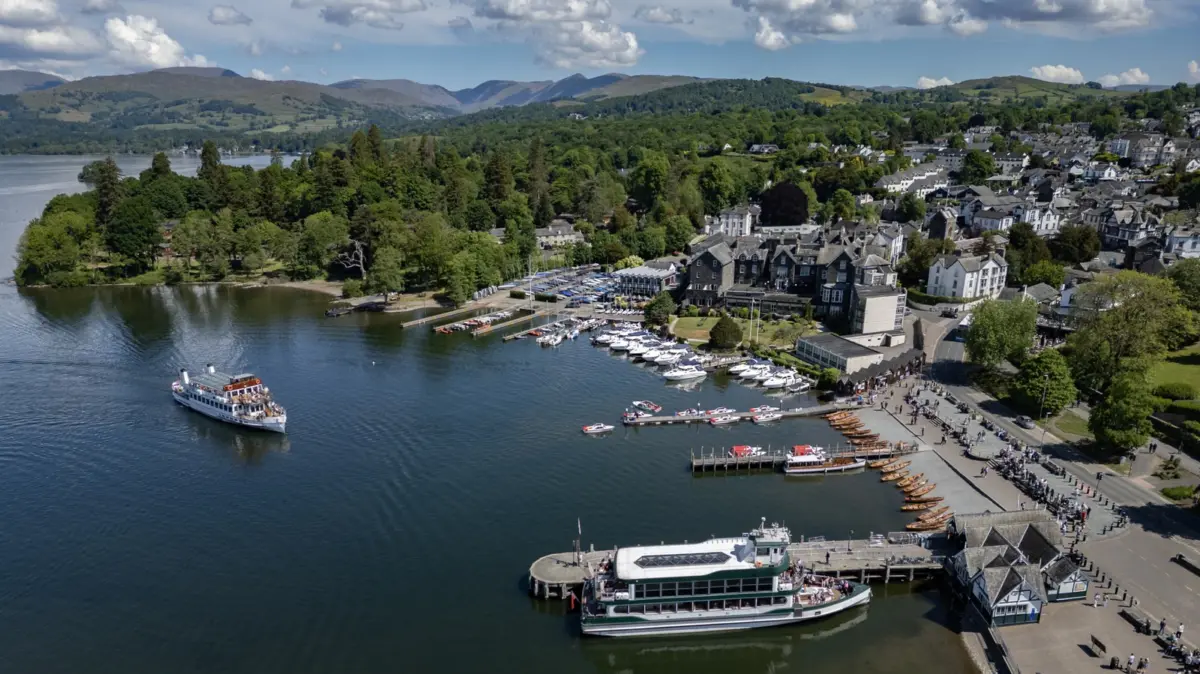
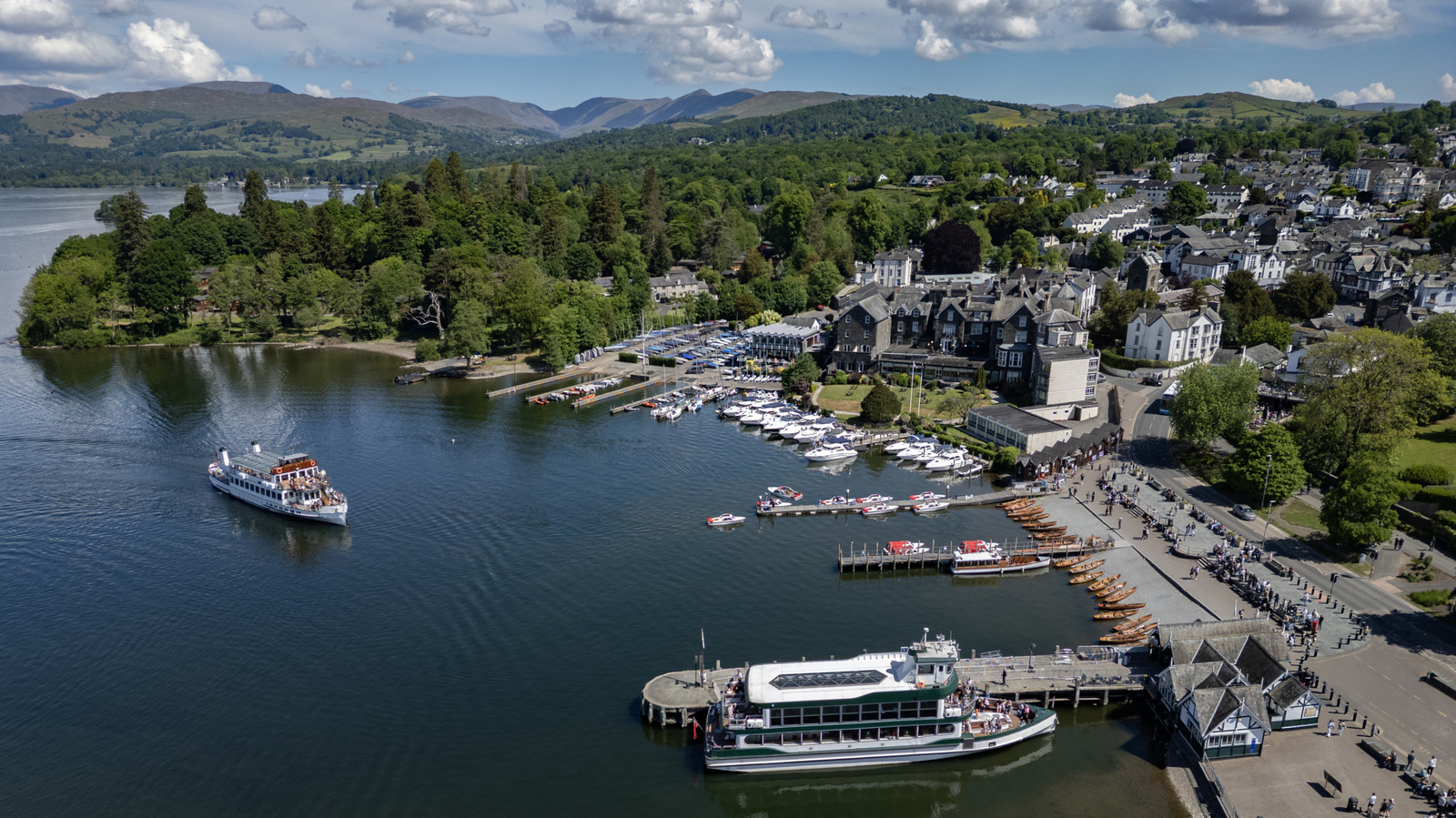
Windermere Lake Cruises: Operating from the bustling piers of Bowness-on-Windermere (a mere five-minute drive or twenty-minute scenic walk from Windermere town), these historic steamers offer comprehensive sightseeing loops. The service connects Windermere to outlying cultural nodes such as Ambleside and Lakeside, enabling multi-destination day excursions.
Paddlesports and Independent Exploration: For those seeking an active encounter with the water, operators like Windermere Canoe Kayak provide canoe, kayak, and stand-up paddleboard hire. Navigating the quiet, secluded bays and winding around the tree-lined islets (such as the private Belle Isle) offers a tranquil escape from the bustling shores. Guided excursions are readily available for novices seeking local ecological and historical insights.
Terrestrial Trails and Panoramic Summits
On dry land, the network of walking and cycling trails surrounding Windermere offers some of the most accessible and rewarding vantage points in the British Isles.
Orrest Head: Regarded as one of the finest introductory walks in the Lake District, this historic two-mile out-and-back route begins near the Windermere Hotel. Winding upward through mature broadleaf woodlands, it culminates in a breathtaking 360-degree panoramic summit overlooking the lake and the distant Central Fells. It was famously the first viewpoint captured by legendary guidebook author Alfred Wainwright upon his arrival in the district in 1930.
Claife Heights and Wray Castle: For a more extended trek or mountain biking expedition, travelers can utilize the Cross Lakes Shuttle ferry across the water to Ash Landing. This opens up a magnificent 7.5-mile trail system winding through Claife Heights, offering sweeping elevated views of the lake and architectural marvels like the mock-Gothic Wray Castle.
Official Statements and Expert Perspectives
Local stakeholders, conservation authorities, and long-term residents emphasize the critical importance of sustainable tourism management as Windermere’s global profile continues to rise.
A senior representative from the Lake District National Park Authority released a statement regarding the balance between economic vitality and environmental stewardship:
"Windermere is undeniably one of the jewels of Cumbria. However, the sheer volume of visitors it attracts demands a proactive approach to conservation. Our objective is to ensure that every visitor experiences the profound natural beauty of this region without compromising the delicate ecosystems that make it unique. We strongly encourage visitors to embrace shoulder-season travel, utilize public transit infrastructure, and support the independent businesses that form the cultural bedrock of our community."
A long-standing Cumbrian hospitality entrepreneur and two-decade resident of the area offered vital insider perspective on navigating the town:
"People come to Windermere seeking a romanticized ideal of the English countryside, and the town certainly delivers on that promise. Yet, the secret to truly falling in love with Windermere is escaping the midday summer rushes. Take the early morning ferry across the water, hike Orrest Head as the mist lifts off the fells, and spend your evenings supporting our local independent artisans and chefs. That is where the true spirit of the Lake District reveals itself."
Future Outlook: Sustainability, Community, and Preservation
As Windermere looks toward the decades ahead, its trajectory is defined by a commitment to sustainable modernization and rigorous environmental preservation.
Infrastructure and Green Mobility
To mitigate the carbon footprint associated with millions of annual motorists, local transport authorities are heavily investing in integrated green mobility solutions. Enhanced bus networks—such as the vital 599 route linking the Windermere railway station directly to Bowness Pier—alongside expanded cycling corridors and electric vehicle charging stations, are vital components of the town’s long-term master plan. The goal is to create a seamless, car-free transit experience that protects the tranquil acoustic landscape of the national park.
Economic Resilience and Housing Pressures
The immense popularity highlighted by Business Insider—wherein visitors frequently express a desire to permanently relocate to Windermere—introduces complex socioeconomic challenges. High demand for residential and holiday properties has exerted upward pressure on local housing markets. Community land trusts and local municipal planners are actively working to implement balanced zoning regulations. These measures aim to protect affordable housing stock for local Cumbrian families while preserving the architectural integrity of the historic town center against unregulated commercial expansion.
Conclusion
Windermere remains far more than a mere transit hub or a picturesque postcard backdrop; it is a living, breathing community where human enterprise, geological majesty, and poetic history converge. By championing independent commerce, prioritizing high-end local gastronomy, and enforcing rigorous ecological stewardship, Windermere successfully guards its timeless allure. For the traveler willing to look beyond the peak summer crowds and immerse themselves in its rich network of trails, waters, and culture, Windermere offers an unforgettable, deeply transformative experience that lingers long after the journey home.