






Executive Overview
The American aviation landscape is hurtling toward a critical juncture. As global crude oil markets remain volatile and geopolitical tensions continuously strain energy supplies, jet fuel prices have steadily climbed back toward levels that historically trigger financial distress across the transportation sector. While legacy carriers and major network airlines—such as Delta Air Lines, United Airlines, and American Airlines—possess the balance sheet resilience, sophisticated hedging portfolios, and pricing power to absorb these macroeconomic shocks, America’s ultra-low-cost carriers (ULCCs) are facing an existential crisis.
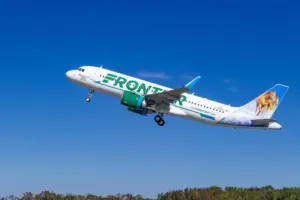
For budget airlines like Allegiant Air, Frontier Airlines, Avelo Airlines, and Breeze Airways, the mathematics of soaring fuel costs are punishingly asymmetrical. Jet fuel routinely represents between 25% and 35% of an airline’s total operating expenses. When fuel prices spike, the financial margins of low-cost operators evaporate almost instantaneously. Unlike their legacy counterparts, which can lean on lucrative business class cabins, international long-haul networks, and global loyalty programs to cushion the blow, ULCCs operate on razor-thin margins built entirely on stimulating demand through ultra-cheap base fares.
Compounding this operational vulnerability is a harsh political reality in Washington, D.C. Industry advocacy groups, most notably the Association of Value Airlines (AVA), have sounded the alarm on Capitol Hill, lobbying for targeted legislative relief or temporary regulatory interventions. Yet, their pleas have largely fallen on deaf ears. Lawmakers, wary of appearing to bail out private corporations while everyday consumers grapple with economy-wide inflation, have shown virtually zero appetite to extend a financial safety net to the budget airline sector.

This deep dive examines the multi-faceted crisis facing America’s value carriers. We analyze the structural economics of the low-cost business model during energy shocks, review the legislative roadblocks in Washington, explore the timeline of recent industry lobbying efforts, and evaluate the long-term implications for budget-conscious travelers across the United States.
Detailed Chronology: The Escalating Crisis and Washington’s Cold Shoulder
To understand how the ultra-low-cost carrier sector arrived at this precarious financial precipice, it is necessary to examine the timeline of events that have unfolded over the past several quarters.
Phase 1: The Post-Pandemic Demand Surge and Hidden Vulnerabilities (Early 2023 – Late 2023)
In the immediate aftermath of the COVID-19 pandemic, the U.S. airline industry experienced an unprecedented wave of leisure-led travel demand, often referred to as "revenge travel." Ultra-low-cost carriers capitalized on this phenomenon by aggressively expanding routes, taking delivery of new narrowbody aircraft, and keeping base fares low to capture price-sensitive consumers.
However, beneath the veneer of robust passenger volumes, macroeconomic headwinds were quietly gathering. Persistent inflation, coupled with tightening global oil supplies driven by OPEC+ production cuts and geopolitical instability in Eastern Europe and the Middle East, began to apply relentless upward pressure on refined petroleum products. By the second half of 2023, jet fuel prices had detached from historical seasonal norms, remaining stubbornly elevated well above pre-pandemic averages.
Phase 2: Margin Compression and the Pricing Wall (Early 2024)
As jet fuel costs hovered at economically burdensome levels through the winter and spring of 2024, ULCCs discovered the hard ceiling of their pricing power. In a traditional market, rising operational costs are seamlessly passed down to the consumer via higher ticket prices. For legacy carriers, whose core customer demographic includes corporate travelers whose companies absorb higher airfares, this strategy is relatively frictionless.
For ULCCs, however, raising ticket prices directly sabotages their core value proposition. The fundamental psychological trigger that drives a consumer to book with Frontier, Allegiant, Avelo, or Breeze is the promise of a drastically cheaper fare compared to legacy competitors. When a budget carrier attempts to raise base fares by $30 to $50 to offset fuel spikes, demand elasticity immediately takes over. Price-sensitive leisure travelers simply opt to stay home, drive, or postpone their travel plans. Consequently, ULCC executives found themselves trapped in a classic economic squeeze: absorbing the fuel cost hikes meant bleeding cash, while passing them on to consumers meant flying empty planes.
Phase 3: The D.C. Lobbying Push and Legislative Dead-End (Recent Weeks)
Recognizing that market forces alone would not rescue the sector from mounting losses, industry representatives mobilized. In recent weeks, executive leadership and trade representatives from the Association of Value Airlines (AVA)—which formally represents key ULCC and low-cost pioneers including Allegiant, Frontier, Avelo, and Breeze—initiated an emergency outreach campaign targeting key congressional offices on Capitol Hill.
The objective was straightforward: brief lawmakers on the impending economic squeeze facing budget carriers and explore potential legislative or administrative relief measures. Discussions reportedly touched upon temporary relief options, such as the suspension or reduction of federal excise taxes on jet fuel during periods of acute energy price spikes, or targeted economic stabilization grants akin to those provided during the pandemic.
However, the response from Washington was decidedly lukewarm. According to Jonathon Freye, executive director of the AVA, subsequent follow-ups with congressional staffers and committee members yielded no tangible indications that Congress was willing to take up the mantle.
When contacted for comment, the powerful House Transportation and Infrastructure Committee maintained a telling silence, failing to issue an immediate response—a clear signal that airline fuel relief is radioactive on Capitol Hill ahead of upcoming legislative agendas.
Supporting Context & Metrics: The Economics of Low-Cost Fuel Exposure
To fully grasp why jet fuel prices pose a disproportionate threat to ultra-low-cost carriers, one must examine the fundamental metrics that dictate airline profitability and cost accounting.
The Cost Breakdown: Fuel vs. Labor
In airline accounting, Operating Cost Per Available Seat Mile (CASM) is the primary metric used to evaluate efficiency. For legacy network carriers (such as Delta, United, and American), non-fuel CASM is historically high due to complex legacy labor contracts, expensive hub-and-spoke infrastructure, premium airport terminal leases, and comprehensive global route networks. Consequently, fuel represents roughly 20% to 25% of a legacy carrier’s total operating expenses.
Conversely, ultra-low-cost carriers pride themselves on achieving ultra-low non-fuel CASM. They accomplish this by utilizing point-to-point routing (bypassing expensive hub airports), operating single-family aircraft fleets (reducing maintenance and pilot training costs), utilizing unbundled pricing (charging separately for carry-on bags, seat selection, and refreshments), and maintaining leaner administrative overhead.
Because their non-fuel operating costs are engineered to be so lean, fuel exerts an outsized gravitational pull on their income statements. For many ULCCs, jet fuel consumption accounts for 30% to 35% of total operating expenditures during high-price cycles. A sustained $0.50 per gallon increase in jet fuel can wipe out an entire quarter’s net income for a mid-sized low-cost carrier.
The Hedging Disparity
Another critical differentiator between major network carriers and budget airlines is fuel hedging—the practice of locking in future fuel prices through financial derivatives (such as futures, options, and swaps) to protect against sudden market spikes.
- Legacy and Major Carriers: Carriers like Delta Air Lines maintain dedicated internal trading desks and sophisticated hedging programs. While major airlines have occasionally moved away from aggressive hedging in recent years following painful losses during historical oil crashes, they retain the capital reserves to re-enter hedging positions or absorb unhedged spot-market volatility without threatening solvency.
- Ultra-Low-Cost Carriers: Operating under strict cash-conservation models, ULCCs frequently lack the capital liquidity required to purchase complex, long-term fuel hedges. Entering into hedging contracts requires substantial upfront margin cash deposits and lines of credit. When cash flows are tight, budget airlines are forced to buy their jet fuel on the unhedged spot market, leaving them entirely naked and exposed to daily price gyrations at the pump.
Official Statements and Industry Perspectives
The standoff between the budget airline sector and federal policymakers highlights a growing ideological divide regarding government intervention in transportation economics.
Jonathon Freye and the Association of Value Airlines
Speaking candidly on behalf of the AVA, Executive Director Jonathon Freye emphasized that the struggle facing budget airlines is ultimately a consumer protection and accessibility issue disguised as an operational cost problem.
"There’s clearly a sort of concern about the affordability of transportation, and I think for a lot of our customers and the big carriers, too," Freye remarked in an interview with industry publication Skift.
Freye’s argument hinges on the democratizing effect that ultra-low-cost carriers have brought to the American travel market over the past two decades. By introducing aggressive base fares, ULCCs forced legacy carriers to lower their prices—a phenomenon economists term the "Southwest Effect" (though now applicable across multiple ultra-low-cost operators). If fuel prices squeeze budget carriers out of marginal markets or force consolidation, consumers across secondary and tertiary cities face the grim prospect of monopolized routes and skyrocketing ticket prices.
The Congressional Silence
Despite the compelling consumer-advocacy angle advanced by the AVA, Capitol Hill’s muted response underscores a harsh political reality.
In interviews with legislative staffers and committee aides, a consensus emerges: Congress views high fuel prices as an exogenous macroeconomic shock rather than a systemic market failure requiring direct government intervention. With federal deficits under intense scrutiny and public fatigue over corporate bailouts running high, lawmakers are unwilling to champion tax holidays or direct subsidies for the aviation sector.
Furthermore, environmental and fiscal hawks in Congress argue that artificially subsidizing fossil-fuel-dependent aviation operations runs counter to broader federal initiatives aimed at reducing carbon emissions and transitioning toward sustainable aviation fuels (SAF).
Future Outlook: Consolidation, Capacity Cuts, and Consumer Impact
As the summer travel season unfolds against a backdrop of stubborn energy prices and closed doors in Washington, what does the future hold for America’s ultra-low-cost carriers and their passengers?
1. Route Rationalization and Capacity Retrenchment
To survive the fuel price squeeze without federal assistance, ULCCs are already altering their tactical playbooks. Expect to see aggressive route rationalization across the board. Airlines like Allegiant, Frontier, Avelo, and Breeze will likely pull back from unprofitable or marginal secondary markets where passenger demand is too soft to support even modest fare increases. Capacity growth will slow significantly as carriers prioritize high-yielding leisure routes (such as flights to Florida, Las Vegas, and near-international sun destinations) while trimming mid-week frequencies.
2. Industry Consolidation Pressures
The financial strain of high fuel costs, combined with softening domestic yields, will undoubtedly accelerate merger and acquisition (M&A) discussions within the budget sector. Regulatory headwinds from the Department of Justice (DOJ) and the Department of Transportation (DOT) have made airline mergers notoriously difficult—as evidenced by the blocked JetBlue-Spirit transaction. However, distressed asset sales, strategic partnerships, or smaller-scale tie-ups may become necessary survival strategies for carriers unable to weather prolonged margin compression.
3. The Impact on the Everyday Consumer
For the American traveler, the current standoff carries profound implications. The golden age of ubiquitous $29 cross-country base fares may be entering a temporary—or permanent—hiatus. As budget carriers are forced to adjust their pricing structures to survive fuel inflation, ancillary fees (for bags, seat assignments, and priority boarding) will likely face upward adjustments, and base fares will creep higher.
Ultimately, the plight of America’s ultra-low-cost carriers serves as a stark reminder of the fragile interconnectedness of global energy markets and domestic travel. With Washington signaling that no cavalry is coming to rescue them from high fuel tabs, budget airlines must rely on extreme operational discipline, fleet efficiency, and strategic route pruning to navigate the turbulence ahead. Whether they can successfully thread this needle without alienating their core price-sensitive customer base will define the next chapter of American commercial aviation.