Long before the iconic California Gold Rush captured the imagination of a westward-expanding nation, a parallel mineral frenzy was quietly reshaping the rugged northern wilderness of Michigan’s Upper Peninsula. Centered on the sprawling Keweenaw Peninsula, this monumental boom drove thousands of prospectors, engineers, and laborers into the region in a relentless pursuit of silver, iron, and—most importantly—copper. For roughly 150 years, the Keweenaw yielded an astonishing 12 billion pounds of pure native copper, earning the territory the enduring moniker "Copper Country."
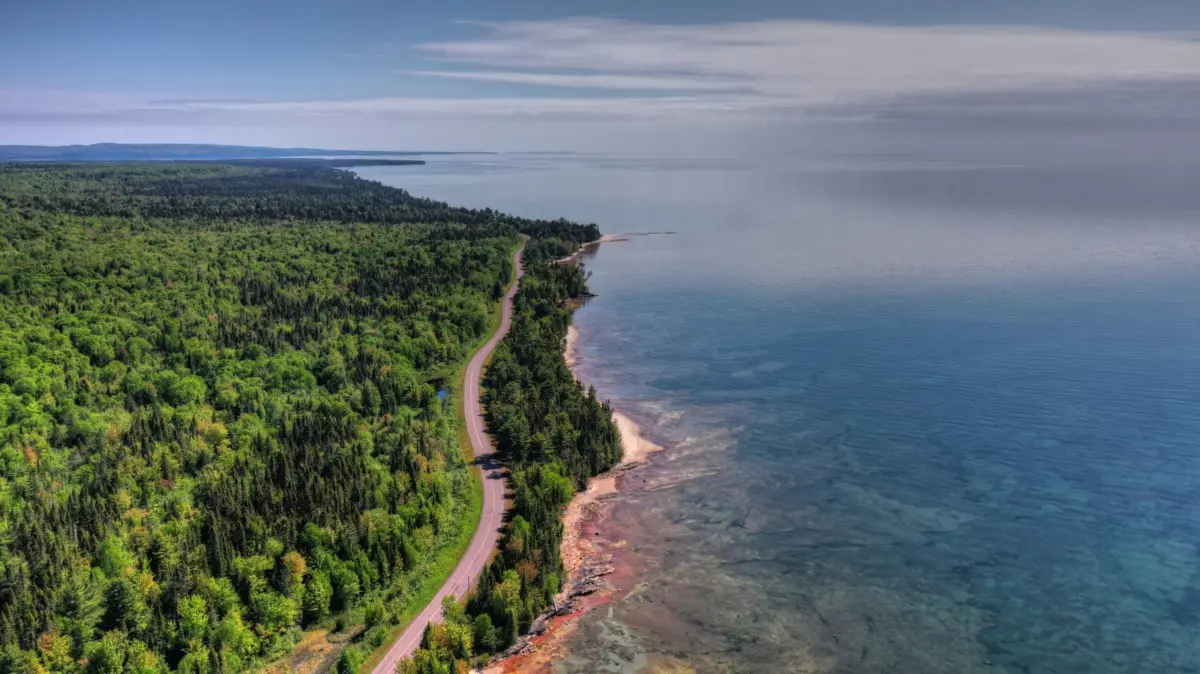
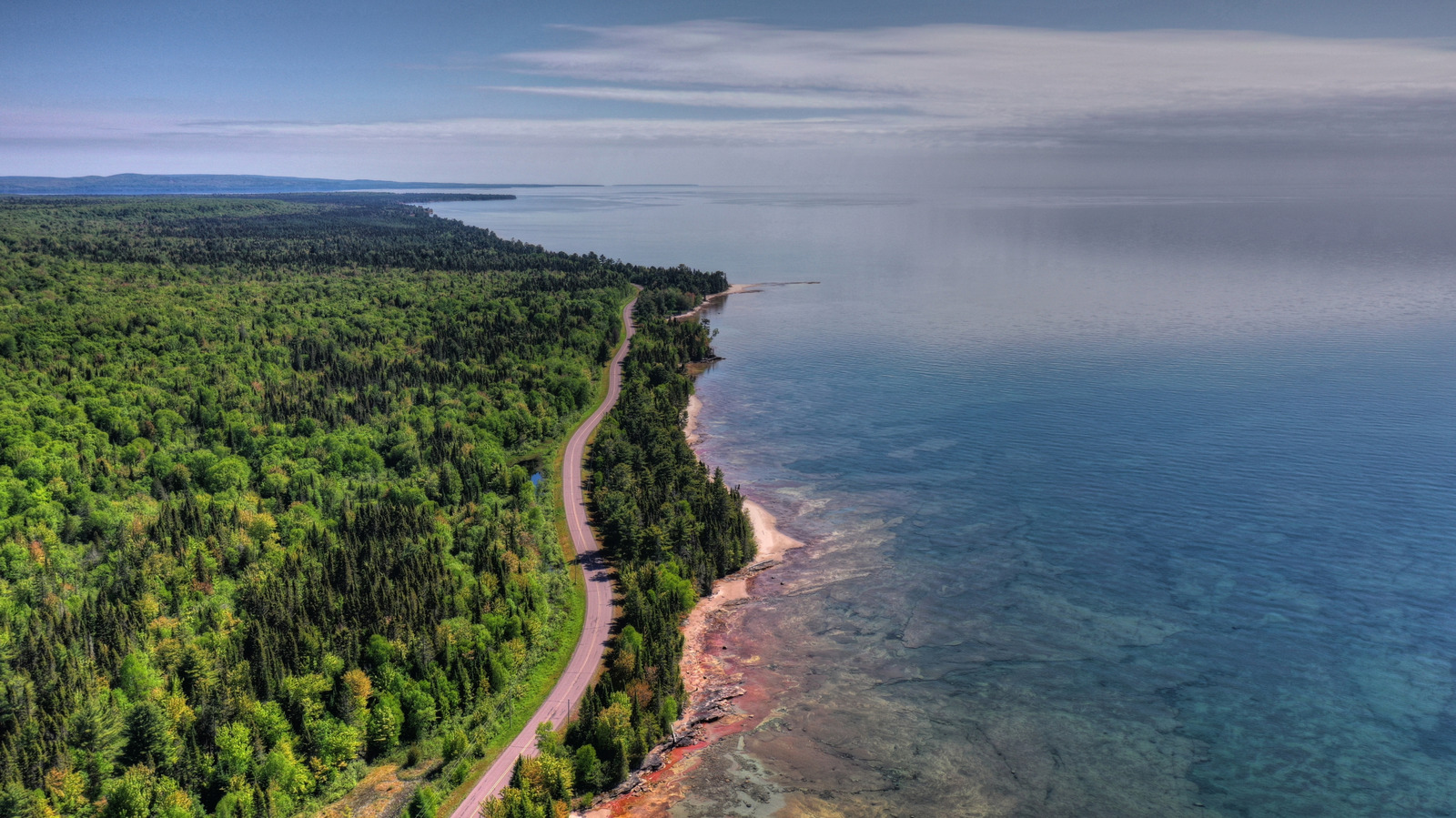
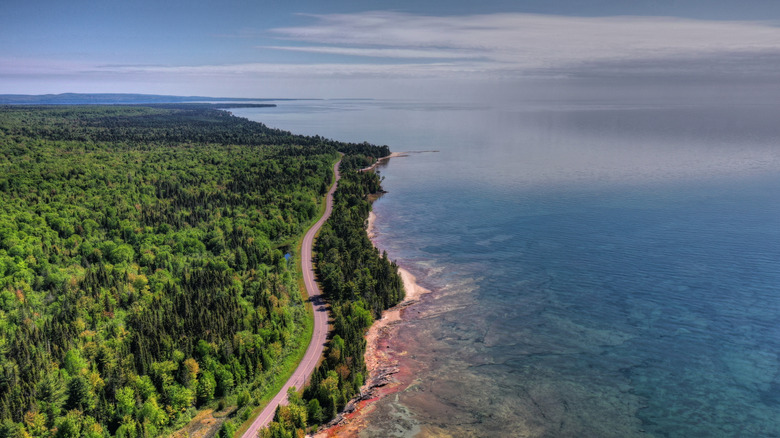
Today, travelers seeking an immersive escape from the hum of modern life can trace this remarkable industrial saga via the Copper Country Trail National Scenic Byway. Spanning 47 miles from the historic Portage Lake Lift Bridge in the south to the tranquil, rugged village of Copper Harbor at the peninsula’s northern tip, this designated byway offers a masterclass in American history, geological wonder, and world-class outdoor recreation. Flanked on three sides by the vast, cobalt-blue expanse of Lake Superior, the route weaves seamlessly through dense northern hardwood forests, volcanic rock formations, and time-capsule mining communities.
Far removed from major metropolitan centers—sitting approximately four hours north of Green Bay and six-and-a-half hours from Chicago—the Copper Country Trail serves as a pristine Midwestern refuge. It offers a rare intersection of deep historical introspection and raw, unbridled wilderness, making it an essential destination for road-trippers, history buffs, and outdoor enthusiasts alike.
Detailed Chronology: The Rise, Peak, and Legacy of Michigan’s Copper Empire
To fully appreciate the sights along the Copper Country Trail, one must understand the deep historical strata upon which the roadway rests. The story of the Keweenaw Peninsula is a sweeping narrative of indigenous stewardship, industrial ambition, labor struggles, and ecological transition.
Pre-Columbian and Early Exploration Era (Before 1840s)
Long before European settlers arrived, the Indigenous Peoples of the region—particularly the Anishinaabe and their ancestors—harvested copper from surface deposits along the Keweenaw Peninsula for thousands of years. This pure, native copper was worked into tools, weapons, and ceremonial objects traded extensively across North America. In the early 1840s, following the Michigan Geological Survey led by state geologist Douglass Houghton, the federal government secured mining rights through treaties with the Ojibwe. Houghton’s reports ignited the nation’s first major mineral rush, sparking an influx of prospectors into an area previously deemed inhospitable.
The Industrial Boom and Underground Extraction (1845–1920s)
By the mid-19th century, corporate mining enterprises replaced lone prospectors. Industrial towns sprouted overnight across the peninsula, frequently established and entirely administered by wealthy mining conglomerates. Companies like the Quincy Mining Company and the Calumet & Hecla Mining Company transformed the local landscape, sinking cavernous shafts deep into the ancient basalt layers of the earth. During the late 19th and early 20th centuries, the Keweenaw Peninsula supplied a vast percentage of the nation’s copper, fueling the electrical revolution, telegraph networks, and industrial manufacturing across the United States.
This era of immense wealth also witnessed profound social dynamics. The region attracted waves of European immigrants—Cornish miners, Finns, Italians, Germans, and Swedes—who brought their cultural traditions, architecture, and culinary heritage to the isolated peninsula. However, the grueling, dangerous conditions also culminated in historic labor friction, most notably the 1913–1914 copper miners’ strike, which permanently altered the region’s labor landscape.
Decline, Preservation, and the Birth of the Byway (Mid-20th Century to Present)
As high-grade surface and near-surface deposits dwindled and Western copper mines utilizing open-pit extraction methods emerged with cheaper yields, the Keweenaw’s deep underground operations became economically unviable. By the mid-20th century, the major mines systematically closed their doors, leaving behind abandoned headframes, towering hoist houses, and silent, overgrown company towns.
Rather than fading into total obscurity, the region underwent a cultural and economic renaissance centered on historic preservation and eco-tourism. Recognizing the unique architectural and technological heritage of the area, the federal government established the Keweenaw National Historical Park in 1992. Simultaneously, local preservationists, state departments of transportation, and community leaders banded together to champion the establishment of the Copper Country Trail National Scenic Byway, officially preserving the transportation corridor that ties these historic settlements together.
Supporting Context & Metrics: Navigating the Byway’s Key Landmarks
Spanning nearly five decades of industrial output and stretching across 47 miles of dynamic terrain, the Copper Country Trail is best experienced as a curated journey rather than a hurried drive. Below is a breakdown of the primary hubs, historical installations, and natural features defining the route.
1. The Southern Gateway: Hancock, Houghton, and the Quincy Mine
The byway officially begins in the twin cities of Houghton and Hancock, separated by the deep waters of the Portage Canal and connected by the iconic Portage Lake Lift Bridge—a marvel of engineering capable of vertical elevation to allow massive lake freighters to pass underneath.
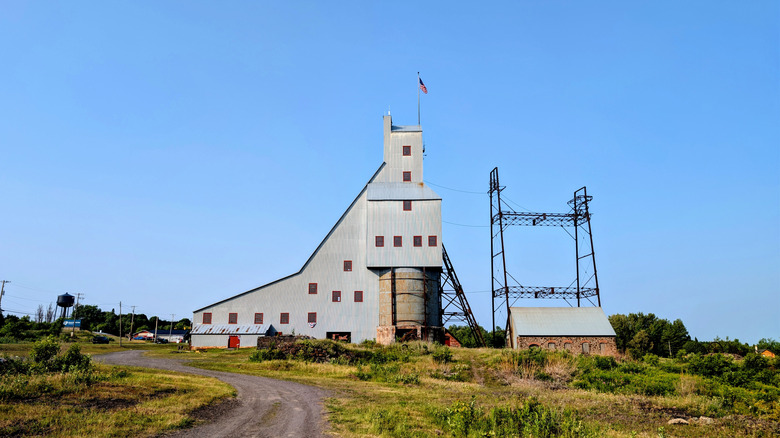
The Quincy Mine ("Old Reliable"): Located merely minutes from the byway’s starting point in Hancock, the Quincy Mine stands as an enduring monument to Victorian-era industrial might. Operating for 99 uninterrupted years, its No. 2 shaft plunged a staggering 9,000 feet into the earth, making it at one time the deepest mine in the world. Visitors can tour the massive surface facilities—including the world’s largest steam hoist engine housed in an imposing grey stone structure—before boarding a cog-wheel tram that descends the hillside to a horizontal tunnel. Inside, the mine maintains a crisp year-round temperature of roughly 43 degrees Fahrenheit, offering a chillingly authentic glimpse into the daily working conditions of 19th-century miners.
Houghton’s Urban Charm: On the opposite side of the lift bridge, Houghton offers a vibrant, artsy downtown district. Flanked by historic brownstone buildings reflecting the wealth of the copper era, the city boasts craft breweries, cozy cafes, and a scenic waterfront trail. Travelers can rent paddleboards at local city parks to navigate the calm waters of the Portage Canal.
2. The Cultural Heart: Calumet and 5th Street
Continuing approximately 10 miles north along the byway brings travelers to Calumet, once the beating heart of the global copper empire and the home of the monumental Calumet & Hecla Mining Company.
Historic 5th Street: Calumet’s downtown core feels like a well-preserved Hollywood set frozen in the late 1800s. Its grand, multi-story red brick commercial blocks now house independent bookshops, artisan boutiques, and local eateries.
Calumet Visitor Center: Operated as part of the Keweenaw National Historical Park, this free, two-story museum features exhaustive exhibits detailing the social, geological, and mechanical history of the region. Just a short stroll away is the legendary Shute’s 1890 Saloon, where visitors can step inside to admire preserved stained-glass windows, hand-carved mahogany bars, and turn-of-the-century mirrors.
3. The Wilderness Stretch: Delaware Mine and US-41 Canopy
As the byway presses further north along US-41—a stretch flanked by an unbroken, leafy tunnel of mature hardwoods—civilization gives way to deeper wilderness.
Delaware Mine: Located roughly 30 minutes north of Calumet, the Delaware Mine offers an authentic, self-guided above-ground and underground experience. Having operated for a relatively brief span from the 1840s to 1887, its surface ruins, rusted machinery, and skeletal headframes are heavily reclaimed by nature. Visitors can explore the above-ground walking trails or venture 100 feet below the surface via a guided stair descent into the damp, historic shafts.
4. The Northern Terminal: Copper Harbor
Reaching the end of the 47-mile byway brings drivers to Copper Harbor, an isolated, rugged lakeside village nestled against the rugged bedrock of Lake Superior’s northern shore.
Mountain Biking Mecca: Over the past several decades, millions of dollars in regional investment have transformed Copper Harbor into one of the premier mountain biking destinations in the Midwest. The community features more than 60 miles of professionally constructed single-track trails that weave through dense old-growth forests, scale rugged ridges, and offer sweeping, panoramic vistas of Lake Superior.
Water and Shoreline Recreation: Beyond cycling, the town acts as a launchpad for sea kayaking along volcanic shorelines, hiking trails leading to hidden waterfalls, and ferries heading out to the remote, pristine wilderness of Isle Royale National Park.
Official Statements and Expert Perspectives
The enduring appeal of the Copper Country Trail lies in its rare blend of heavy industrial heritage and pristine ecological preservation. Land managers, historians, and tourism officials emphasize the delicate balance required to maintain this unique corridor.
"The Keweenaw Peninsula is fundamentally different from anywhere else in the Midwest," notes Dr. Steven Ericson, a regional industrial historian specializing in Great Lakes infrastructure. "You are driving through a landscape that was entirely engineered and exploited at the height of the Industrial Revolution, yet nature has moved back in with an aggressive, breathtaking vengeance. The juxtaposition of crumbling 19th-century hoist houses against the pristine, cold waters of Lake Superior creates a historical narrative that you simply cannot replicate anywhere else in the United States."
Local tourism authorities also stress the importance of sustainable travel as visitor numbers steadily climb.
"Our goal has always been to invite travelers to step back in time while respecting the fragile ecosystems that define our coastline," states Aria Lindstrom, director of regional heritage initiatives for the Keweenaw Convention and Visitors Bureau. "Whether visitors are descending 900 feet into the Quincy Mine or exploring the quiet sand beaches of Bete Grise, they are interacting with living history. The byway isn’t just a road; it’s the spinal cord of our community’s identity."
Transportation planners highlight the unique logistical framework required to maintain a scenic byway in an area subject to extreme Great Lakes weather patterns, noting that heavy winter snowfalls—frequently exceeding 200 inches annually—necessitate robust seasonal infrastructure and continuous cooperative upkeep between local municipalities, the Michigan Department of Transportation, and federal park services.
Future Outlook: Preservation, Eco-Tourism, and Sustainable Growth
As the tourism paradigm shifts toward authentic, off-the-beaten-path destinations, the Copper Country Trail National Scenic Byway stands poised for a new era of appreciation.
Infrastructure and Trail Expansion
Looking forward, regional stakeholders are heavily investing in expanding non-motorized trail networks. Plans are currently underway to connect existing mountain biking loops directly with historical heritage sites, allowing eco-tourists to cycle seamlessly from preserved mining ruins to Lake Superior shorelines without relying exclusively on motor vehicles. Furthermore, ongoing historic preservation grants directed by the National Park Service aim to stabilize vulnerable industrial architecture—such as the massive stamp mills and aging hoist structures—ensuring these fragile monuments survive for future generations of travelers.
Balancing Conservation with Increased Visitation
With social media continuing to highlight the hidden charms of Michigan’s Upper Peninsula, local communities face the delicate task of managing increased seasonal traffic while preserving the tranquil, remote atmosphere that draws travelers north in the first place. Emphasis is being placed on responsible recreation, trail etiquette, and supporting locally owned small businesses—from artisan coffee shops on Calumet’s 5th Street to independent outfitters in Copper Harbor.
For the modern traveler fatigued by congested urban environments and cookie-cutter tourist traps, the Copper Country Trail offers an antidote: a 47-mile ribbon of road connecting deep historical introspection with the vast, untamed majesty of America’s inland seas. Whether approached for its rich mineral heritage, its challenging outdoor single-tracks, or the simple solace of a quiet Lake Superior sunset, Michigan’s northernmost frontier remains an irreplaceable gem of the American landscape.