









Executive Overview
Saudi Arabia, the linchpin of the global energy architecture, is standing on the precipice of an unprecedented export crisis. Following a series of highly coordinated drone strikes that forced the immediate shutdown of its massive East-West pipeline, industry insiders, sovereign energy buyers, and commodity traders warn that the Kingdom’s Red Sea export buffers are rapidly evaporating. If the pipeline is not brought back online within days, Saudi Arabia faces the imminent exhaustion of its coastal stockpiles. This disruption threatens to instantly remove up to 4 million barrels per day (bpd) of crude oil from the global market—equivalent to roughly 4% of the world’s total supply.
This critical supply threat comes at a moment of acute vulnerability for the global economy. The ongoing wartime closure of the Strait of Hormuz has already throttled Middle Eastern oil flows, triggering a severe global supply crunch. The loss of the Red Sea export route would supercharge this deficit, pushing global fuel prices to historic highs, fueling systemic inflation, and exacerbating volatility in international financial markets. Already, the panic has reverberated through Wall Street, driving U.S. Treasury yields to levels not seen since the height of the 2008 global financial crisis. As Riyadh races against time to assess and repair the infrastructure, the energy sector is bracing for a shockwave that could redefine geopolitical and macroeconomic realities for years to come.
Detailed Chronology
The current crisis is the culmination of a rapidly escalating regional conflict that has systematically targeted the world’s most critical energy transit corridors. To understand the gravity of the current pipeline shutdown, one must trace the timeline of events that transformed a regional proxy war into an existential threat to global energy security.
[February]
  │  Conflict begins; Strait of Hormuz shipping corridor compromised.
  ▼
[February–August]
  │  Saudi production falls from 10.9M to 6.2M bpd due to regional instability.
  ▼
[Friday (Recent)]
  │  • Coordinated drone strikes hit the East-West Pipeline; Riyadh orders shutdown.
  │  • Houthi forces seize strategic island in the mouth of the Red Sea.
  ▼
[Present (T+5 to 7 Days)]
  │  Yanbu storage stocks face total exhaustion; global market faces 4% supply loss.
The Strait of Hormuz Blockade and the Red Sea Pivot
For the past six months, a wider regional war has effectively choked off the Strait of Hormuz—the narrow waterway through which approximately a fifth of the world’s oil consumption traditionally passes. Before the outbreak of hostilities, the Middle East exported roughly 22 million barrels of crude oil per day. Following the closure of the Strait, shipping volumes through Hormuz collapsed to a mere trickle of 6 million to 9 million bpd, as commercial tankers faced unacceptable risks of seizure, mine attacks, and missile strikes.
To survive this blockade, Saudi Arabia turned to its ultimate strategic backup: the East-West Pipeline. This 746-mile (1,200 km) steel artery, stretching across the vast Arabian Peninsula, allowed state oil giant Saudi Aramco to bypass the volatile Persian Gulf entirely. By pumping crude from its rich eastern oilfields directly to the western port of Yanbu on the Red Sea, Riyadh successfully rerouted approximately 4 million bpd. This engineering bypass single-handedly kept the Kingdom’s export machine alive and prevented a total collapse of Western energy markets.
The Friday Drone Strikes
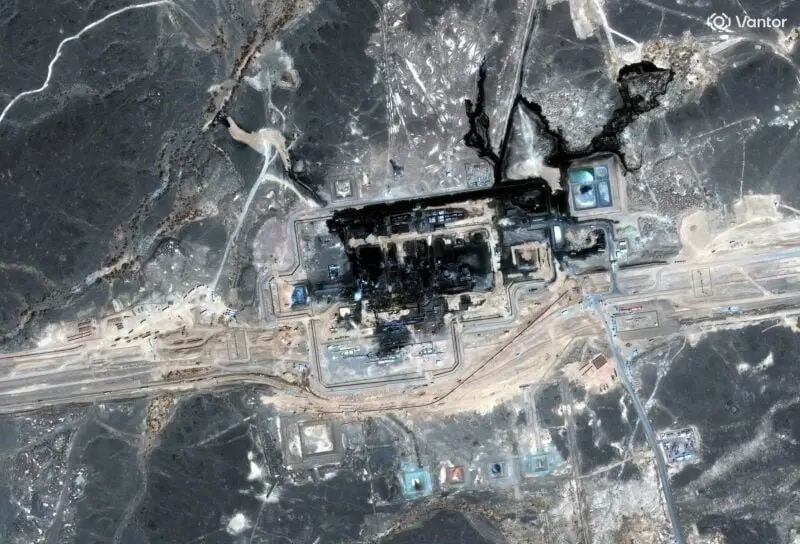
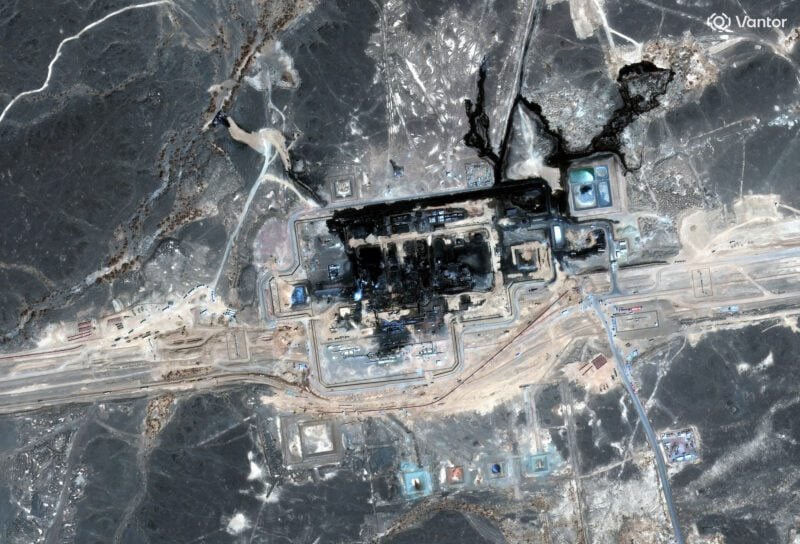
The strategic buffer provided by the Red Sea route was shattered on Friday when a fleet of weaponized drones, launched by Yemen’s Houthi rebels, penetrated Saudi air defenses. The drones targeted key pumping stations along the East-West Pipeline, causing significant explosions and localized fires. Fearing further catastrophic damage and potential environmental disasters, the Saudi Ministry of Energy ordered an immediate, complete shutdown of the entire pipeline network.
Simultaneously, in a highly coordinated maritime maneuver, Houthi fighters seized a strategically critical island situated in the Bab el-Mandeb strait at the southern mouth of the Red Sea. This dual-pronged offensive was designed to achieve a singular geopolitical objective: to completely isolate Saudi Arabia’s western energy corridor, trapping its oil inland and cutting off its access to global markets.

Conflicting Timelines for Recovery
In the wake of the attacks, a cloud of uncertainty has hung over the extent of the physical damage to the pipeline. Because the state-run media and ministry officials have kept operational details closely guarded, international buyers have been forced to rely on intelligence gathered by private security firms and satellite imagery.
Industry sources have offered starkly contrasting estimates for when the pipeline can resume operations:
- The Worst-Case Scenario (5 to 6 Weeks): Technical experts speaking to Reuters on the condition of anonymity warn that the drone strikes caused severe thermal damage to the specialized turbines at the pumping stations. Replacing these sophisticated, custom-manufactured components could take more than a month, leaving the pipeline dark for up to six weeks.
- The Optimistic Scenario (Days to Partial Resume): Conversely, other engineering sources suggest that the structural integrity of the pipeline itself remains largely intact. They argue that bypass systems and temporary manual overrides could allow Aramco to partially resume pumping at a reduced capacity within a few days, while maintenance crews work on permanent repairs in parallel.
Supporting Context & Metrics
The mathematics of the current oil shutdown present a terrifying equation for global energy analysts. With the East-West Pipeline offline, the countdown to a complete halt of Saudi crude exports from the Red Sea has officially begun.
The Yanbu Depletion Curve
The port of Yanbu is equipped with a massive crude storage terminal designed to buffer short-term shipping delays. However, it was never configured to act as a long-term substitute for an active pipeline.
- Total Storage Capacity: Yanbu’s nominal storage capacity stands at approximately 35 million barrels.
- Operational Reality: At the time of the Friday attacks, these storage tanks were not filled to capacity due to the high export volumes maintained over the preceding months.
- The Depletion Timeline: According to three prominent industry sources familiar with Saudi export logistics, Yanbu possesses only enough active inventory to sustain normal export volumes for five to seven days. Once these reserves are drawn down, the loading berths at Yanbu will sit idle.
| Location | Storage Capacity (Barrels) | Estimated Survival Window (Days) |
|---|---|---|
| Yanbu Terminal (Saudi Arabia) | 35 Million | 5 – 7 Days |
| Ain Sukhna (Egypt – Red Sea) | 18 Million | Variable (Shared buffer) |
| Sidi Kerir (Egypt – Med.) | 20 Million | Variable (Shared buffer) |
The Egyptian Buffer: SUMED’s Limitations
To prolong its export capabilities, Saudi Arabia has historically utilized the Suez-Mediterranean (SUMED) pipeline system. This system allows oil to be unloaded at the Egyptian port of Ain Sukhna on the Red Sea, pumped overland through Egypt, and reloaded onto tankers at the Mediterranean port of Sidi Kerir.
While Saudi Arabia maintains stored reserves at both Ain Sukhna (18 million barrels capacity) and Sidi Kerir (20 million barrels capacity), these stocks are also finite. A fourth industry source confirmed that while these Mediterranean reserves can buy Saudi Aramco a few additional days of flexibility to supply European refineries, they are ultimately a drop in the bucket. Without the continuous inflow of 4 million bpd from the East-West Pipeline, these North African reserves will dry up shortly after the Yanbu terminals empty.
The Macroeconomic Impact
The timing of this infrastructure failure could not be worse. The International Energy Agency (IEA) had already sounded the alarm, noting that global oil supplies were projected to decline by 5.7 million bpd this year—a staggering 6% contraction.
The systemic decay of Saudi production capacity is illustrated by the official figures submitted to OPEC. In February, prior to the outbreak of the war, Saudi Arabia was producing 10.9 million bpd. By August, under the pressure of regional hostilities and transport blockades, that figure had plummeted to 6.2 million bpd—a 30-year low. If the pipeline shutdown persists, this output could plunge further, dragging down global supply to levels that would trigger catastrophic energy shortages across Asia and Europe.
Saudi Arabian Oil Production (2026)
===================================
February: ██████████████████████████████  10.9 Million bpd
August:   █████████████████              6.2 Million bpd
Post-Pip: ████████                       2.2 Million bpd (Est. Local Consumption Only)
Official Statements & Market Reactions
The official response to the crisis has been characterized by a tense, calculated silence from Riyadh, contrasting sharply with panic in the international financial markets.
Sovereign and Institutional Silence
Both Saudi Arabia’s government media office and the Ministry of Energy have repeatedly declined to comment on the specific state of the pipeline or the projected timeline for repairs. This lack of transparency is a standard operating procedure for the Kingdom during times of national security crises, aimed at preventing market manipulation and denying military intelligence to hostile regional actors.
However, this silence has backfired in the trading pits of London, New York, and Singapore, where the lack of concrete information has fueled wild speculation. In contrast, the International Energy Agency (IEA), which coordinates energy policies for Western industrialized nations, issued a sobering assessment, confirming the precarious nature of the global supply-demand balance and highlighting the vulnerability of Western economies to any further loss of Saudi crude.
Financial Markets in Turmoil
The realization that Saudi Arabia could effectively be forced out of the export market within a week sent shockwaves through global financial systems:
- Crude Futures Spike: Brent crude and West Texas Intermediate (WTI) futures surged immediately following news of the pipeline shutdown, with analysts predicting that oil could easily breach all-time highs if Yanbu’s reserves are depleted.
- The Inflationary Spiral: The prospect of sustained high energy costs has raised the specter of "stagflation"—a toxic combination of stagnant economic growth and rampant inflation. Central banks worldwide, already struggling to tame post-war price increases, face the prospect of being forced to maintain high interest rates.
- Bond Market Panic: The most dramatic reaction occurred in the fixed-income markets. U.S. Treasury yields, which move inversely to bond prices, surged to their highest levels since the 2008 global financial crisis. Investors are dumping government debt in anticipation of aggressive interest rate hikes by the Federal Reserve to combat the energy-driven inflationary wave.
Future Outlook
The vulnerability of the East-West Pipeline has exposed a fundamental truth: the traditional geography of global energy security is obsolete. For decades, Western military and economic planning focused almost exclusively on defending the Strait of Hormuz. The assumption was that land-based pipelines and Red Sea shipping lanes would always serve as a safe, reliable alternative. The events of this week have shattered that assumption.
The New Geopolitics of Energy Chokepoints
If drone technology and asymmetrical warfare can easily disable overland pipelines running through deep desert territory, then no energy corridor is truly secure. The seizure of the Red Sea island by Houthi forces further illustrates that even if the pipeline is repaired, the maritime exit points of the Red Sea are just as vulnerable to interdiction as the Strait of Hormuz.
For international oil buyers, this realization will likely prompt a permanent shift away from Middle Eastern crude. Countries in East Asia and Europe are expected to accelerate their diversification strategies, seeking to secure long-term supply contracts with producers in West Africa, the Americas, and the North Sea, despite the higher transportation costs.
Long-Term Economic Scars
Should the repairs to the East-West Pipeline drag into the five-to-six-week range predicted by pessimistic sources, the damage to the global economy will be profound. A prolonged loss of 4% of the global oil supply would force industrial rationing in energy-starved regions, potentially triggering deep recessions in major manufacturing hubs.
Furthermore, the financial strain on Saudi Arabia itself cannot be ignored. Running on a severely restricted production regime of just 6.2 million bpd has already strained the Kingdom’s domestic budget. A complete halt in exports from Yanbu would starve the Saudi government of vital foreign currency reserves at a time when military expenditures are soaring.
The coming days will be critical. The world is watching the red dirt of the Arabian desert, where technicians and engineers are working under intense pressure. Their success or failure in restarting the East-West Pipeline will determine whether the global economy faces a manageable winter of high prices or a devastating, systemic energy collapse.