










Executive Overview
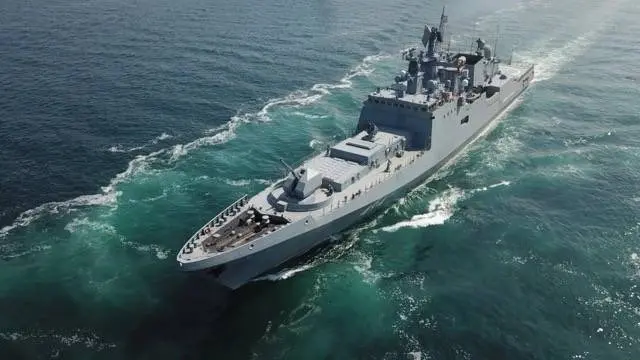
In a decisive move to reshape the maritime balance of power in the Eastern Mediterranean, Greece has finalized a bilateral agreement with Italy for the acquisition of two used Bergamini-class (FREMM) frigates. The deal, signed in Rome by Greek Defence Minister Nikos Dendias and his Italian counterpart Guido Crosetto, represents a crucial milestone in Athens’ ambitious €28 billion ($32.5 billion) multi-year military modernization strategy.
Faced with persistent geopolitical friction in the Aegean Sea and the wider Levant, Greece has embarked on its most aggressive defense procurement campaign in decades. The addition of the Italian-built Bergamini-class warships—complemented by an option to acquire two more—is designed to rapidly inject high-end blue-water capabilities into the Hellenic Navy.
Together with four newly ordered French-designed "digital" Belharra (FDI) frigates, these vessels will replace aging Cold War-era surface combatants, establishing a formidable naval shield.
Though official government statements did not disclose the exact contract value, defense industry insiders and Greek media estimate the transaction to be worth between €500 million ($581.50 million) and €600 million ($697.80 million). By securing proven, highly capable warships at a fraction of the cost and lead time of new-build vessels, Athens is executing a pragmatic high-low capability mix to secure its sovereign maritime rights and assert its role as a pillar of stability on NATO’s southern flank.
Detailed Chronology
The road to the Bergamini-class acquisition is the result of years of strategic reassessments within the Hellenic Armed Forces, accelerated by the severe geopolitical crises of the early 2020s.
+-------------------------------------------------------------------------+
|                          CHRONOLOGY OF THE DEAL                         |
+-------------------------------------------------------------------------+
|                                                                         |
|  [2020–2021]                                                            |
|  Severe maritime standoffs in the Eastern Mediterranean expose the      |
|  vulnerabilities of Greece's aging Elli-class (Kortenaer) frigates.     |
|                                                                         |
|  [Late 2021]                                                            |
|  Greece signs a landmark defense pact with France, ordering three       |
|  Belharra (FDI) frigates (with an option for a fourth).                 |
|                                                                         |
|  [Mid 2023]                                                             |
|  Athens recognizes a quantitative gap in its surface fleet. Informal    |
|  talks begin with Rome regarding the transfer of Italian FREMM units.   |
|                                                                         |
|  [Late 2023]                                                            |
|  Greece and Italy sign a preliminary framework agreement for two used   |
|  Bergamini-class frigates, including an option for two more.            |
|                                                                         |
|  [Tuesday - Present]                                                    |
|  Ministers Nikos Dendias and Guido Crosetto sign the official           |
|  "implementing arrangement" in Rome, finalizing the acquisition.        |
|                                                                         |
+-------------------------------------------------------------------------+
The Catalyst: The 2020 Maritime Standoffs
The urgent need to modernize the Hellenic Navy became undeniable during the summer of 2020. Confrontations over maritime boundaries, continental shelf limits, and energy exploration rights in the Eastern Mediterranean brought Greece and Turkey to the brink of military conflict.
During these tense standoffs, the Hellenic Navy relied heavily on its workhorse Elli-class (ex-Dutch Kortenaer-class) frigates, which entered service in the late 1970s and 1980s. While highly professional Greek crews performed admirably, the technical limitations of these aging platforms against modern submarine, drone, and anti-ship missile threats became glaringly apparent.
The French Connection and the Quantitative Gap
In response, Athens signed a landmark defense agreement with France in late 2021, purchasing three state-of-the-art FDI (Frégates de défense et d’intervention) frigates, known locally as the Belharra class, with an option for a fourth (which Greece has since moved to secure).
While the Belharra frigates offer unparalleled air-defense capabilities, defense planners realized that three or four top-tier ships were insufficient to cover the vast, island-dotted geography of the Aegean Sea while simultaneously maintaining a presence in the deep waters of the Eastern Mediterranean.
The Italian Pivot
To bridge this quantitative and qualitative gap without bankrupting the state, the Greek Ministry of National Defence turned to Italy. The Italian Navy (Marina Militare) operates a highly successful variant of the Franco-Italian FREMM program, known as the Bergamini class.
In late 2023, Athens and Rome reached a preliminary agreement in principle. Greece would acquire two used Bergamini-class frigates directly from the Italian Navy’s active or reserve inventory, retaining an option to purchase an additional two. Over the course of 2024, technical delegations ironed out the details regarding weapon configurations, maintenance schedules, and crew training, culminating in Tuesday’s high-profile signing ceremony in Rome.
Supporting Context & Metrics
Technical Comparison: Bergamini (FREMM) vs. Belharra (FDI)
The acquisition of the Bergamini-class frigates is a calculated move to diversify and complement the Hellenic Navy’s future fleet architecture. Rather than relying on a single class of ship, Greece is building a multi-tiered surface force.
| Feature / Specification | Bergamini Class (FREMM) | Belharra Class (FDI) |
|---|---|---|
| Origin / Shipbuilder | Italy (Fincantieri) | France (Naval Group) |
| Displacement | ~6,700 tons (Full Load) | ~4,500 tons (Full Load) |
| Primary Role | General Purpose / Anti-Submarine Warfare | Multi-Mission / Advanced Air Defense |
| Radar System | Kronos Grand Naval (AESA) | Sea Fire (Fully Digital AESA) |
| Missile Systems | Aster 15/30, Teseo Mk2/A | Aster 30, Exocet MM40 Block 3c |
| Hangar Capacity | Dual hangar (NH90 / EH101 helicopters) | Single hangar (NH90 / UAVs) |
The larger displacement of the Bergamini class (6,700 tons compared to the Belharra’s 4,500 tons) provides superior sea-keeping capabilities and endurance in rough seas, making them ideal for long-range patrols in the Eastern Mediterranean.
Furthermore, the dual-hangar configuration of the Italian ships allows for the simultaneous deployment of anti-submarine warfare (ASW) helicopters and unmanned aerial vehicles (UAVs), significantly boosting Greece’s ability to counter regional submarine threats.
Financial and Defense Budget Metrics
Greece’s defense spending has consistently defied European trends, driven by the existential nature of its security concerns.
- GDP Allocation: Greece routinely spends approximately 3.5% of its Gross Domestic Product (GDP) on defense, placing it at the very top of NATO alongside the United States and Poland.
- The €28 Billion Horizon: Under its comprehensive multi-year defense plan spanning to 2036, Athens has earmarked approximately €28 billion ($32.5 billion) for procurement and modernization.
- The Deal’s Efficiency: At an estimated €500 million to €600 million ($581.50 million to $697.80 million) for two hulls, the Italian deal represents extraordinary value. Purchasing brand-new frigates of equivalent tonnage would easily cost upwards of €1.2 billion to €1.5 billion, with delivery timelines stretching past 2030.
GREEK DEFENSE ALLOCATION (Relative to NATO Target)

Greece:     [====================================] 3.5% - 3.9% of GDP
NATO Target:[====================] 2.0% of GDP
The Geopolitical Context: Keeping Pace with Turkey
The primary driver behind this spending is Turkey’s rapid naval expansion. Under its domestic "Mavi Vatan" (Blue Homeland) maritime doctrine, Ankara has built a robust domestic defense shipbuilding industry. Turkey’s MILGEM project has produced modern Ada-class corvettes and Istanbul-class frigates, while its flagship, the amphibious assault ship TCG Anadolu, has entered service as a drone carrier.
To prevent Turkey from establishing absolute naval supremacy in the Aegean, Greece must maintain a technologically superior fleet. The combination of French digital radars and Italian blue-water hulls is Athens’ direct answer to Ankara’s domestic ship production.
Official Statements
The signing of the "implementing arrangement" in Rome was accompanied by statements highlighting the strategic alignment between the two Mediterranean nations.
Greek Defence Minister Nikos Dendias emphasized the structural transformation of the Hellenic Navy:
"Today’s agreement with our Italian allies is not merely a transaction; it is a profound reinforcement of our naval doctrine. Together with our French Belharra frigates, these Bergamini-class vessels will form the unbreakable backbone of the Hellenic Navy for decades to come. Greece is asserting its sovereign rights under international law, and we are equipping our forces with the tools necessary to project security, stability, and peace across the entire Eastern Mediterranean."
Italian Defence Minister Guido Crosetto framed the deal as a victory for European defense cooperation and Mediterranean security:
"The security of the Mediterranean is a shared responsibility. By transferring these highly capable Bergamini-class frigates to Greece, we are strengthening NATO’s southern flank and fostering deeper interoperability between our two navies. Italy and Greece stand together in defense of maritime security, free trade routes, and international law in a region that is increasingly vital to the stability of the entire European continent."
Future Outlook
The acquisition of the Bergamini-class frigates marks the beginning of a complex integration phase for the Hellenic Navy, which will play out over the next three to five years.
Fleet Integration and Training
The first challenge for the Hellenic Navy will be logistical and operational integration. Greek sailors, long accustomed to American and German-designed systems, must now adapt to Italian engineering and weapon platforms.
The deal includes comprehensive training packages conducted by the Italian Navy, with Greek crews expected to deploy to Italian naval bases in Taranto and La Spezia for hands-on operational training.
The Strategic Maritime Triad
Looking ahead, the Hellenic Navy’s future posture will rely on a powerful strategic triad:
- High-End Air Defense: Anchored by the French Belharra (FDI) frigates, utilizing their Sea Fire radars and Aster 30 missiles to establish a localized anti-air umbrella over the Aegean.
- Multi-Mission Patrol and ASW: Spearheaded by the Italian Bergamini (FREMM) frigates, which will patrol deep waters, conduct anti-submarine warfare, and assert presence in contested economic exclusion zones (EEZs).
- Subsurface Dominance: Maintained by Greece’s highly regarded fleet of Type 214 air-independent propulsion (AIP) submarines, which remain a potent deterrent in the deep trenches of the Mediterranean.
Long-Term Geopolitical Implications
By securing these advanced surface combatants, Greece position itself as a critical security guarantor for emerging energy infrastructure in the region. With the development of offshore natural gas fields in the Levant Basin and proposed undersea electrical interconnectors linking Europe to Israel and Egypt, the Eastern Mediterranean has become an energy corridor of global importance.
Through this €600 million investment, Athens is ensuring that it possesses the hard naval power required to protect these critical assets, deter unilateral revisionism, and remain an indispensable partner in Western security architectures.


