




Executive Overview
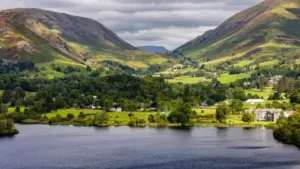
For decades, the United States Virgin Island of St. John has held a singular, almost mythic status in the broader Caribbean landscape. While neighboring islands have surrendered vast coastlines to high-density resort sprawl, mass tourism, and heavy commercialization, St. John has maintained a fiercely independent, eco-centric identity. The defining catalyst for this preservation is the Virgin Islands National Park, which protects nearly two-thirds of the approximately 20-square-mile island.
This conservation mandate does not relegate St. John to a passive, look-don’t-touch destination. Instead, it creates an immersive playground where travelers actively navigate through a living ecosystem. From the world-renowned underwater snorkeling trails of Trunk Bay to the sea-turtle-frequented waters of Maho Bay, St. John offers a rare synthesis of rugged wilderness and laid-back sophistication.
Beneath this pristine natural canopy lies a dynamic infrastructure. The island seamlessly bridges the gap between raw outdoor adventure and upscale comfort through three distinct accommodation pillars: an extraordinary private villa market managed by premier agencies like Blue Sky Luxury Travels, a diverse collection of established resorts like The Westin St. John Resort Villas, and fresh boutique concepts such as the newly minted, adults-only Saint Resort in Cruz Bay.
For U.S. citizens navigating the logistics of modern international travel, St. John offers an additional, friction-free advantage: it can be accessed without a passport. Arriving exclusively via a scenic 20-minute ferry ride from Red Hook, St. John demands a sense of exploration. This comprehensive dispatch examines the island’s unique ecosystem, its accommodation landscape, and the enduring allure that continues to captivate seasoned Caribbean travelers.
Detailed Chronology & Evolution of the Destination
The Preservation Era and the Birth of the National Park
The modern trajectory of St. John was permanently altered in the mid-20th century, specifically in 1956, when philanthropist and conservationist Laurance S. Rockefeller purchased a significant portion of the island’s acreage. Deeply moved by its untouched natural beauty, Rockefeller donated these lands to the federal government to establish the Virgin Islands National Park.
This legislative move protected the island’s dense tropical forests, pristine white-sand bays, and historical Danish sugar plantation ruins from unchecked development. Over the subsequent decades, this conservation framework shaped a unique real estate and tourism culture. Rather than building high-rise hotels along the North Shore, developers pivoted toward low-impact hillside villas and localized commercial hubs.
Infrastructure Expansion: The Resort Evolution (2010s)
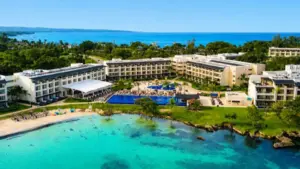
While villas remained the dominant accommodation choice for purists, the early 2010s marked a period of institutional investment in traditional resort properties. Most notably, The Westin St. John Resort Villas underwent a substantial $35 million expansion and renovation project announced in 2013. This multi-phase undertaking modernized guest townhouses, enhanced dining corridors, upgraded the sprawling resort pool complex, and expanded its inventory to approximately 200 villas. This development proved that St. John could successfully accommodate multi-generational family travel and large-scale resort infrastructure without compromising the integrity of the surrounding national park.
The Modern Boutique Shift (2020s–Present)
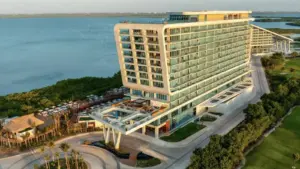
As travel preferences shifted toward intimate, design-forward, and adults-only experiences, St. John’s hospitality sector adapted once more. The watershed moment arrived in 2025 with the debut of The Saint Resort. Located a mere five-minute walk from central Cruz Bay, this adults-only boutique property introduced a sophisticated urban-island hybrid to the local market. Featuring comprehensive wellness amenities—including hot tubs, a cold plunge, a dedicated spa, and the upscale Aerial restaurant—The Saint signaled a maturation of Cruz Bay’s hospitality offerings, proving that the island could attract contemporary luxury seekers while retaining its historic, off-the-grid charm.
Supporting Context & Metrics
Understanding St. John requires looking closely at the logistical, spatial, and economic metrics that govern the island experience.
Spatial and Geographic Distribution
- Land Area: Approximately 20 square miles.
- National Park Coverage: Nearly 66% (two-thirds) of the island is protected federal land under the National Park Service.
- Key Transit Hubs: Cruz Bay serves as the island’s sole commercial and ferry port. There is no commercial airport on St. John; travelers fly into Cyril E. King Airport (STT) on neighboring St. Thomas, take a taxi to Red Hook, and board a 20-minute passenger ferry.
- Beach Access: The island features dozens of distinct strands, anchored by the iconic North Shore corridor: Trunk Bay, Hawksnest Bay, Cinnamon Bay, Francis Bay, and Maho Bay.
Comparative Accommodation Economics
St. John caters to three distinct financial and experiential demographics:
- Boutique Value & Simplicity: Properties like the Cruz Bay Boutique Hotel offer lean, highly accessible options. Featuring 10 rooms and a penthouse directly in town, off-season and shoulder-season rate checks (such as those recorded for May) reveal starting prices as low as $255 per night. This provides an economical base camp for travelers whose primary objective is all-day exploration.
- Resort Scale & Family Travel: The Westin St. John Resort Villas commands a higher tier, offering studio spaces up to massive 2,850-square-foot, three-bedroom townhouses equipped with full gourmet kitchens. This model serves families and extended groups seeking predictable, full-service resort amenities.
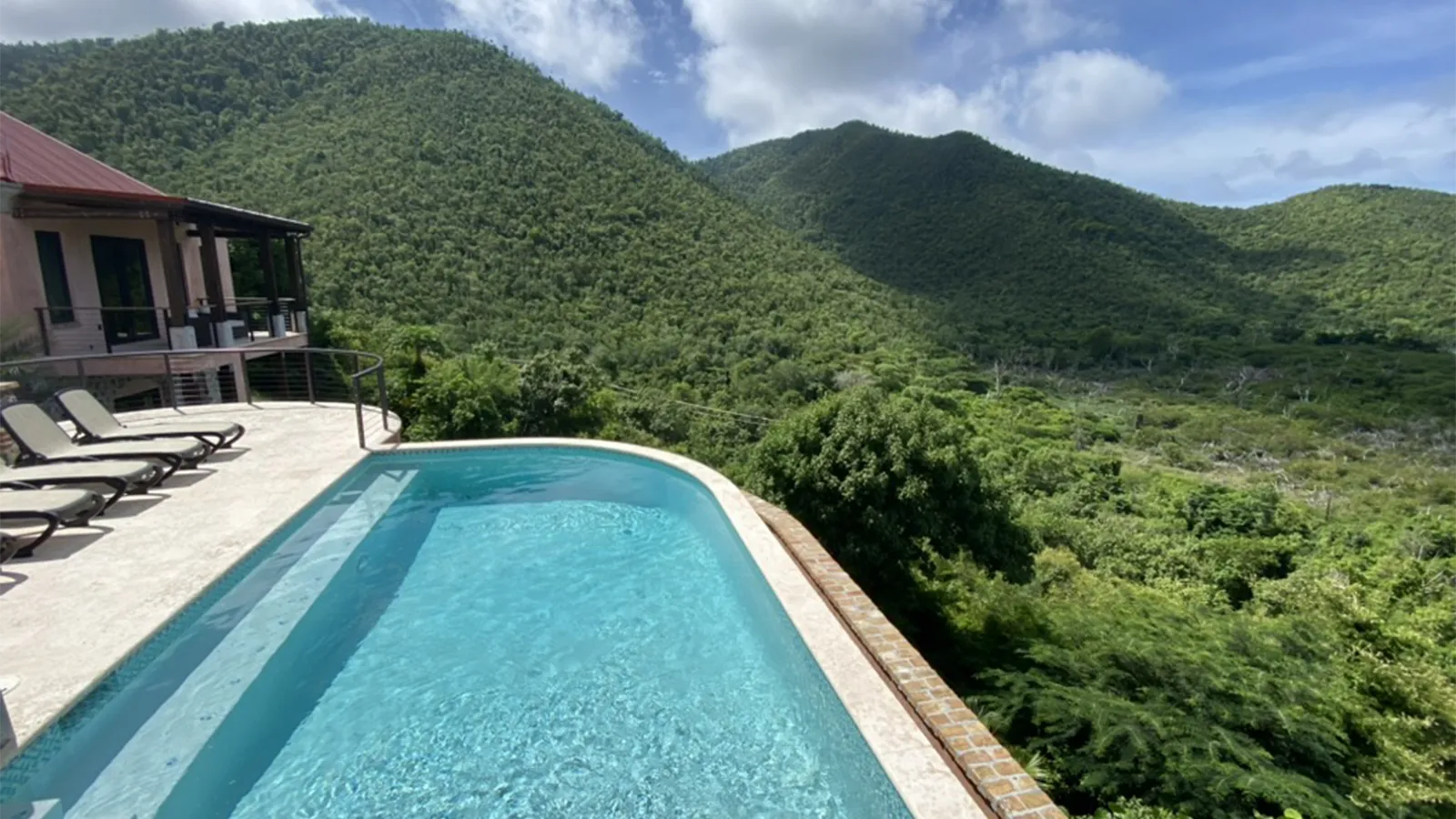
- Immersive Villa Living: Represented by premier agencies like Blue Sky Luxury Travels, private estates such as the acclaimed Maho Bay House sit high in the national park hills. These properties command top-tier luxury rates, justified by architectural masterworks featuring chef’s kitchens, infinity pools, standalone bedroom suites, and proximity measured not in miles, but in a four-minute walking time down to Maho Bay Beach.
Official Perspectives and Industry Insights
Long-term observers, travel journalists, and hospitality curators emphasize that St. John’s resistance to over-commercialization is its greatest asset. Industry analyses consistently highlight the island’s unique psychological duality: the contrast between the wild, untamed North Shore and the vibrant, pedestrian-friendly energy of Cruz Bay.
Travel analysts tracking the destination note that the lack of an airport on St. John acts as a natural buffer against mass-market tourism congestion. By requiring a two-step transit process—flying into St. Thomas followed by the Red Hook marine crossing—the destination self-selects for travelers who value journey and discovery over instant, frictionless resort check-ins.
Furthermore, hospitality experts emphasize that renting a four-wheel-drive Jeep is not merely a transportation choice, but an essential component of the St. John lifestyle. Navigating the steep, winding switchbacks of Centerline Road and the North Shore Road transforms the daily commute to the beach into an active exploration of tropical flora, hidden scenic overlooks, and secluded bays.
Future Outlook: Preservation Meets Sustainable Growth
As the Caribbean tourism sector faces mounting pressures from climate change, over-tourism, and rapid commercialization, St. John stands as a compelling case study in sustainable development.
The Preservation Mandate
Because two-thirds of the island is federally protected under the National Park Service, future commercial sprawl is legally constrained. This structural limitation ensures that St. John will never mirror the high-rise density found in other regional hotspots. Instead, growth will likely occur within the existing footprint of Cruz Bay and through low-density, highly sustainable luxury villa developments integrated discreetly into the hillside forest canopy.
Evolving Traveler Demographics
The successful 2025 launch of The Saint Resort demonstrates that St. John is capturing a sophisticated demographic of travelers who demand modern wellness amenities, boutique design, and adult-oriented social spaces without sacrificing proximity to nature. Moving forward, the island’s hospitality sector is expected to lean further into eco-luxury—properties that utilize solar energy, advanced water catchment systems, and locally sourced materials while delivering world-class comfort.
The Enduring Appeal of Freedom
Ultimately, the future of St. John rests on the timelessness of its core proposition. Whether a visitor chooses the sophisticated enclave of The Saint, the family-friendly expanses of The Westin, the urban simplicity of the Cruz Bay Boutique Hotel, or the secluded forest canopy of Maho Bay House, the core experience remains unchanged.
You step off the ferry into Cruz Bay, pick up the keys to a Jeep, and let the island dictate the pace. With protected green hills framing every horizon and the turquoise waters of the Caribbean waiting around every switchback, St. John remains what it has always been: the last undisturbed eden of the American tropics.