







Executive Overview
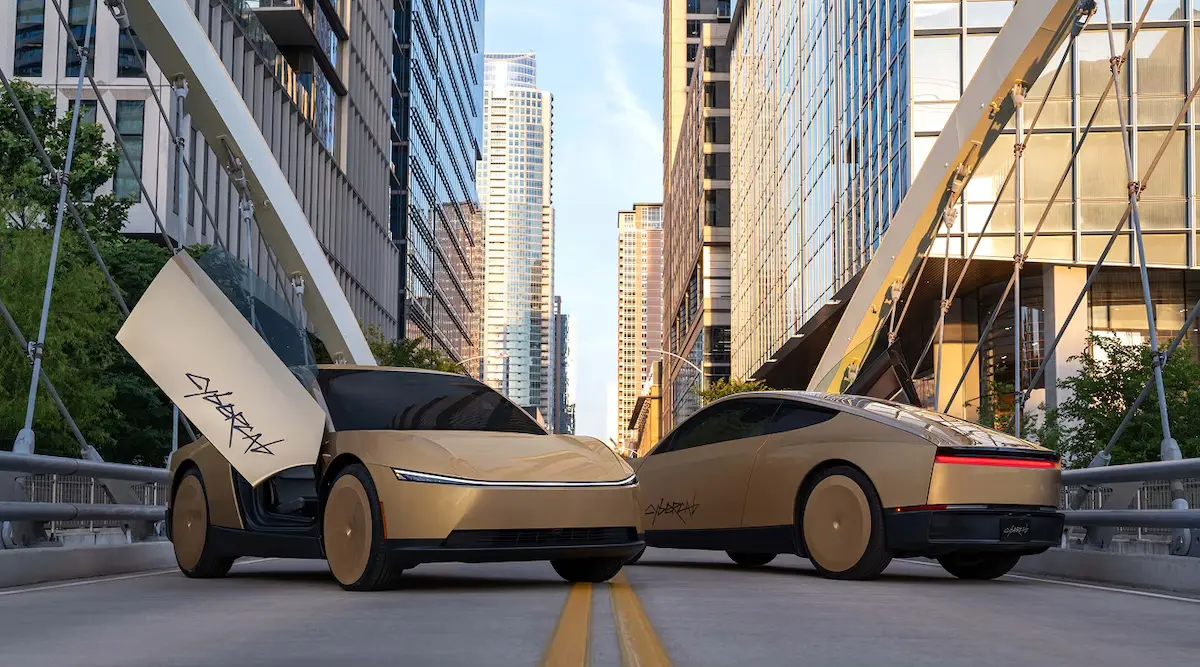
Tesla’s much-hyped September 3 unveiling of its steering-wheel-less, autonomous Cybercab in Austin, Texas, was designed to signal a bold leap into the future of urban mobility. Yet, rather than sparking unbridled enthusiasm, the high-profile event left industry analysts, fleet operators, and safety regulators scratching their heads. Billed as a revolutionary leap forward, the vehicle’s debut instead illuminated a labyrinth of operational hurdles, glaring infrastructure limitations, and severe regulatory scrutiny.
Beneath the sleek, futuristic exterior of the two-seater robotaxi lies a product that challenges traditional fleet management models. Notably, the Cybercab is entirely incompatible with Level 1 or Level 2 home charging, effectively locking individual gig-economy operators and home-depot fleet models out of the equation. This design choice forces exclusive reliance on high-powered DC fast-charging infrastructure, fundamentally altering the economics of vehicle ownership and operation.
Compounding these technical hurdles are alarming safety directives issued for first responders, which warn of potential electrical hazards, unexpected autonomous engagement, and a troubling reliance on corporate support lines that may or may not answer. Simultaneously, the National Highway Traffic Safety Administration (NHTSA) has launched an immediate Audit Query to probe whether the self-certified vehicle truly meets Federal Motor Vehicle Safety Standards.

As Tesla attempts to pitch the Cybercab network to outside fleet operators, the ghosts of past fleet debacles—most notably the Hertz inventory write-downs and the collapse of European EV-only leasing startups—loom large. Paired with escalating controversies surrounding CEO Elon Musk’s geopolitical alignments, the Cybercab’s rollout presents a complex case study of technological ambition colliding with stark operational and regulatory friction.
Detailed Chronology
September 3: The Austin Unveiling
Tesla rolled out the Cybercab in Austin to a flurry of pre-event media anticipation. Promoted as the cornerstone of Tesla’s upcoming autonomous ride-hailing network, the vehicle discarded traditional manual controls entirely, featuring neither a steering wheel nor pedals. However, the presentation shifted rapidly from celebratory product showcase to logistical interrogation as automotive journalists and fleet operators began parsing the fine print of how the system would actually function in the wild.
September 4: Regulatory Intervention
The morning after the showcase, federal oversight arrived swiftly. The National Highway Traffic Safety Administration (NHTSA) announced an official Audit Query targeting the Austin event and the vehicle’s self-certification protocols. Regulators made it unequivocally clear that despite ongoing agency rule-making in areas like mirrors, lighting, and windshield wipers, the existing federal safety standards remain absolute. The probe aims to determine if the steering-wheel-less vehicle bypasses mandatory federal benchmarks under the guise of autonomous innovation.
September 5: First Responder Safety Protocols Surface
Public scrutiny deepened when media reports highlighted Tesla’s internal emergency guidance document for first responders. The manual revealed stark warnings: attempting to manually move the vehicle incorrectly risks severe electric shock and motor overheating. Furthermore, the document emphasized that after a collision, low-voltage power systems might fail, warning emergency personnel against attempting manual fixes due to the risk of electrical fires. Most controversially, the guide instructed responders to contact a "Tesla Robotaxi First Responder Support" line, while quietly acknowledging that if no support is available, emergency crews must physically "cage" the vehicle before handling it.
September 6: International Controversy and Political Alignment
As domestic fallout from the vehicle launch continued, international headlines shifted the spotlight to CEO Elon Musk. On Sunday, September 6, Musk posted a public congratulatory message—"Gut gemacht" (German for "good job")—on his social media platform X, celebrating the landslide regional election victory of the far-right Alternative for Germany (AfD) party in Saxony-Anhalt. The move drew swift appreciation from winning AfD candidates, but it amplified existing European anxieties regarding the political affiliations of high-profile tech executives.
Supporting Context & Metrics: The Fleet Economics Trap
To understand the skepticism surrounding the Cybercab rollout, one must examine the economic graveyard of previous corporate fleet partnerships involving Tesla. The company’s business model relies heavily on convincing third-party entities to stock their operations with its vehicles. However, historical precedents suggest this is a precarious financial gamble.
The Hertz Debacle
In October 2021, rental car giant Hertz announced a blockbuster pledge to purchase 100,000 Tesla electric vehicles. The partnership was heralded as a watershed moment for zero-emission commercial adoption. Instead, it devolved into a corporate cautionary tale. Neither Hertz, its consumer base, nor the fragmented public EV charging network was adequately prepared for the transition.
The situation deteriorated further when Elon Musk initiated aggressive price cuts—slashing Tesla vehicle prices by up to 30% throughout 2024. These sudden reductions vaporized the residual value of Hertz’s existing fleet, inflicting catastrophic financial write-downs and prompting the rental agency to rapidly offload a significant portion of its electric inventory.

The Mistergreen Cautionary Tale
European markets offered a parallel lesson in December 2025, when fleet industry publication Fleets Europe reported the collapse of Mistergreen, a Dutch auto-leasing startup. Mistergreen’s monobrand strategy—leasing exclusively Tesla EVs—suffered a resounding failure. The company blamed massive financial losses directly on residual value pressure caused by Tesla’s unpredictable pricing adjustments. The Dutch firm was ultimately forced to liquidate and sell off its assets to surviving competitors.
The Charging Infrastructure Chokepoint
Adding to these fiscal uncertainties is the Cybercab’s unique physical limitation: its absolute incompatibility with Level 1 and Level 2 home charging systems. For individual fleet operators, rideshare drivers, and small-business entrepreneurs, the ability to overnight-charge a vehicle at a residential address or standard depot is a fundamental pillar of profitability. By restricting the Cybercab exclusively to high-speed DC fast-charging networks, Tesla has effectively excluded the gig-economy ownership model, narrowing its prospective market strictly to heavily capitalized fleet yards capable of maintaining industrial-grade charging infrastructure.
Official Statements & Regulatory Scrutiny
The intersection of cutting-edge autonomy and public safety has triggered intense scrutiny from regulatory bodies and emergency response agencies.
NHTSA’s Stance on Self-Certification
In response to the Austin unveiling, the NHTSA issued a stern reminder regarding federal compliance:
"In the process means in the process,"
reiterating that current Federal Motor Vehicle Safety Standards remain the absolute law of the land, regardless of whether a vehicle is designed for human drivers or autonomous systems. The agency’s Audit Query will investigate whether Tesla’s self-certification of the Cybercab accurately reflects adherence to rigorous federal mandates governing everything from core structural integrity to vital operational interfaces.
Emergency Guidance Realities
Tesla’s official Cybercab First Responder Interaction Plan lays bare the extraordinary complications emergency personnel face when managing an autonomous vehicle post-collision. Key passages from the manual underscore these operational hurdles:
- On Moving the Vehicle: While the robotaxi "can be quickly pushed" to clear a lane, doing so improperly risks "electric shock and overheating the motor."
- On Low-Voltage Systems: "After a safety critical event, low voltage power may not be available and the touchscreen may not be operational. Trying to support low voltage power on a vehicle that has been in a collision could lead to a possible electrical fire. Tesla does not recommend attempting to reconnect low voltage power after an accident."
- On Autonomous Persistence: "LACK OF MOVEMENT OR VISUAL INDICATION OF AUTONOMOUS MODE DOES NOT MEAN AUTONOMOUS MODE IS OFF. UNTIL THE VEHICLE IS FULLY SHUT OFF AND A TESLA REPRESENTATIVE GIVES THE ALL CLEAR, APPROACH CAUTIOUSLY."
- On Contingency Plans: If first responders cannot reach Tesla’s support hotline, the manual advises them to "cage the vehicle first" before attempting any direct physical interaction.
These instructions paint a picture of emergency services burdened with managing complex, potentially unpredictable robotic assets in high-stress, post-accident environments without guaranteed corporate backup.
Future Outlook
As the dust settles on the Austin event, the path forward for the Tesla Cybercab remains fraught with ambiguity. Market reaction has been cool; investors demonstrated their skepticism by driving Tesla stock downward at the close of trading following the debut. Furthermore, the burgeoning fallout from CEO Elon Musk’s political alignments—exemplified by his endorsement of Germany’s AfD, a group classified by intelligence agencies as a suspected extremist organization—threatens to alienate municipal governments and corporate buyers across Europe and North America who prioritize brand alignment and social governance standards.
Moving forward, the success or failure of the Cybercab will not be determined by sleek product presentations or viral social media announcements. Instead, it will hinge on three critical milestones:
- Regulatory Clearance: Whether the NHTSA permits the commercial deployment of a steering-wheel-less vehicle without compromising federal safety standards.
- First Responder Integration: How emergency services across target metropolitan areas adapt to complex, potentially unassisted safety protocols.
- Economic Viability for Fleets: Whether commercial operators can justify the capital expenditure of building dedicated DC fast-charging depots to support a vehicle that rejects standard residential and commercial charging models.
Until these fundamental questions are answered with empirical proof rather than corporate optimism, the Tesla Cybercab remains less a guaranteed revolution in urban mobility and more an expensive, highly scrutinized high-wire act.