




Executive Overview
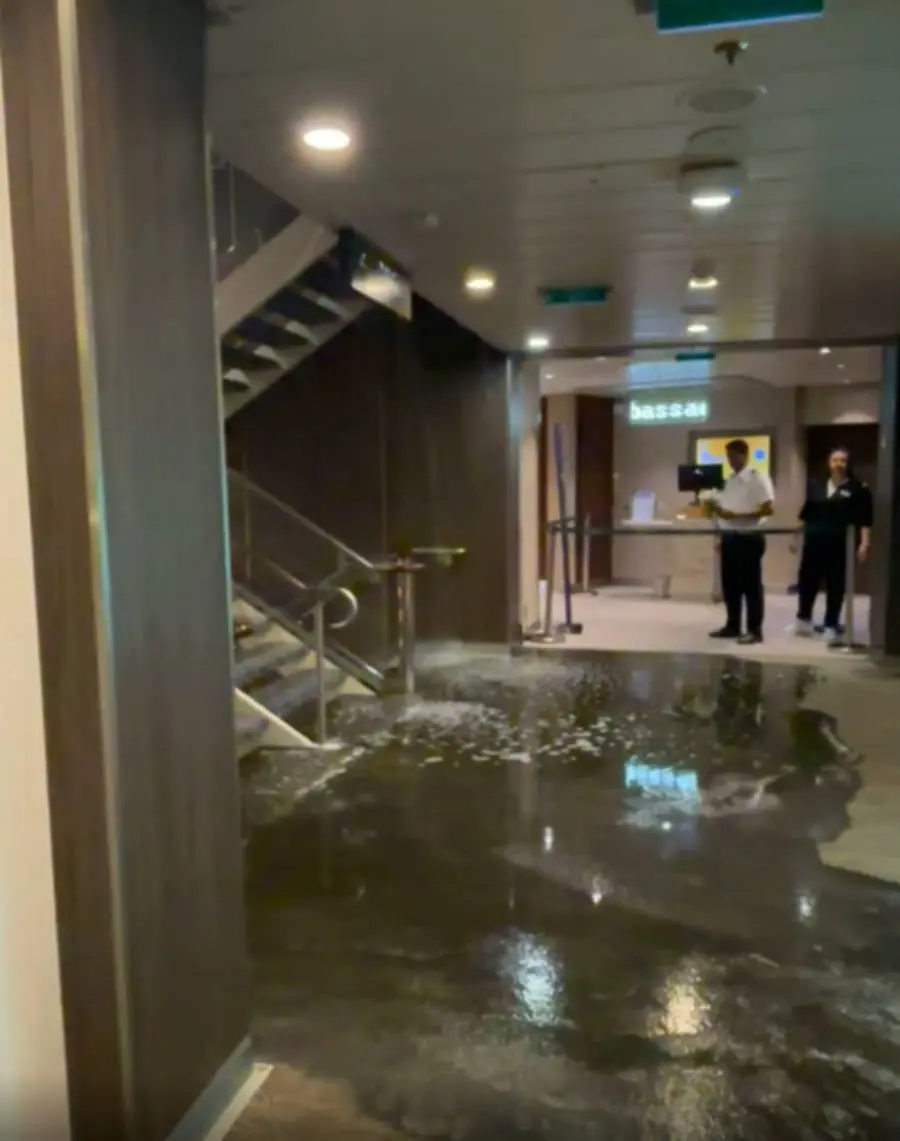
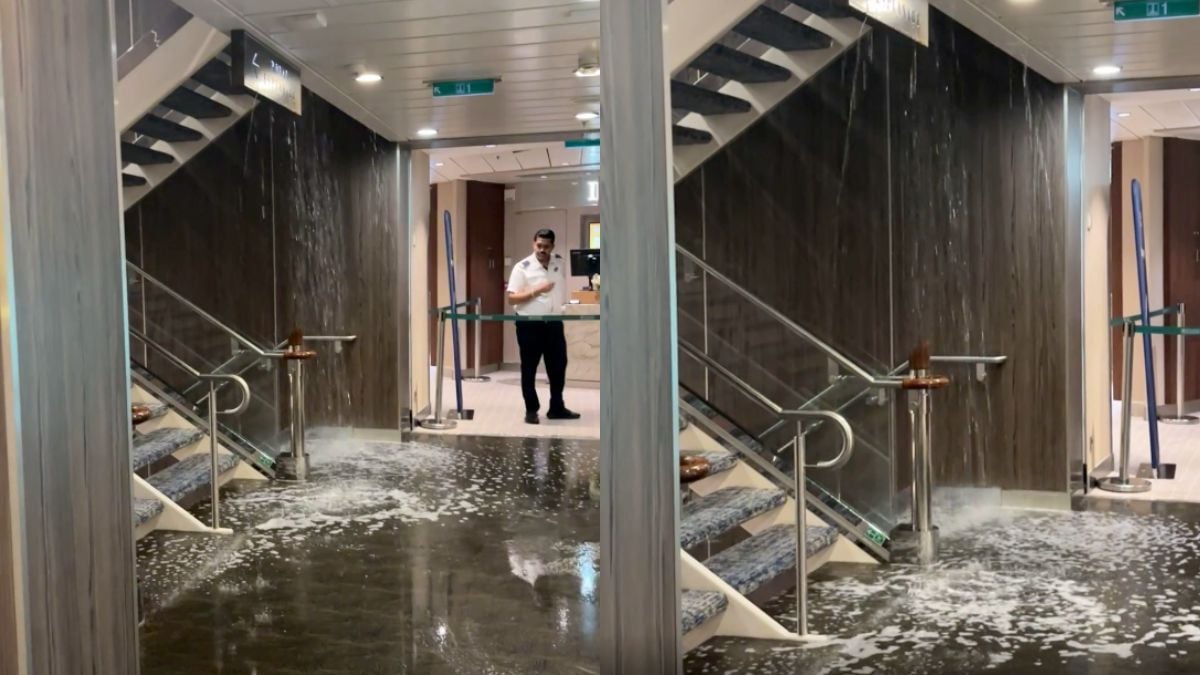
While cruise vacations are universally marketed as escapes built upon tranquil ocean views, sun-drenched pool decks, and serene beach days, passengers aboard Royal Caribbean’s Quantum of the Seas recently experienced an entirely different kind of water-based encounter. Rather than gazing out at the peaceful expanse of the Pacific Ocean, guests found themselves navigating an impromptu indoor waterfall cascading directly through the ship’s central public stairwells.
A 12-second video capturing the startling event quickly circulated on social media, drawing widespread attention across Reddit and travel forums. The footage revealed heavy volumes of water pouring down from upper levels, pooling rapidly at the base of the stairwell near the vessel’s distinct "Royal Esplanade."
Initially rumored to be related to heavy weather systems encountered near the coast of Mexico, subsequent investigations and eyewitness accounts clarified that the spectacle was the result of an internal mechanical failure: a burst pipe located near the midship public restrooms on Deck 5.
Despite the shocking visual nature of the leak, the incident underscores the complex operational challenges inherent in managing massive floating cities. Modern cruise ships are marvels of maritime engineering, functioning as self-contained municipalities complete with sprawling plumbing, electrical, and HVAC networks. When minor infrastructural components fail, the results can be dramatic. However, as the rapid response of the Quantum of the Seas crew demonstrated, the cruise industry relies on rigorous contingency protocols to mitigate disruptions, protect passenger safety, and preserve the integrity of the guest experience long before the next wave of travelers steps foot onboard.
Detailed Chronology: Unraveling the Quantum of the Seas Incident
The unfolding of events surrounding the Quantum of the Seas water leak highlights the rapid transmission of information in the modern digital age, contrasted against the logistical realities of onboard maintenance at sea.
The Discovery and Viral Spread
The incident first came to public prominence on Friday, September 4, 2026, when a Reddit user published a short video under the title “Major water leak on Quantum of the Seas last week.” The 12-second clip immediately captured the attention of cruise enthusiasts and travel commentators. In the video, water can be seen actively cascading down the architectural framework of a public stairwell, creating a makeshift waterfall effect.
Prominently visible in the footage are directional and informational signs for the "Royal Esplanade." Seasoned Royal Caribbean travelers immediately identified the location. While the majority of the cruise line’s larger vessels—such as those in the Oasis and Freedom classes—utilize the signature "Royal Promenade" as their central indoor thoroughfare for retail and dining, the Quantum-class ships are uniquely configured with the Royal Esplanade, which spans Decks 4 and 5.
Although the video did not explicitly display the exact deck where the breach occurred, the physics of the flow indicated that water was originating from an upper level and descending heavily into the stairwell base.
Weather Coincidence vs. Mechanical Reality
At the time of the video’s circulation, Quantum of the Seas was operating off the coast of Cabo San Lucas, Mexico, navigating through a regional storm system. Naturally, early observers speculated that rough seas, exterior hull stress, or weather-related deck infiltration might have caused the flooding.
However, passengers who were onboard during the relevant timeframe quickly dismantled the weather theory in the discussion threads.
“It was a burst pipe by the men’s room at the midship elevators, the storm was coincidence,” noted one passenger intimately familiar with the ship’s layout, confirming that the men’s restroom in question is situated on Deck 5 directly adjacent to the primary midship elevator bank.
Pinpointing the Timeline
Establishing the precise date of the pipe burst proved challenging due to conflicting reports within online forums. While the original Reddit poster uploaded the content on September 4 and referred to the event vaguely as occurring “last week,” other community members countered that the incident may have transpired closer to August 25, nearly two weeks prior.
Adding to the complexity, travelers registered for the subsequent August 31, 2026, to September 4, 2026, four-day sailing reported no lingering evidence of structural damage or active remediation upon embarkation.
“Just got off the ship. Was on a 4 day cruise from Aug 31 to Sept 4,” one recent guest commented. “There was absolutely no signs of a prior water leak whatsoever when I got on. So it sounds like I was the follow-up boat, and they fixed it so quickly that I hadn’t even noticed.”
Supporting Context & Metrics: Understanding Quantum of the Seas
To fully appreciate the scale of the Quantum of the Seas and the infrastructure required to maintain it, one must examine the vessel’s impressive technical specifications and operational scope.
Vessel Specifications and Deployment
Delivered in late 2014 by the Meyer Werft shipyard in Papenburg, Germany, Quantum of the Seas is the namesake vessel of Royal Caribbean’s technologically advanced Quantum class.
- Gross Tonnage: Approximately 168,666 GT
- Passenger Capacity: 4,180 guests (double occupancy), with a maximum capacity exceeding 4,900 passengers when fully berthed.
- Crew Complement: Approximately 1,500 international crew members.
- Length: 1,141 feet (347.1 meters)
- Beam: 136 feet (41.4 meters)
At the time of the incident, the ship was homeported in Los Angeles, California, executing a series of popular Mexican Riviera itineraries. These short-to-mid-length voyages typically feature stops in vibrant ports such as Cabo San Lucas, Mazatlán, and Puerto Vallarta.
Following the completion of its Mexican Riviera deployment in late September 2026, Quantum of the Seas prepared for a massive repositioning voyage. On September 26, 2026, the ship embarked on an extensive one-way transpacific cruise bound for Brisbane, Australia, with scheduled calls in Hawaii and French Polynesia. The vessel is slated to operate out of Australia through mid-April 2027 before returning to the United States Pacific Northwest to manage lucrative seven-night Alaskan itineraries departing from Seattle.
Official Statements and Industry Response
As is customary with localized technical malfunctions that do not compromise the overall seaworthiness of a vessel, Royal Caribbean International did not issue a formal public press release regarding the Quantum of the Seas pipe burst.
Operational Discretion and Remediation
Within the modern cruise industry, internal plumbing failures—while visually disruptive—are treated as routine maintenance challenges rather than navigational emergencies. Because the burst pipe was rapidly isolated and repaired by the ship’s dedicated technical engineering teams, the incident caused zero operational downtime. The ship maintained its published itinerary, and no disruptions, delays, or passenger cancellations were recorded.
Eyewitness footage from the scene highlighted the immediate mobilization of the ship’s crew. Even as water continued to pool at the base of the stairwell, crew members had already deployed safety signage and physical barriers to restrict passenger access, mitigating slip-and-fall hazards before the deep-extraction and drying processes commenced.
Future Outlook: Infrastructure Maintenance in Modern Cruising
The Quantum of the Seas incident, while isolated, highlights a broader reality of modern cruise line management: the constant vulnerability of complex maritime plumbing systems.
Water Incidents Are Not Uncommon
Maintaining thousands of miles of piping across a moving, vibrating metallic environment presents unique engineering challenges. Water management issues frequently make headlines across the broader cruise sector:
- Allure of the Seas (July 28, 2026): A suspected burst pipe on another Royal Caribbean vessel resulted in significant water infiltration across multiple passenger staterooms.
- Enchanted Princess (May 2026): Princess Cruises experienced localized plumbing failures that impacted guest accommodations.
- MSC Seaview (January 2026): MSC Cruises faced similar internal drainage and pipe challenges.
- P&O Cruises Azura (January 2025): Public areas and corridors experienced temporary flooding due to infrastructural leaks.
Beyond aging or compromised pipe welds, abrupt flooding incidents on cruise ships can be triggered by a variety of mechanical anomalies, including automatic sprinkler system malfunctions, pool filtration overflows, and severe clogs in greywater and blackwater sanitation networks.
The Path Forward: Proactive Engineering
To combat these vulnerabilities, major cruise lines continue to invest heavily in predictive maintenance technologies. Modern vessels increasingly utilize smart sensors, acoustic leak detection monitors, and automated shut-off valves designed to instantly isolate compromised pipe zones before large volumes of water can escape into public spaces or staterooms.
Ultimately, while videos of indoor waterfalls onboard luxury liners will continue to capture viral attention online, the swift remediation observed on Quantum of the Seas demonstrates the resilience of modern maritime operations. As cruise ships grow larger and technologically more sophisticated, the dedication of onboard engineering crews ensures that minor plumbing failures remain momentary anomalies rather than voyage-ending disasters, allowing millions of travelers to continue exploring the world’s oceans with confidence.