








WASHINGTON — In a sweeping move aimed at overhauling the nation’s aging public transportation backbone, the U.S. Department of Transportation (USDOT) and the Federal Transit Administration (FTA) have announced a combined federal investment exceeding $191 million. This capital injection is earmarked for critical infrastructure upgrades, focusing heavily on replacing antiquated rail rolling stock in major urban corridors and funding an innovative, cutting-edge autonomous vehicle (AV) shuttle network in Chattanooga, Tennessee.
The announcement arrives at a pivotal moment for American public transit. As cities nationwide grapple with post-pandemic ridership shifts, escalating maintenance backlogs, and the pressing demand for carbon-neutral mobility solutions, federal funding serves as an essential financial lifeline. By targeting both legacy rail systems and next-generation autonomous micro-transit, the USDOT package highlights a dual-track strategy: stabilizing traditional mass transit while aggressively incubating the future of smart urban mobility.
Executive Overview
The newly allocated $191 million funding package is divided into two major funding streams designed to address distinct operational challenges within the American transit landscape.
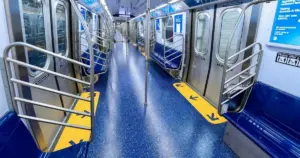
The lion’s share of the initiative—approximately $166 million—is distributed through the FTA’s specialized Rail Vehicle Replacement Grants program. This funding is explicitly designated to help transit agencies phase out and replace decades-old light rail and commuter rail vehicles. According to federal transit data, roughly one-third of all subway and commuter rail cars currently operating across the United States have surpassed the 25-year operational mark. These aging assets are not only frequent culprits behind catastrophic service disruptions and chronic delays, but they also drain municipal and regional transit budgets through disproportionately high maintenance costs.
Simultaneously, the USDOT and FTA have earmarked $25 million for the Chattanooga Area Regional Transportation Authority (CARTA). This significant grant will finance the deployment of an advanced autonomous vehicle shuttle service in downtown Chattanooga. The project is part of a broader, massive federal push: a $1.73 billion nationwide investment spanning 127 infrastructure projects distributed through the USDOT’s Better Utilizing Investments to Leverage Development (BUILD) grant program.
Together, these initiatives illustrate a comprehensive federal approach to modernizing American transit. They pair urgent maintenance relief for legacy rail networks with forward-looking technological integration, establishing a blueprint for how metropolitan areas can enhance safety, reliability, and efficiency.
Detailed Chronology and Breakdown of Funding Initiatives
To understand the far-reaching implications of this announcement, it is necessary to examine the specific allocation of funds, the mechanics of the grant programs, and the timeline of implementation for the targeted urban transit projects.

The FTA Rail Vehicle Replacement Program
The Federal Transit Administration’s Rail Vehicle Replacement Grants program was established to tackle one of the most stubborn capital deficits facing American transit agencies: rolling stock obsolescence. While federal grants historically prioritized system expansions—such as laying new track or building new stations—transit authorities have increasingly sounded the alarm over deteriorating fleets.
In this funding cycle, the FTA selected three major regional transit projects to receive the $166 million allotment. These grants are engineered to replace rolling stock that has exceeded its useful design life by decades.
- Mitigating Maintenance Backlogs: Older rail cars require frequent, specialized maintenance. Because many legacy components are no longer manufactured, transit agencies must commission custom parts, leading to prolonged vehicle downtime in maintenance yards and reduced peak-hour service frequencies.
- Enhancing Passenger Safety and Comfort: Modern rail vehicles incorporate advanced crashworthiness standards, improved ADA (Americans with Disabilities Act) accessibility features, efficient climate control systems, and modern passenger information displays.
- Optimizing Energy Efficiency: Newer propulsion systems and regenerative braking technologies in contemporary light and commuter rail cars dramatically reduce electrical consumption, aligning with federal environmental goals.
Chattanooga’s Autonomous Leap: The CARTA $25 Million Initiative
While the rail grants focus on heavy infrastructure renewal, the $25 million award to the Chattanooga Area Regional Transportation Authority (CARTA) represents a bold foray into automated public mobility.
CARTA’s initiative centers on deploying a fleet of up to six autonomous vehicle (AV) shuttles designed to navigate the complex traffic ecosystem of downtown Chattanooga. However, the project is far more than a simple vehicle purchase; it is an integrated systems approach to urban transit management.
The AV shuttles will operate in direct communication with Chattanooga’s state-of-the-art Mobility & Innovation Command Center. This centralized hub will provide:
- Real-Time Operational Oversight: Continuous monitoring of vehicle locations, route adherence, and passenger loads.
- Emergency Incident Response: Automated alert triggers and remote-operator override capabilities to handle unexpected roadway hazards or accidents safely.
- Data-Driven Transit Optimization: Advanced analytics platforms that ingest operational data to dynamically adjust schedules, optimize routing, and improve overall fleet efficiency based on fluctuating passenger demand.
This Chattanooga project serves as a proving ground for federal regulators, city planners, and transit operators seeking to understand how autonomous vehicles can safely and effectively integrate into mixed-traffic urban environments to provide first-mile/last-mile connectivity.
Supporting Context and Metrics: The State of American Transit Infrastructure
The necessity for immediate, substantial federal intervention is underscored by a convergence of demographic, economic, and engineering metrics compiled by federal agencies, transit associations, and civil engineering firms.
The Aging Rolling Stock Crisis
The revelation by the USDOT that approximately 33% of all U.S. subway and commuter rail cars are older than 25 years highlights a ticking time bomb in metropolitan transit maintenance. In the transit industry, the standard useful life (SUL) for rail rolling stock is typically pegged at 25 to 30 years, depending on maintenance regimes and operating environments.
When rail cars cross this threshold without a comprehensive mid-life overhaul or total replacement, transit agencies experience a cascading series of failures:
- Spiking Maintenance Budgets: According to American Public Transportation Association (APTA) benchmarks, keeping a rail car in service past its useful life can increase annual maintenance costs by up to 300%.
- Unreliability and Delays: Mechanical failures of doors, propulsion systems, and braking mechanisms on aging cars are primary drivers of system-wide delays during peak commuting hours.
- Erosion of Public Trust: Chronic delays and uncomfortable conditions—such as failing HVAC systems in extreme weather—drive commuters away from public transit and back into private automobiles, exacerbating urban traffic congestion and carbon emissions.
The Evolution of Smart Cities and Automated Transit
On the other end of the funding spectrum, the investment in Chattanooga’s AV shuttle project reflects a broader structural shift toward intelligent transportation systems (ITS). The global market for autonomous public transit is expanding rapidly, driven by the need to reduce labor costs, eliminate human error (which accounts for over 90% of traffic accidents), and provide flexible micro-transit options that feed into high-capacity fixed-route rail and bus systems.
The integration of CARTA’s AV shuttles with the Mobility & Innovation Command Center addresses one of the primary hurdles of early autonomous vehicle pilots: isolation. By tethering the vehicles to a centralized command structure equipped with real-time data analytics and emergency override capabilities, the project mitigates safety risks while gathering invaluable operational telemetry. This data will ultimately inform federal safety standards and state-level regulatory frameworks for autonomous public transit nationwide.
Official Statements and Political Perspectives
The announcement of the $191 million funding package drew strong reactions from federal transportation leaders, municipal officials, and transit advocates, all emphasizing the critical link between infrastructure investment and economic vitality.
Weighing in on the urgency of the rail modernization initiative, Transportation Secretary Sean P. Duffy underscored the tangible benefits awaiting everyday commuters:
"These funds will buy new, safer light rail vehicles to replace fleets that have been in service for decades," Secretary Duffy stated. "New transit infrastructure will help commuters avoid delays and improve their overall passenger experience."
Duffy’s remarks reflect the current administration’s focus on core infrastructure reliability—ensuring that federal dollars translate directly into visible, daily improvements for working Americans who rely on mass transit to reach their jobs, schools, and healthcare facilities.
Meanwhile, local leaders in Tennessee heralded the CARTA funding as a transformative milestone for Chattanooga’s economic and technological development. Regional transit advocates pointed out that the $25 million BUILD grant validates Chattanooga’s long-standing reputation as an innovation hub—a reputation forged through pioneering municipal investments in high-speed fiber-optic infrastructure.
By layering autonomous transit over an advanced digital backbone, Chattanooga is positioning itself as a national laboratory for smart city development. Municipal stakeholders emphasized that the AV shuttle service will not only ease downtown congestion but also provide equitable, reliable mobility options for residents and visitors navigating the city’s commercial and entertainment districts.
Future Outlook: What Lies Ahead for U.S. Public Transit
As the USDOT disburses these funds and transit agencies begin the complex process of procurement, engineering integration, and deployment, the broader implications for the future of American mobility will become increasingly clear.
Challenges in Procurement and Supply Chain Realities
While the influx of $166 million for rail vehicle replacement is a vital down payment, transit experts warn that agencies face significant headwinds in the current industrial landscape. The domestic and global supply chains for specialized rail manufacturing are constrained. There are a limited number of certified rolling stock manufacturers capable of complying with federal "Buy America" requirements, which mandate that a significant percentage of rail car components be manufactured within the United States.
Consequently, transit agencies receiving these grants will need to navigate extended manufacturing lead times. It may take several years from the initial contract award for the newly funded light rail and commuter rail vehicles to roll off assembly lines and onto active tracks. During this interim period, agencies must continue practicing aggressive, preventative maintenance on their existing, aging fleets to prevent catastrophic service failures.
The Scaling of Autonomous Public Transit
For Chattanooga and the broader autonomous vehicle industry, the success of the CARTA pilot will be closely monitored by federal regulators, urban planners, and peer transit agencies across the country.
If the six-vehicle AV shuttle network successfully navigates downtown Chattanooga’s traffic complexities—operating seamlessly under the watchful eye of the Mobility & Innovation Command Center—it could serve as a replicable template for mid-sized cities nationwide. Key performance indicators that analysts will evaluate include:
- Safety Record: The frequency and severity of disengagements or required manual interventions.
- Ridership Adoption: Public acceptance, passenger satisfaction, and equity of access across diverse demographic groups.
- Cost Efficiency: The operational cost-per-mile compared to traditional fixed-route diesel or electric minibuses.
- Traffic Integration: The impact of AV shuttles on general vehicular traffic flow, pedestrian safety, and bicycle infrastructure.
Conclusion
The USDOT’s $191 million funding announcement bridges two distinct eras of American transportation. By dedicating $166 million to rescue aging rail networks from obsolescence, the federal government is reaffirming its commitment to the heavy-duty mass transit systems that form the economic circulatory system of our largest metropolitan areas. Simultaneously, by investing $25 million in Chattanooga’s autonomous shuttle initiative, the federal government is seeding the ground for the next generation of smart, connected, and automated micro-mobility.
Ultimately, these investments are about more than just steel, silicon, and rubber. They represent a concerted effort to restore reliability, enhance safety, and future-proof the daily commutes of millions of Americans. As these projects move from the planning table to execution, they will undoubtedly shape the trajectory of urban mobility for decades to come.