








Executive Overview
The Charlotte Area Transit System (CATS) is officially commemorating five years of continuous passenger service on its flagship CityLynx Gold Line streetcar. Launched amid the complexities of the modern urban transit landscape on August 30, 2021, the four-mile fixed-rail corridor has steadily evolved into a vital economic and social artery for North Carolina’s largest city. Connecting the historic neighborhoods of the West End with the vibrant commercial districts near Plaza Midwood, the streetcar has successfully transported more than 2.8 million passengers across its 17 distinct stations.
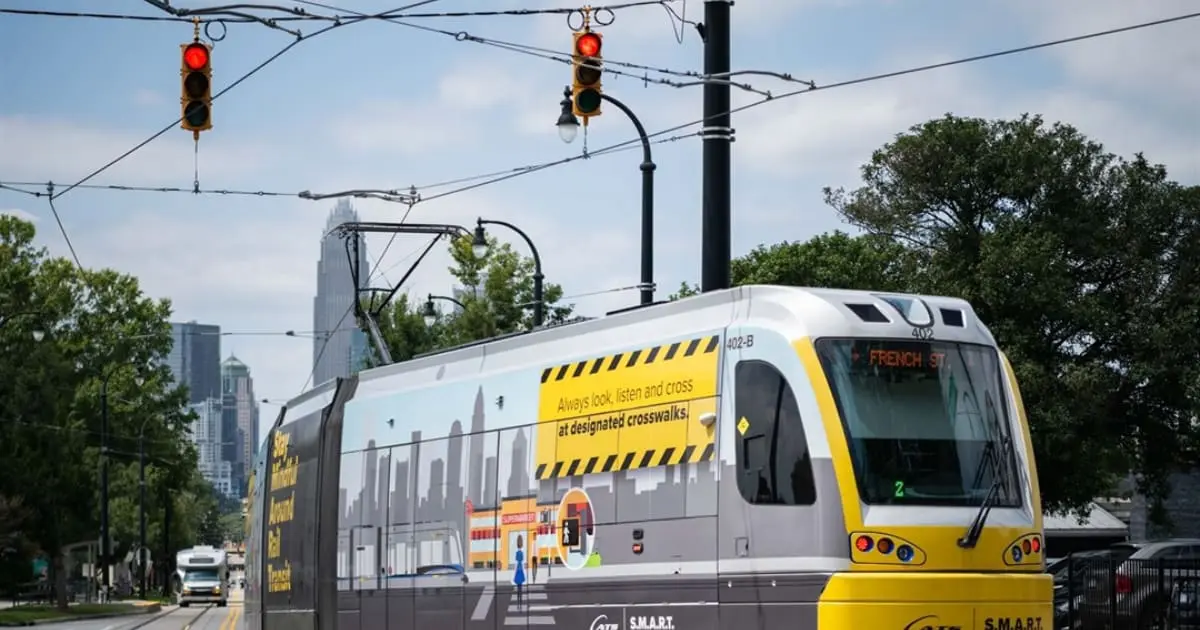
Beyond its raw ridership metrics, the Gold Line has served as a technological proving ground for modern American mass transit. By introducing hybrid Siemens S700 streetcars equipped with advanced onboard battery technology, CATS solved complex urban design challenges, successfully marrying modern light rail convenience with historical preservation.
Now, as the system marks half a decade of operation, CATS leadership is not merely reflecting on past achievements but looking aggressively toward the future. Propelled by the strategic blueprints of the 2055 Transit System Plan—and bolstered by a pivotal sales tax referendum approved by Mecklenburg County voters in November 2025—the Gold Line is slated for a massive, multi-faceted expansion. This upcoming phase of development promises to double the footprint of the route, integrating underserved communities, enhancing regional connectivity, and cementing the streetcar’s status as a foundational pillar of Charlotte’s long-term mobility vision.
Detailed Chronology: From Conception to Milestone
To fully understand the significance of the Gold Line’s five-year anniversary, it is necessary to trace the historical trajectory of the project. The implementation of modern streetcar service in Charlotte was envisioned as a multi-phased initiative designed to stitch together disparate urban enclaves that had been historically fractured by mid-20th-century automotive-centric infrastructure policies.
Phase 1 and the Road to August 30, 2021
While initial streetcar planning and preliminary segments experienced various developmental evolutions, Phase 2 of the CityLynx Gold Line officially opened for passenger revenue service on August 30, 2021. This launch occurred during a uniquely challenging historical window, as public transit agencies nationwide grappled with shifting commuting patterns, public health considerations, and workforce dynamics in the wake of the global COVID-19 pandemic.
Despite these macro-level headwinds, the four-mile alignment—stretching from the French Street Station in Charlotte’s Historic West End to the Sunnyside Station near Plaza Midwood—immediately established utility. Traversing Uptown Charlotte, the route created a seamless, low-floor transit option that bypassed vehicular congestion and offered high-frequency service to medical centers, educational institutions, employment hubs, and cultural destinations.
Operational Evolution and Milestones
Over the subsequent 60 months of operation, the Gold Line weathered the fluctuations of urban mobility. CATS continuously refined headways, implemented fare modernization initiatives (such as the integration of fare ambassadors and digital payment infrastructure), and monitored shifting travel demands.
Key infrastructural nodes rapidly emerged as the line’s heavy lifters. Commuters, students, and urban explorers heavily utilized high-volume stops including:
- CTC Arena (Charlotte Transportation Center): The central multi-modal hub allowing transfers to the LYNX Blue Line light rail and numerous local and express bus routes.
- Tryon Street: The bustling commercial core of Uptown.
- Johnson & Wales University: A major anchor for student ridership and academic commutes.
- CPCC (Central Piedmont Community College): Serving thousands of students and faculty members daily.
- Sunnyside Station: The eastern terminus anchoring the edge of the vibrant Plaza Midwood commercial district.
Through steady, reliable operations, the line accumulated a cumulative ridership exceeding 2.8 million journeys—a testament to the enduring demand for dedicated, on-street transit options in rapidly densifying urban corridors.
Supporting Context & Metrics: Engineering Innovation and Ridership Demographics
The success of the CityLynx Gold Line is as much a triumph of civil and electrical engineering as it is of urban planning. Operating a heavy rail transit vehicle through the heart of a major metropolitan downtown presents profound logistical hurdles, particularly regarding overhead aesthetic impacts and spatial constraints.
Siemens S700 and Wire-Free Battery Technology
To navigate Uptown Charlotte without marring the historical streetscape or violating strict clearance parameters, CATS procured a fleet of hybrid Siemens S700 streetcars. These state-of-the-art vehicles are engineered with dual-mode operational capabilities, drawing power either from traditional overhead catenary wires or from advanced, high-capacity onboard energy storage systems (batteries).
The deployment of this wire-free technology was critical for two primary reasons:
- Preservation of the Tryon Street Parade Route: Uptown Charlotte hosts numerous civic celebrations, parades, and public gatherings along Tryon Street. Traditional overhead electrification poles and wires would have physically obstructed these events and created visual clutter. The battery-hybrid system allows streetcars to drop their pantographs and traverse the Tryon Street corridor entirely on stored electrical energy.
- Low-Clearance Bridge Navigation: The route features segments running beneath historic and modern bridges with restrictive vertical clearances. Traditional overhead catenary systems could not be safely installed in these tighter envelopes without extensive, cost-prohibitive structural reconstruction. The onboard battery technology bypassed this bottleneck entirely, ensuring a smooth, continuous passenger journey.
Economic and Community Impact Metrics
Quantifying the value of the Gold Line requires looking beyond raw farebox data to examine urban revitalization and equity metrics. By directly connecting the Historic West End—an area historically subjected to disinvestment and urban renewal displacement—with the economic engine of Uptown and the trendy commercial corridors of Plaza Midwood, the streetcar acted as an economic catalyst.
Real estate development, mixed-use commercial projects, and small-business investments clustered predictably around key stations along the four-mile route. Furthermore, by providing a reliable, zero-emission transit option, the Gold Line actively contributed to Charlotte’s municipal sustainability goals, reducing vehicle-miles traveled and cutting localized carbon emissions within the urban core.
Official Statements and Leadership Perspectives
As CATS pauses to celebrate the five-year milestone, agency leadership has emphasized that the streetcar’s journey is only just beginning. The resilience demonstrated by the system over the past half-decade underscores the profound importance of sustained civic investment in public infrastructure.
Reflecting on the milestone, Brent Cagle, Interim CEO of CATS, offered a comprehensive assessment of the streetcar’s role in the city’s fabric:
"The Gold Line serves some of Charlotte’s most historic and vibrant neighborhoods, and its success reflects the true value of investing in communities. As we look ahead, we remain intensely focused on building a resilient, equitable system that supports every rider, every day—ensuring that our transit network grows dynamically alongside the people it serves."
Cagle’s remarks highlight a core philosophical shift within modern transit governance: moving away from viewing transit purely as a commuter utility, and instead treating it as an essential social equity tool that links neighborhoods of opportunity, preserves cultural heritage, and provides dignified, accessible mobility for all residents, regardless of socioeconomic status.
Additional transit advocates and urban planners have echoed these sentiments, noting that the Gold Line serves as a blueprint for how mid-sized American cities can successfully implement modern rail without compromising historical integrity or community character.
Future Outlook: The 2055 Transit System Plan and Comprehensive Expansion
The most significant chapter in the CityLynx Gold Line’s history is currently being written on the drafting tables of urban planners and within the financial frameworks of municipal and county government. Propelled by the visionary directives of the CATS 2055 Transit System Plan—and decisively catalyzed by Mecklenburg County voters’ approval of a critical sales tax referendum in November 2025—the Gold Line is poised for an unprecedented era of expansion.
The Expansion Blueprint: Scope and Scale
The proposed extension represents a massive scaling up of the existing infrastructure. While the current operational route spans four miles and 17 stations, the upcoming expansion plans call for:
- Addition of approximately six miles of new track, more than doubling the physical length of the system.
- Construction of up to 17 new stations, extending the geographic reach of the transit network deep into currently underserved quadrants of the city.
- Creation of vital multi-modal transit anchors, specifically establishing direct connections to the Eastland Community Transit Center to the east and the Rosa Parks Community Transit Center to the west.
Regional Connectivity and the Charlotte Gateway Station
A centerpiece of the future expansion is the integration of the Gold Line with the upcoming Charlotte Gateway Station. This multi-modal mega-hub is designed to consolidate intercity rail (Amtrak), regional commuter rail, local bus operations, and light/streetcar transit into a single, unified architectural marvel. By tying the Gold Line directly into the Gateway Station, CATS will ensure that streetcar riders have frictionless access to regional and national travel networks.
Furthermore, the expanded corridor will interconnect with various other planned rapid transit corridors outlined in the 2055 blueprint. This creates a cohesive, grid-like transit ecosystem rather than a collection of isolated lines, drastically improving system-wide utility, reducing transfer friction, and offering a genuine, competitive alternative to automobile dependency.
Navigating the Road Ahead
Of course, executing a multi-mile rail expansion through a rapidly growing metropolis is not without its challenges. CATS will need to navigate complex engineering hurdles, coordinate extensive utility relocations, manage community engagement to mitigate construction-phase disruptions, and maintain rigorous fiscal discipline under the newly secured revenue streams.
However, armed with five years of hard-earned operational data, proven battery-hybrid vehicle technology, and renewed public mandate via the 2055 Transit System Plan, CATS enters this next phase of development with unprecedented momentum.
As the CityLynx Gold Line looks past its first five years, it stands ready to transition from a localized urban circulator into the backbone of an interconnected, equitable, and modern regional transit network—defining the physical and economic landscape of Charlotte for generations to come.