



Executive Overview
For millions of fans who descended upon the United States and Canada for the 2026 FIFA World Cup, the match-day journey was deceptively straightforward. Spectators boarded regional commuter trains, stepped onto connecting shuttles, followed brightly marked signage, and arrived at the stadium gates with time to spare—all before celebrating a victory or processing a defeat and repeating the loop in reverse. To the casual observer, the transit network operated with organic, almost effortless precision.
Yet, beneath this seamless veneer lay one of the most complex, high-stakes, and multi-layered logistical operations in the history of North American mobility. Unlike a one-off marquee event like the Super Bowl or a localized championship parade, the World Cup demanded relentless, multi-week endurance. It was a month-long marathon of crowd management, precision vehicle staging, round-the-clock maintenance, and real-time schedule adjustments spread across vast geographic footprints.
Achieving this required an unprecedented synchronization of public transit agencies, regional planners, private motorcoach operators, federal regulators, law enforcement, and tens of thousands of frontline employees. These teams were tasked with an extraordinary dual mandate: move millions of international and domestic visitors safely through dense urban corridors while simultaneously ensuring that local workforces and everyday riders could reach their daily destinations without disruption.
As transit leaders look back on the tournament, the consensus is clear: the success of the 2026 World Cup was a masterclass in collaboration, proving that the future of mega-event mobility relies not on a single transit mode, but on an integrated, highly adaptive ecosystem.
Detailed Chronology & Operational Scope: A Month-Long Mobility Marathon
The sheer duration of the tournament set the 2026 World Cup apart from any prior sporting spectacle hosted in North America. Spanning over a month of continuous matches, fan festivals, and parallel civic events—including Independence Day celebrations like the July 4 Peachtree Road Race in Atlanta—transit operators could not simply deploy a surge plan for a single Sunday and recover the following week.
Instead, agencies were locked into a grueling cycle of repetition. Every few days meant resetting operations, executing rigorous preventive maintenance on rolling stock, adjusting staffing models, and instantly applying operational lessons learned from the previous match.
The Rhythm of the Surge
In Atlanta, the Metropolitan Atlanta Rapid Transit Authority (MARTA) recorded a staggering 4.7 million rail passenger trips over a 35-day window. The system’s ultimate stress test arrived on June 24, when a high-stakes match between Morocco and Haiti pushed rail ridership to an incredible 240,000 passenger trips—roughly 2.6 times the volume of a standard weekday. Across all match days, MARTA regularly sustained rail traffic at two to three-and-a-half times normal operating levels.
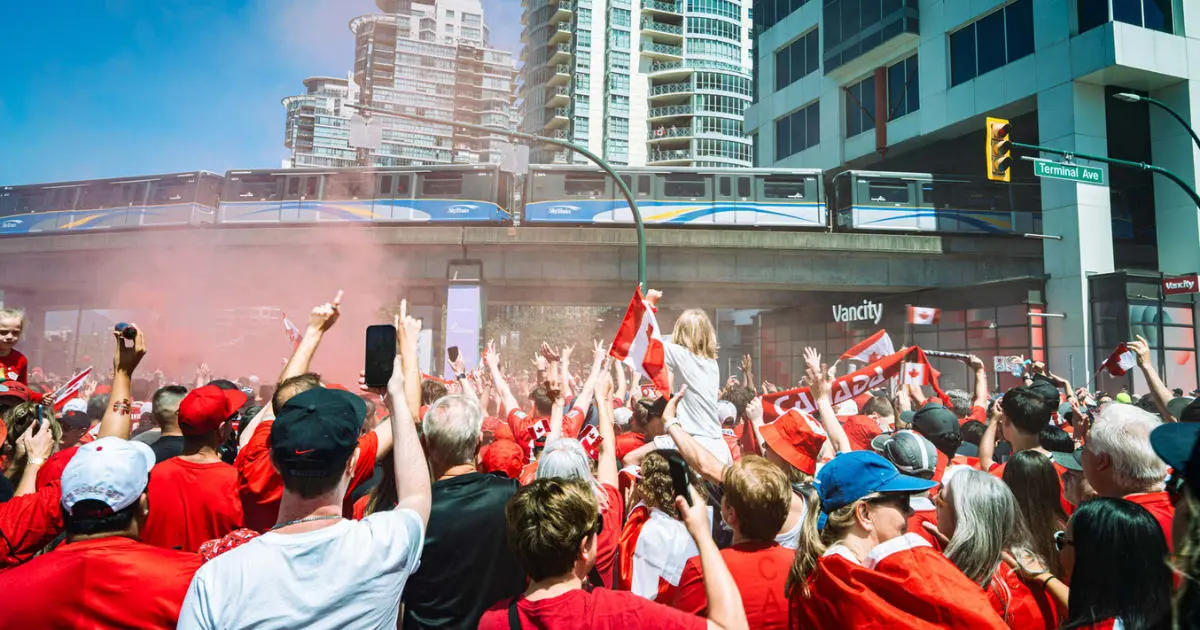
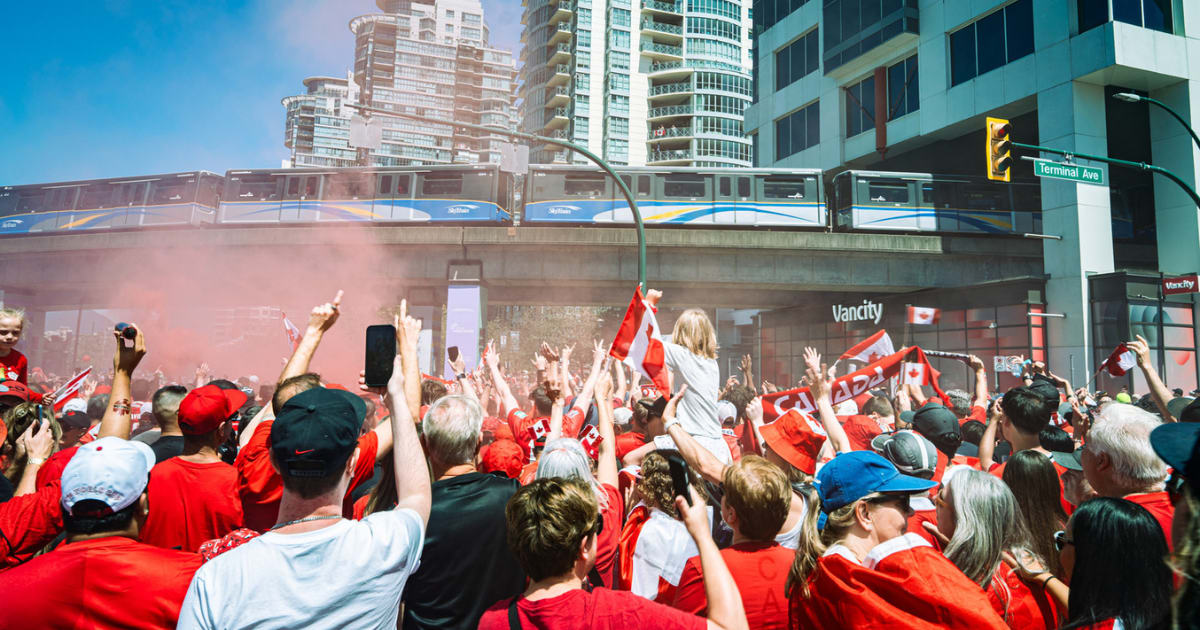
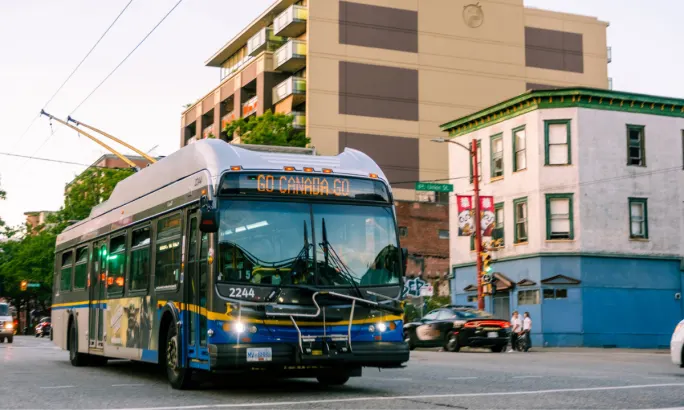
Concurrently, public systems in Vancouver and the Bay Area smashed historic records. Vancouver’s TransLink reported an average of 87,000 additional boardings on each of the city’s seven match days, culminating in more than 600,000 supplemental transit boardings overall. June 24—the day Canada faced Switzerland at BC Place—marked a watershed moment for the region, generating nearly 1.4 million system-wide boardings, TransLink’s highest ridership day in over six years.
In Northern California, the Santa Clara Valley Transportation Authority (VTA) moved nearly 230,000 passengers to and from stadium venues across six matches, easily eclipsing records set by previous Super Bowls and major stadium concert tours. The peak arrived on June 25, injecting nearly 42,000 stadium-bound passengers into the light rail network in a matter of hours.
Down in South Florida, Tri-Rail faced its own unique pressures, logging more than 11,000 rides on Saturday, June 27—the system’s highest-ever Saturday ridership—to accommodate fans traveling to the Portugal-Colombia fixture in Miami. To meet this demand, Tri-Rail injected express trains, post-game supplemental runs, and dedicated shuttle connections linked directly to the Golden Glades Station.
Supporting Context & Metrics: Filling the Gaps with Private Charter Networks
While heavy rail and light transit formed the structural backbone of the tournament’s urban corridors, fixed-rail infrastructure has inherent geographic limitations. It cannot deviate from its tracks, nor can it scale instantly to reach every hotel, training camp, or airport terminal. This is where private motorcoach and charter networks stepped in to bridge critical mobility gaps.
The North Texas Intermodal Hand-Off
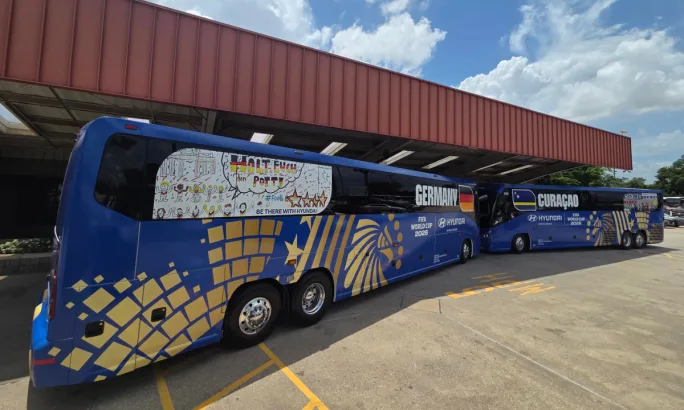
One of the most vivid examples of this multi-modal synergy unfolded in North Texas. For the nine matches hosted at the Arlington stadium venue, the Trinity Railway Express (TRE) carried thousands of fans to CentrePort Station. From that strategic rail node, a dedicated fleet of 125 charter buses handled the high-capacity final leg directly to the stadium gates.
During the tournament, more than 40,000 fans utilized these charter shuttles, with approximately 30,000 of them feeding into CentrePort via the TRE. By operating longer trains at heightened frequencies—including special Sunday service—planners transformed the station into a temporary, high-efficiency intermodal transit hub.
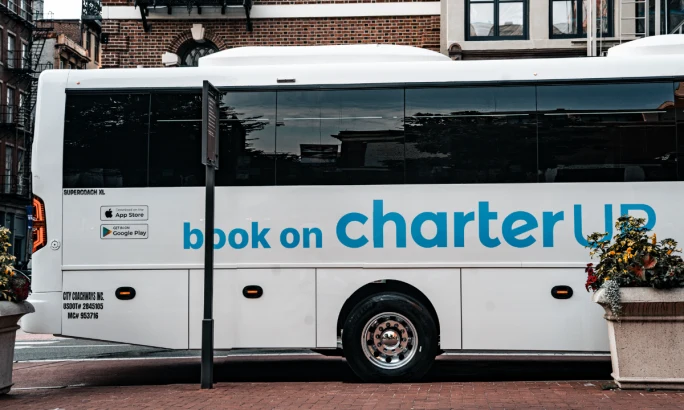
Peter Gould, Vice President of Transit for CharterUP, emphasized that private operators viewed their role as complementary rather than competitive. "Public transit was always the foundation," Gould explained. "We weren’t there to replace it, but to fill the gaps where fixed-route transit wasn’t designed to operate."
CharterUP’s software platform and Transit Intelligence infrastructure provided real-time visibility into vehicle locations, driver hours, and route performance. This allowed private groups, hospitality programs, VIP delegations, and international supporters to navigate complex, multi-city itineraries seamlessly through a single dashboard.
Overcoming Curbside and Maintenance Realities
Behind the passenger counts lay complex logistical hurdles that rarely appeared on highlight reels. For First Class Transportation, which managed team base camps in Austin and Houston alongside contracted game-day services for The Woodlands Transit, operational success hinged on intense mechanical and human agility.
With Woodlands game-day services operating at 100% capacity throughout the tournament, First Class maintenance crews worked around the clock. Vehicle turnarounds were razor-thin, requiring overnight bus-wrap changes to transition fleets as one national team departed a market and another arrived.
Airport curbside management presented another severe test. When an international delegation from Portugal required a seven-bus transfer at George Bush Intercontinental Airport, operators collided with structural limitations: the airport’s newly completed international terminal featured highly restricted motorcoach loading zones. Rather than forcing the entire group and their heavy luggage to relocate to a distant terminal—which would have created a cascading logistical bottleneck—First Class coordinated a staggered staging protocol with airport authorities. Four buses loaded directly near international departures while the remaining units waited in a holding lot, rotating into position with surgical precision as space opened up.
Official Statements & Human-Centric Operations
Despite the vast arrays of data, sensors, and intelligent transportation systems deployed during the 2026 World Cup, transit leaders universally emphasized that the tournament’s success was fundamentally driven by human beings.
Jared Flaum, Director of Sales and Operations at Lux Bus America—which provided dedicated transport for national teams, media personnel, FIFA officials, and tournament stakeholders across Los Angeles, San Francisco, San Diego, and Arizona—noted that the ultimate measure of a transport network is its invisibility.
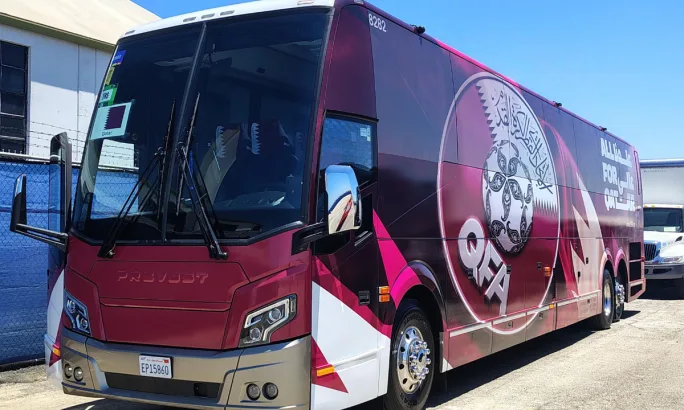
"One thing we often say is that the best transportation operation is the one nobody notices," Flaum remarked. "If teams arrived on time, schedules stayed on track, and transportation became something they never had to think about, then we had done our job." Achieving this standard required months of rigorous route scouting, driver training, and cross-departmental coordination long before the first buses rolled out of the yard.
Public agencies adopted a similar philosophy on the ground, recognizing that foreign visitors navigating unfamiliar transit systems often needed empathy just as much as engineering capacity.
In Atlanta, MARTA deployed 600 Transit Ambassadors who completed 6,400 individual deployment assignments, working side-by-side with 100 multilingual FIFA volunteers. Safety personnel distributed free water and sunscreen, administered basic first aid, and worked in tandem with hundreds of MARTA Police officers and regional law enforcement partners to secure platforms, trains, and transfer hubs.
The human-centric approach bore tangible fruit. In Vancouver, despite moving record-breaking crowds of international tourists through TransLink’s network, customer service call volumes actually dropped by 7.6% compared to the same month in the previous year. Thousands of unfamiliar riders utilized the system smoothly precisely because frontline staff and clear wayfinding eliminated confusion before it required a phone call.
Frede Smith of First Class Transportation praised the adaptability of frontline staff: "Our drivers were the backbone of the entire operation. They had to be flexible as schedules and operational needs changed, while maintaining the safety and professionalism expected during an event of this magnitude."
Future Outlook: Mega-Events as Mobility Laboratories
As the final crowds disperse and the stadiums transition back to their domestic tenants, transit agencies across the U.S. and Canada are left with an invaluable repository of operational data. Every tap-in, dwell time, transfer surge, and post-match exodus has been meticulously recorded, transforming the 2026 World Cup into a massive, real-world mobility laboratory.
This data arrives at a critical juncture for North American infrastructure. The federal government recognized the monumental scale of the undertaking early on, with the Federal Transit Administration (FTA) injecting substantial capital into host cities. In March, the FTA announced $100.3 million in public transportation funding specifically targeted to support planning, capital upgrades, and operating expenses for the World Cup. This momentum continued in April with an additional $94.3 million allocation aimed at preparing transit agencies for the upcoming 2028 Olympic and Paralympic Games in Los Angeles.
For municipal leaders and private operators alike, the lessons of the 2026 tournament serve as a blueprint for the future. The primary takeaway is that no single transit mode can shoulder the burden of a global mega-event in isolation. True urban resilience requires breaking down historical silos between public rail, municipal bus networks, private motorcoach operators, and rideshare ecosystems, fusing them into a unified, highly coordinated mobility strategy.
As Jared Flaum and Lux Bus America view the World Cup not as a finish line, but as a stepping stone toward the 2028 Olympics, the broader transit sector shares a unified vision. The ultimate legacy of the 2026 FIFA World Cup will not merely be measured in record ridership tallies or scoreboard statistics, but in the permanent elevation of North America’s transit capabilities—proving that when planning, technology, and human dedication align, even the most daunting logistical challenges can be met with effortless grace.