





Executive Overview
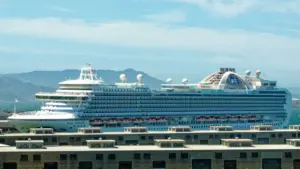
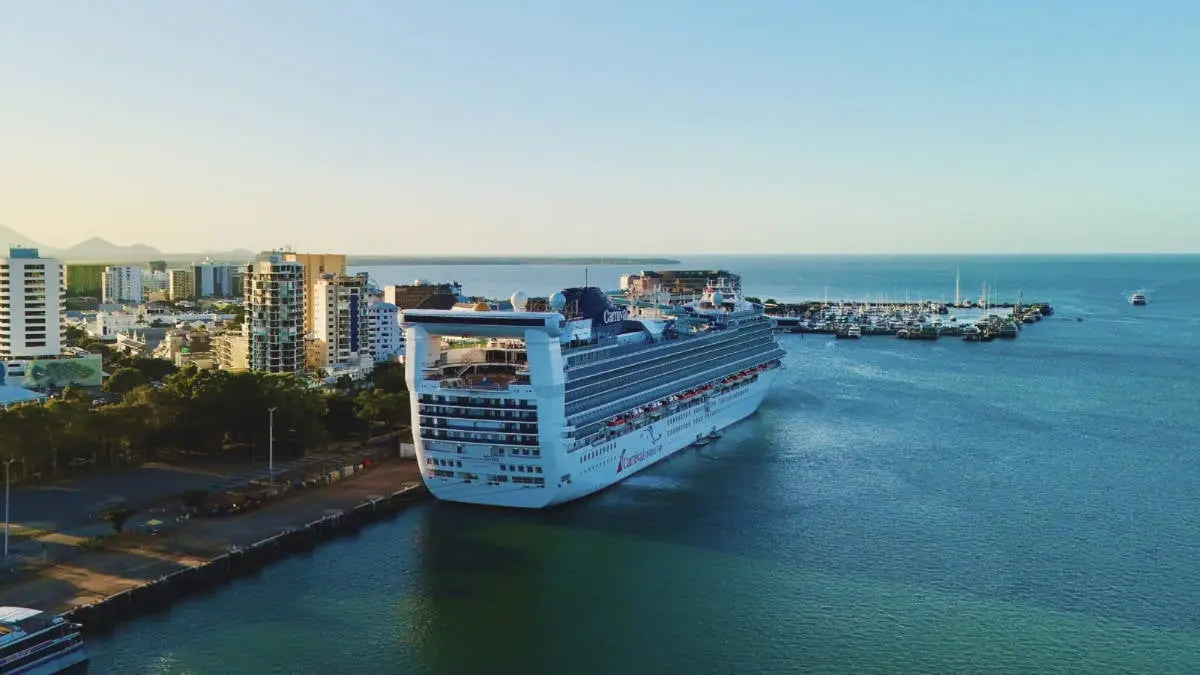
In the fast-paced world of modern cruising, few events elicit as much immediate anxiety among passengers as a last-minute itinerary alteration. For guests booked aboard the upcoming September 5, 2026, departure of the Carnival Encounter, that exact scenario materialized just four days prior to embarkation. Carnival Cruise Line formally notified travelers of a mandatory route modification for the 108,865-gross-ton vessel’s six-night Great Barrier Reef voyage departing from Brisbane, Australia.
The catalyst behind this operational pivot is not mechanical failure or severe meteorological phenomena—the traditional culprits of maritime schedule disruptions—but rather a critical infrastructure challenge: severely reduced channel depths leading into the Cairns Cruise Terminal. According to navigational assessments relayed by the cruise line, the waterway has grown too shallow to ensure the safe passage of the 2,600-passenger ship. With remediation efforts unable to meet the tight timeframe of the upcoming sailing, Carnival was left with no viable alternative but to excise Cairns from the itinerary entirely.
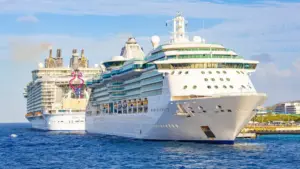
While safety remains the undisputed priority for major cruise operators, unexpected route changes ripple outward, impacting everything from shore excursion scheduling to independent travel logistics. For the passengers preparing to board the recently enhanced ship, the sudden shift has necessitated a flurry of itinerary reshuffling. Airlie Beach has been brought forward by 24 hours, a novel port call has been established in Townsville, and a minor one-hour delay has been appended to the final return schedule in Brisbane.
This administrative and logistical pivot highlights the persistent vulnerabilities cruise lines face when navigating regional port infrastructure in ecologically sensitive and dynamic marine environments like Australia’s tropical north. As the Carnival Encounter maintains its year-round Australian deployment through 2027 and 2028, this incident serves as a stark reminder of the delicate balance between ambitious deployment schedules and the unpredictable realities of maritime infrastructure.
Detailed Chronology: How the Itinerary Unraveled
To fully understand the scope of the recent operational adjustment, it is essential to trace the timeline of events leading up to the decision, as well as the cascading series of changes implemented by Carnival Cruise Line’s maritime operations team.
The Original Blueprint
The voyage in question was conceptualized as a classic, highly sought-after six-night Great Barrier Reef getaway. Originally, the Carnival Encounter was scheduled to execute the following sequence:
- September 5, 2026: Embarkation and departure from Brisbane, Australia.
- September 6, 2026: A relaxing day at sea, allowing guests to experience the vessel’s newly upgraded amenities following its recent multi-million-dollar dry dock enhancement.
- September 7, 2026: Scenic cruising and operational stop at Willis Island, a tiny meteorological islet renowned for its rugged isolation and birdlife.
- September 8, 2026: A scheduled full-day port call at Cairns, providing passengers access to the doorstep of the Great Barrier Reef, Kuranda Scenic Railway, and the Daintree Rainforest.
- September 9, 2026: A port visit to Airlie Beach, the gateway to the Whitsunday Islands and Whitehaven Beach.
- September 10, 2026: A final leisurely day at sea as the ship tracks southward along the Queensland coast.
- September 11, 2026: Return to Brisbane with an initial scheduled arrival time of 7:00 a.m.
The September 1 Notice
As final preparations were underway both at Carnival’s regional headquarters and in the homes of excited travelers, marine operations data signaled a growing crisis. Siltation and shifting sediment patterns had critically reduced channel depths along the approach to the Cairns Cruise Terminal. Recognizing that dredging operations or natural tidal surges would not rectify the hazard prior to the ship’s estimated time of arrival, corporate leadership made the decisive call to cancel the stop.
On September 1, 2026—just a fleeting 96 hours before the gangways were set to open in Brisbane—dispatched emails and app notifications informed booked guests of the imminent route overhaul. The notification stressed that the decision was non-negotiable and rooted strictly in maritime safety protocols.
The Re-Engineered Route
Faced with the loss of one of its premier regional destinations, Carnival’s itinerary planning team scrambled to construct a viable alternative that would satisfy passengers while adhering to strict maritime navigation limits. The resulting revised schedule looks significantly different from the brochure description:
- September 5: Departure from Brisbane proceeds exactly as planned.
- September 6: Day at sea.
- September 7: The visit to Willis Island remains entirely unaffected, offering guests their expected dose of remote scenic cruising.
- September 8: Rather than sitting idle or drifting at sea, the Carnival Encounter will pull forward its scheduled visit to Airlie Beach, granting passengers an earlier-than-expected taste of the Whitsundays.
- September 9: To replace the lost economic and recreational value of Cairns, the ship has secured a newly added port call in Townsville, Queensland’s largest tropical city.
- September 10: Final day at sea.
- September 11: Return to Brisbane. However, due to the altered steaming distances and maneuvering times required by the new port integration, arrival will be delayed by one hour, with the ship now expected to dock at 8:00 a.m. rather than the original 7:00 a.m. marker.
Supporting Context & Metrics
The disruption aboard the Carnival Encounter is not merely an isolated scheduling hiccup; it highlights the complex metrics and operational parameters governing modern megaships operating within regional Australian waters.
Vessel Specifications and Engineering Constraints
The Carnival Encounter is a formidable piece of maritime engineering. Boasting a gross tonnage of 108,865 and a passenger capacity hovering around 2,600 guests (double occupancy), the ship requires substantial draft clearance to navigate restricted channels, river mouths, and narrow harbor approaches safely.
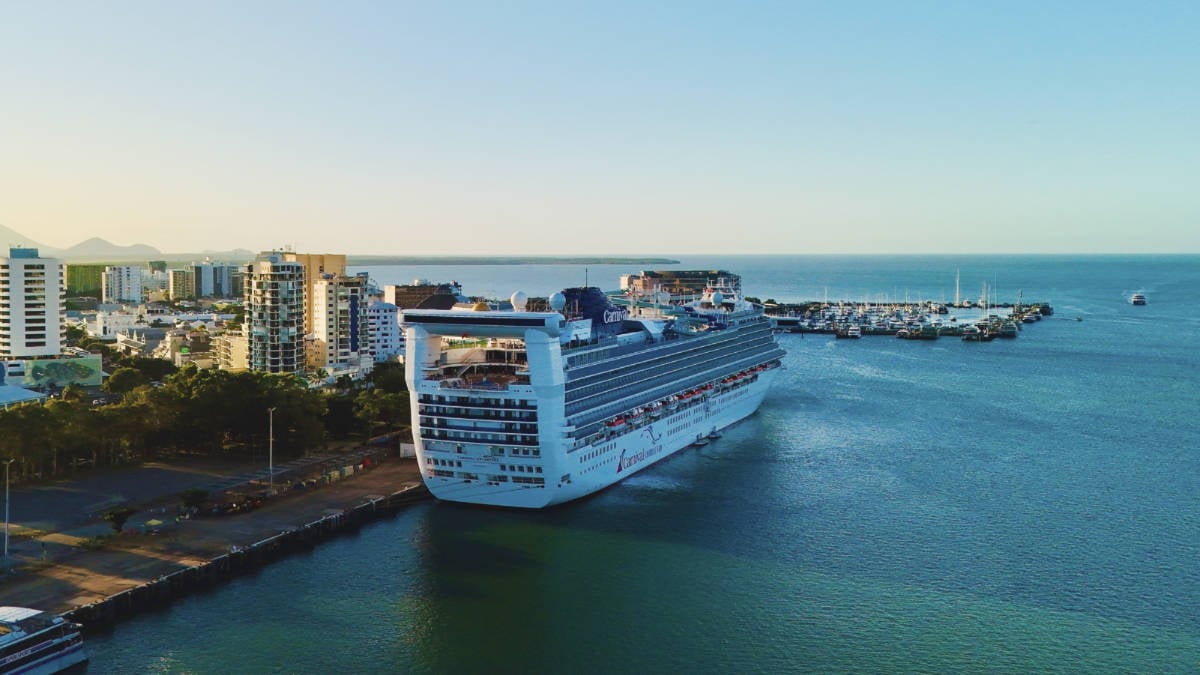
When a cruise vessel of this scale enters a terminal like Cairns, the margin for error under the keel is remarkably slim. Hydrographic changes—often driven by seasonal monsoonal activity, severe tropical weather events, or long-term coastal sediment drift—can rapidly alter channel bathymetry. When depth surveys indicate that the clearance falls below mandatory safety margins established by port authorities and the cruise line’s marine safety management systems, captains and port pilots have no legal or operational latitude: the port must be bypassed.
Financial and Logistical Ramifications for Passengers
For the 2,600 passengers eagerly anticipating this voyage, itinerary changes carry both logistical and emotional tolls. Carnival Cruise Line has attempted to mitigate financial friction through targeted administrative policies:
- Shore Excursions: All prepaid shore excursions booked directly through Carnival for the canceled Cairns port of call will be subject to a full, automatic refund to the original form of payment. Guests will not need to file manual claim forms.
- Townsville Additions: To compensate for the loss of Cairns, the newly introduced Townsville stop offers a robust array of alternative regional experiences. Guests can browse and book excursions for Townsville—ranging from visits to the renowned Reef HQ Aquarium (or regional marine facilities) to explorations of Magnetic Island—directly onboard via the Carnival HUB app or in person at the Carnival Adventures Desk.
- Independent Travel Complications: The one-hour delay in returning to Brisbane (now scheduled for 8:00 a.m. on September 11) introduces potential headaches for travelers who booked independent flights or tight rail connections. Unlike cruise-line-sponsored air arrangements, independent post-cruise travel logistics are entirely the responsibility of the passenger. Carnival’s official communications offered no indication of financial compensation or reimbursement for travelers forced to modify tight domestic or international flight schedules due to the delayed arrival time.
Official Statements and Industry Perspective
The formal communications issued by Carnival Cruise Line balanced transparent risk assessment with corporate caution. In the notice sent to guests on September 1, the carrier did not mince words regarding the severity of the navigational hazard:
"Current channel depths have reduced and are now too shallow to allow for the safe passage of our ship to Cairns Cruise Terminal, and the issue will not be fixed before our planned visit," the official guest advisory stated. "The safety of our guests is our top priority, so our scheduled visit to Cairns can no longer proceed."
While the cruise line was decisive regarding the immediate safety rationale, industry analysts note a conspicuous absence of technical specifics in public statements. Carnival did not disclose the exact depth measurements recorded during recent hydrographic surveys, nor did they assign a definitive timeline for when local dredging operations or natural tidal shifts might restore the channel to acceptable operational parameters for ships of this scale.
This opacity leaves a lingering question mark over future deployment plans. While cruise lines are routinely tight-lipped about third-party infrastructure deficits to avoid inflaming local port authorities, the silence suggests that the issue is systemic rather than transient. If regional siltation along the Cairns channel cannot be rapidly addressed by local maritime authorities, additional cruise lines and future Carnival Encounter sailings could find themselves similarly locked out.
Future Outlook: The Resiliency of Carnival’s Australian Deployment
Despite the immediate turbulence surrounding the September 5 departure, Carnival Cruise Line’s long-term commitment to the Australian market remains exceptionally robust. The Carnival Encounter is a cornerstone of the brand’s year-round homeporting strategy in Brisbane, anchoring a diverse roster of regional itineraries that include short getaways, island-hopping voyages, and extended explorations of the Great Barrier Reef.
Looking Ahead to Late 2026 and Beyond
Corporate leadership has made it clear that the Australian and New Zealand cruise markets are vital growth sectors. Recent announcements from Cruise Hive and other industry observers confirm that Carnival’s expanded regional deployment will extend deep into 2027 and 2028, introducing new homeport dynamics and elevated guest offerings down under.
Crucially, the cruise line has emphasized that the current channel depth issue in Cairns is being monitored on a voyage-by-voyage basis, and at present, subsequent itineraries remain officially unaffected. For instance, the Carnival Encounter is already scheduled to return to a similar regional circuit later in the month, departing Brisbane on September 26, 2026. That specific seven-night itinerary outlines a stop at Airlie Beach on September 28, followed by a much-anticipated overnight call in Cairns beginning September 29, before wrapping up with a visit to Willis Island on October 1 and a return to Brisbane on October 3.
As of this writing, Carnival Cruise Line has announced no modifications to that late-September sailing or subsequent October deployments. However, maritime logistics experts advise that future passengers booked on Cairns-inclusive itineraries should maintain a pragmatic outlook. Navigational safety in northern Australia is dictated by powerful environmental forces, and until comprehensive, long-term dredging solutions are executed by local port operators, the fluid nature of coastal geography will continue to demand flexibility from both cruise lines and travelers alike.
Summary of Key Operational Impacts for the Sept. 5, 2026 Sailing:
- Deposition Point: Brisbane, Australia (Departure: Sept. 5; Return: Sept. 11, delayed to 8:00 a.m.)
- Canceled Port: Cairns (Sept. 8) due to shallow channel depths.
- Added/Shifted Ports: Airlie Beach moved forward to Sept. 8; Townsville added as a new port call on Sept. 9.
- Unaffected Stops: Willis Island scenic cruising proceeds as scheduled on Sept. 7.
- Financial Protections: Automatic full refunds issued for all prepaid Cairns shore excursions; passengers must absorb or independently manage any costs associated with the one-hour return delay in Brisbane.