









Executive Overview
Situated on the eastern perimeter of Missouri, merely 30 miles west of downtown St. Louis, lies a sprawling sanctuary of dense woodlands, deep valleys, and rich New Deal-era history: Dr. Edmund A. Babler Memorial State Park. Spanning over 2,400 acres in the thriving suburb of Wildwood, this natural haven occupies the northeastern edge of the Ozark Mountain region, near the meandering path of the Missouri River. Offering an intentional synthesis of outdoor recreation and historical preservation, the park serves as a vital ecological and cultural refuge for millions of urban residents seeking respite from the concrete sprawl of the greater St. Louis metropolitan area.
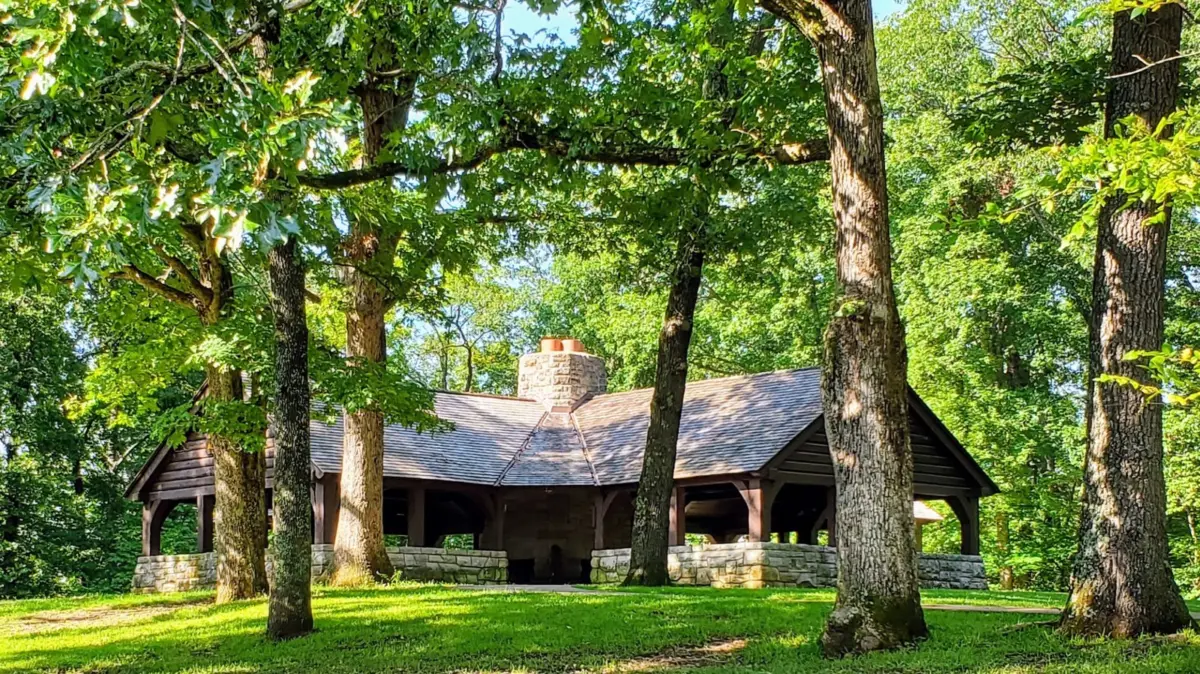
Established in the late 1930s, the park owes its existence to a philanthropic land donation and the tireless manual labor of the Civilian Conservation Corps (CCC) and the Works Progress Administration (WPA). Today, it stands not only as a premier Midwest camping and hiking destination, recognized consistently for its exceptional visitor satisfaction, but also as a living museum. Featuring nearly two dozen historic structures listed on the National Register of Historic Places, Dr. Edmund A. Babler Memorial State Park bridges the gap between early 20th-century American public works and modern ecological stewardship. This comprehensive report explores the park’s detailed chronology, infrastructural metrics, historical significance, ecological value, and future outlook.
Detailed Chronology
The origins of Dr. Edmund A. Babler Memorial State Park are deeply rooted in the philanthropic legacy of the Babler family and the federal work-relief programs of the Great Depression. The following chronology outlines the key milestones that shaped the park into the institution it is today.
- Early 20th Century: Dr. Edmund A. Babler establishes himself as a prominent and highly respected surgeon in St. Louis, Missouri, renowned for his medical contributions and community involvement.
- 1934–1935: Following the death of Dr. Babler, his brothers, Jacob L. and Henry E. Babler, seek a fitting tribute to honor his life and medical legacy. They acquire extensive tracts of rugged timberland along the northeastern edge of the Ozarks.
- October 1934: The Babler brothers formally deed thousands of acres of pristine land to the State of Missouri, stipulating that the property be developed into a public park dedicated to environmental education, recreation, and the memory of Dr. Edmund A. Babler.
- 1935–1938: The federal government deploys workers from the Civilian Conservation Corps (CCC) and the Works Progress Administration (WPA) to the site. Operating under Company 1715, these young men begin the arduous task of carving infrastructure out of the dense wilderness.
- Late 1938: The park officially opens to the public, offering rudimentary recreational opportunities, newly cut footpaths, and rustic stone and timber structures built entirely by hand using local materials.
- 1940s–1950s: Infrastructure is expanded to accommodate post-World War II surges in outdoor recreation. The Missouri State Park Board formalizes maintenance protocols to preserve the architectural integrity of the New Deal-era assets.
- 1985: Recognizing its profound architectural and historical significance, the collection of buildings constructed by the CCC and WPA secures official placement on the prestigious National Register of Historic Places.
- 21st Century: The park undergoes continuous modernization, including campground expansions with full-utility hookups, modernized restroom and shower facilities, and ongoing trail maintenance initiatives to support an escalating number of annual visitors.
Supporting Context & Metrics
To fully appreciate the scope and operational footprint of Dr. Edmund A. Babler Memorial State Park, one must examine the quantitative and qualitative data defining the property. Managed under the umbrella of Missouri State Parks, the reservation functions as a multi-use outdoor facility balancing conservation with public access.
Geographical and Infrastructural Metrics
- Total Acreage: Encompasses more than 2,400 acres of protected rolling hills, creek beds, and upland forests.
- Proximity to Urban Centers: Located roughly 30 miles west of St. Louis, accessible via State Route 109 in Wildwood, Missouri.
- Campground Capacity: Features 75 distinct campsites, ranging from primitive tent sites to modern pads equipped with electricity, water, and sewer hookups.
- Historic Asset Count: Nearly two dozen intact structures built during the New Deal era remain operational and preserved on-site.
- Trail Network Diversity: Houses approximately half a dozen primary trails catering to hikers, equestrians, and cyclists, varying in length from just over 1 mile to roughly 6 miles.
Comparative Recreational Standing
Within the Missouri State Parks system, Babler consistently ranks among the top-tier destinations for front-country camping and day-trip excursions. Consumer sentiment aggregators, including Google Reviews and TripAdvisor, consistently award the park’s campground high marks. Campers frequently highlight the cleanliness of the facilities, the generous spacing between concrete pad sites, and the exceptional clarity of the night sky, which remains surprisingly free of severe light pollution despite its proximity to St. Louis.
Official Statements & Administrative Perspectives
The management and preservation of Dr. Edmund A. Babler Memorial State Park require a delicate balance between welcoming hundreds of thousands of recreational visitors and safeguarding fragile natural and historical resources. Representatives from Missouri State Parks and local preservation advocates have consistently emphasized the dual mandate of the park: public enjoyment and historical stewardship.
In official guidelines published by Missouri State Parks, administrators emphasize that the preservation of the New Deal architecture is non-negotiable. "The structures erected by the Civilian Conservation Corps and the Works Progress Administration are physical testaments to an era of national resilience," notes park management documentation. "Every stone arch, timber pavilion, and rustic shelter tells the story of young men working during the Great Depression to build a legacy for future generations of Missourians."

Furthermore, park superintendents frequently issue advisories regarding seasonal shifts in operations. While the park grounds and campground remain open 365 days a year, municipal and state directives mandate the seasonal closure of water and shower facilities—typically from November 1 through March 31—to protect vulnerable plumbing infrastructure from sub-freezing Midwestern winters. Park authorities routinely urge prospective visitors to consult the official Missouri State Parks web portal prior to departure to review active weather advisories, trail closures, and maintenance updates.
Safety and environmental compliance are also paramount. Local rangers stress adherence to "Leave No Trace" principles, particularly given the park’s fragile limestone topography and sensitive flora. As urban development in Wildwood and surrounding St. Louis suburbs continues to press against the park’s boundaries, state officials view Babler as an increasingly crucial ecological island that protects native wildlife corridors from total fragmentation.
Future Outlook
As Dr. Edmund A. Babler Memorial State Park looks toward the future, it faces a complex matrix of environmental, infrastructural, and demographic challenges. Navigating the next several decades will require strategic investments, proactive maintenance, and community engagement.
Infrastructure Modernization vs. Historic Preservation
One of the primary challenges facing park administrators is the ongoing maintenance of aging infrastructure. The nearly two dozen New Deal-era structures that earned the park its spot on the National Register of Historic Places are approaching a century of existence. Historic preservation requires specialized masonry, authentic timber sourcing, and meticulous craftsmanship to maintain architectural integrity without violating federal and state historical guidelines. Concurrently, modern campers demand updated amenities, such as robust electrical grids capable of supporting modern RVs, high-speed Wi-Fi access points, and improved wastewater management systems. Balancing the rustic aesthetic of the 1930s with 21st-century technological expectations remains a constant administrative tightrope walk.
Trail Resilience and Accessibility
The park’s trail network—ranging from the 1-mile Hawthorn Trail to the 6-mile Equestrian Trail—faces significant strain from extreme weather events. Changing precipitation patterns in the Midwest have resulted in heavier downpours, causing severe soil erosion, trail washouts, and chronic mud accumulation on popular routes like the Dogwood Trail. Furthermore, administrative hurdles, such as the temporary closure of the paved bicycle trail due to unsafe surface conditions, highlight the ongoing need for capital improvement grants. Future planning must focus on sustainable trail engineering, incorporating French drains, aggregate surfacing, and rerouted pathways to prevent ecological degradation while expanding ADA-compliant accessibility for visitors with mobility impairments.
Managing Suburban Encroachment
Located in Wildwood, one of the fastest-growing residential sectors in the St. Louis metropolitan area, Babler State Park is increasingly surrounded by suburban developments, commercial hubs, and high-density roadways. This geographic isolation turns the park into an ecological oasis for native fauna—including white-tailed deer, wild turkeys, foxes, and numerous migratory bird species—while simultaneously increasing human pressures. Invasive species management, deer population control, and the mitigation of stormwater runoff from adjacent developments will be critical priorities for state ecologists in the coming years.
Educational Outreach and the Next Generation
To ensure the park’s continued relevance, administrators are expanding educational programming that bridges history and environmental science. By partnering with local school districts, universities, and historical societies, Babler aims to immerse younger generations in the history of the New Deal while fostering hands-on understanding of Ozark forestry and watershed conservation.
In conclusion, Dr. Edmund A. Babler Memorial State Park stands as a triumph of conservation, architectural heritage, and public recreation. By honoring the vision of the Babler family, respecting the sweat equity of the CCC and WPA workers, and dynamically adapting to modern ecological demands, the park is well-positioned to remain a crown jewel of the Missouri State Parks system for generations to come.