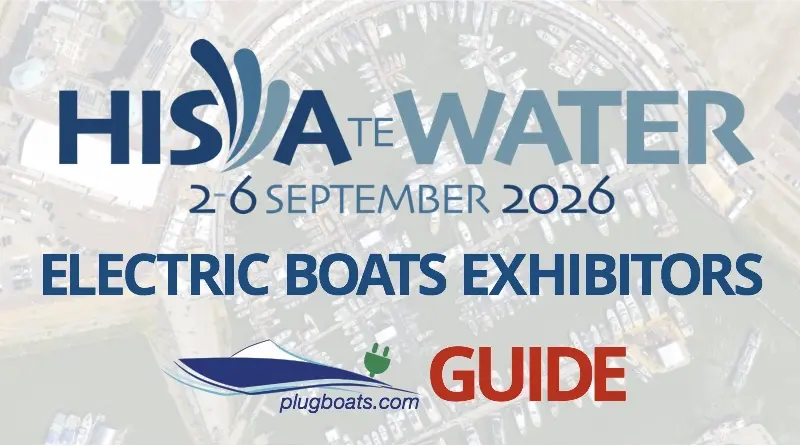
The maritime sector is undergoing a profound structural evolution, shifting away from fossil fuel combustion toward high-performance electric propulsion, green materials, and digitally integrated energy management systems. Nowhere is this transition more visible than at Hiswa te Water, Northern Europe’s largest in-water boat show. Held annually at the sprawling Batavia Haven marina in Lelystad, Netherlands—roughly 40 kilometers (25 miles) from central Amsterdam—the September 2–6 exhibition has rapidly transformed into the premier global venue for electric boating and sustainable marine technology.
With nearly 50 dedicated boat builders, motor manufacturers, battery developers, and accessory retailers exhibiting, the 2026 edition of Hiswa te Water underscores a definitive market tipping point. Electric boating is no longer an experimental niche reserved for auxiliary sailboat drives or sheltered inland canals. Instead, it has matured into a robust, high-performance ecosystem encompassing luxury day-cruisers, long-range solar-electric overnighters, high-speed tenders, zero-emission personal watercraft, and sophisticated serial hybrid architectures.
This comprehensive report explores the initiatives driving this year’s exhibition, profiles the key propulsion and battery technologies on display, and examines the groundbreaking vessels nominated for elite industry recognition.
Detailed Chronology: Navigating the E-Boating Evolution at Batavia Haven
The integration of electric propulsion into Hiswa te Water is the result of years of intentional strategic planning by the organizing body, HISWA (the Dutch industry trade group for the water sports business). Recognizing that recreational boating must adapt to tightening environmental regulations, local zero-emission green zones, and shifting consumer values, show organizers have progressively expanded the event’s sustainability footprint.
The Entrance and the Sustainable Boating Coalition
The visitor journey into the world of electric propulsion begins immediately at the main entrance in the first exhibition hall. Here, the national Duurzaam Varen (Sustainable Water Recreation Program) stand serves as an educational anchor. Industry experts are stationed continuously to answer technical inquiries regarding electric and hybrid conversion, charging infrastructure, and regulatory compliance.
Adjacent to this installation, the Sustainable Boating Coalition (SBC)—a collective of forward-thinking enterprises dedicated to advancing e-mobility—presents the EV Motor Show exhibit. This centralized display offers an exhaustive overview of 16 distinct electric and hybrid motor brands, giving shipyards and individual boat owners a direct comparison of available technologies under one roof.
The Green Tour and Interactive Mapping
To assist visitors in navigating the dense concentration of green-tech exhibitors, Hiswa te Water features the daily Green Tour. Designed as a compact, one-hour guided walkthrough led in small groups, the tour stops at 10 carefully selected exhibitors. Each company representative delivers a concise presentation detailing their technical vision and product roadmap.
Complementing the physical tour is the flagship Green Route, originally conceived and organized by Dutch electric boat pioneer Marcel Schaap. Expanded significantly for the 2026 show, the Green Route identifies approximately 80 participating exhibitors actively engaged in zero-emission propulsion, eco-friendly construction materials, or smart energy management. For the first time, visitors can utilize an interactive digital floor plan via the official Hiswa te Water website and event app to curate personalized itineraries, mapping out targeted visits from the entrance hall to the floating docks.
Floating Pavilions and the Fun Park
Exiting the main hall, visitors encounter the floating Electric Boating Pavilion, where SBC members conduct live, on-water demonstrations of advanced electric drives, modular battery banks, solar panel integration, and remote vessel monitoring systems. This floating hub bridges the gap between theoretical propulsion concepts and tangible, in-water application, guiding enthusiasts directly to the electric sloops, sailboats, and motor yachts moored in the marina.
For those seeking high-octane entertainment, the show’s Fun Park hosts daily dynamic demonstrations of zero-emission water toys and personal watercraft. Highlights include electric jet surfboards from Motorsurf and Esurf, Audi E-foils, and high-performance Seabobs provided by the World Nautic Center.
Supporting Context & Metrics: The Technical Landscape of 2026
The commercial viability of electric boating hinges on continuous improvements in energy density, charging speed, and systems integration. The exhibitors at Hiswa te Water 2026 showcase remarkable advancements across three primary technical pillars: motor engineering, lithium battery chemistry, and hybrid range-extension.
Propulsion Innovations: Standardization and Power Scaling
A major trend at this year’s show is the industry-wide migration toward standardized 48-volt DC architecture for lower-to-mid power ranges (up to 20 kW). By maintaining low-voltage standards, manufacturers eliminate the need for specialized high-voltage shipyard certifications, significantly lowering the barrier for boatbuilders and retrofit technicians.
Torqeedo: Following its acquisition by Yamaha, Torqeedo has streamlined its model lineup, showcasing the standardized 48-volt architecture on its popular Cruise 3.0 and 6.0 outboards. These units now feature a foldable tiller with a high-resolution display, integrated Wi-Fi, Bluetooth, and real-time telemetry via the TorqView app. At the heavy-duty end, the Deep Blue system (25–100 kW) introduces a central Intelligent Control Unit (ICU) and Power Distribution Unit (PDU) for enhanced scalability.
VETUS: A pioneer in electric marine propulsion, VETUS has expanded its E-LINE inboard series to include seven models, anchored by the newly unveiled E-LINE 22 kW liquid-cooled motor. Designed to drop seamlessly into existing engine mounts using adjustable "Swap & Go" brackets, the E-LINE range accommodates both air-cooled and liquid-cooled configurations with zero-emission compliance for protected green zones.
Molabo & Fischer Panda: In a landmark collaboration bridging genset manufacturing and electric drive technology, Fischer Panda and Molabo unveiled an advanced serial hybrid system. Utilizing Molabo’s touch-safe, 48-volt ARIES drive paired with Fischer Panda’s lightweight AGT-series diesel generators, the system provides flexible, ultra-efficient energy management for long-range cruising. Crucially, the onboard generators can operate on HVO (hydrotreated vegetable oil) biofuel, achieving a near-neutral carbon footprint.
Energy Storage and Battery Solutions
Lithium Iron Phosphate (LiFePO4) chemistry has firmly cemented its status as the industry standard for marine energy storage, virtually replacing heavy, maintenance-intensive lead-acid batteries. Dutch specialist ACES Energy highlights the stark performance delta: modern marine lithium solutions offer a cycle life 4 to 15 times higher, weigh up to six times less, feature built-in electronic Battery Management Systems (BMS), and achieve complete recharging cycles in just one to two hours.
Official Statements and Industry Insights
The collaborative ethos driving the European e-boating movement was heavily emphasized by participating coalition leaders and executives at the event.
"Our goal is to make electric boating truly break through on Dutch waters and beyond," notes a representative from De Stille Boot, a leading Benelux total-solutions provider representing brands like BlueNav, Molabo, Torqeedo, and Waterworld. "It is a wonderful, relaxing sailing experience: silent, reliable, and clean. Good for ourselves and nature, but also for our climate. This is a global challenge to which we are happy to contribute."
The Sustainable Boating Coalition echoed this sentiment, emphasizing that the energy transition must maintain accessibility:
"We are working on a sustainable future for recreational boating to preserve our waterways and aquatic ecosystems. At the same time, we want to keep water recreation accessible to everyone. Through shared infrastructure, smart charging, and standardized swappable batteries, we can make a positive difference."
Featured Vessels & Showcase Highlights
Hiswa te Water 2026 hosts several notable vessel premieres and nominees for the prestigious Electric Boat of the Year award.
1. Canna One
Measuring 5.50 meters in length with a shallow 0.51-meter draft, the Canna One is an exquisite, sustainably built day-cruiser drawing aesthetic inspiration from 1950s yachting tradition. Accommodating up to five passengers with a tranquil top speed of 12 km/h, it represents the pinnacle of intimate, low-impact inland cruising.
2. ESEA 800
Making its global public debut, the ESEA 800 is an 8-meter (26 ft) fully electric recreational boat crafted by superyacht designers and built in Sweden. Marrying the precision engineering of the luxury yacht sector with advanced IoT smart-boating interfaces, the ESEA 800 delivers silent power wrapped in timeless design.
3. Lasai 32KS Catamaran
Following the Bureau Veritas certification of their 22GL model (which achieved over 100 nautical miles on a single charge), Spanish solar-electric builder Lasai introduces the Lasai 32KS. Utilizing a catamaran hull configuration to minimize hydrodynamic drag, the 32KS provides an expansive deck layout and a fully appointed interior cabin with an en-suite head, designed specifically for multi-day cruising.
4. Qrafter e-Qruiser 800S
Nominated for Electric Boat of the Year, the Qrafter e-Qruiser 800S brings high-speed electric performance to the consumer market. Originating from an elite electric rental fleet, Qrafter’s aluminum tender sloops emphasize maintenance-free operation, ergonomic comfort, and effortless handling.
5. Hanse 360 Electric Sailboat
In the realm of auxiliary-powered sailing yachts, the Hanse 360 stands out. Developed in partnership with Berret-Racoupeau, the 360 features a hydrodynamic hull optimized for minimal resistance and outfitted with a 25 kW electric motor paired with up to a 36 kWh battery bank, proving that long-distance cruising can be achieved with zero fossil fuel consumption under auxiliary power.
Future Outlook: The Road Ahead for Zero-Emission Maritime Mobility
As Hiswa te Water 2026 demonstrates, the transition from internal combustion engines to electric and hybrid marine propulsion is no longer an abstract vision of the future—it is a rapidly scaling commercial reality.
The convergence of standardized 48V architectures, plug-and-play retrofit kits (such as those pioneered by E-WERF and VETUS), and autonomous solar generation (exemplified by Boss Boating’s walkable solar panels and long-range voyaging) points toward a transformative decade ahead. As municipal authorities across Europe continue to legislate strict green zones and emission bans on inland waterways, shipyards and equipment manufacturers exhibiting at Lelystad are proving that sustainable boating requires no compromise on luxury, range, or performance.
The success of Hiswa te Water 2026 solidifies the Netherlands’ position as the global epicentre of marine e-mobility, setting a high benchmark for boat shows worldwide as the industry accelerates toward a zero-emission horizon.